Protecting lives in a warming world: Health takes centre stage at COP30

As climate negotiations continue in the Amazonian city of Belém, Brazil, governments, UN agencies and partners have adopted the Belém Health Action Plan, placing an emphasis on addressing healthcare inequalities.

For updates on all the action and UN News coverage so far, head to our dedicated page here.

A planet heading to ‘intensive care’

The adoption took place on COP’s designated Health Day – a recognition that the climate crisis is also a health crisis.

“If our planet were a patient, it would be admitted to intensive care,” World Health Organization (WHO) Director-General Tedros Adhanom Ghebreyesus warned on the eve of the conference.

Extreme heat, floods, droughts and storms are not only environmental threats –they are driving disease outbreaks, food and water insecurity, and the disruption of essential health services.

A UNFPA mobile health clinic midwife assesses a pregnant woman at a displacement camp in Marib, Yemen.

Blueprint for resilience

Developed by the WHO, UN University (UNU) and other UN partners in collaboration with the Brazilian Government, the Action Plan sets out practical steps to integrate health into climate strategies

  • Strengthening health systems to withstand climate shocks
  • Mobilising finance and technology for adaptation and
  • Ensuring communities have a voice, promoting their participation in governance.

Brazil’s Health Minister Alexandre Padilha described the launch as “a crucial moment to demonstrate the strength of the health sector in global climate action”

© UNFCCC/Diego Herculano

Civil society demonstration at COP30

Solutions hub

Thursday’s high-level sessions in the main conference rooms are dominated by speeches and discussions about climate and health – but throughout COP30, the WHO-led Health Pavilion has been the hub for solutions and dialogue.

The topics covered at the pavilion range from AI to waste management, jobs, education and human rights – all from the perspective of health.

Friday in the pavilion will be dedicated to the Alliance for Transformative Action on Climate and Health, a WHO-led initiative to accelerate the transition to climate-resilient and low carbon health systems. 

Food Waste Breakthrough

Also today, the UN Environment Programme (UNEP) and its partners launched an initiative to cut food waste in half by 2030 and cut up to seven per cent of methane emissions as part of efforts to slow climate change.

UNEP notes that the world wastes more than one billion tonnes of food every year, contributing up to 10 per cent of global greenhouse gas emissions and accounting for up to 14 per cent of methane emissions, which is a short-lived climate pollutant that is 84 times more potent at warming the atmosphere than carbon dioxide over 20 years.

Funded by the Global Environment Facility, the UN Environment Programme will launch a $3 million, four-year global project to implement the targets of the Food Waste Breakthrough.  

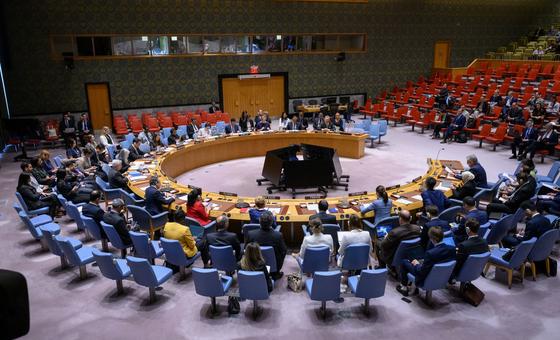
SECURITY COUNCIL LIVE: NATO allies rally round Poland in face of Russian incursion, as drone warfare takes centre stage

The Security Council is meeting in emergency session at Poland’s request at 3pm in New York, after some 19 Russian drones violated their and the North Atlantic Treaty Organization’s (NATO) airspace earlier this week. It marked the most serious incursion into NATO territory since Russia’s full-scale invasion of Ukraine began – and highlights the extent to which drone technology has reshaped tactics, logistics and strategy in wars worldwide. Follow the live coverage of the debate around the iconic horseshoe table below.

Source link

South Sudan’s longest cholera outbreak enters critical stage

The outbreak – which started in September 2024 and was confirmed a month later – comes amidst a protracted humanitarian crisis exacerbated by rising intercommunal violence, climate shocks such as flooding and catastrophic hunger.  

“Now, more than ever, collective action is needed to reduce tensions, resolve political differences and make tangible progress in implementing peace,” said Anita Kiki Gbeho, UN Resident and Humanitarian Coordinator in South Sudan.  

Alarming escalation

Since the cholera outbreak was declared in October 2024, UN agencies and partners have documented over 80,000 cholera cases and 1,400 deaths.  

This is in addition to regional outbreaks of mpox, hepatitis and measles among other communicable diseases.

South Sudanese authorities, civil society and UN agencies held an inter-ministerial meeting on Monday to discuss what they called an “alarming escalation” in the spread of the outbreak. 

“This is not merely a public health crisis, but a multi-sectoral emergency exacerbated by flooding, displacement, and limited access to basic services,” the ministers wrote in a communiqué released.  

The group resolved to facilitate unimpeded humanitarian access to areas which already have outbreaks and to other areas at risk for outbreaks. The Government of South Sudan will coordinate these efforts.

Partners will also work to preposition materials, improve water and sanitation infrastructure and coordinate proactive and reactive vaccination campaigns.  

Time is running out

With the peak of the rainy season on the horizon, the next eight weeks are critical in containing and mitigating the outbreak before severe flooding begins.  

“Time is of the essence to prevent a further escalation of the outbreak,” the officials wrote.  

Floods more than double the frequency of cholera outbreaks by imperiling access to clean water and impeding humanitarian access to affected areas. And with rising global temperatures making floods more severe, millions of South Sudanese who were not previously in regions of concern may now be at risk for cholera outbreaks.

A preventable disease  

Cholera is an acute diarrhoeal infection caused by consuming contaminated water or food. Although highly communicable, it is preventable through proper hygiene, regular handwashing, safe food preparation and storage, improved sanitation infrastructure, and vaccination.

Symptoms typically include watery diarrhoea. Most cases are mild to moderate and can be treated effectively with oral rehydration salts (ORS) mixed with clean, boiled water.

However, in severe cases, cholera can be fatal—sometimes within hours—if not treated promptly.

Infected individuals can also transmit the disease through their faeces for up to ten days, even if they show no symptoms.

Need for additional funds

In South Sudan, the already inadequate water and sanitation infrastructure and overstretched public health system has further deteriorated as a result of displacement and conflict. This has ripened the conditions for the spread of cholera.

The UN and its partners are working quickly to preposition emergency supplies, especially in these previously low-risk areas, but they are hampered by funding shortfalls. Agencies estimate that they will need $1.69 billion – of which they have only received $368 million – to address the many intersecting humanitarian needs in the country.  

Nevertheless, the group of ministers insisted that this outbreak is and must remain a priority for all involved.

“Cholera response and flood preparedness must be treated as urgent national priorities,” they said in the communiqué. 

Source link

Jazz takes centre stage in Chicago for 2026

The announcement came from UN culture agency (UNESCO) on Wednesday, as this year’s day was being celebrated in the capital of the United Arab Emirates (UAE), Abu Dhabi.

The focus there was on ‘Arabic Jazz’, a tapestry of musical traditions, which included the use of classical instruments from the region such as the oud, qanun and ney.

Following the jazz synthesis which ended on a high note in the UAE, the spotlight now turns to Chicago – where many would argue the golden era of jazz began as pioneers from New Orleans headed north during the 1920s.

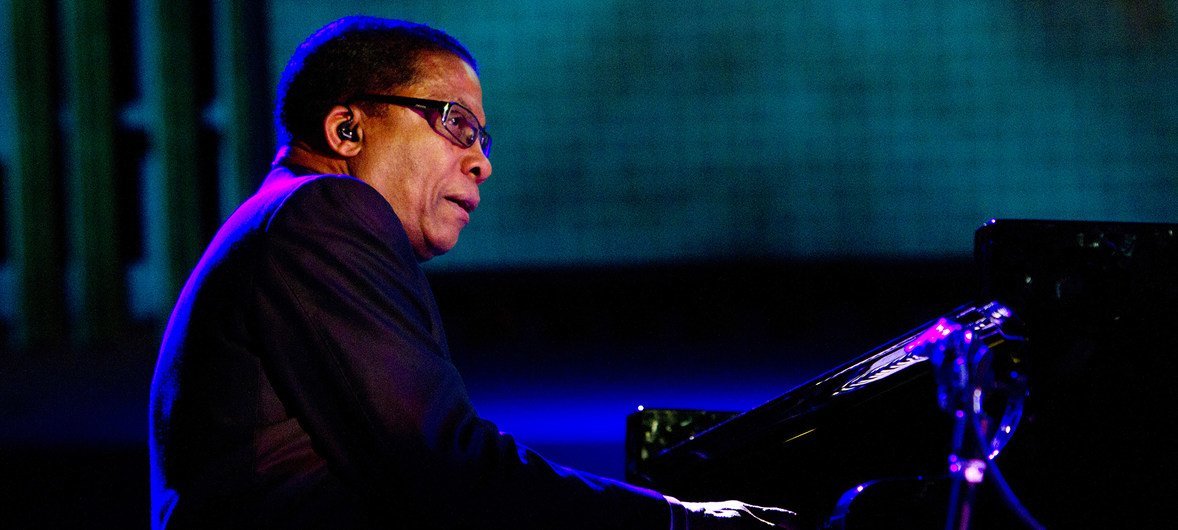
The midwestern city will host the renowned All-Star Global Concert, directed by UNESCO Goodwill Ambassador Herbie Hancock, featuring some of the world’s most celebrated jazz artists.

What better way for UNESCO to celebrate the 250th anniversary of the United States than by sharing its rich musical heritage with the world?” said Audrey Azoulay, UNESCO’s Director-General.

Rich jazz pedigree

Chicago has played a pivotal role in the evolution of the genre for over a century. In the 1920s, musicians journeyed up the Mississippi and found in Chicago a vibrant creative hub. Legends like Louis Armstrong, King Oliver, and Jelly Roll Morton helped define the “Chicago style” of jazz – marked by bold solos, improvisation, big band arrangements, and the rising prominence of the saxophone.

Today, the city remains a stronghold of jazz culture, home to renowned events such as the Chicago Jazz Festival and iconic venues including the Green Mill and the Jazz Showcase, which has been a cornerstone of the scene for 75 years.

Multiple Grammy Award-winning jazz pianist and Goodwill Ambassador for the UN Educational, Scientific and Cultural Organization (UNESCO), Herbie Hancock, performs at the inaugural International Jazz Day Concert at UN Headquarters. (2012)

UNESCO’s Goodwill Ambassador Herbie Hancock, a native of Chicago, reflected on what jazz has meant to him.

It was in my high school auditorium in Chicago that I discovered jazz – an experience that ignited a lifelong passion,” he said. “Jazz opened doors to creativity, self-expression, and freedom.”

Events throughout the year

In addition to the Global Concert, Chicago will host a range of events throughout 2026 to celebrate International Jazz Day, including concerts, educational programmes, discussions, and community activities.

These will be organized in collaboration with the Chicago Jazz Alliance, the Ravinia Festival, the City of Chicago, the Illinois Arts Council, the State of Illinois, and other partners.

Launched by UNESCO in 2011, International Jazz Day is observed annually on April 30 in over 190 countries. It celebrates the power of jazz as a force for peace, intercultural dialogue, and human dignity.

Source link