
Between fear and survival: Women and girls flee violence in northern Syria

Now eight months pregnant and sheltering in a makeshift camp, the mother of three said her biggest fear isn’t the biting cold – it’s what will happen if she goes into labour. 

“I worry about my health, but I worry more about where to go if something happens,” said Fatima. “Displacement is not just losing your home. It’s losing your privacy, your safety and access to healthcare, especially as a woman.” 

Every step we took felt like it could be our last

She is one of tens of thousands of women and girls affected by the uptick in violence and insecurity around Aleppo in the past few weeks, which has forced large numbers to flee, disrupted essential services and shut down hospitals. 

“We fled under bombardment, with nothing but our fear,” Farida, 39, told the United Nations Population Fund (UNFPA), which is the UN’s sexual and reproductive health agency. 

“Every step we took felt like it could be our last.”

A UNFPA-supported health worker delivers essential healthcare at a clinic in Al-Hassakeh, for women and girls forced to flee Aleppo in Northern Syria.

Unbearable cold 

In Aleppo, some 58,000 are still displaced following recent clashes between the transitional Government’s security forces and the mostly-Kurdish Syrian Democratic Forces (SDF), with insecurity spreading to surrounding areas. 

To make matters worse, winter conditions have only deepened the suffering: thousands are now enduring freezing temperatures, sheltering in makeshift camps, former schools and unfinished buildings across the country. 

Ruhan, a mother of three from Aleppo, fled with only what she could carry. 

 “The cold is unbearable. My biggest fear is keeping my children warm and safe,” she told UNFPA aid workers, who provided her with reproductive health services, counselling and a dignity kit. 

Delivering aid 

More than 890,000 people had been newly displaced as of December 2025 in Syria, adding to almost seven million already displaced inside the country. 

Fourteen years of conflict, climate shocks, and economic decline have left Syria’s recovery fragile and uneven, with immense humanitarian needs and severely damaged healthcare systems.

In response, UNFPA and its partners have sent mobile health teams to reach displaced communities with life-saving sexual and reproductive healthcare, dignity kits with essential hygiene items, and psychosocial counselling. 

Around 400,000 pregnant women in Syria are struggling to access essential maternity services – a situation worsened by deep funding cuts which began last year that have further restricted access.

Women and girls displaced by violence receive reproductive health support and dignity kits in a neighbourhood in Aleppo, Syria.

Source link

Violence in northern Mozambique forces thousands to flee, straining aid efforts

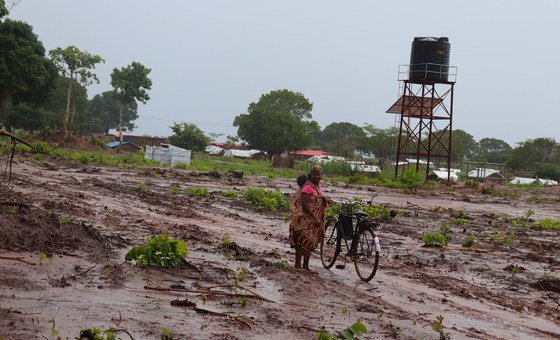
The displacement is the latest consequence of a cascade of overlapping emergencies in the country – including armed violence, climate shocks, disease outbreaks and a severe funding shortfall. Since January, over 95,000 people have fled insecurity in Cabo Delgado and humanitarian access is becoming increasingly fragile.

According to the UN Office for the Coordination of Humanitarian Affairs (OCHA), attacks by armed groups between 20 and 28 July triggered the displacement of at least 46,667 people across the districts of Chiúre, Ancuabe and Muidumbe.

Chiúre was the hardest hit, with more than 42,000 people uprooted – over half of them children.

Insecurity persists, and people on the move often lack civil documentation,” OCHA said in a humanitarian bulletin on Saturday. “These challenges may impact the ability of displaced people to move freely, safely access basic services and maintain their livelihoods.

Children separated from families

Attacks in Chiúre Velho, Ocua and Mazeze have driven families to Chiúre Sede, where they are sheltering in overcrowded conditions in the neighbourhoods of Bairro Micone and Bairro Namicir. Reports indicate a high number of unaccompanied or separated children.

Food, shelter and essential non-food items are reported as the most urgent needs, according to humanitarian partners.

The security situation in Ancuabe district also deteriorated rapidly. According to the UN International Organization for Migration (IOM), the number of displaced families nearly tripled in one week, reaching 444 households (1,946 people), including over 1,200 children. The violence forced residents of Nanduli village to seek refuge in Chiote and Ancuabe Sede.

In Muidumbe, fighters reportedly torched homes in Magaia village and opened fire near Mungue. Nearly 500 families fled to nearby displacement sites, where humanitarian access remains limited.

Protection concerns, limited funding

OCHA stressed that under international law, civilians must be allowed to seek safety and freely choose their destination. But insecurity, lack of documentation and involuntary relocations are compounding protection risks.

At the same time, the aid response remains severely underfunded.

As of July, only 19 per cent of Mozambique’s 2025 Humanitarian Response Plan has been funded. Of the $352 million requested, just $66 million has been received – forcing agencies to reduce their response targets by over 70 per cent. They now aim to assist only 317,000 people, down from the target of 1.1 million at the start of the year.

Urgent and sustained funding is essential to prevent further deterioration and address the escalating humanitarian needs that remain as acute and widespread as ever,” the OCHA report warned.

Source link

Northern hemisphere heatwave underscores value of early-warning alerts

Three days after Spain’s national weather service confirmed a record 46°C reading in the southern town of El Granado, there’s been little let-up in stifling day and night temperatures across the continent and beyond.

In Barcelona, a road sweeper reportedly died on Saturday after completing her shift, prompting an investigation and widespread public appeals to keep out of the sun wherever possible.

“Everybody is at risk,” insisted Clare Nullis, spokesperson for the World Meteorological Organization (WMO): “If you go out without water in the middle of the day, to do jogging, have a bike ride, you will probably have health problems or even die.”

Fossil fuel factor

If part of the reason for Europe’s heat misery is because it is in the grip of a strong high-pressure weather front trapping hot air from northern Africa, Ms. Nullis noted that “human-induced climate change” is the source of these acute weather events.

Another part of the climate puzzle is that sea surface temperatures in the Mediterranean are exceptionally high for this time of year. “It’s the equivalent of a land heatwave”, the WMO spokesperson said.

“Extreme heat creeps up on you,” she added, while dangerously warm conditions are becoming “more frequent, more intense” because of global warming caused by burning fossil fuels.

“It’s something we have to learn to live with,” Ms. Nullis maintained, highlighting the importance of early warnings from national meteorological and hydrological services to prevent more deaths from extreme heat events – which are often “under-reflected” in official statistics.

Hot days – and nights

According to the UN agency, night-time minimum temperatures and daytime maximum temperatures broke monthly station records for June in parts of Western and Southwestern Europe, partly explaining why the heatwave is so draining.

“The frequency and intensity of extreme heat events is increasing in Europe and by 2050 about half the European population may be exposed to high or very high risk of heat stress during summer,” Ms. Nullis explained.

“What is exceptional – and I would stress exceptional but not unprecedented – is the time of year. We are 1 July, and we are seeing episodes of extreme heat which normally we would see later on.”

WMO insisted that warnings from national weather services and coordinated heat-health action plans are increasingly important to protect public safety and wellbeing.

The UN agency is promoting these efforts through its Early Warnings for All platform.

A key component is the WMO Coordination Mechanism (WCM) which supports crisis-prone and conflict-affected regions with advice. WMO curates authoritative weather, climate and water information from countries such as its WCM Global Hydromet Weekly Scan