New recombinant mpox strain detected in UK and India, WHO urges continued monitoring

WHO confirmed that two cases of the recombinant strain – combining genomic elements of clades Ib and IIb of the monkeypox virus (MPXV) – have been identified to date: one in the United Kingdom and one in India. Both patients had recent travel histories, and neither experienced severe illness.

No secondary cases were detected following contact tracing.

WHO has published a detailed update on the two cases and the national responses.

Recombination is a natural process that can occur when two related viruses infect the same person and exchange genetic material, producing a new variant.

According to WHO, detailed genomic analysis shows the two individuals “fell ill several weeks apart with the same recombinant strain,” suggesting that additional undetected cases may exist.

What is mpox?

Mpox is an infectious disease caused by the monkeypox virus (MPXV), part of the Orthopoxvirus genus, which also includes the virus that causes smallpox.

It spreads through close physical contact, including sexual contact, and in some cases through contaminated materials or respiratory droplets.

Symptoms typically include fever, swollen lymph nodes, and rash and/or lesions.

Click here for the WHO factsheet on mpox.

Two detected cases

The case in the United Kingdom was detected in December 2025 in a traveller returning from a country in the Asia Pacific region. Initial laboratory testing identified the virus as clade Ib, but whole genome sequencing later revealed that it contained genetic regions from both clade Ib and clade IIb strains. Repeat sequencing confirmed the findings and demonstrated that the virus “can replicate and presents potential for onward transmission.”

In India, a patient who developed symptoms in September 2025 was initially classified as infected with clade II MPXV. However, following updates to global genomic databases, the virus was reclassified as the same recombinant strain identified in the UK. The Indian case represents the earliest known detection of this strain.

“Due to the small number of cases found to date, conclusions about transmissibility or clinical characterization of mpox due to recombinant strains would be premature, and it remains essential to maintain vigilance regarding this development,” WHO said.

Clinical presentations in both cases were consistent with known mpox infections.

Risk assessment unchanged

WHO’s overall risk assessment remains unchanged: the risk is assessed as moderate for men who have sex with men with new and/or multiple partners and for sex workers or others with multiple casual sexual partners, and low for the general population without specific risk factors.

At the same time, WHO cautioned that clade differentiation PCR tests alone “may not reliably identify recombinant MPXV strains,” meaning genomic sequencing is essential for detection.

“All countries should remain alert to the possibility of MPXV genetic recombination,” WHO said, urging continued epidemiological surveillance, sequencing, vaccination of at-risk groups, and infection prevention and control measures.

WHO advised that no travel or trade restrictions are warranted based on current information.

Nuclear watchdog chief announces breakthrough on Iran monitoring

“Indispensable” monitoring by the International Atomic Energy Agency (IAEA) ended in June, agency chief Rafael Grossi said, when Israel and US-backed airstrikes targeted Iran’s nuclear power installations.

At the time, the Iranian authorities confirmed that the Natanz enrichment site had been “impacted” without affecting existing radiation levels, the top IAEA diplomat said.

Practical step forward

Now, “practical modalities” have been agreed to allow the resumption of inspection activities in Iran, Mr. Grossi told the agency’s board of governors in the Austrian capital. “This is an important step in the right direction,” he continued, before expressing his gratitude to Egypt for brokering the deal.

The development follows the 28 August announcement by France, Germany and the UK of their intention to reimpose UN sanctions on Iran within 30 days, under the so-called “snapback” mechanism contained in the Iranian nuclear agreement signed in July 2015 by the five permanent members of the UN Security Council, in addition to Germany, the EU and Iran.

Working in partnership

The new agreement – which was preceded by weeks of technical discussions in Tehran and Vienna over verification activities of “all facilities and installations in Iran”– came despite the decision by Iranian lawmakers on 25 June to suspend cooperation with IAEA, a move approved by the country’s President one week later.

At the time, Mr. Grossi noted that this domestic decision did not alter Iran’s international nuclear non-proliferation treaty (NPT) obligations.

Agreement remains in force

And earlier this week, he insisted that the NPT agreement remained in force as “the sole legally binding treaty governing the rights and obligations of the [IAEA] and Iran with respect to safeguards implementation in Iran”.

While acknowledging that his Iranian interlocutors had declared their willingness to remain part of the international non-proliferation movement, Mr. Grossi noted Tehran’s “concerns”.

Nonetheless, the deal – sealed by Mr. Grossi and Iranian Foreign Minister Abbas Aragchi in Cairo on Monday – “provides for a clear understanding of the procedures for inspection, notifications and their implementation”, he insisted.

The agreement also “contemplates” reporting on all facilities targeted by Israel and the US in June “including the nuclear material present” in Iran, the IAEA chief continued.

“These practical steps…need to be implemented now,” he insisted. “There may be difficulties and issues to be resolved for sure, but we now know what we have to do and the elements at our disposal for these basic understandings to be implemented.”

Source link

Monitoring Iran and promoting peaceful nuclear use – IAEA role explained

The International Atomic Energy Agency (IAEA) dates back to 1957 and was set up in response to global fears following the first use of nuclear and atomic weapons and alarm over the advent and spread of nuclear technology. An autonomous part of the United Nations system, it works on issues as varied as food safety, cancer control and sustainable development – and also on promoting peaceful uses of nuclear energy.

Another principal responsibility, perhaps less well understood, is the  agency’s framework of nuclear ‘safeguards’ agreements. These agreements are voluntarily entered into by countries and are key to preventing the spread of nuclear weapons by independently verifying whether countries are meeting their non-proliferation commitments. As of 2024, some 182 countries have safeguards  agreements with the IAEA.

IAEA Director General Rafael Mariano Grossi delivers remarks on the military action launched by Israel which includes attacks on nuclear facilities in Iran.

In a June 9 address to the agency’s board, IAEA Director General Rafael Grossi laid out troubling findings, raising fresh concerns about Iran’s compliance with global nuclear agreements.

“Iran has repeatedly either not answered” IAEA requests “or not provided technically credible answers,” Mr. Grossi told the 35-nation board on Monday. Additionally, he said, Iran has sought to “sanitise the locations,” which the agency has now concluded were part of a “structured” nuclear programme in the early 2000s.

“Unless and until Iran assists the agency in resolving the outstanding safeguards issues, the Agency will not be in a position to provide assurance that Iran’s nuclear programme is exclusively peaceful,” he said.

Mr. Grossi expressed alarm at the rapid accumulation of over 400 kilogrammes of highly enriched uranium, which has serious implications (highly enriched uranium is one of the necessary components for the creation of a nuclear bomb).

The statement to the board underlined the significant role the IAEA plays in Iran, which can be broken down into four main areas.

1. Monitoring

The agency uses safeguard agreements under the Nuclear Non-Proliferation Treaty (NPT), a key international accord designed to prevent the spread of nuclear weapons. The vast majority of safeguards agreements are those that have been concluded by the IAEA with non-nuclear-weapon States. However, safeguards are implemented in three States that are not party to the NPT – India, Pakistan and Israel – on the basis of item-specific agreements they have concluded with the IAEA.

As a non-nuclear armed signatory to the treaty, Iran is banned from acquiring nuclear weapons and is required to allow the IAEA to inspect and verify all nuclear materials and activities, including at short notice, if asked.

The agency regularly inspects Iran’s nuclear facilities, including sites like Natanz, Fordow, and Isfahan. The aim is to ensure that nuclear materials are only used for peaceful means and are not diverted for weapons use.

On 9 June, Mr. Grossi noted that man-made uranium particles had been found at three more, undeclared sites (Varamin, Marivan and Turquzabad). Iran, he said, had failed to provide “technically credible explanations” for the presence of the particles, despite years of consultations.

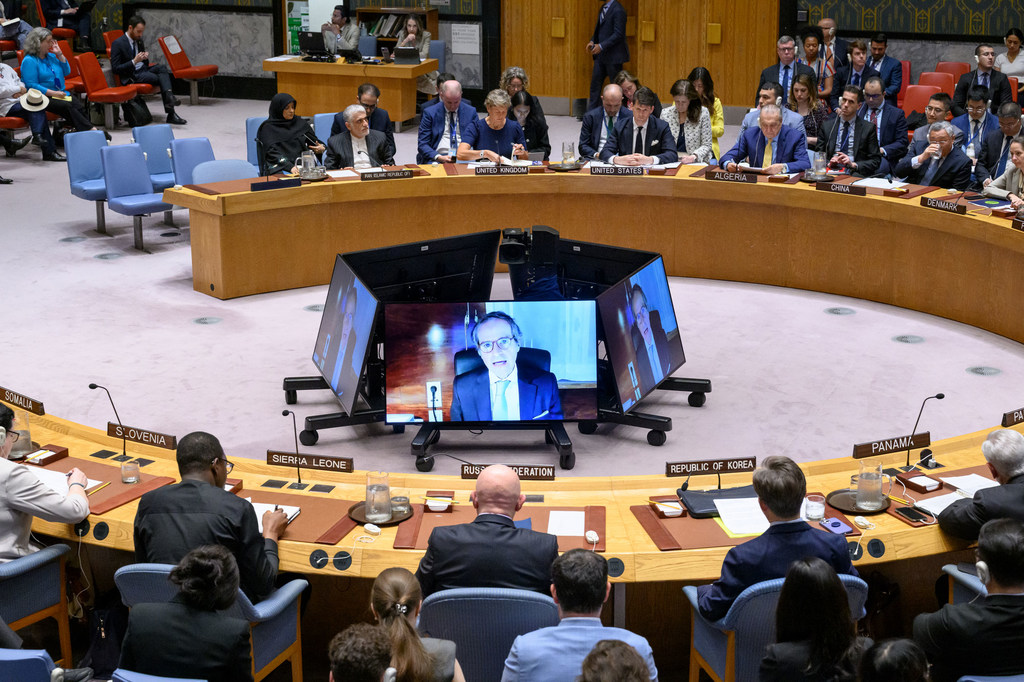
Rafael Grossi (on screen), Director General of the International Atomic Energy Agency (IAEA), briefs the UN Security Council meeting on Iran.

2. Reporting

The agency regularly reports to its Board of Governors on the nuclear activities of Iran (and other countries), using methods such as inspections, monitoring equipment, environmental sampling, and satellite imagery to gather data and prepare technical reports. In the case of countries under special scrutiny – such as Iran – these reports are typically issued every quarter.

If Iran – or any non-nuclear weapon country party to the NPT – fails to comply with the IAEA’s requirements (for example, by limiting access or not explaining the presence of uranium particles), the agency can report Iran to the UN Security Council, which may lead to diplomatic pressure, sanctions or calls for further negotiations.

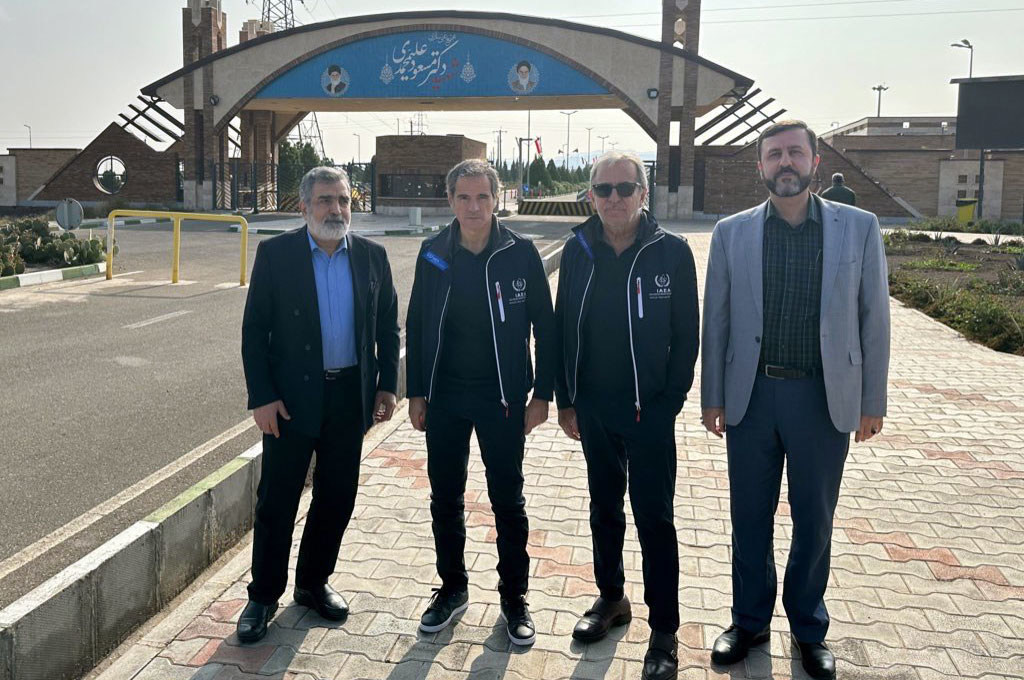
IAEA Director General Rafael Grossi (2nd left) visiting the Natanz and Fordow nuclear facilities.

3. Diplomatic engagement

The IAEA frequently calls for diplomatic solutions and emphasises the importance of dialogue to resolve concerns about Iran’s nuclear intentions. Director General Grossi has engaged directly with Iranian authorities and international stakeholders to maintain communication and transparency.

Addressing the Security Council on June 13, Mr. Grossi said that his agency was in constant contact with the Iranian Nuclear Regulatory Authority to assess the status of affected facilities and determine broader impacts on nuclear safety and security.

4. Safety and security oversight

This is a critical part of the IAEA’s broader mission to prevent nuclear accidents, ensure that nuclear energy is used for peaceful purposes, and protect people and the environment.

The IAEA works with the Iranian authorities to ensure that nuclear facilities like Natanz, Fordow, and Esfahan operate safely, by assessing the design and operation of the facilities, monitoring radiation protection measures, and evaluating emergency preparedness.

After the June 2025 Israeli strikes, the IAEA confirmed that Natanz had been impacted but reported no elevated radiation levels. However, it emphasised that any military attack on nuclear facilities is a violation of international law and poses serious risks to safety and the environment.

‘Misplaced, Misinformed, Unwarranted’: India Rebuffs US Remarks on CAA Implementation

India has rejected the US State Department’s “concerns” regarding the implementation of the Citizenship Amendment Act (CAA), and termed it as “misplaced, misinformed, and unwarranted.”

In a press briefing, Randhir Jaiswal, spokesperson for the Ministry of External Affairs, emphasized that the CAA primarily aims at granting citizenship rather than revoking it. Jaiswal dismissed critiques from those with limited comprehension of India’s diverse traditions and the historical context following partition.

Addressing concerns raised by the US State Department and others, Jaiswal reiterated that India views the criticism as unfounded. He urged international partners to acknowledge the goodwill underlying the enactment of the CAA, framing it as consistent with India’s inclusive ethos and enduring commitment to human rights.

The Citizenship Amendment Act 2019 provides refuge to persecuted minorities, including Hindus, Sikhs, Buddhists, Parsis, and Christians from Afghanistan, Pakistan, and Bangladesh, who arrived in India before December 31, 2014.

Jaiswal contended that there are no justifiable grounds for apprehension or mistreatment of minorities, cautioning against allowing political considerations to influence perceptions of a commendable initiative aiding distressed individuals.

India’s assertive response followed comments from US State Department Spokesperson Matthew Miller expressing concern over the notification of CAA rules and signaling close scrutiny of its implementation.

The Central government implemented the CAA on Monday, offering a pathway to citizenship for undocumented non-Muslim migrants from neighboring countries who entered India before December 31, 2014.

Critics argue that the law undermines the secular principles enshrined in the Indian Constitution by excluding Muslims from its provisions.

TikTok in-app browser on iOS monitoring keystrokes, taps: Cybersecurity researcher

Chinese short-form video app TikTok may be monitoring all keyboard inputs and taps via its in-app browser on iOS, said independent cyber-security researcher Felix Krause.

Founder of Fastlane that was acquired by Google, Krause said that when the user opens any link on the TikTok iOS app, it’s opened inside their in-app browser leveraging access to other information.

“While you are interacting with the website, TikTok subscribes to all keyboard inputs (including passwords, credit card info) and every tap on the screen, like which buttons and links you click,” Krause claimed in a blog post on Thursday.

From a technical perspective, it amounts to installing a keylogger on third-party websites and the company confirmed those features exist in the code but deneid that it was using them.

It proves that “TikTok injects code into third party websites through their in-app browsers that behaves like a keylogger. However, claims it’s not being used,” said the researcher. “This was an active choice the company made. This is a non-trivial engineering task. This does not happen by mistake or randomly.”

“Like other platforms, we use an in-app browser to provide an optimal user experience, but the Javascript code in question is used only for debugging, troubleshooting and performance monitoring of that experience – like checking how quickly a page loads or whether it crashes,” a company spokesperson was quoted as saying in a Forbes report.