New recombinant mpox strain detected in UK and India, WHO urges continued monitoring

WHO confirmed that two cases of the recombinant strain – combining genomic elements of clades Ib and IIb of the monkeypox virus (MPXV) – have been identified to date: one in the United Kingdom and one in India. Both patients had recent travel histories, and neither experienced severe illness.

No secondary cases were detected following contact tracing.

WHO has published a detailed update on the two cases and the national responses.

Recombination is a natural process that can occur when two related viruses infect the same person and exchange genetic material, producing a new variant.

According to WHO, detailed genomic analysis shows the two individuals “fell ill several weeks apart with the same recombinant strain,” suggesting that additional undetected cases may exist.

What is mpox?

Mpox is an infectious disease caused by the monkeypox virus (MPXV), part of the Orthopoxvirus genus, which also includes the virus that causes smallpox.

It spreads through close physical contact, including sexual contact, and in some cases through contaminated materials or respiratory droplets.

Symptoms typically include fever, swollen lymph nodes, and rash and/or lesions.

Click here for the WHO factsheet on mpox.

Two detected cases

The case in the United Kingdom was detected in December 2025 in a traveller returning from a country in the Asia Pacific region. Initial laboratory testing identified the virus as clade Ib, but whole genome sequencing later revealed that it contained genetic regions from both clade Ib and clade IIb strains. Repeat sequencing confirmed the findings and demonstrated that the virus “can replicate and presents potential for onward transmission.”

In India, a patient who developed symptoms in September 2025 was initially classified as infected with clade II MPXV. However, following updates to global genomic databases, the virus was reclassified as the same recombinant strain identified in the UK. The Indian case represents the earliest known detection of this strain.

“Due to the small number of cases found to date, conclusions about transmissibility or clinical characterization of mpox due to recombinant strains would be premature, and it remains essential to maintain vigilance regarding this development,” WHO said.

Clinical presentations in both cases were consistent with known mpox infections.

Risk assessment unchanged

WHO’s overall risk assessment remains unchanged: the risk is assessed as moderate for men who have sex with men with new and/or multiple partners and for sex workers or others with multiple casual sexual partners, and low for the general population without specific risk factors.

At the same time, WHO cautioned that clade differentiation PCR tests alone “may not reliably identify recombinant MPXV strains,” meaning genomic sequencing is essential for detection.

“All countries should remain alert to the possibility of MPXV genetic recombination,” WHO said, urging continued epidemiological surveillance, sequencing, vaccination of at-risk groups, and infection prevention and control measures.

WHO advised that no travel or trade restrictions are warranted based on current information.

Ukraine: Continued Russian assaults drive civilians from frontline communities

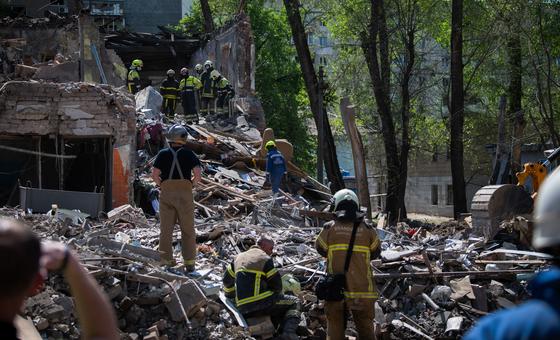
Attacks on frontline regions (are) increasing and it’s always civilians that are bearing the highest cost of the war,” said UNHCR Representative Karolina Lindholm Billing.

Since January, more than 3,500 newly displaced people have transited through a centre in Pavlohrad towards central Ukraine; in total, more than 200,000 people have been evacuated or displaced from frontline areas between August last year and the start of 2025.

Last to leave

Last month, more than 4,200 evacuees arrived at a transit centre in the northeastern city of Sumy where UNHCR and partners provide humanitarian support. These numbers are only a fraction of all those made homeless by the violence and mandatory evacuation orders issued by Kyiv in the face of ongoing Russian aggression.

The majority of those being moved are the elderly with low mobility or disabilities, families with few resources and children. In many cases, they stayed until the end because they didn’t want to leave everything they had behind, UNHCR said.

Cities and civilians targeted

On Thursday, UN aid agencies led condemnation of Russian missile-and-drone attack on Kyiv that killed 12 people and injured 84, one of a wave of attacks across the country that point to an intensification of the conflict since the start of the year – and growing humanitarian needs for refugees.

“Those deadly Russian attacks have intensified alarmingly since January,” said Ms. Billing, speaking to journalists in Geneva via videolink from Kyiv.

“More than 1,000 people have been directly affected as their homes have been damaged or completely destroyed. Civilian infrastructure were also hit in several other regions yesterday, including in Kharkiv, where I myself woke up around 2 am in the morning to the loud sound of explosions.”

According to the UN Human Rights Monitoring Mission in Ukraine, civilian casualties in Ukraine were 70 per cent higher in March this year compared to 12 months earlier.

Supporting lives and livelihoods

The war has left four million internally displaced since 24 February 2022 when Russian tanks rolled into Ukraine. Many of those uprooted have yet to find affordable housing and a new job – which is why support from humanitarian organizations is so crucial, the UNHCR official continued.

“One of the main things we deliver as part of the emergency response are emergency shelter materials that help people cover broken windows, roofs and doors,” Ms. Billing said.

Since 2022, UNHCR has supported around 450,000 people making repairs on their homes. The UN agency also provides psychological first aid and legal support to those who have lost their identity documents and emergency cash assistance to help people cover most basic needs.   

Funding impacts

But more support is needed to sustain a timely and predictable response to the many calls for assistance the agency receives from the affected people and the authorities.

Last year, US funding for UNHCR accounted for around 40 per cent of its overall contributions. For 2025, UNHCR has appealed for $803.5 million to address the emergency situation in Ukraine. Today, that appeal is just 25 per cent funded. During the winter period, the agency had to put some of its programmes partially on hold, impacting psychosocial support, emergency shelter material and cash assistance. 

Source link