Nuclear watchdog chief announces breakthrough on Iran monitoring

“Indispensable” monitoring by the International Atomic Energy Agency (IAEA) ended in June, agency chief Rafael Grossi said, when Israel and US-backed airstrikes targeted Iran’s nuclear power installations.

At the time, the Iranian authorities confirmed that the Natanz enrichment site had been “impacted” without affecting existing radiation levels, the top IAEA diplomat said.

Practical step forward

Now, “practical modalities” have been agreed to allow the resumption of inspection activities in Iran, Mr. Grossi told the agency’s board of governors in the Austrian capital. “This is an important step in the right direction,” he continued, before expressing his gratitude to Egypt for brokering the deal.

The development follows the 28 August announcement by France, Germany and the UK of their intention to reimpose UN sanctions on Iran within 30 days, under the so-called “snapback” mechanism contained in the Iranian nuclear agreement signed in July 2015 by the five permanent members of the UN Security Council, in addition to Germany, the EU and Iran.

Working in partnership

The new agreement – which was preceded by weeks of technical discussions in Tehran and Vienna over verification activities of “all facilities and installations in Iran”– came despite the decision by Iranian lawmakers on 25 June to suspend cooperation with IAEA, a move approved by the country’s President one week later.

At the time, Mr. Grossi noted that this domestic decision did not alter Iran’s international nuclear non-proliferation treaty (NPT) obligations.

Agreement remains in force

And earlier this week, he insisted that the NPT agreement remained in force as “the sole legally binding treaty governing the rights and obligations of the [IAEA] and Iran with respect to safeguards implementation in Iran”.

While acknowledging that his Iranian interlocutors had declared their willingness to remain part of the international non-proliferation movement, Mr. Grossi noted Tehran’s “concerns”.

Nonetheless, the deal – sealed by Mr. Grossi and Iranian Foreign Minister Abbas Aragchi in Cairo on Monday – “provides for a clear understanding of the procedures for inspection, notifications and their implementation”, he insisted.

The agreement also “contemplates” reporting on all facilities targeted by Israel and the US in June “including the nuclear material present” in Iran, the IAEA chief continued.

“These practical steps…need to be implemented now,” he insisted. “There may be difficulties and issues to be resolved for sure, but we now know what we have to do and the elements at our disposal for these basic understandings to be implemented.”

Source link

UN warns of ‘catastrophic hunger’ in Gaza as Israel announces humanitarian pauses

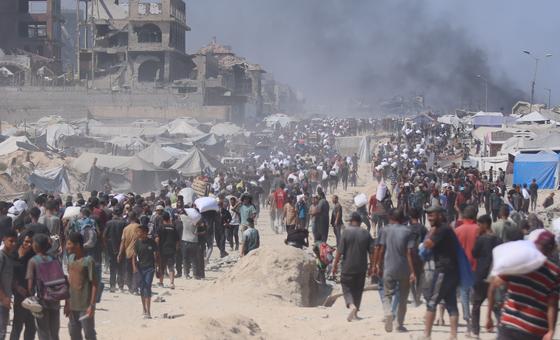
But as starvation tightens its grip and “children are dying before our eyes,” UN officials and aid workers warn that the measures fall far short of the much-needed ceasefire and unfettered aid access that could help stem the spiralling humanitarian catastrophe.

“Welcome announcement of humanitarian pauses in Gaza to allow our aid through,” UN Emergency Relief Coordinator Tom Fletcher said on X. “In contact with our teams on the ground who will do all we can to reach as many starving people as we can in this window.”

Also reacting via the platform, UNICEF said: “This is an opportunity to begin to reverse this catastrophe and save lives.”

According to the agency, since the collapse of the ceasefire between Israel and Hamas in March, children have been trapped in a nightmare and deprived of the basics to survive.

“The entire population of over two million people in Gaza is severely food insecure. One out of every three people has not eaten for days, and 80 per cent of all reported deaths by starvation are children,” the agency continued.

UNICEF emphasized that while it has never stopped delivering, “we can do a lot more if additional designated humanitarian corridors are created to facilitate the movement of our convoys – as well as commercial trucks, which are essential.”

‘A lifeline – if upheld and expanded’

The UN World Food Programme (WFP) also welcomed Israel’s announcement and its intent to open designated corridors for aid convoys in Gaza, “where hunger has reached catastrophic levels.”

With nearly half a million people facing famine-like conditions and a third of the population going days without food, WFP said in a press statement that the measures could offer a lifeline – if upheld and expanded.

Despite recent deliveries, including 350 truckloads last week, aid workers continue to face extreme risks and logistical hurdles. WFP said it has enough food stockpiled or en route to feed Gaza’s 2.1 million residents for three months, but without a ceasefire and consistent access, the scale of need far outpaces current efforts.

“An agreed ceasefire is the only way to reach everyone,” the agency stressed, calling for predictable and safe conditions to prevent further loss of life.

‘An entirely preventable crisis’

At the same time, the UN World Health Organization (WHO) warned that malnutrition in Gaza is spiralling out of control, with a sharp rise in deaths – most of them in July – marking what it calls a “dangerous trajectory.”

Of the 74 malnutrition-related deaths recorded this year, 63 occurred this month alone, including 24 children under five. Many died before reaching medical care, their bodies showing signs of severe wasting.

“This crisis is entirely preventable,” WHO said in a press release, citing the deliberate obstruction of aid for the mounting toll.

Children are bearing the brunt. Over 5,000 children have already been treated for malnutrition in July, many with the most life-threatening form. But Gaza’s four specialized treatment centers are overwhelmed, running low on fuel and supplies, and staffed by exhausted health workers.

“The health system is on the brink,” WHO warned, as disease spreads rapidly through communities with no clean water or sanitation.

The crisis is also devastating pregnant and breastfeeding women, over 40 per cent of whom are now severely malnourished. And it’s not just hunger that’s killing people—it’s the desperate search for food, according to WHO.

Since late May, more than 1,000 people have been killed and over 7,000 injured while trying to access aid. WHO is calling for an immediate ceasefire and a sustained surge of diverse, nutritious food and medical supplies.

“This flow must remain consistent and unhindered,” the agency said, urging protection for civilians, health workers, and humanitarian operations.

‘The world will judge this conference’

Looking ahead to the High-Level Conference on Palestine set to open on Monday at UN Headquarters in New York, the UN High Commissioner for Human Rights issued a strong call for immediate action to end Israel’s unlawful occupation and the ongoing devastation in Gaza.

“Countries that fail to use their leverage may be complicit in international crimes,” Volker Türk warned in a statement, urging governments to seize the moment for concrete measures that pressure Israel to halt the carnage and recommit to a two-state solution.

The UN rights chief described Gaza as a “dystopian landscape of deadly attacks and total destruction,” where children are starving and families are being killed in their search for food. The militarized aid distribution system, supported by the US and Israel, is failing to meet the scale of need.

“We can never forget that more than 300 of our own colleagues have been killed,” he added.

Moreover, in the occupied West Bank, violence by Israeli forces and settlers continues unabated, with homes demolished and water supplies cut off.

Mr. Türk reiterated condemnation of the 7 October attacks by Hamas but emphasized that the scale of suffering inflicted on Palestinians since then cannot be justified.

Calling for an immediate, permanent ceasefire, the release of hostages and detainees, and a massive surge in humanitarian aid, he concluded:

“The people of the world will judge this Conference on what it delivers.”

Source link

As funding cuts bite, UN chief announces new dawn for peacekeeping

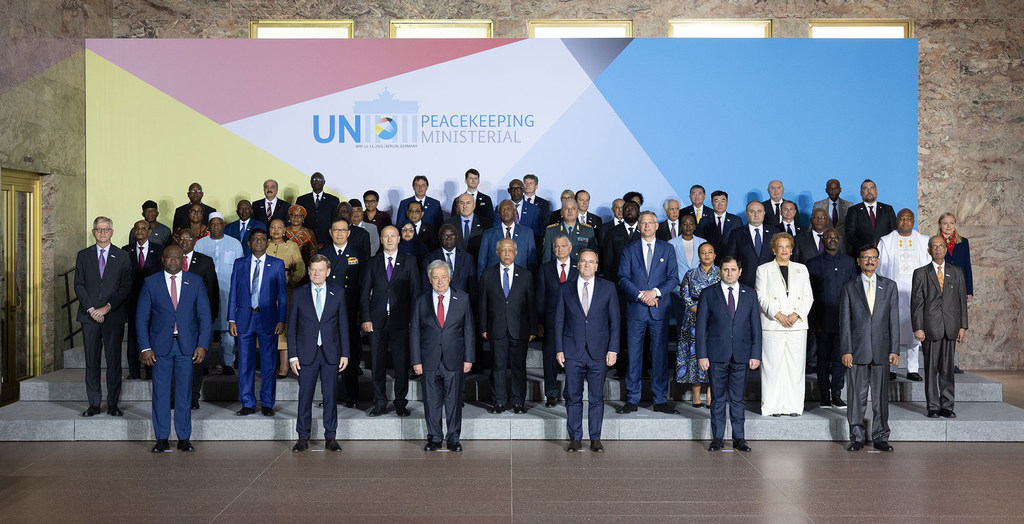
Addressing the UN Peacekeeping Ministerial 2025 in the German capital, the Secretary-General told dozens of ministers from more than 130 countries that peacekeepers remain key to “help countries move from conflict to peace.”

“In trouble spots around the world, blue helmets can mean the difference between life and death,” he insisted. “They are also a clear demonstration of the power of multilateral action to maintain, achieve and sustain peace.”

Despite the proven value of peacekeeping missions in ensuring a durable peace in countless countries from Cambodia to Liberia and Timor Leste, Mr. Guterres warned that today’s challenges have made this task much harder.

“We are now facing the highest number of conflicts since the founding of the United Nations and record numbers of people fleeing across borders in search of safety and refuge,” he said, before alluding to additional obstacles caused by an absence of political support for peacekeeping mandates.

The UN’s peacekeeping budget runs on a July-June cycle and has unpaid arrears of $2.7 billion.

Practical approach

To counter this and in the face of “dramatic financial constraints” now affecting the UN in its entirety, the Secretary-General announced an urgent review of operations to inspire a new peacekeeping model that is “fit for the future.”

In coming years, “a clear exit strategy” for peacekeepers will be key, Mr. Guterres said, as well as working with Member States and the Security Council “to ensure that any new mandates “are prioritized and achievable with the resources available.”

Other clues about what UN peacekeeping 2.0 could look like post-reform might be gleaned from the missions that the UN chief referred to in his speech in Germany.

Active missions such as UNIFIL in Lebanon have already shown that it is possible to adapt to today’s challenges while still ensuring peace and aid deliveries, Mr. Guterres noted.

And in a nod to MINUSCA in the Central African Republic, the Secretary-General highlighted its work in protecting civilians “and assisting the government to extend its reach beyond the capital where people are in desperate need.”

In the Democratic Republic of the Congo, too and despite ongoing fighting there, peacekeepers from MONUSCO also remain in the field and protect vulnerable populations, the UN chief maintained.

As Member States prepared to announce financial pledges for peacekeeping on Wednesday, Mr. Guterres stressed that the overall budget for missions represented only 0.5 per cent of global military spending.

Peacekeeping “is only as strong as Member States’ commitment to it,” stressed Mr. Guterres.

Amid massive cuts to UN funding by Member States, it remains to be seen if the upbeat mood in Berlin translates into desperately needed financial support for the global body’s peacekeeping operations.

“UN peacekeeping today is more vibrant than ever,” insisted Boris Pistorius, Minister of Defence of Germany. “It is and will remain a cornerstone of international stability. Let us commit to making it even more effective for the sake of those who depend on it.”

Cutbacks

The UN chief’s push to streamline the global body comes a day after his call to push ahead with major efficiency improvements and cost-cutting in response to the chronic liquidity crisis caused by Member States falling into arrears.

Important as these sweeping structural reforms are – with potential staff downsizing of up to 20 per cent – they are not the answer to the failure of some countries to pay the Organization to fulfil the mandates they have given it, Mr. Guterres insisted.

According to information provided by the UN Controller to the General Assembly’s Fifth Committee (Administrative and Budgetary), only $1.8 billion has been received against the $3.5 billion regular budget assessments for 2025 – a shortfall of around 50 per cent.

In the budget line for unpaid assessments these amounted to $2.4 billion on 30 April, with the United States owing about $1.5 billion, China $597 million, Russia $72 million, Saudi Arabia $42 million, Mexico $38 million and Venezuela $38 million. An additional $137 million has yet to be paid by other Member States.

For International Tribunals, total contributions outstanding totalled $79 million on 30 April.

© Bundeswehr/Jana Neumann

At the 2025 UN Peacekeeping Ministerial in Berlin, Secretary General António Guterres underscored the vital role of UN peacekeeping and urged Member States to help shape peace operations fit for the future.

Source link