
Haiti explained: why the crisis is deepening — and what comes next

Armed gangs control large swathes of territory and violence has spread well beyond the capital Port-au-Prince, weakening the State’s ability to govern and deliver basic services.

Presidential elections have not been held for a decade and humanitarian needs have reached unprecedented levels with millions struggling to meet their daily needs.

“Violence has intensified and expanded geographically, exacerbating food insecurity and instability, as transitional governance arrangements near expiry and overdue elections remain urgent,” according to the UN Secretary-General António Guterres in his latest report on the UN’s political mission in Haiti, BINUH.

A gang member poses with a high-calibre rifle in the Delmas 3 neighbourhood of Port-au-Prince.

Why Haiti matters

The crisis in Haiti is multifaceted. Gang control of urban zones and transport routes and increased activity in rural areas, are disrupting livelihoods and humanitarian access nationwide. 

Extreme weather events, including hurricanes, floods and droughts as well as devastating earthquakes have worsened the humanitarian situation and complicated the ability of the country to recover and develop.

The southern city of Les Cayes is flooded due to Hurricane Melissa in October 2025.

With more than one in ten Haitians having fled their homes due to violence, the country risks prolonged instability.

The displacement of people – including through migration – could heighten pressures on neighbouring countries and undermine regional economic and security stability.

“Gang violence affects communities nationwide, with particularly devastating consequences for women, children and youth, undermining the country’s social fabric over the long term.” António Guterres.

Security: Gangs, violence and the suppression force

Armed violence intensified in the last three months of 2025 and remains the dominant force shaping the daily life of Haitians. 

Gangs with heavy weapons, use sexual violence and kidnappings for ransom to assert control, while police operations – sometimes supported by the UN Security Council-backed Gang Suppression Force – have pushed back in limited areas opening some key routes. 

Despite some tactical gains, killings remain widespread, especially outside the capital, and reprisals against civilians continue.

“More than 8,100 killings were documented nationwide between January and November 2025. …Reports also indicated an increase in the trafficking in children, with children continuing to be used by gangs in multiple roles, including in violent attacks.” António Guterres

Politics: a transition facing a deadline

Haiti’s political transition is approaching a critical deadline. An electoral decree and calendar now point to the hope that elections will take place which will see the installation of an elected President and Legislature in early 2027. 

“The immediate need is for national stakeholder groups to find common ground on ways to end the transition and accelerate preparations for elections.” António Guterres


People cast their vote in elections in Haiti’s capital Port au Prince, in October 2015. (file)

Some observers question whether elections are feasible without significant security improvements.

Humanitarian needs: a system stretched to breaking point

Humanitarian conditions continue to deteriorate in Haiti as funding shortfalls are limiting the reach of life-saving assistance.

  • Food insecurity affects 5.7 million people, with nearly two million at emergency levels.
  • Displacement has doubled to 1.4 million people in one year.
  • Many health facilities are barely functioning and cholera has remained a “major public health concern.”
  • In the 2024-25 school year1,600 schools closed due to violence with 1.5 million lacking access to education.

“The humanitarian response remains severely under-resourced, and humanitarian access is increasingly challenging.” António Guterres

Many children in Haiti are struggling to maintain their studies.

Human rights: Women and girls at extreme risk

Women and girls are among the most affected by Haiti’s crisis. 

Gangs routinely use sexual violence, including collective rape, as a tool of intimidation and control. The reporting of incidents remains low due to fear and stigma, and access to survivor-centred services is limited, compounding trauma and impunity.

“I remain deeply concerned by the continued use of sexual violence by gangs, which terrorizes communities and systematically undermines the safety and dignity of women and girls.” António Guterres

What is the way forward?

The UN has continually emphasized that restoring security is essential, but it is not enough on its own. 

Without progress on governance, justice, accountability and social services, especially for youth, any security gains will be fragile. 

National consensus and sustained international support are critical to breaking the cycle of violence and instability.

“Security enforcement efforts alone will not be enough to address the broader governance problems that triggered the gang violence crisis.” António Guterres

How is the UN responding?

The United Nations is supporting Haiti in a number of ways. 

  • The political mission, BINUH provides human rights monitoring and electoral assistance and supports police development.
  • UN Humanitarian agencies deliver life-saving aid to the most vulnerable communities. The Humanitarian Response Plan for 2026 is seeking $880 million to assist 4.2 million people.
  • Preparations are under way for the recently-established United Nations Support Office in Haiti (UNSOH) to provide logistical and operational backing to the Gang Suppression Force.

Source link

Monitoring Iran and promoting peaceful nuclear use – IAEA role explained

The International Atomic Energy Agency (IAEA) dates back to 1957 and was set up in response to global fears following the first use of nuclear and atomic weapons and alarm over the advent and spread of nuclear technology. An autonomous part of the United Nations system, it works on issues as varied as food safety, cancer control and sustainable development – and also on promoting peaceful uses of nuclear energy.

Another principal responsibility, perhaps less well understood, is the  agency’s framework of nuclear ‘safeguards’ agreements. These agreements are voluntarily entered into by countries and are key to preventing the spread of nuclear weapons by independently verifying whether countries are meeting their non-proliferation commitments. As of 2024, some 182 countries have safeguards  agreements with the IAEA.

IAEA Director General Rafael Mariano Grossi delivers remarks on the military action launched by Israel which includes attacks on nuclear facilities in Iran.

In a June 9 address to the agency’s board, IAEA Director General Rafael Grossi laid out troubling findings, raising fresh concerns about Iran’s compliance with global nuclear agreements.

“Iran has repeatedly either not answered” IAEA requests “or not provided technically credible answers,” Mr. Grossi told the 35-nation board on Monday. Additionally, he said, Iran has sought to “sanitise the locations,” which the agency has now concluded were part of a “structured” nuclear programme in the early 2000s.

“Unless and until Iran assists the agency in resolving the outstanding safeguards issues, the Agency will not be in a position to provide assurance that Iran’s nuclear programme is exclusively peaceful,” he said.

Mr. Grossi expressed alarm at the rapid accumulation of over 400 kilogrammes of highly enriched uranium, which has serious implications (highly enriched uranium is one of the necessary components for the creation of a nuclear bomb).

The statement to the board underlined the significant role the IAEA plays in Iran, which can be broken down into four main areas.

1. Monitoring

The agency uses safeguard agreements under the Nuclear Non-Proliferation Treaty (NPT), a key international accord designed to prevent the spread of nuclear weapons. The vast majority of safeguards agreements are those that have been concluded by the IAEA with non-nuclear-weapon States. However, safeguards are implemented in three States that are not party to the NPT – India, Pakistan and Israel – on the basis of item-specific agreements they have concluded with the IAEA.

As a non-nuclear armed signatory to the treaty, Iran is banned from acquiring nuclear weapons and is required to allow the IAEA to inspect and verify all nuclear materials and activities, including at short notice, if asked.

The agency regularly inspects Iran’s nuclear facilities, including sites like Natanz, Fordow, and Isfahan. The aim is to ensure that nuclear materials are only used for peaceful means and are not diverted for weapons use.

On 9 June, Mr. Grossi noted that man-made uranium particles had been found at three more, undeclared sites (Varamin, Marivan and Turquzabad). Iran, he said, had failed to provide “technically credible explanations” for the presence of the particles, despite years of consultations.

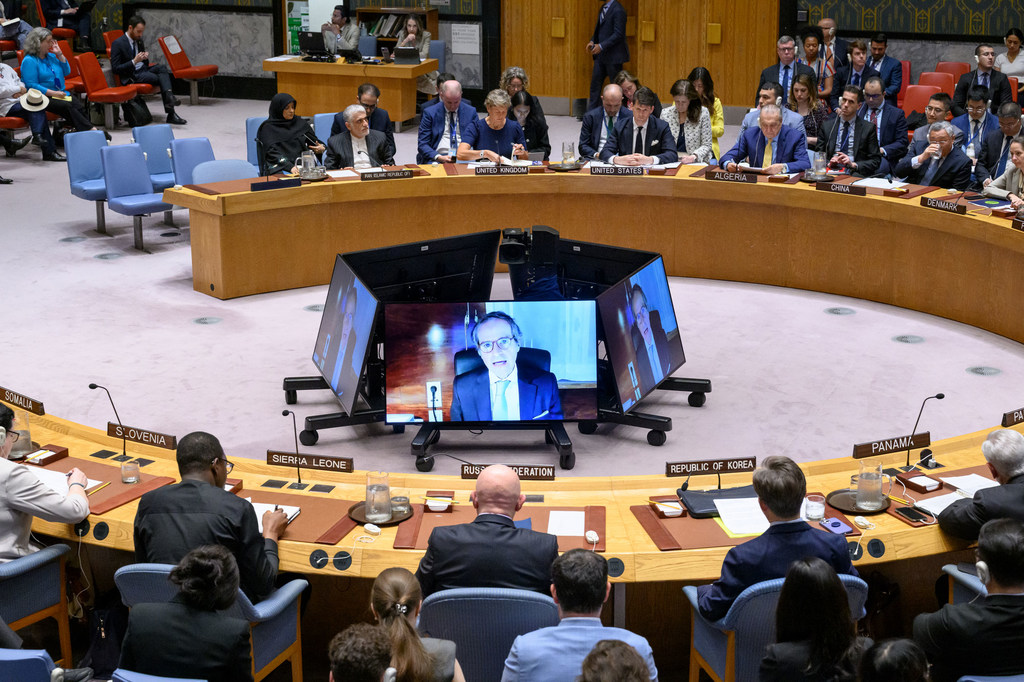
Rafael Grossi (on screen), Director General of the International Atomic Energy Agency (IAEA), briefs the UN Security Council meeting on Iran.

2. Reporting

The agency regularly reports to its Board of Governors on the nuclear activities of Iran (and other countries), using methods such as inspections, monitoring equipment, environmental sampling, and satellite imagery to gather data and prepare technical reports. In the case of countries under special scrutiny – such as Iran – these reports are typically issued every quarter.

If Iran – or any non-nuclear weapon country party to the NPT – fails to comply with the IAEA’s requirements (for example, by limiting access or not explaining the presence of uranium particles), the agency can report Iran to the UN Security Council, which may lead to diplomatic pressure, sanctions or calls for further negotiations.
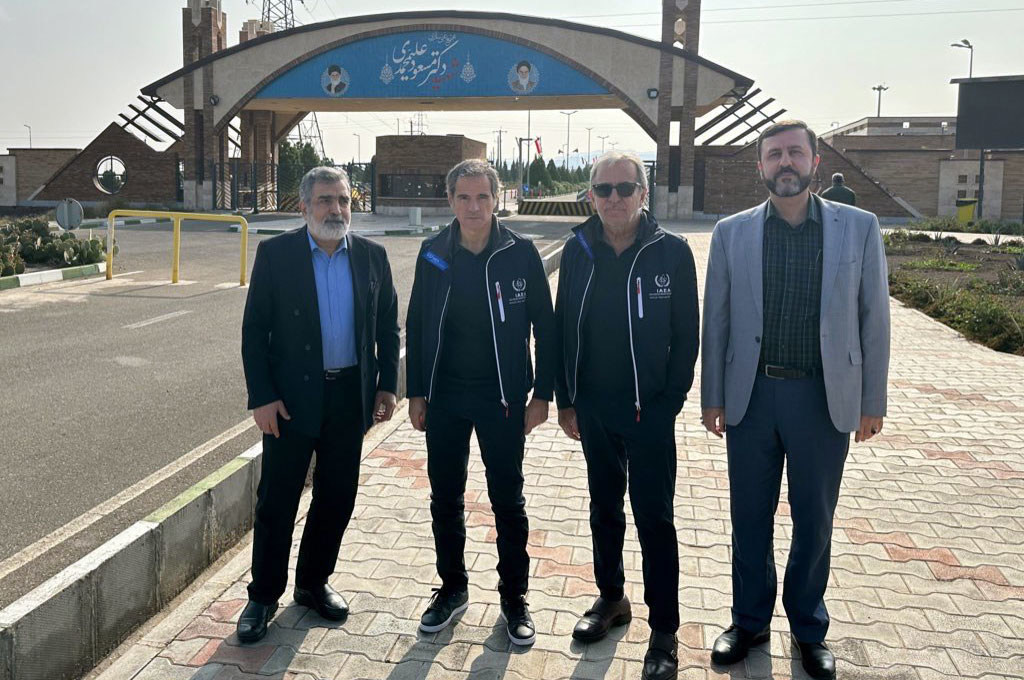
IAEA Director General Rafael Grossi (2nd left) visiting the Natanz and Fordow nuclear facilities.

3. Diplomatic engagement

The IAEA frequently calls for diplomatic solutions and emphasises the importance of dialogue to resolve concerns about Iran’s nuclear intentions. Director General Grossi has engaged directly with Iranian authorities and international stakeholders to maintain communication and transparency.

Addressing the Security Council on June 13, Mr. Grossi said that his agency was in constant contact with the Iranian Nuclear Regulatory Authority to assess the status of affected facilities and determine broader impacts on nuclear safety and security.

4. Safety and security oversight

This is a critical part of the IAEA’s broader mission to prevent nuclear accidents, ensure that nuclear energy is used for peaceful purposes, and protect people and the environment.

The IAEA works with the Iranian authorities to ensure that nuclear facilities like Natanz, Fordow, and Esfahan operate safely, by assessing the design and operation of the facilities, monitoring radiation protection measures, and evaluating emergency preparedness.

After the June 2025 Israeli strikes, the IAEA confirmed that Natanz had been impacted but reported no elevated radiation levels. However, it emphasised that any military attack on nuclear facilities is a violation of international law and poses serious risks to safety and the environment.