Gaza radio station re-opens, bringing voices from the rubble

While 23 local radio stations were operating in Gaza before the conflict erupted, they were all destroyed and ceased broadcasting, he told UN News.

“Today, we are the only radio station broadcasting on FM from within Gaza after this widespread destruction,” he said. “We hope that other local radio stations will resume broadcasting, thus allowing competition in providing media services to the people of the Gaza Strip.”

Ahead of World Radio Day, observed on 13 February, the resumption of broadcasting comes at a time when Gaza’s media infrastructure still faces significant challenges amid local and international calls to support journalism as part of broader recovery and reconstruction efforts in the sector.

A journalist works in the damaged office of Zaman 90.60 FM radio station in Gaza City.

Digging through the rubble

After a hiatus of nearly two years due to the war, some local radio stations in the Gaza Strip are transmitting again, in a move showing gradual efforts to revive the media landscape in the war-ravaged Strip – much of which has suffered widespread destruction of infrastructure and civilian institutions from Israeli attacks.

Zaman FM operates in the Tel al-Hawa neighbourhood of Gaza City, where Israeli attacks triggered a famine and left mountains of debris in the streets.

The cracked walls of the station’s building tell a story of immense destruction and the scene inside is unlike any other radio studio in the world. 

Employees dig through the rubble to keep the station broadcasting, working with minimal technical resources while behind them, awareness posters warn people of the dangers of dilapidated buildings.

On-air messages of hope

Local radio remains vital in Gaza as humanitarian crises persist, power outages continue and access to other media remains limited. This makes radio one of the most effective ways of getting key messages out to the public, along with health guidance and information about other services.

Gaza is in dire need of professional local radio stations capable of broadcasting awareness messages and guidance bulletins in light of the spread of diseases, the deterioration of the education system and the disruption of many basic services, said Mr. Al-Sharafi, director of the radio station and host of the morning programme, An Hour of Time.

“We need to deliver information to the population and guide them to the services that have stopped and are gradually being resumed,” he said, “especially in light of the difficult health conditions and the spread of epidemics.”

Amid the destruction all around, Mr. Al-Sharafi sits behind his dust-covered microphone and does just that. 

He sends morning greetings to Gaza residents and provides them with important information and updates, bringing some much-needed hope to the airwaves across a devastated landscape that has only just begun to recover.

Source link

First Person: Documenting despair and finding hope amidst the rubble of Gaza

Some 21 months have passed since the 7 October armed attacks on Israel which sparked the current brutal conflict.

Thousands have died and much of Gaza has been laid to waste, but life must continue, according to the correspondent, who is remaining anonymous for security reasons.

“Those who live here in Gaza don’t need long explanations to understand the meaning of this war.

It is enough to listen for a few minutes: Planes buzz incessantly overhead, and airstrikes silence everything except fear which, although invisible, fills every space between our tents and seeps into our bodies.

© UNICEF/Mohammed Nateel

A young boy is rescued after he was caught in an attack on a school shelter.

At night, there’s absolute darkness except for the flashes of bombing.

We sleep knowing that waking up is not guaranteed.

Every morning in Gaza is a new attempt to live, and every evening a challenge to survive. This is the harsh reality we live in.

I am one of more than two million Palestinians living under the burden of displacement. I document stories of war and despair while experiencing their full bitterness.

Since our home was destroyed in November 2023, the tent has become our safety. My family, once part of my private world, is now part of the stories I share with the world.

Here, life is simple and tragic.

Sleeping on the hard ground, cooking over firewood and the exhausting pursuit of a morsel of bread are no longer options, but a way of life imposed by the cruelty of war.

In the face of my eldest son, who is not yet 14, I see a reflection of a war that has stolen his childhood and imposed burdens on him greater than his years.

He has become an expert at water distribution routes, haggling for bread and carrying heavy gallons of water. I feel boundless pride in his courage, yet simultaneously a painful sense of powerlessness because I can’t protect him from what’s happening around us.

Oasis of hope

My wife is trying to create an oasis of hope for our other children. My two eldest daughters continue to learn online when the internet is intermittently working and to read whatever books are available.

My youngest daughter draws on worn pieces of cardboard while my youngest son, who is four, has no memory of anything other than the sound of explosions.

We stand helpless in the face of his innocent questions. There are no schools, no education, only desperate attempts to keep the brightness of childhood alive in them, in the face of a brutal reality.

More than 625,000 children in Gaza have been deprived of an education.

This is due to the destruction of schools and the lack of a safe environment in which to learn.

The future of an entire generation is threatened.

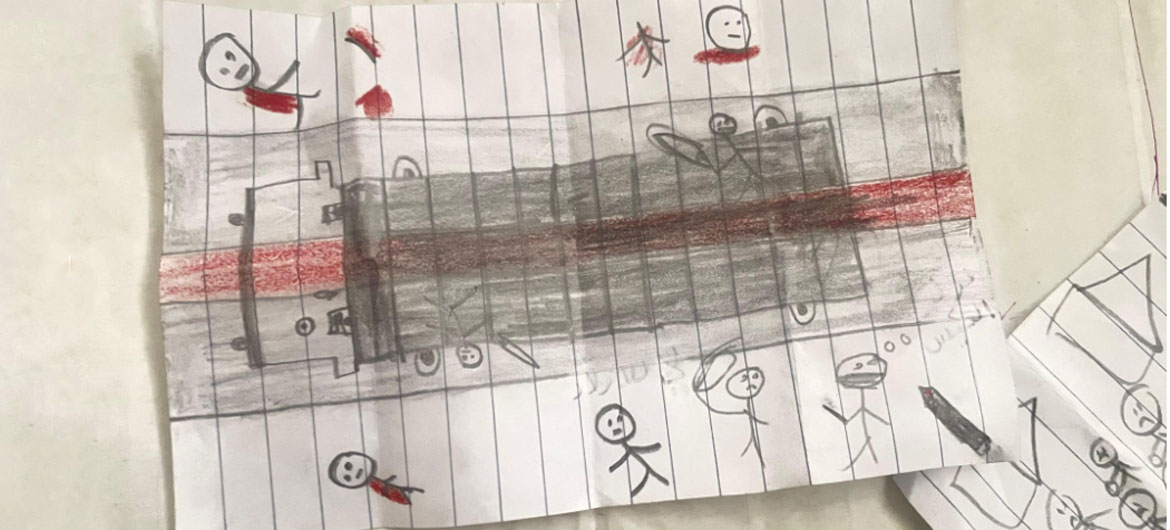
A drawing depicts people dying as they try to access food from a truck in Gaza.

Bearing witness

I work alongside other journalists. We wander between hospitals, streets and shelters.

We carry our journalistic equipment not only to document events, but also to be a voice for those whose voices have been silenced.

We film a child suffering from severe malnutrition, listen to the story of a man who has lost everything and witness the tears of a woman unable to provide food for her children.

We document a scene which is repeated daily: Thousands of people rush to reach a flour truck. They run after the trucks, collecting the last grains of flour from the ground.

They don’t care about danger as the hope of getting their hands on a loaf of bread is more precious than life.

Each time, casualties fall along the convoys’ routes and militarised distribution points.

We walk the streets, alert to every sound, as if we’re waiting for the end with every turn we make.

There’s no longer time for surprises or sadness, only constant tension and anxiety that has become part of the survivors’ DNA here.

This is the reality that cameras don’t capture, but it is the daily truth we try to explain to the world.
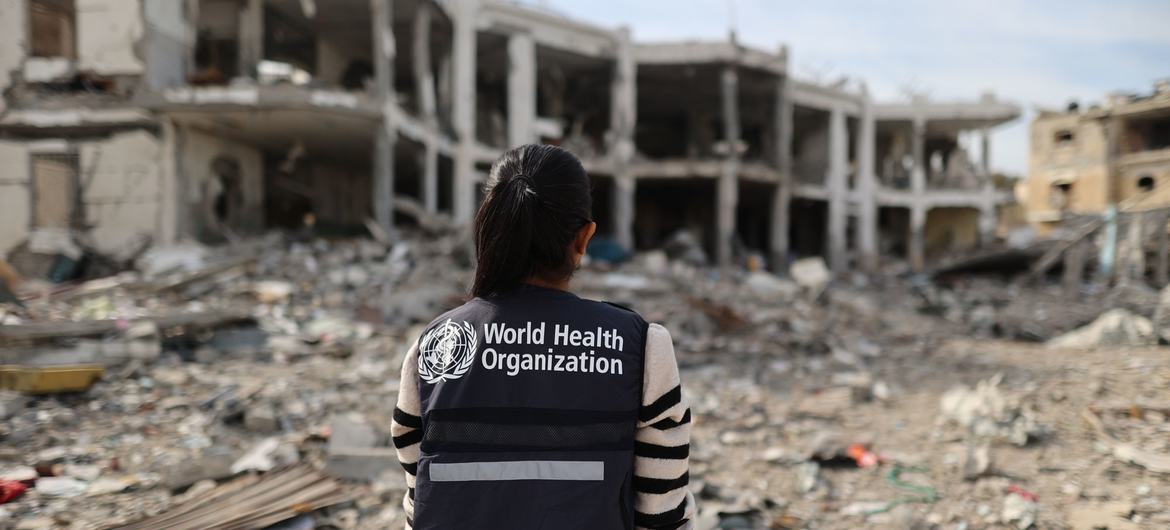
A WHO worker assesses a destroyed hospital in northern Gaza.

Tears of UN colleagues

We document the efforts of the United Nations and its various organizations.

I see staff sleeping in their cars to be closer to the crossings, and I see our UN colleagues crying as they listen to the stories of my fellow Gazans.

There is not enough aid. The crossings open and close abruptly, and some areas are deprived of supplies for days.

The western areas of Gaza City are overcrowded. Tents are spread out on every corner, on the sidewalks and among the rubble of destroyed homes, in dire conditions.

Empty markets

The value of the local currency has evaporated. Those with money in their bank accounts pay fees of up to 50 per cent to withdraw it, only to find themselves facing nearly empty markets. Whatever is available is being sold at exorbitant prices.

Vegetables are scarce, and when available, a kilogramme can cost more than $30. Fruit and meat are a distant memory.

The health system is in a state of complete collapse as 85 per cent of Gaza’s hospitals are no longer functioning and most dialysis and chemotherapy services have stopped.

Medications for chronic diseases are unavailable. I am unable to secure medicine for my parents, who suffer from diabetes and high blood pressure, and there is no hope of surgery which could save my brother’s arm, which was injured in an airstrike.
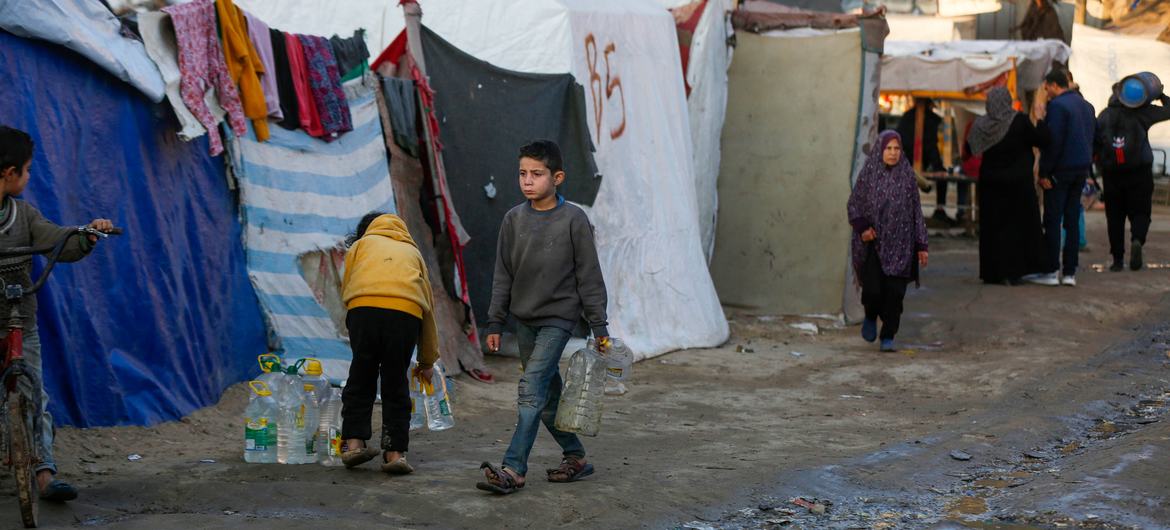
A young boy carries a water bottle through an area where people are living in tents.

Witness to everything

Sometimes, I feel caught between two identities, the journalist documenting the suffering and the human experiencing it.

But, perhaps this is where the strength of our journalistic mission from the Gaza Strip lies: to be a voice from the heart of the tragedy, to convey to the world the reality of what is happening on a daily basis.

Every day in Gaza poses a new question:

Will we survive?

Will our children return from their search for water?

Will the war end?

Will the crossings be opened so aid can be delivered?

From here, we will continue, because untold stories die and because every child, woman and man in Gaza deserves to have their voice heard.

I am a journalist.

I am a father.

I am displaced.

And I am a witness to everything.
Dreams amid the rubble: Gaza’s women speak of homes, loss and hungry children

In Gaza City, families living in tents reveal a shared, grim reality.

Many have been forced to flee the fighting dozens of times. Most find themselves homeless and hungry while facing an uncertain future.

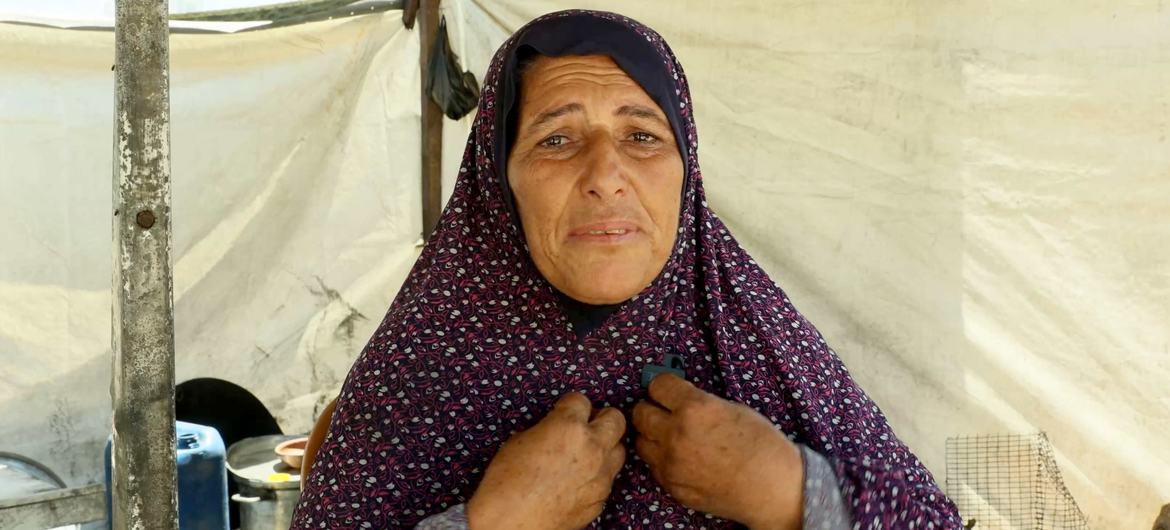
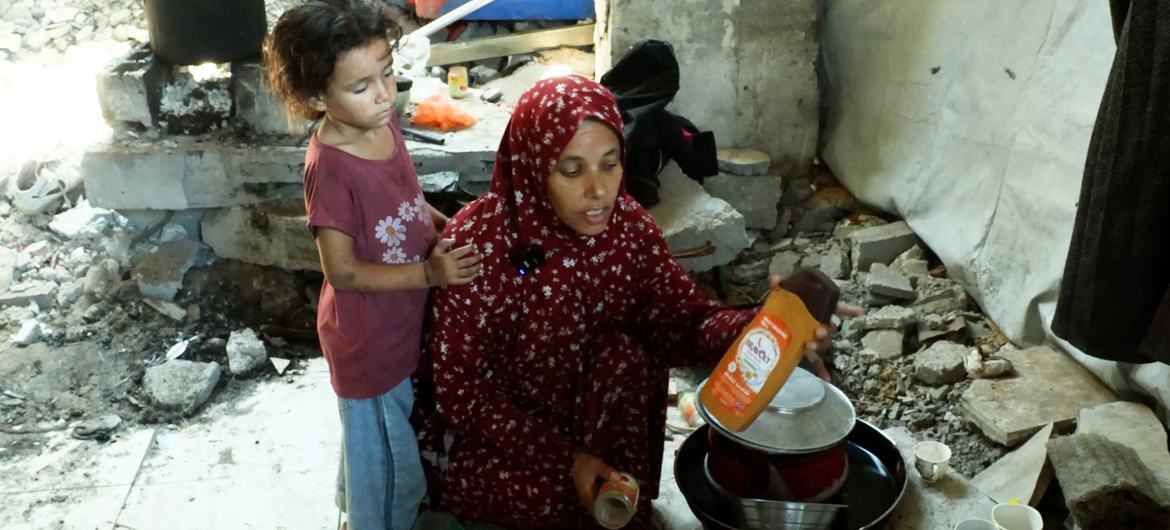
Khadija Manoun and her daughter in the space she uses as a kitchen inside a destroyed building.

Khadija Manoun: Kitchen of life’s leftovers

Khadija Manoun said she and her family have moved more than 20 times, from Jabalia in the northern Gaza Strip to a destroyed building in western Gaza, in search of shelter. She had owned a new fully furnished house, which she had built with a bank loan.

“I furnished my house well, with tiles and electrical appliances,” she said. “It had only been three years since I had the house. Then the war came and everything was lost.”

Today, everything has changed, Ms. Manoun said. Her spacious, fully equipped kitchen is now just a corner in the rubble, where a solitary soap dish borrowed from a neighbour sits. Metal utensils have been replaced with plastic tea containers to serve 10 people.

The bathroom was reduced to a corner covered with pieces of cloth that had been blankets. Her dressing room is now home to tattered suitcases.

“This is now my closet where I put everything,” she said. “I had a bedroom that had cost me 10,000 shekels.”

Her family sleeps on simple mattresses. Clean drinking water is a luxury that Khadija chases after, running between trucks, often returning with empty containers.

Amid all this, she sometimes reminisces, scrolling through photos on her mobile phone of her old home and the meals they used to eat.

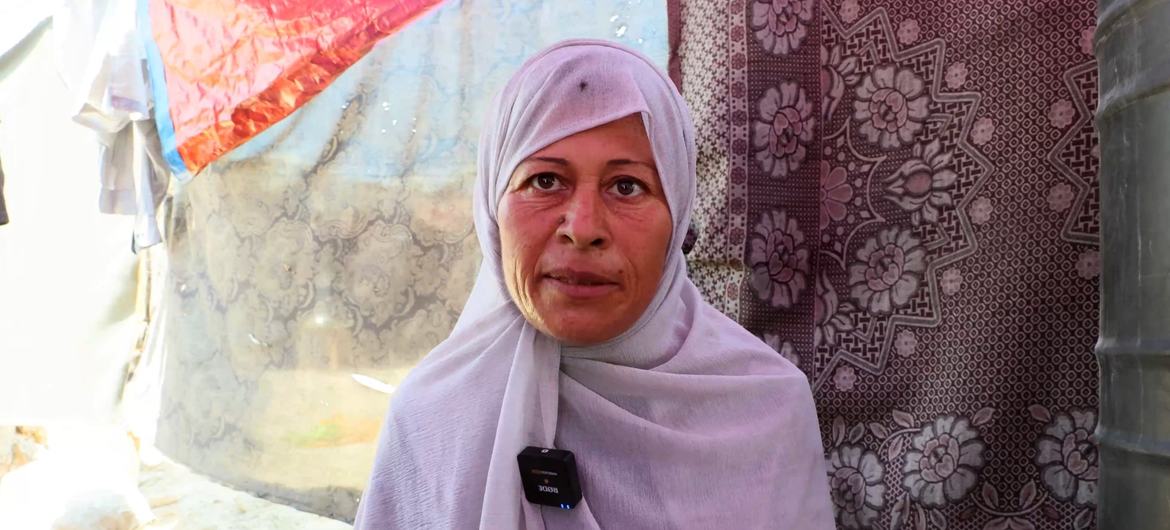
Badriya Barrawi, a displaced person in Gaza, is living among the ruins of destroyed buildings.

Badriya Barawi: Exhausted by hunger

In her modest tent on the beach west of Gaza City, Badriya Barawi, from Beit Lahia, sits, arranging what remains of her life. Tears stream from her eyes.

“Have mercy on us,” she said. “We are fed up and exhausted, mentally and physically. We can’t bear it any longer. How long will this life go on?”

She says her children are crying from the heat and hunger.

“We haven’t had bread for three days. This morning, I fed the children hummus, but is that enough for their stomachs?” said Ms. Barawi, who suffers from high blood pressure and diabetes.

She said she collapses daily from a lack of food.

Hiyam Zayed is displaced from Beit Lahia in the northern Gaza Strip.

Hiyam Zayed: Trampled garden of dreams

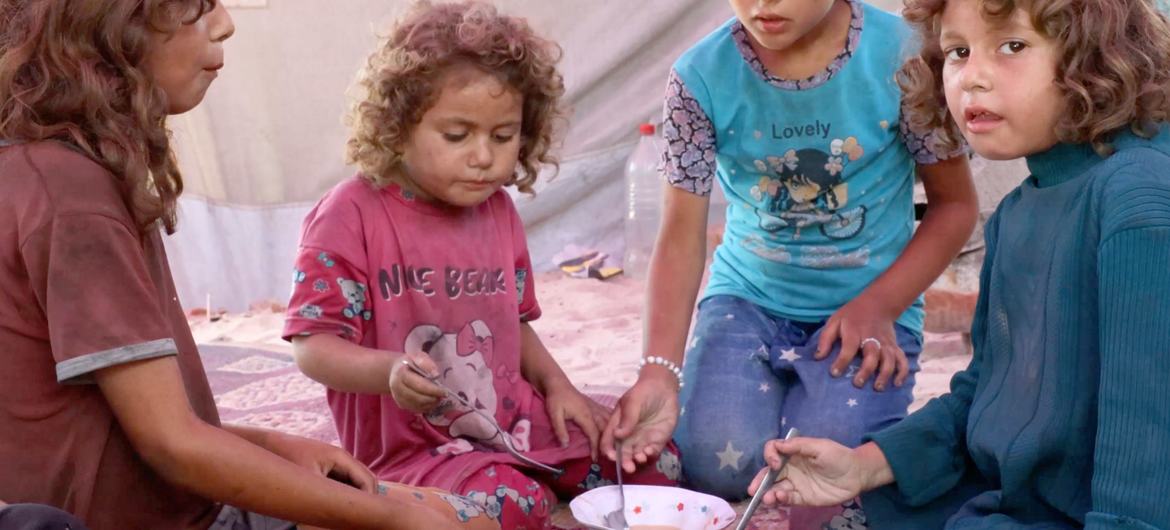
In a nearby tent, Hiyam Zayed and her eight daughters eat lentil soup without bread. Describing her former home, she said there were six rooms and a garden.

“I was happy in my home,” she said. “My daughters and I used to have fun there. They played on the roof or inside the rooms. We had a beautiful garden in front of the house, and we grew plants and ate its produce and raised chickens. My daughters were very happy. We fed them the best food and dressed them in the best clothes.”

She also said she used to have a washing machine, a fully equipped kitchen and a refrigerator “full of goodies”.

Now, everything is gone.

“No food, no washing machine, no feelings: we’ve become depressed,” she added.

“My daughters wear the worst clothes. I can’t find a way to bathe them. I used to turn on the water tap at home and water would run for drinking or bathing. Now, we live in a tent in the sand. I light a fire to cook after I used to have gas. I borrow cooking utensils.”

“How are we to blame for what happened, and who bears responsibility?” Ms. Zayed asked. “What is my fault and my children’s fault when we are displaced from one place to another and they die of hunger?”

Hiyam’s daughters eating a lunch of lentil soup, without bread, where they live, inside a destroyed building.

Mass displacement

According to UN reports, more than two million Palestinians –the population of Gaza – live in about 15 per cent of the Strip’s area after the war caused widespread destruction of infrastructure and homes.

International organizations have warned that the continuation of the conflict threatens to have “catastrophic consequences” in the near term.

That includes a serious impact on children’s mental and physical health, the spread of disease and the disintegration of social structures.

This amid the absence of any clear path towards a political or humanitarian solution.

Source link