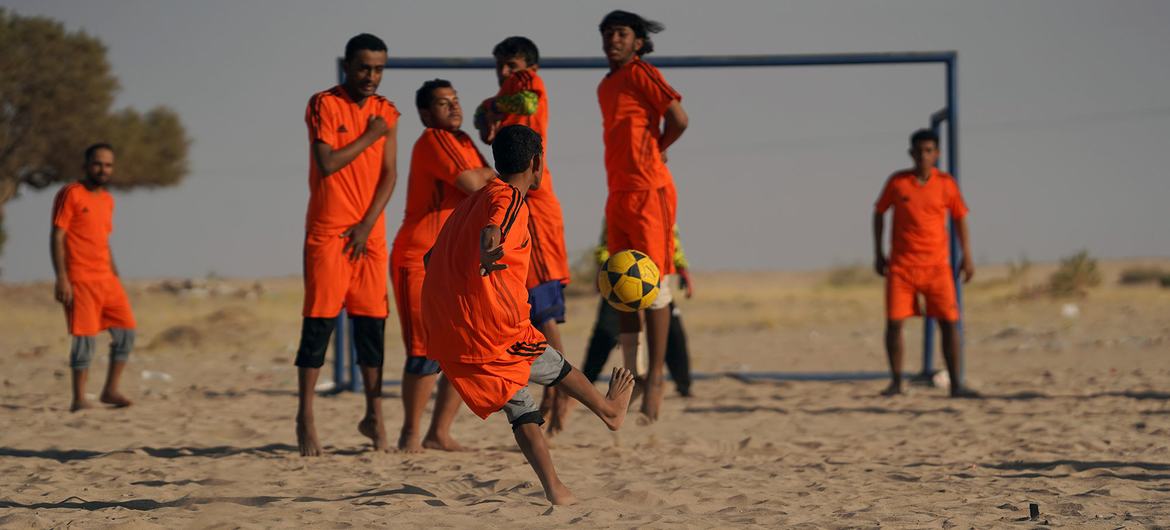
In Gaza City, families living in tents reveal a shared, grim reality.
Many have been forced to flee the fighting dozens of times. Most find themselves homeless and hungry while facing an uncertain future.

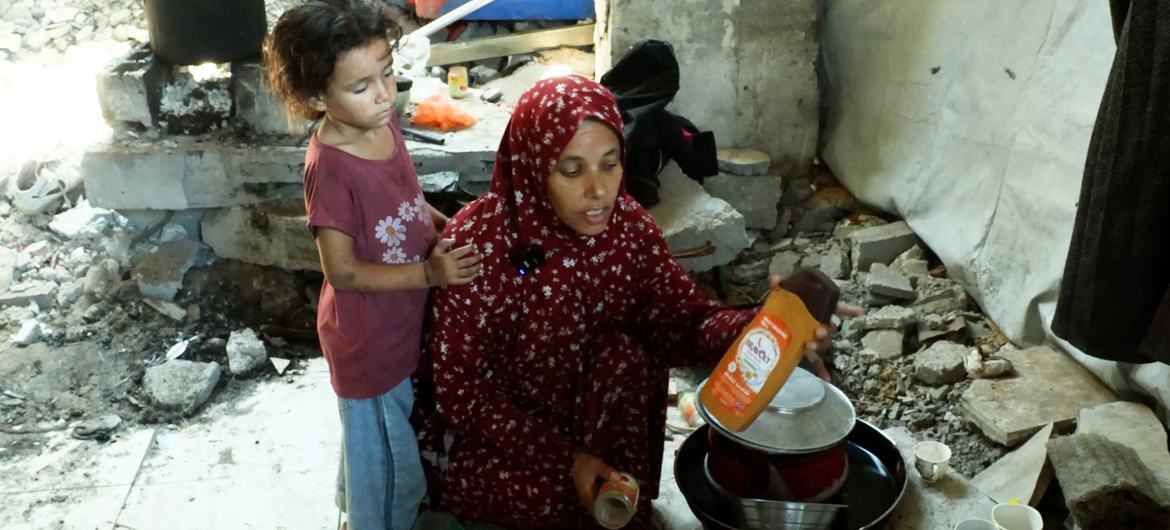
Khadija Manoun and her daughter in the space she uses as a kitchen inside a destroyed building.
Khadija Manoun: Kitchen of life’s leftovers
Khadija Manoun said she and her family have moved more than 20 times, from Jabalia in the northern Gaza Strip to a destroyed building in western Gaza, in search of shelter. She had owned a new fully furnished house, which she had built with a bank loan.
“I furnished my house well, with tiles and electrical appliances,” she said. “It had only been three years since I had the house. Then the war came and everything was lost.”
Today, everything has changed, Ms. Manoun said. Her spacious, fully equipped kitchen is now just a corner in the rubble, where a solitary soap dish borrowed from a neighbour sits. Metal utensils have been replaced with plastic tea containers to serve 10 people.
The bathroom was reduced to a corner covered with pieces of cloth that had been blankets. Her dressing room is now home to tattered suitcases.
“This is now my closet where I put everything,” she said. “I had a bedroom that had cost me 10,000 shekels.”
Her family sleeps on simple mattresses. Clean drinking water is a luxury that Khadija chases after, running between trucks, often returning with empty containers.
Amid all this, she sometimes reminisces, scrolling through photos on her mobile phone of her old home and the meals they used to eat.
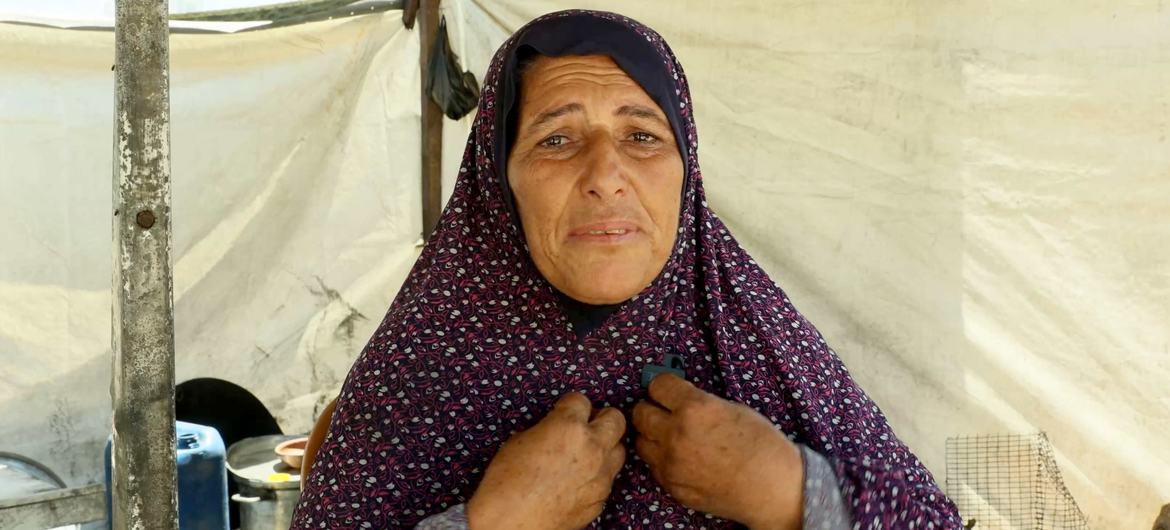
Badriya Barrawi, a displaced person in Gaza, is living among the ruins of destroyed buildings.
Badriya Barawi: Exhausted by hunger
In her modest tent on the beach west of Gaza City, Badriya Barawi, from Beit Lahia, sits, arranging what remains of her life. Tears stream from her eyes.
“Have mercy on us,” she said. “We are fed up and exhausted, mentally and physically. We can’t bear it any longer. How long will this life go on?”
She says her children are crying from the heat and hunger.
“We haven’t had bread for three days. This morning, I fed the children hummus, but is that enough for their stomachs?” said Ms. Barawi, who suffers from high blood pressure and diabetes.
She said she collapses daily from a lack of food.
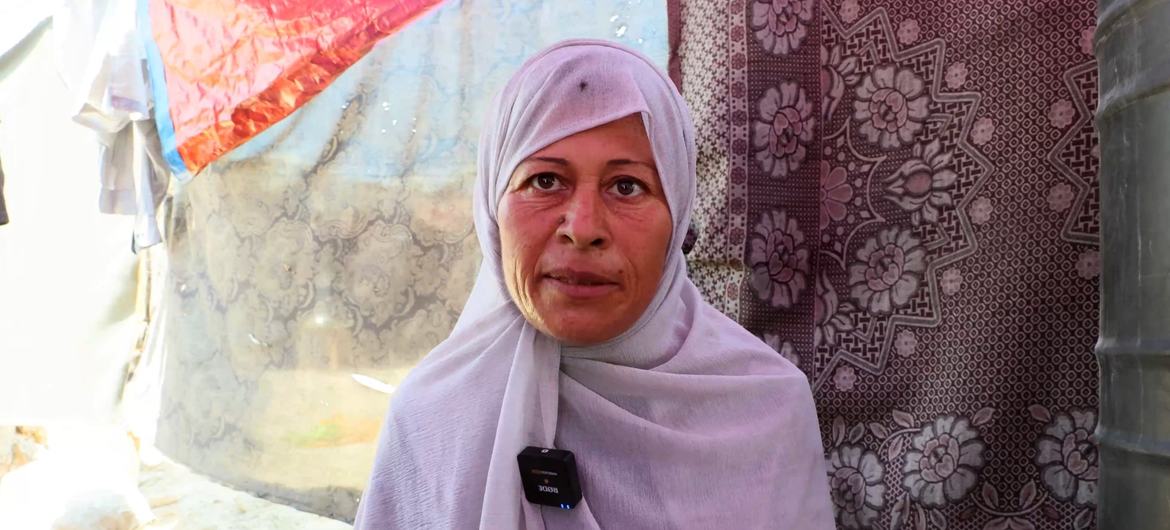
Hiyam Zayed is displaced from Beit Lahia in the northern Gaza Strip.
Hiyam Zayed: Trampled garden of dreams
In a nearby tent, Hiyam Zayed and her eight daughters eat lentil soup without bread. Describing her former home, she said there were six rooms and a garden.
“I was happy in my home,” she said. “My daughters and I used to have fun there. They played on the roof or inside the rooms. We had a beautiful garden in front of the house, and we grew plants and ate its produce and raised chickens. My daughters were very happy. We fed them the best food and dressed them in the best clothes.”
She also said she used to have a washing machine, a fully equipped kitchen and a refrigerator “full of goodies”.
Now, everything is gone.
“No food, no washing machine, no feelings: we’ve become depressed,” she added.
“My daughters wear the worst clothes. I can’t find a way to bathe them. I used to turn on the water tap at home and water would run for drinking or bathing. Now, we live in a tent in the sand. I light a fire to cook after I used to have gas. I borrow cooking utensils.”
“How are we to blame for what happened, and who bears responsibility?” Ms. Zayed asked. “What is my fault and my children’s fault when we are displaced from one place to another and they die of hunger?”
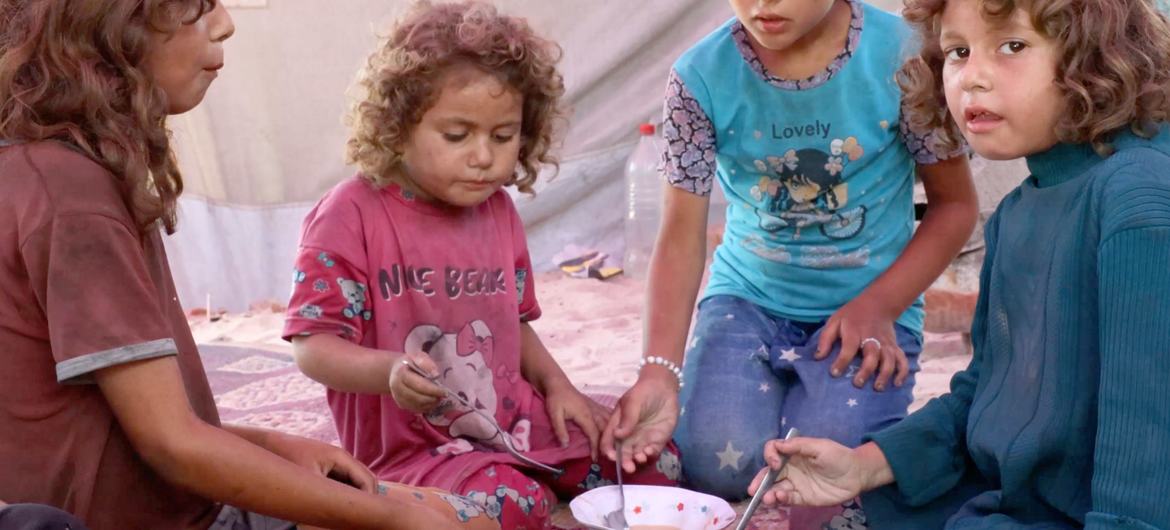
Hiyam’s daughters eating a lunch of lentil soup, without bread, where they live, inside a destroyed building.
Mass displacement
According to UN reports, more than two million Palestinians –the population of Gaza – live in about 15 per cent of the Strip’s area after the war caused widespread destruction of infrastructure and homes.
International organizations have warned that the continuation of the conflict threatens to have “catastrophic consequences” in the near term.
That includes a serious impact on children’s mental and physical health, the spread of disease and the disintegration of social structures.
This amid the absence of any clear path towards a political or humanitarian solution.