Gaza radio station re-opens, bringing voices from the rubble

While 23 local radio stations were operating in Gaza before the conflict erupted, they were all destroyed and ceased broadcasting, he told UN News.

“Today, we are the only radio station broadcasting on FM from within Gaza after this widespread destruction,” he said. “We hope that other local radio stations will resume broadcasting, thus allowing competition in providing media services to the people of the Gaza Strip.”

Ahead of World Radio Day, observed on 13 February, the resumption of broadcasting comes at a time when Gaza’s media infrastructure still faces significant challenges amid local and international calls to support journalism as part of broader recovery and reconstruction efforts in the sector.

A journalist works in the damaged office of Zaman 90.60 FM radio station in Gaza City.

Digging through the rubble

After a hiatus of nearly two years due to the war, some local radio stations in the Gaza Strip are transmitting again, in a move showing gradual efforts to revive the media landscape in the war-ravaged Strip – much of which has suffered widespread destruction of infrastructure and civilian institutions from Israeli attacks.

Zaman FM operates in the Tel al-Hawa neighbourhood of Gaza City, where Israeli attacks triggered a famine and left mountains of debris in the streets.

The cracked walls of the station’s building tell a story of immense destruction and the scene inside is unlike any other radio studio in the world. 

Employees dig through the rubble to keep the station broadcasting, working with minimal technical resources while behind them, awareness posters warn people of the dangers of dilapidated buildings.

On-air messages of hope

Local radio remains vital in Gaza as humanitarian crises persist, power outages continue and access to other media remains limited. This makes radio one of the most effective ways of getting key messages out to the public, along with health guidance and information about other services.

Gaza is in dire need of professional local radio stations capable of broadcasting awareness messages and guidance bulletins in light of the spread of diseases, the deterioration of the education system and the disruption of many basic services, said Mr. Al-Sharafi, director of the radio station and host of the morning programme, An Hour of Time.

“We need to deliver information to the population and guide them to the services that have stopped and are gradually being resumed,” he said, “especially in light of the difficult health conditions and the spread of epidemics.”

Amid the destruction all around, Mr. Al-Sharafi sits behind his dust-covered microphone and does just that. 

He sends morning greetings to Gaza residents and provides them with important information and updates, bringing some much-needed hope to the airwaves across a devastated landscape that has only just begun to recover.

Source link

World News in Brief: Child deaths in Pakistan, Ukrainian rail station attack, new UN-India development partnership

The children picked up the unexploded ordnance in a nearby field, mistaking it for a toy, and brought it back to their village where it later detonated, UNICEF said.

The ordnance is likely one of the many unexploded shells left over from the military clashes between Pakistan and India in May, according to news reports.

Extending condolences to those affected, the agency stressed that “no child should fall victim to landmines or unexploded ordnance.”

The organization denounced the presence of explosive remnants of war, as they continue to pose deadly risks to children and communities in conflict zones – and former conflict areas – worldwide. 

Ordnance risk education

Since January, UNICEF has collaborated with the Government to educate 9,500 children on the risks posed by leftover munitions in the Khyber Pakhtunkhwa province.

The agency called on Pakistan to increase support for lifesaving explosive ordnance risk education.  

Five dead in attack on Ukrainian rail station

Amid a wave of record civilian casualties, an overnight strike early Tuesday on a railway station in the city of Lozova, in Ukraine’s frontline Kharkiv region, killed five civilians and workers, injuring several others.

According to a social media post from the UN humanitarian aid agency (OCHA) in Ukraine, the railway station was heavily damaged, and surrounding homes were also affected.

According to news reports, the attack triggered fires across the city and disrupted rail traffic in Lozova, a strategically important transport hub.

Emergency assistance is ongoing, with aid workers on site providing emergency repair materials and psychological support.

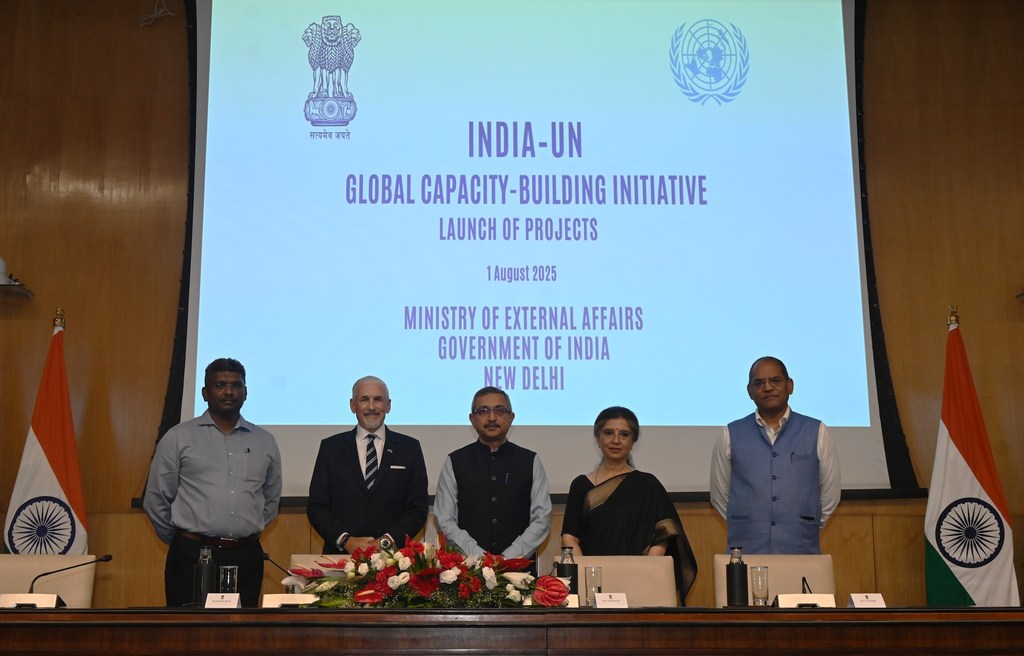
UN-India partnership launches SDG projects across Global South

At Tuesday’s daily press briefing in New York, UN Deputy Spokesperson Farhan Haq highlighted the launch of a new UN-India partnership to facilitate cooperation across the Global South and advance the Sustainable Development Goals (SDGs).

The UN-India Global Capacity-Building Initiative, will showcase successful innovations to countries across the Global South, tailored to national priorities.

The Gates Foundation and the Indian Technical and Economic Cooperation (ITEC) programme are also supporting the projects, which will be implemented with national partners in the Caribbean, Laos, Nepal, South Sudan and Zambia.

The projects aim to enhance digital health, food security, census preparedness and vocational skills training.  

India and UN join forces for South-South Cooperation to accelerate the SDGs.

Source link