The night the mountains shook: A doctor on the front lines of Afghanistan’s earthquake

At his home in Jalalabad, roughly 50 kilometres away from the epicentre, Dr. Sahak and his wife stormed out of their bedroom to find their eight children already in the hallway.

“I immediately thought about Herat,” the Afghan physician in his late forties told me, referring to the earthquakes that devastated the country’s western province in 2023. “I could tell that the impact would be huge as well.”

A native of the Jalalabad area, he knew first-hand what this new disaster would mean for the country’s northeast, where extended families all live under the same roof in remote, hard-to-reach locations.

Within seconds, their homes built of mud and loose stones would crumble. Roads would disappear under the rubble. Families would be buried alive as they slept.

The first calls

Dr. Sahak, who leads the local World Health Organization (WHO) emergency office, immediately turned to his health-cluster WhatsApp group, a thread that links hospitals, clinics and aid organisations across the region.

Reports began trickling in from Asadabad, the capital of neighboring Kunar Province, the hardest-hit area along the Pakistani border. There, the quake had been felt very strongly, the city’s main hospital informed him. Some residents would likely be injured.

By 1am, the calls grew more urgent: “We received multiple injuries from different areas and the situation is not good. If possible, provide us with support!”

Racing the monsoon

Dr. Sahak asked his WHO team to meet him at the organization’s warehouse in Jalalabad. As he and his colleagues drove through the dark, rain began to fall – the monsoon that would complicate everything, from helicopter landings to ambulance runs, in the first hours of the response.

Soon, the aid pipeline clicked into place. A truck was loaded with medical supplies at WHO’s depot, then transferred at Jalalabad’s airport, five kilometres away, before a Defence Ministry helicopter lifted pallets toward Nurgal District – the epicentre of the earthquake, midway between Asadabad and Jalalabad.

“Fortunately, we were able to quickly reach the most affected area,” Dr. Sahak said.

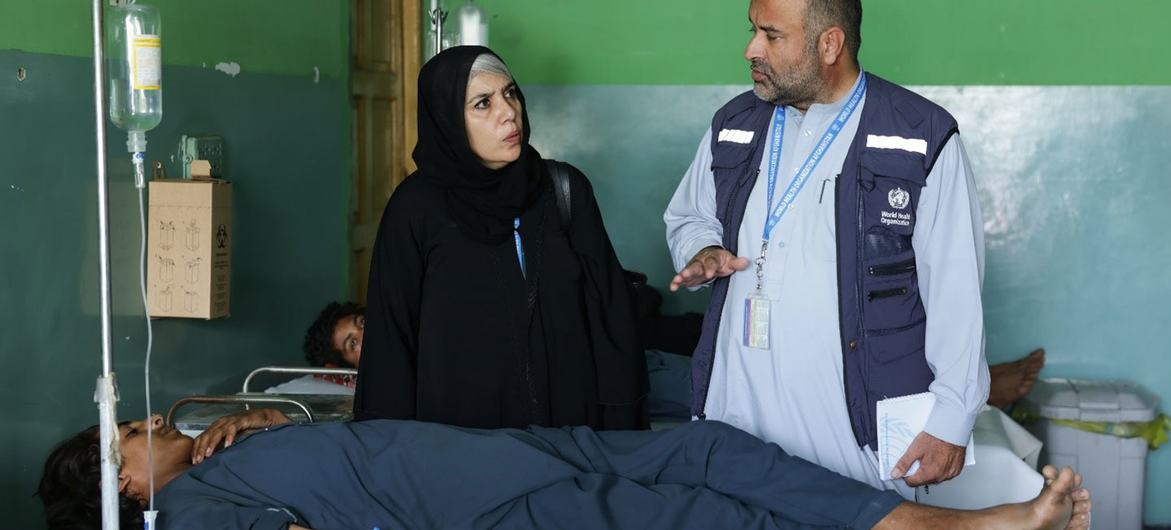
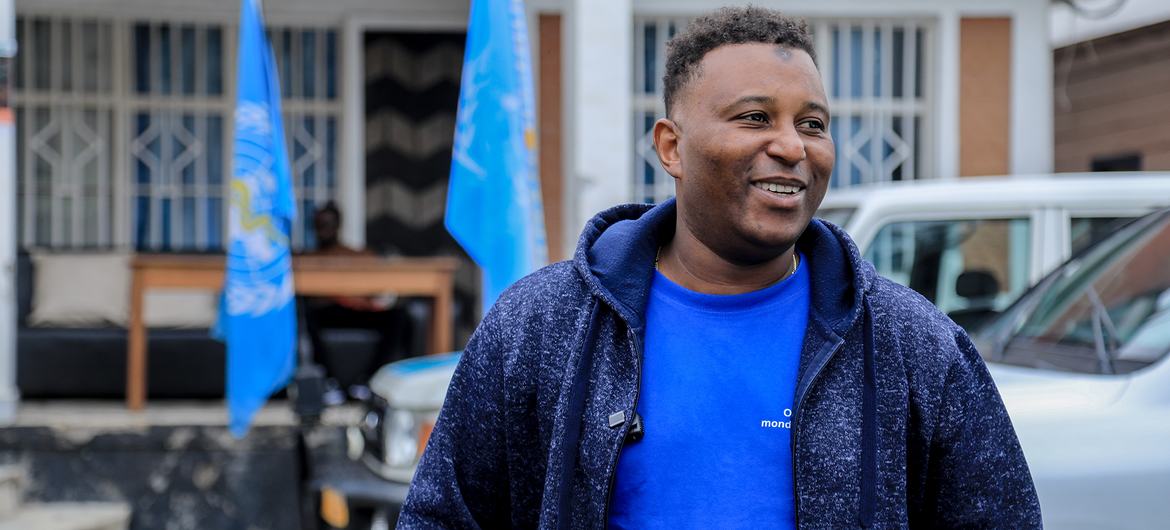
On September 2, 2025, Dr. Abdul Mateen Sahak and his WHO team visited a hospital in Kunar Province to monitor emergency healthcare services for people affected by the earthquake.

Into Nurgal District

His initial field team came down to just four people: himself, a technical adviser, an emergency focal point and a security assistant.

Within hours, they drew in Afghan partners from two local NGOs, assembling a force of 18 doctors, nurses, and pharmacists – “six of them were female doctors and midwives,” he said. That first day, WHO managed to airlift 23 metric tonnes of medicine to Nurgal District.

Meanwhile, the casualty figures kept climbing. “There was news that 500, maybe 600 people died. There were thousands of injuries and thousands of houses destroyed,” Dr. Sahak recalled.

Five days later, the official toll is far grimmer: more than 2,200 dead, 3,640 injured, and 6,700 houses damaged.

He and his team reached Nurgal District on Monday afternoon aboard an armoured vehicle. “Many roads were closed because big stones were falling from the mountains,” he said. On the lanes that remained open, crowds were slowing down traffic – thousands of civilians rushing in, most of them on foot, to help the victims.

‘Where is my baby?’

Once there, Dr. Sahak, a seasoned humanitarian worker, was unprepared for the scale of devastation. “We saw bodies in the street. They were waiting for the people to come in to bury them,” he said. Volunteer rescuers streamed in from neighbouring districts to clear rubble, carry the injured, and tend to the dead.

Among the survivors was a 60-year-old man named Mohammed, whose house had been destroyed.

I could not bear to look this man in the eyes. He was tearing up

“He had a total of 30 family members living with him…22 of them had died in the earthquake,” Dr. Sahak said. “This was shocking for me. I could not bear to look this man in the eyes. He was tearing up.”

At the local clinic, its walls cracked by the tremors, medical staff treated a rapidly growing number of patients beneath tents pitched outside.

Dr. Sahak met a woman with multiple injuries – pelvic fracture, head trauma, broken ribs. She struggled to breathe and could not stop crying. “She kept saying: ‘Where is my baby! I need my baby! Please bring me my baby!’” he recalled. Then he paused. “No, no, she lost her baby. All of her family.”

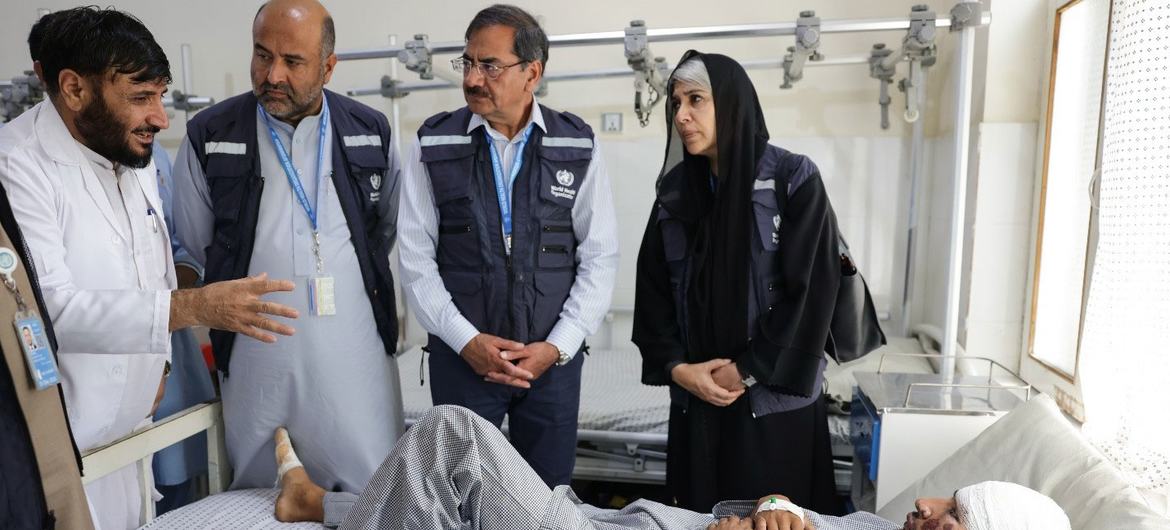
On September 2, 2025, Dr. Abdul Mateen Sahak and his WHO team visited the regional hospital of Asadabad, in Kunar Province, to monitor emergency healthcare services for people affected by the earthquake.

Women on the frontline

In a country where strict gender rules govern public life, the earthquake briefly broke down barriers.

“In the first few days, everyone – men and women – was rescuing the people,” Dr. Sahak said. Female doctors and midwives can still work in Afghanistan, but only if accompanied to hospitals by a male relative. He did not see female patients being denied care either.

In the first few days, everyone – men and women – was rescuing the people

The deeper crisis, he added, is the exodus of female professionals since the Taliban’s return in 2021. “Most of the specialist doctors, particularly the women, left the country…We have difficulty finding professional staff.”

The impact reached his own home. His eldest daughter had been in her fifth year of medical school in Kabul when the new authorities barred women from higher education.

“Now unfortunately, she is at home,” he said. “She can do nothing; there is no chance for her to complete her education.”

A family’s fear

From the outset, the WHO’s task was to keep clinics running by providing technical guidance, medical supplies, and clear instructions. It also meant offering words of encouragement to the medical staff. “We told them: ‘You are heroes!’” Dr. Sahak recalled.

As he cheered on local doctors, his family back in Jalalabad had been worried sick, following the news. He had spent a career running hospitals and leading emergency responses across Afghanistan, but this disaster struck too close to home.

That first night, when he finally returned to his wife and children, it was his 85-year-old mother who greeted him first. “She hugged me for more than 10 minutes,” he said.

She gently scolded him and tried to make him promise he would not go back to the stricken areas. But in the poor eastern districts of Nurgal, Chawkay, Dara-i-Nur and Alingar, tens of thousands of people were relying on the WHO to survive. The next morning, he was back on the trail.

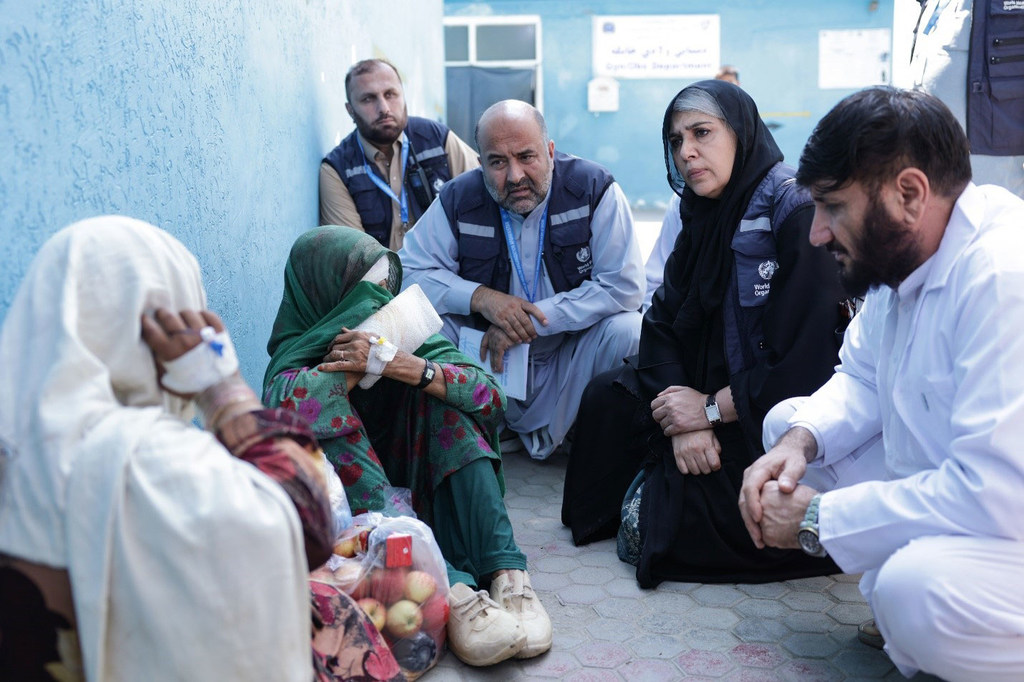
On September 2, 2025, Dr. Abdul Mateen Sahak and his WHO team met two women, at the regional hospital of Asadabad, in Kunar Province, who had lost all of their family members in earthquake, on 31 August 2025.

Ledger of life and death

By Friday afternoon, when I spoke to him, the figures in Dr. Sahak’s ledger told the story of the emergency: 46 metric tons of medical supplies delivered; more than 15,000 bottles of lactate, glucose and sodium chloride distributed – intravenous fluids for trauma and dehydration; and 17 WHO surveillance teams deployed to track the spread of disease, which the agency expects soon because of the destruction of drinking water sources and sanitation systems.

WHO has asked for $4 million to deliver lifesaving health interventions and expand mobile health services. About 800 critical patients had already been rushed to the hospital in Jalalabad. Others were taken to the regional hospital in Asadabad, which Dr. Sahak and his team visited on Tuesday.

A mother’s words

Outside the health facility, they noticed two survivors driven by the sun into a narrow strip of shade along a wall – an older woman and her daughter, both recently discharged, both alone.

They were alive, but their remaining 13 family members were dead

“They were alive, but their remaining 13 family members were dead,” Dr. Sahak said. There was no one left to collect them. The daughter, in her twenties, seemed devastated: “She was unable to speak.” Tears streamed down her face.

Moved by their plight, Dr. Sahak asked the hospital to keep them in a bed for a week or two. The director agreed. That night, back home, he recounted the scene to his family. “All of them were crying, and they were even unable to have dinner,” he said. By then, even his mother no longer begged him to stay.

“Please go there and support the people,” she told him.

Source link

DR Congo: The doctor who couldn’t leave Goma

Gunfire tore through the dark. Night after night, the 44-year-old physician from Guinea clung to the hope that the besieged city would hold somehow. Then, one morning in late January, the call came: he and the remaining international staff had to be evacuated immediately.

“We took the last flight out,” he recalled.

Hours later, Goma was in the hands of M23. The Tutsi-led rebel group, backed by neighbouring Rwanda, had just landed its boldest military victory in the region yet.

For most, that would have been the end of the story: a narrow escape, a mission cut short. But, as the aircraft lifted from the runway, he knew he would return. The only question was: how soon?

Dr Thierno Baldé, 45, led the WHO response in Goma after the city fell to M23 rebels in early 2025. (file)

A reluctant interlude

Back in Dakar, where he heads the World Health Organization (WHO) emergency hub for West and Central Africa, Dr. Balde grew restless. Reports of civilian massacres kept trickling out of North Kivu, each new detail cutting deeper. The colleagues he had left behind haunted him. With every grim report, his conviction deepened: his place was at their side.

Two weeks later, on the day he turned 45, he was tapped to lead the agency’s response in eastern DRC. He kept the assignment from his parents in Conakry, his hometown, to spare them the dread.

“I only told them once I was already there,” he admitted, almost sheepishly. His wife and two children had long since grown used to watching him vanish into the world’s most dangerous crises.

Return to ruins

It took him five days to reach Goma. By then, the airport had been shut and the roads pocked with checkpoints.

The city he found was hollowed out. Power lines were down, hospitals crammed with the wounded and talk of the streets being littered with bodies. Fear had settled like ash after a blaze on every face. “In 15 days, everything had changed.”

His team was broken. Some 20 Congolese staffers, gaunt from exhaustion, had been trying to hold the city’s fragile health system together. He gave half of them time off to recover, despite knowing every pair of hands was desperately needed. It was the least he could do.

And yet, amid the wreckage, there was one stroke of good fortune. Unlike most other UN agencies, the WHO warehouses had not been looted. They became lifelines, providing fuel to power hospitals, surgical kits for the wounded and cell phones to coordinate emergency evacuations.

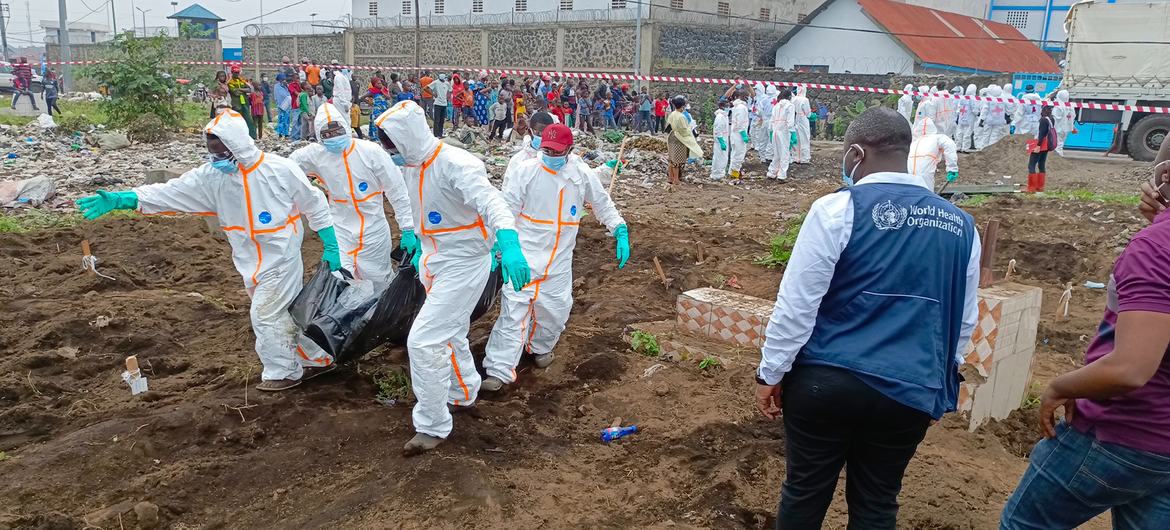
Still, the numbers were crushing, with as many as 3,000 dead, according to initial reports. The bodies needed to be dealt with swiftly before disease spread.

“We had to bury everyone intensely, in a very specific timeframe,” he said, noting that WHO ended up paying local gravediggers to collect the corpses.

Bodies are being buried with the assistance of WHO personnel in the aftermath of the fall of Goma to M23 rebels in early February 2025. (file)

The spectre of cholera

On the day of his return, another illness announced itself: cholera. The first cases had just been confirmed in a MONUSCO camp, where hundreds of disarmed Congolese soldiers and their families had sought shelter after losing the city to the M23 militia. The UN peacekeeping mission’s bases, designed for Blue Helmets, were not built to accommodate a large number of civilians. Sanitation conditions were dire, and the disease spread fast.

That night, Dr. Balde could not sleep.

The next morning, he walked into the camp and saw patients stretched out on the floor. There were 20 or 30 people, with only one doctor, he remembered. Two were already dead.

For days, his team scrambled to hold back the tide, with chlorine for disinfection, protective gear, makeshift triage and staff recruited and trained on the spot. Vaccines were rushed in from Kinshasa.

Rumours rippled through the city

Still, rumours rippled through the city.

“People began saying ‘cholera is exploding in Goma and WHO is overwhelmed.’” He, who had come for humanitarian relief, now found himself with an epidemic on his hands.

“We had to completely re-orient ourselves,” he said. The ghost of another Haiti, where the UN played a role in a cholera outbreak in 2010, hovered over his every decision.

As if on cue, another disease was spreading. Mpox, once confined to the sprawling camps of displaced people on Goma’s outskirts, now spilled into the city itself. Those camps, home to hundreds of thousands uprooted by earlier waves of violence in the region, were emptied in the chaos of Goma’s fall.

“The patients ended up in the community,” he explained.

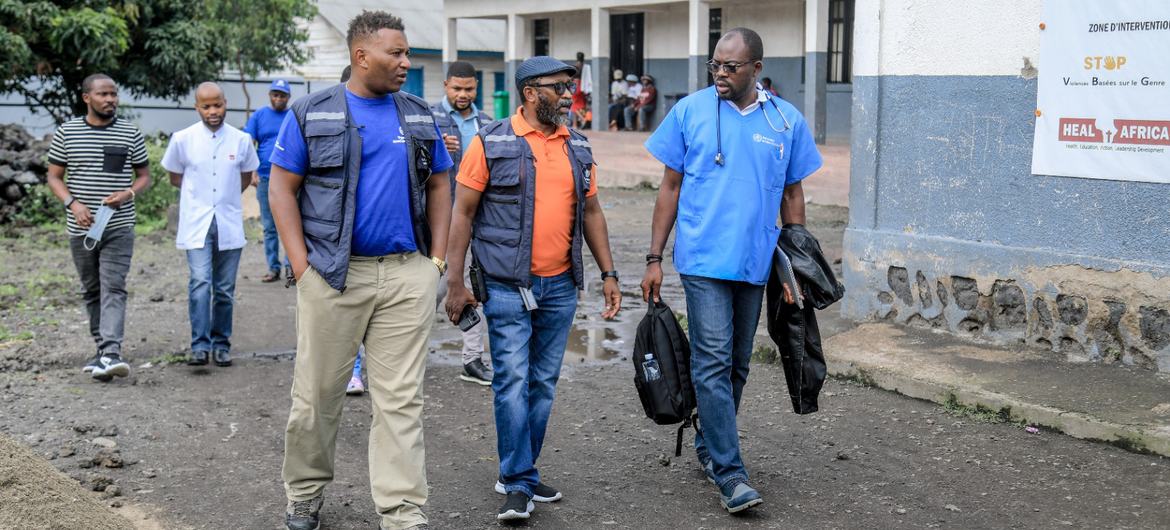
Dr Thierno Baldé (center left) and colleagues visit a WHO-supported health centre providing care to the population around Goma. (file)

Sitting across from rebels

Then came the men with guns. One afternoon, they barged into the WHO compound without warning. Were they under M23 orders, fighters acting on their own or mere criminals? It hardly mattered. The staff talked them down, persuading them to leave, but the incident made one thing clear. Without some understanding with the de facto authorities, the agency’s work could be compromised overnight.

So, Dr. Balde sought them out.

“We mustered the courage and went to meet them,” he said. At the North Kivu governor’s offices, now run by the rebels, he laid down his WHO “Incident Manager” card.

“I told them Ebola can affect everyone, cholera can affect everyone. We are here to contain them.”

A channel was opened. Fragile, but enough.

The cost of altruism

There’s a stiff price to pay for helping others. In Goma, the days blurred together. Hours were spent in fevered meetings and evenings spent alone in a hotel where heavily armed men dined at nearby tables.

During Ramadan, with the city under curfew, he broke the fast each night with the same simple meal, the city outside trembling with uncertainty.

When he returned to Dakar two month later, his blood tests were a mess.

“It was a real personal sacrifice,” he said, “and I’m not even talking about mental health. As a humanitarian, you have to take care of yourself, too.”

A veteran, still marked

Dr. Balde is no stranger to disaster zones. Trained in Guinea and Quebec, an associate professor at the University of Montreal, he cut his teeth with the Canadian Red Cross in Haiti after the earthquake, then in Guinea during the Ebola outbreak. Since joining WHO in 2017, he has faced emergency after emergency, including COVID-19.

I did everything I could to go back, but I paid a price.

And yet, he admitted, Goma left a mark that few other crises had.

“I did everything I could to go back, but I paid a price.”

In the Senegalese capital, his family bears that price, too. His children know their father disappears into places where the world is breaking apart. His wife has learned to live with the absence.

Still, when he speaks of those feverish weeks in eastern DRC, one sentence returns again and again, insistent and unshaken: “I had to be there.”

Source link

‘Humanitarian work, a moral obligation’: Retired doctor returns to face the ‘silent threat’ in Gaza

After a successful career that lasted 43 years, during which he worked in Saudi Arabia, for the Palestinian Ministry of Health and then the UN Children’s Fund (UNICEF), Dr. Awadallah decided to retire at the end of 2021.

But, that was short-lived. As the crisis in Gaza escalated and polio reappeared, he decided to return to the field. Doing so was not just a job assignment. As he describes it, it’s a “message of loyalty” to his profession, to the children of Gaza and to the institution that gave him so much.

Dr. Awadallah’s return was driven by a “deep inner sense of responsibility and belonging”.

“I felt that my long experience and field knowledge could make a difference in these critical times,” he told UN News.

‘The Silent Threat to Gaza’

Dr. Awadallah’s story was the focus of the film The Silent Threat to Gaza, produced by UNICEF in conjunction with World Humanitarian Day, observed annually on 19 August. The organization emphasises that the film is a powerful testament to the resilience of humanitarian workers who are facing the dangers of conflict.

Named in May on Time Magazine’s TIME100 Health List for leading “a heroic vaccination campaign” that reached 600,000 children in Gaza, Dr. Awadallah was one of the lead subjects of the 32-minute documentary. The film follows him and his colleague Fairuz Abu Warda, who, during short periods of last year’s ceasefire, delivered lifesaving vaccines to children across the Gaza Strip.

Watch the full document here:

UNICEF said their courage underscores a fundamental fact that when humanitarian principles are adhered to, workers are protected and given safe and timely access, lives can be saved even in the most fragile environments. The UN agency stressed that the courage of humanitarian workers, such as Dr. Awadallah and Ms. Warda, reinforces the urgent need for principled action and international accountability.

Dr. Awadallah told UN News how exhaustion, hunger and fear were part of their daily routine under constant bombardment from the air and sea.

However, their priority was to keep vaccinations effective and reach every child, he said, remembering the moments when he would see his colleagues collapse from exhaustion and then immediately return to work.

A living testimony to willpower

Dr. Awadallah points out that every scene in the vaccination campaign, from the smile of a child to the insistence of the teams to reach the farthest house despite the security difficulties and the danger of moving, reminded him that “humanitarian work cannot be retired.”

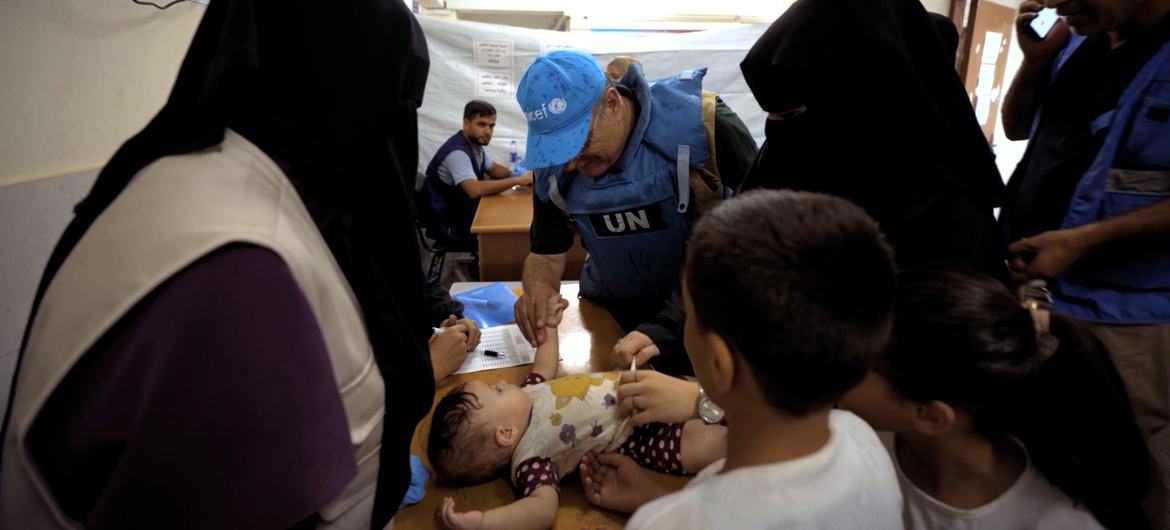
Children received the polio vaccine as part of a Gaza-wide campaign. (file)

“I provide humanitarian work, and even if I retire, it does not apply to humanitarian work,” he said.

“The Silent Threat to Gaza was not just a film or a depiction of events, but a living testimony to the strength of will and the power of hope.”

He believes that every shot in the film was “a message to the world that despite the wounds, despite the death and the difficulty of life, Gaza is able to rise up and protect its children”.

Despite the risks to their lives, Dr. Awadallah and his fellow humanitarian workers in Gaza continue their work under constant bombardment.

Protecting humanitarian workers is ‘not a luxury’

“Fear knows no way to their hearts,” he said. “We hear the explosion and then we go to do our work. We are moving towards our goal and we are used to it.”

He said more than 350 medical personnel have been killed, hundreds injured and more than 1,300 arrested.

He appealed to the world that the protection of those who lend a helping hand “is not a luxury, but a prerequisite for ensuring that life and hope reach those in need”, and that it is a “humanitarian duty” that is as important as the provision of assistance itself.

Dr. Younis Awadallah administers a polio vaccine in Gaza.

Spreading hope

After decades of experience, Dr. Awadallah said he has learned that human beings have an incredible resilience beyond imagination.

“Resilience is not the absence of pain and suffering, but the ability to persevere and rise despite tragedies,” he said. “I saw mothers smiling and laughing at their children despite the bleeding and pain. I saw patients facing the pain with a smile and hope.”

Their role as humanitarian workers goes beyond providing treatment and material assistance to include “promoting and instilling hope in people’s hearts, supporting them psychologically and maintaining their strength in the face of problems”, he said.

Not just a profession

On World Humanitarian Day, Dr. Awadallah pays tribute to all those who choose to walk towards danger rather than away from it.

I believe in this business

“We are throwing ourselves into perdition for the sake of others,” he said.

Humanitarian workers in Gaza and everywhere in the world – regardless of their specialties – “are witnesses that mercy knows no boundaries and that human solidarity can flourish even during wars or amid the rubble”, he added.

He said he hopes he would be able to reunite with his family soon.

“My message today is that humanitarian work is not just a profession, but a moral and humanitarian obligation. I left my family and haven’t seen them for two years because I believe in this business.”

Patient plays saxophone while surgeons remove brain tumor

Music is not only a major part of Dan Fabbio’s life, as a music teacher it is his livelihood. So when doctors discovered a tumor located in the part of his brain responsible for music function, he began a long journey that involved a team of physicians, scientists, and a music professor and culminated with him awake and playing a saxophone as surgeons operated on his brain.

Fabbio’s case is the subject of a study published today in the journal Current Biology that sheds new light on how music is processed in the brain.

In the spring of 2015, Fabbio was serving as substitute music teacher in a school in New Hartford, New York. He was in a small office at the school working on the capstone project for his Master’s degree in music education when he began to suddenly “see and hear things that I knew were not real.”

He became dizzy and nauseous and the episode prompted a visit to hospital in nearby Utica later that day. After undergoing a CAT scan, the doctors sat Fabbio down and told him they found a mass in his brain.

“I was 25 at the time and I don’t think there is any age when it is OK to hear that,” recalled Fabbio. “I had never had any health problems before and the first thing my mind went to was cancer.”

The good news was that the tumor appeared to be benign – in fact, it had probably been slowly growing since childhood – and was in an area of the brain that was relatively easy for surgeons to access. The bad news was that it was located in a region that is known to be important for music function.

Fabbio was referred to UR Medicine’s Del Monte Institute for Neuroscience and neurosurgeon Web Pilcher, M.D., Ph.D.

“When I met Dan for the first time, he expressed how concerned he was about losing his musical ability, because this frankly was the most important thing to him in his life, not only his livelihood, but his profession and his interest in life,” said Pilcher.

A Precise Map of Brain Function

Pilcher, who is the Ernest and Thelma Del Monte Distinguished Professor of Neuromedicine and Chair of Department of Neurosurgery, had struck up a partnership with Brad Mahon, Ph.D., an associate professor in the University of Rochester Department of Brain and Cognitive Sciences. The two have developed a Translational Brain Mapping program for patients who had to undergo surgery to remove tumors and control seizures.

“Removing a tumor from the brain can have significant consequences depending upon its location,” said Pilcher. “Both the tumor itself and the operation to remove it can damage tissue and disrupt communication between different parts of the brain. It is, therefore, critical to understand as much as you can about each individual patient before you bring them into the operating room so we can perform the procedure without causing damage to parts of the brain that are important to that person’s life and function.”

The brain mapping program Pilcher and Mahon developed is tailored to circumstances of the individual. Patients with brain tumors are now routinely referred to Mahon before undergoing their surgery. Mahon and his team subject each individual to a battery of tests, including brain scans that identify important functions – such as motor control and language processing – that may be located in proximity to the tumor and potentially impacted by the surgery.

“Everybody’s brain is organized in more or less the same way,” said Mahon. “But the particular location at a fine grain level of a given function can vary sometimes up to a couple centimeters from one person to another. And so it’s really important to carry out this kind of detailed investigation for each individual patient.”

While testing language and motor skills was relatively straightforward, evaluating musical ability, especially in a trained musician, was a different undertaking altogether. Perhaps nowhere in the world was Fabbio’s case a better fit. Not only had Pilcher performed hundreds of these surgeries and had partnered with Mahon to develop a sophisticated brain mapping program that would be key to the procedure’s success – but the famed Eastman School of Music, a part of the University of Rochester, could be called upon to help plan Fabbio’s surgery.

Mahon reached out to Elizabeth Marvin, Ph.D., a professor of Music Theory in the University of Rochester’s Eastman School of Music. Marvin also holds a position in the Department of Brain and Cognitive Sciences and studies music cognition – the ability of our brains to remember and process music.

The two developed a series of cognitive musical tests that Fabbio could perform while the researchers were scanning his brain. During functional MRI (fMRI) scanning, Fabbio would listen to and then hum back a series of short melodies. He also performed language tasks that required him to identify objects and repeat sentences. The fMRI detects changes in oxygen levels, so the parts of the brain that were activated during the tests helped pinpoint the areas important for music and language processing.

Using this information the research team produced a highly detailed three-dimensional map of Fabbio’s brain – with both the location of the tumor and music function – that would be used to help guide the surgeons in the OR.

Saxophone Serenades Surgeons

The ability to process and repeat a tune was an important measure, but the team also wanted to know if they were successful in preserving Fabbio’s ability to perform music. So they decided to bring his saxophone into the OR and, if possible, have him play it during the procedure.

The challenge was that Fabbio would be lying on his side, so it would be difficult to play the instrument. Also, the pressure caused by the deep breathes required to play long notes on the saxophone could cause the brain, which would be exposed during the procedure, to essentially protrude from his skull. Fabbio and Marvin ultimately selected a piece – a version of a Korean folk song – that could be modified to be played with shorter and shallower breaths.

“The whole episode struck me as quite staggering that a music theorist could stand in an operating room and somehow be a consultant to brain surgeons,” said Marvin. “In fact, it turned out to be one of the most amazing days of my life because if felt like all of my training was suddenly changing someone’s life and allowing this young man to retain his musical abilities.”

During the procedure, Pilcher and the surgical team used the map of Fabbio’s brain that had been developed by Mahon to plan the surgery. They also went through a process of painstakingly reconfirming what the brain scans showed them. This was accomplished by delivering a mild electrical stimulus that temporarily disrupts a small area of the brain. While this was occurring, Fabbio was awake and repeating the humming and language tasks he performed prior to the surgery. Marvin was present in the OR and scored his performance to let the surgeons know whether or not they had targeted an area that disrupted music processing and, therefore, should be avoided during the procedure.

Once the tumor had been removed the surgeons gave the go ahead to bring over the saxophone and let Fabbio play. “It made you want to cry,” said Marvin. “He played it flawlessly and when he finished the entire operating room erupted in applause.”

Fabbio has since completely recovered and returned to teaching music within a few months of his surgery.

Harnessing Science to Improve Brain Surgery

While the brain mapping program’s primary purpose is to help improve surgical outcomes, the information that the researchers gather before, during, and after the surgery is also helping advance understanding of complexities of the brain’s structures and function.

“We study about 40 or 50 patients a year and what this allows us to do is ask what are the factors that we can identify in these patients before their surgery or early on after their surgery that distinguish which patients go on to have a good outcome versus which patients may have lingering cognitive impairments,” said Mahon.

The data from Fabbio’s case, which is the basis of a study in the journal Current Biology, has helped more precisely define the relation between the different parts of the brain that are responsible for music and language processing.

“As I think back about Dan’s case and about the incredible outcome and what we were able to achieve, it reminds me of how far we have come,” said Pilcher. “Ten years ago, we mapped the brain using very simple tools – electrical stimulation and image guidance. But now, we have all the tools of cognitive science. We have brought the cognitive science laboratory into the operating room and now almost as a matter of course with every single patient.”

A tougher tooth

Fewer trips to the dentist may be in your future, and you have mussels to thank.

Inspired by the mechanisms mussels use to adhere to inhospitable surfaces, UC Santa Barbara researchers have developed a new type of dental composite that provides an extra layer of durability to treated teeth. The potential payoff? Longer lasting fillings, crowns, implants and other work.

“It’s as hard as a typical dental restoration but less likely to crack,” Kollbe Ahn, a materials scientist at UCSB’s Marine Science Institute, said of the composite. The research is highlighted in the journal Advanced Materials. The paper, of which Ahn is the corresponding author, is the result of collaboration between research and industry.

On average, a dental restoration lasts five to 10 or so years before needing replacement. The time frame depends on the type of restoration and how well the patient cares for the treated tooth. However, the continual onslaught of chewing, acidic and hard foods, poor hygiene, nighttime tooth grinding, generally weak teeth and even inadequate dental work can contribute to a filling’s early demise — and another expensive and possibly less-than-pleasant experience in the dental chair.

According to Ahn, one of the primary reasons restorations fall out or crack is brittle failure of the bond with the surrounding tooth. “All dental composites have micro-particles to increase their rigidity and prevent their shrinkage during their curing process,” he explained. “But there’s a trade-off: When the composite gets harder, it gets more brittle.”

With enough pressure or wear and tear, a crack forms, which then propagates throughout the entire restoration. Or, the gap between the tooth and the restoration results in restoration failures, including marginal tooth decay.

So Ahn and his colleagues looked to nature — mussels, to be exact — to find a way not only to maintain strength and hardness but also to add durability. Having perfected the art of adhering to irregular surfaces under the variable conditions of the intertidal zone — evolving to resist pounding waves, the blazing heat of the sun and cycles of salt water immersion and windy dryness — mussels presented the ideal model for more durable dental restoration materials. The byssal threads they use to affix to surfaces allow them to resist the forces that would tear them from their moorings.

“In nature, the soft collagenous core of the mussel’s byssal threads is protected by a 5-to-10 micrometer thick, hard coating, which is also extensible and thus, tough,” Ahn said. This durability and flexibility allow the mollusks to stick to wet mineral surfaces in harsh environments that involve repeated push-and-pull stress.

Key to this mechanism is what the scientists call dynamic or sacrificial bonding — multiple reversible and weak bonds on the sub-nanoscopic molecular level that can dissipate energy without compromising the overall adhesion and mechanical properties of the load-bearing material.

“Say you have one strong bond,” Ahn explained. “It may be strong but once it breaks, it breaks. If you have several weaker bonds, you would have to break them one by one.” Breaking each weak bond, he continued, would dissipate energy, so the overall energy required to break the material would be greater than with a single strong bond.

This type of bonding occurs in many biological systems, including animal bone and tooth. The mussel’s byssus contain a high number of unique chemical functional groups called catechols, which are used to prime and promote adhesion to wet mineral surfaces. The new study shows that using a catecholic coupling agent instead of the conventional silane coupling agent provides 10 times higher adhesion and a 50 percent increase in toughness compared to current dental restorative resin composites.

While research has proven this toughening mechanism in soft materials, this study is one of the first — if not the first — to prove it with rigid and load-bearing materials.

This proof-of-concept, which also demonstrates no cytotoxicity, could mean tougher, more durable dental fillings. And that, in the long run, could mean fewer dental visits. Because each replacement filling also requires the dentist to file the surrounding tooth to prime its surface, given enough replacements a tooth might need to be crowned or extracted; and if not replaced, the tooth loss could have adverse consequences for the individual’s diet and health.

The next step, Ahn said, is to increase the material’s durability even further.

“By changing the molecular design you could have even denser coupling agents that exist on the surface, and then we can have a stronger and more durable dental composite,” he said, estimating a commercial product within a couple of years.