
‘The people of Haiti are in a perfect storm of suffering,’ warns UN chief

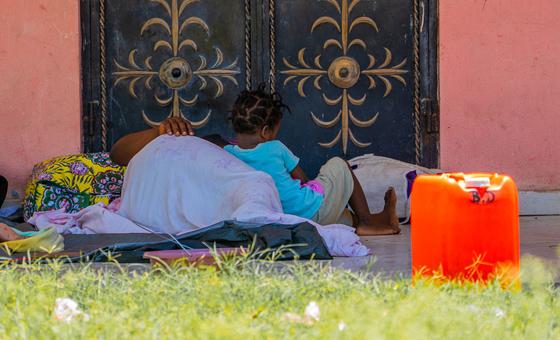
Six million people are in need of humanitarian assistance, while 1.3 million people – half of them children – having been forced to flee their homes, he added.

‘Shamefully overlooked’

Haiti now ranks among the five hunger hotspots worldwide that are of “highest concern,” said the UN chief. Yet it remains the world’s least funded humanitarian appeal. Less than 10 per cent of the $908 million needed has been received.

The UN chief lamented the level of international neglect, describing Haiti as “shamefully overlooked and woefully underfunded,” as armed groups continue to block humanitarian access and attack aid workers.

Due to the lack of resources, around 1.7 million people risk receiving no humanitarian assistance at all. “This is not a funding gap. It is a life-and-death emergency,” he said, urging donors to act before lifesaving operations grind to a halt.

Across the country, basic services have collapsed, and mass displacement has left children without education, healthcare or any sense of safety. As of April, gang violence had interrupted the schooling of some 243.000 children, as attacks on schools continued.

‘Unimaginable suffering’

The head of the UN Children’s Fund (UNICEF), Catherine Russell, told ambassadors Haiti’s youth are enduring “unimaginable suffering amidst the brutal armed violence.”

She noted that last year the UN in Haiti had verified more than 2,000 grave violations against children – a nearly 500 per cent increase on the previous year.

The Caribbean nation last year was among the five worst offenders worldwide, Ms. Russell added, including cases of summary execution.

Even more concerning, she said, was the 700 per cent increase in cases of recruitment and use of children by armed groups, alongside a 54 per cent increase in killing and maiming, according to Ms. Russell.

Children now account for a staggering 50 per cent of all active gang members in Haiti.

“I ask Members of this Council to use all available leverage to protect children,” she said, and to support “concrete actions” which will prevent violations from spiralling still further.

‘Signals of hope’

Despite the bleak outlook across Haiti and soaring levels of violence and lawlessness, “there are emerging signals of hope,” said the Secretary-General.

Closer coordination between the Prime Minister’s Task Force, the Haitian National Police and Security Council-backed Multinational Security Support Mission (MSS) is improving operations on the ground, he said.

But, more decisive international support is required to protect and expand these fragile gains.

The Kenyan-led mission was authorised by the Security Council in October 2023 and aims to help over-stretched Haitian authorities stem the gang violence and restore national security, especially in the capital.

Mr. Guterres welcomed efforts by the Security Council to advance his proposal to strengthen the MSS through UN logistical and operation support, and urged ambassadors “to act without delay and authorise an international force, supported by the UN through logistical and operational backing, and predictable financing.”
Source link

‘Perfect storm’ of global crises drove years of food price surges: FAO

The report, to be released later this month, reveals how between 2020 and 2024, the world experienced a dramatic increase in food prices driven by a combination of COVID-19 inflation, the war in Ukraine restricting movements on food and commodities, and increasing climate shocks.  

“The episodes described in this publication bring up what we call a perfect storm,” said Mr. Torero Cullen.

Máximo Torero Cullen speaks to journalists at UN Headquarters via video link.

First, he explained that during the COVID-19 pandemic, governments launched fiscal stimulus and relief packages, which increased demand and, thus, global inflation.

Russia’s full-scale invasion of Ukraine compounded this crisis. Before the war began in 2022, Ukraine was a key exporter of wheat, sunflower oil and fertilisers. The war not only restricted these exports but disrupted trade routes and pushed up fuel and input costs, which amplified inflation across the world.

Additionally, increasingly frequent and intense climate shocks in major producing regions – such as droughts, floods and heat waves – further aggravated food inflation.

Worldwide impacts

Only in 2024 did prices return to pre-COVID levels, meaning that households struggled for multiple years to afford food, with major consequences.

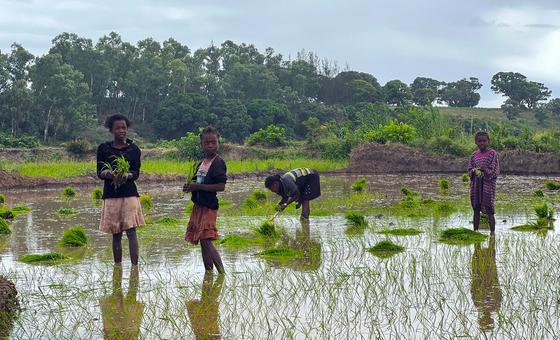
As real wages fell while food prices increased, household purchasing power was eroded. Households responded by buying cheaper and less nutritious food, reducing meal frequency, and often prioritising meals for certain family members and reducing intake for women and children.

Mr. Torero Cullen also explained that an increase in food prices directly correlates to an increase in moderate and severe food insecurity. The impacts of this were particularly harsh in Africa and Western Asia, where food imports, dependence and currency depreciation made food even more expensive.

Moreover, as food prices increased, nutrition outcomes among children under five worsened. The SOFI report illustrated that a 10 per cent food price increase led to a 2.7 to 6.1 per cent increase in moderate to severe wasting, which has long-lasting effects on child development and public health systems.  

Notably, these grave impacts were uneven, mostly affecting low-income and African countries – many of which are still seeing worsening figures. During the peak of the crisis in January 2023, some low-income countries experienced food price inflation of up to 30 per cent, compared to 13.6 per cent globally.

Policy recommendations  

Mr. Torero Cullen finished his briefing by outlining the policy prescriptions detailed in the SOFI report.  

He first underscored targeted fiscal support. “Social protection measures are the most effective response to food price spikes,” he explained. “This will protect vulnerable populations without creating long-term fiscal risk or market distortions.”  

He also highlighted avoiding trade disruptions, coordinating monetary and fiscal policies, improving market transparency, and institutional preparedness as essential components for avoiding future crises.

“This SOFI underscores that inflation can undermine progress. It underlines our vulnerabilities, and it also brings the importance of strengthening resilience, inclusiveness and transparency to be able to avoid and minimize the risk of these problems,” he concluded.  

Source link