A two-way street: Reversing brain drain in Somalia

So the crisis continues. And the brain drain intensifies.  

But what if there was a way to reverse brain drain? This is the question that the International Organization of Migration (IOM) has been asking about Somalia.

“There has been a lot of brain drain in Somalia. How do we bring back those skills that they have been able to achieve in their country of residence to their country of origin?” said Yvonne Jepkoech Chelmio, an IOM official focused on labour and migration in Africa.  

The IOM’s Migration in Africa for Development Programme (MIDA) selects members of the Somali diaspora who are experts in their chosen fields and places them in local hospitals, schools and national ministries in order to build Somalia’s self-sufficiency.

In the past 20 years, MIDA has sponsored the return of over 400 Somalis from 17 different countries. These returnees have worked in many fields — including education and health, as well as climate action, urban planning and the rule of law — all with the hope of advancing sustainable development in Somalia.

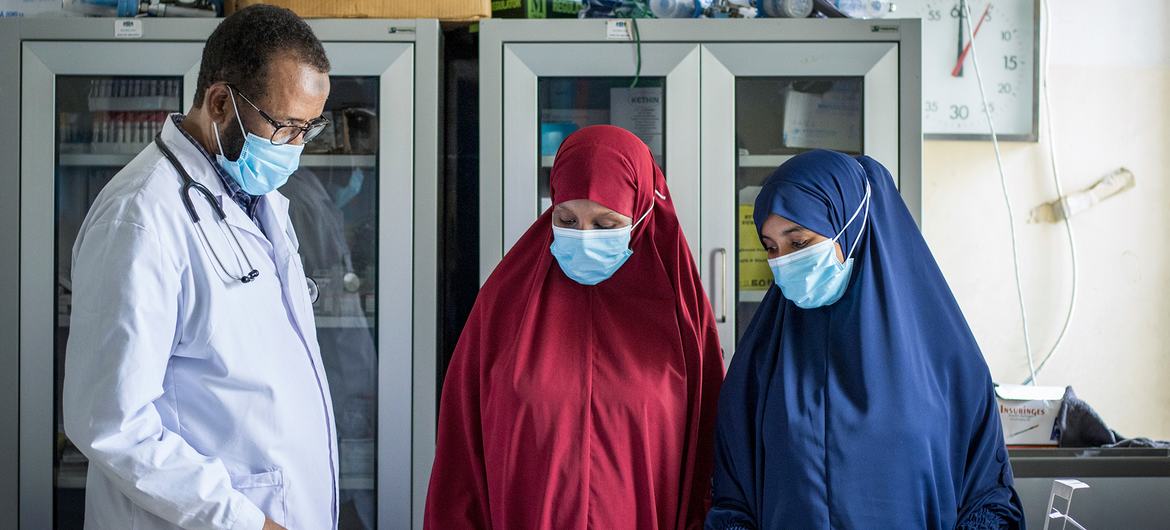
Through the MIDA program, Somali diaspora were placed in hospitals to mentor local doctors.

‘Drivers of change’

The Somali Civil War which began in 1991 provoked mass displacement, both internally and externally. More than 30 years later, the situation has improved but security continues to be an issue, which in turn is imperilling sustainable development.

“What happens in countries like Somalia is someone becomes skilled in a field, educated, they don’t want to stay here. So you lose talent, you lose skill,” said pedagogy expert, Shire Salad, a diaspora participant in the MIDA program who was placed in the Ministry of Education to work alongside their evaluation development team.  

With two million Somalis living abroad, the Somali diaspora has long played an integral role in the country’s economy. The money they send back as remittances sometimes outpaces direct foreign aid, totalling over $2 billion annually and contributing at least one-third of the national GDP.

© IOM/Spotlight Communications

Solar panels provide consistent power to the university in Abudwaq, Galmadug.

But MIDA deviates from a solely economic understanding of the diaspora’s contributions, instead creating avenues for their return which emphasise their technical skills, expertise and international networks. 

“[The diaspora] serve as bridges, as ambassadors, as drivers of change and development actors,” said Nasra Sheikh Ahmed, one of the IOM officials in charge of the programme.

And according to Ms. Ahmed, who is a member of the Somali diaspora herself, one of the most remarkable things about the MIDA programme is that it seizes upon something which already exists — the Somali diaspora wants to return.  

“[The diaspora] still see it as their home. They’re not immigrants in another country. They still see themselves as Somalis. They see themselves as an extension, basically just living somewhere else.”  

Education at the core

While the MIDA programme has operated across many sectors  one of the main sectors on which the MIDA programme has focused is education.  

Mohamed Gure, a professor at Somali National University, participated in the MIDA programme as a local professional who worked alongside members of the diaspora to improve the curriculum for aspiring teachers.  

When Dr. Gure began his studies years ago, he said that there were no programmes in Somalia which offered a doctoral degree in education. So he, like many others, went abroad.

Today, he sees a new sort of problem — not enough Somalis want to become teachers, and those that do believe that they do not need a formal training.  

“Teachers in the classroom do not have training in being a teacher. This will affect the quality of education in Somalia in the long-term,” Dr. Gure said.  

Over the course of a few years, Dr. Gure worked alongside diaspora professionals to develop a new curriculum and create a lasting partnership with the University of Helsinki in Finland.  

For him, the benefits of this new curriculum are already clear — students are learning more, and the online collaborations with students in Helsinki are creating an international network of expertise.

“All this [training] is a resource for the country. All the curricula that were developed for the country will remain. It will be used by lecturers who can train other lecturers,” Dr. Gure said.  

The MIDA program has focused on empowering the education sector in Somalia.

A two-way street

Partnerships, like that which Dr. Gure experienced, are an essential part of the MIDA programme’s long-term impact, ensuring that even after the diaspora professional leave, their contributions remain.  

“We have not just provided skills transfer to two people, but these two people can now transfer to four people. So there’s more sustainability in terms of process,” Ms. Chelmio said.

But this skills transfer is not without challenges. Many of the diaspora who are returning to Somalia have been gone for years, sometimes decades. The Somalia to which they return is quite different from the one they left.  

“Although you may speak the language and you may understand that culture, they still see you as a foreigner,” said Dr. Salad, who left Somalia when he was quite young and “returned with grey hairs.” 

Adapting expertise to the Somali context is essential for sustainable development, and this is something that the local professionals are uniquely equipped to do, creating a two-way street with both parties acting as experts in their own right.

“[The diaspora] don’t understand the context, the dynamic of the country itself. The local expert is able to give the diaspora expert the perspective,” Ms. Chelmio said.  

A future in which Somalis stay

MIDA has, in small ways, reversed the brain drain of the past decades. It has brought back hundreds of diaspora members. And even if they have not stayed, their skills and expertise have.  

But, Somalis are still leaving the country, risking their lives on boats to the Gulf and to Europe out of pure hopelessness And many of them die.  

Dr. Salad hopes that one day for Somalia, there will be no brain drain to reverse.  

“If they had hope in this country, they would have stayed. If they believed this country was going to be a better country, they would have stayed. My hope is that younger generations will have that hope, that they will stay.” 

Source link

Managing diabetes key to prevent dementia: Study

An Indian-origin scientist has found that reducing the risk of dementia in Alzheimer’s is possible by keeping diabetes under control.

Narendra Kumar, an associate professor at Texas A&M University in the US, spearheaded a study featured in the ‘American Society for Biochemistry and Molecular Biology’ journal, uncovering a robust connection between diabetes and Alzheimer’s disease.

“Implementing preventative or mitigative measures for diabetes could potentially stall or mitigate the advancement of dementia symptoms in Alzheimer’s,” he emphasized.

Diabetes and Alzheimer’s represent two burgeoning health challenges worldwide. Diabetes disrupts the body’s energy conversion from food and affects approximately one in ten US adults. Meanwhile, Alzheimer’s ranks among the top ten leading causes of death in the US, as highlighted in the research.

The team delved into how dietary patterns might influence Alzheimer’s progression in individuals with diabetes.

Their investigation unveiled that a high-fat diet diminishes the expression of Jak3, a specific protein in the gut. Mice lacking this protein showcased a cascade of inflammation from the intestines to the liver and brain. Consequently, these mice exhibited Alzheimer’s-like manifestations in the brain alongside cognitive decline.

The researchers propose that the route from the gut to the brain involves the liver. “As the primary metabolizer of our dietary intake, we hypothesize that the pathway from gut to brain involves the liver,” explained Kumar.

Their long-standing exploration of Jak3’s functions revealed that alterations in its expression due to dietary factors can lead to intestinal permeability, resulting in chronic inflammation, diabetes, diminished brain capacity to eliminate toxins, and dementia-like symptoms akin to Alzheimer’s disease.

Subcutaneous fat emerges as a protector of Womans’ brains

Womans’ propensity to deposit more fat in places like their hips, buttocks and the backs of their arms, so-called subcutaneous fat, is protective against brain inflammation, which can result in problems like dementia and stroke, at least until menopause, scientists report.

Males of essentially any age have a greater propensity to deposit fat around the major organs in their abdominal cavity, called visceral adiposity, which is known to be far more inflammatory. And, before females reach menopause, males are considered at much higher risk for inflammation-related problems from heart attack to stroke.

“When people think about protection in women, their first thought is estrogen,” says Alexis M. Stranahan, PhD, neuroscientist in the Department of Neuroscience and Regenerative Medicine at the Medical College of Georgia at Augusta University. “But we need to get beyond the kind of simplistic idea that every sex difference involves hormone differences and hormone exposure. We need to really think more deeply about the underlying mechanisms for sex differences so that we can treat them and acknowledge the role that sex plays in different clinical outcomes.”

Diet and genetics are other likely factors that explain the differences broadly assigned to estrogen, says Stranahan, corresponding author of a study in the American Diabetes Association journal Diabetes.

She acknowledges that the findings are potentially heretical and revolutionary and certainly surprising even to her. “We did these experiments to try and nail down, first of all, what happens first, the hormone perturbation, the inflammation or the brain changes.”

Brain Image (NIH)

To learn more about how the brain becomes inflamed, they looked at increases in the amount and location of fat tissue as well as levels of sex hormones and brain inflammation in male and female mice at different time intervals as they grew fatter on a high-fat diet.

Since, much like with people, obese female mice tend to have more subcutaneous fat and less visceral fat than male mice, they reasoned that the distinctive fat patterns might be a key reason for the protection from inflammation the females enjoy before menopause.

They found again the distinctive patterns of fat distribution in males and females in response to a high-fat diet. They found no indicators of brain inflammation or insulin resistance, which also increase inflammation and can lead to diabetes, until after the female mice reached menopause. At about 48 weeks, menstruation stops and fat positioning on the females starts to shift somewhat, to become more like males.

They then compared the impact of the high-fat diet, which is known to increase inflammation body wide, in mice of both sexes following surgery, similar to liposuction, to remove subcutaneous fat. They did nothing to directly interfere with normal estrogen levels, like removing the ovaries.

The subcutaneous fat loss increased brain inflammation in females without moving the dial on levels of their estrogen and other sex hormones.

Bottom line: The Womans’ brain inflammation looked much more like the males’, including increased levels of classic inflammation promoters like the signaling proteins IL-1β and TNF alpha in the brain, Stranahan and her colleagues report.

“When we took subcutaneous fat out of the equation, all of a sudden the females’ brains start to exhibit inflammation the way that male brains do, and the females gained more visceral fat,” Stranahan says. “It kind of shunted everything toward that other storage location.” The transition occurred over about three months, which translates to several years in human time.

Dr. Alexis Stranahan/CREDIT:Michael Holahan, Augusta University

By comparison, it was only after menopause, that the females who did not have subcutaneous fat removed but did eat a high-fat diet, showed brain inflammation levels similar to the males, Stranahan says.

When subcutaneous fat was removed from mice on a low-fat diet at an early age, they developed a little more visceral fat and a little more inflammation in the fat. But Stranahan and her colleagues saw no evidence of inflammation in the brain.

One take-home lesson from the work: Don’t get liposuction and then eat a high-fat diet, Stranahan says. Another is: BMI, which simply divides weight by height and is commonly used to indicate overweight, obesity and consequently increased risk of a myriad of diseases, is likely not a very meaningful tool, she says. An also easy and more accurate indicator of both metabolic risk and potentially brain health, is the also easy-to-calculate waist to hip ratio, she adds.

“We can’t just say obesity. We have to start talking about where the fat is. That is the critical element here,” Stranahan says.

ultra-processed foods

She notes that the new study looked specifically in the hippocampus and hypothalamus of the brain. The hypothalamus controls metabolism and exhibits changes with inflammation from obesity that help control conditions that develop bodywide as a result. The hippocampus, a center of learning and memory, is regulated by signals associated with those pathologies but doesn’t control them, Stranahan notes.

While these are good places to start such explorations, other regions of the brain could respond very differently, so she is already looking at the impact of loss of subcutaneous fat in others. Also, since her evidence indicates estrogen may not explain the protection Women have, Stranahan wants to better define what does. One of her suspects is the clear chromosomal differences between the XX female and the XY male.

Stranahan has been studying the impact of obesity on the brain for several years and is among the first scientists to show that visceral fat promotes brain inflammation in obese male mice, and, conversely, transplanting subcutaneous fat reduces their brain inflammation. Females also have naturally higher levels of proteins that can tamp down inflammation. It’s been shown that in males, but not females, microglia, immune cells in the brain, are activated by a high-fat diet.

She notes that some consider the reason that females have higher stores of subcutaneous fat is to enable sufficient energy stores for reproduction, and she is not challenging the relationship. But many questions remain like how much fat is needed to maintain fertility versus the level that will affect your metabolism, Stranahan says.

–Dr. Alexis Stranahan/CREDIT:Michael Holahan, Augusta University

Also Read:

Fatty fish, camelina oil good for HDL, IDL cholesterol: study

How the mother’s mood influences her baby’s ability to speak

Detecting Alzheimer’s disease in the blood using Digital ICA

Researchers from Hokkaido University and Toppan have developed a method to detect build-up of amyloid β in the brain, a characteristic of Alzheimer’s disease, from biomarkers in blood samples.

Alzheimer’s disease is a neurodegenerative disease, characterised by a gradual loss of neurons and synapses in the brain. One of the primary causes of Alzheimer’s disease is the accumulation of amyloid β (Aβ) in the brain, where it forms plaques. Alzheimer’s disease is mostly seen in individuals over 65 years of age, and cannot currently be stopped or reversed. Thus, Alzheimer’s disease is a major concern for nations with ageing populations, such as Japan.

A team of scientists from Hokkaido University and Toppan, led by Specially Appointed Associate Professor Kohei Yuyama at the Faculty of Advanced Life Science, Hokkaido University, have developed a biosensing technology that can detect Aβ-binding exosomes in the blood of mice, which increase as Aβ accumulates in the brain. Their research was published in the journal Alzheimer’s Research & Therapy.

Alzheimer’s disease model mice (Photo: Kohei Yuyama)./CREDIT:Kohei Yuyama

When tested on mice models, the Aβ-binding exosome Digital ICATM (idICA) showed that the concentration of Aβ-binding exosomes increased with the increase in age of the mice. This is significant as the mice used were Alzheimer’s disease model mice, where Aβ builds up in the brain with age.

In addition to the lack of effective treatments of Alzheimer’s, there are few methods to diagnose Alzheimer’s. Alzheimer’s can only be definitively diagnosed by direct examination of the brain—which can only be done after death. Aβ accumulation in the brain can be measured by cerebrospinal fluid testing or by positron emission tomography; however, the former is an extremely invasive test that cannot be repeated, and the latter is quite expensive. Thus, there is a need for a diagnostic test that is economical, accurate and widely available.

Previous work by Yuyama’s group has shown that Aβ build-up in the brain is associated with Aβ-binding exosomes secreted from neurons, which degrade and transport Aβ to the microglial cells of the brain. Exosomes are membrane-enclosed sacs secreted by cells that possess cell markers on their surface. The team adapted Toppan’s proprietary Digital Invasive Cleavage Assay (Digital ICATM) to quantify the concentration of Aβ-binding exosomes in as little as 100 µL of blood. The device they developed traps molecules and particles in a sample one-by-one in a million micrometer-sized microscopic wells on a measurement chip and detects the presence or absence of fluorescent signals emitted by the cleaving of the Aβ-binding exosomes.

Clinical trials of the technology are currently underway in humans. This highly sensitive idICA technology is the first application of ICA that enables highly sensitive detection of exosomes that retain specific surface molecules from a small amount of blood without the need to learn special techniques; as it is applicable to exosome biomarkers in general, it can also be adapted for use in the diagnosis of other diseases.

Noninvasive eye scan could detect key signs of Alzheimer’s years before patients show symptoms

Child abuse affects brain wiring

Impaired neural connections may explain profound and long-lasting effects of traumatic experiences during childhood

  • For the first time, researchers have been able to see changes in the neural structures in specific areas of the brains of people who suffered severe abuse as children.
  • Difficulties associated with severe childhood abuse include increased risks of psychiatric disorders such as depression, as well as high levels of impulsivity, aggressivity, anxiety, more frequent substance abuse, and suicide.
    Severe, non-random physical and/or sexual child abuse affects between 5-15 % of all children under the age of 15 in the Western world.
  • Researchers from the McGill Group for Suicide Studies, based at the Douglas Mental Health University Institute and McGill University’s Department of Psychiatry, have just published research in the American Journal of Psychiatry that suggests that the long-lasting effects of traumatic childhood experiences, like severe abuse, may be due to an impaired structure and functioning of cells in the anterior cingulate cortex. This is a part of the brain which plays an important role in the regulation of emotions and mood.
  • The researchers believe that these changes may contribute to the emergence of depressive disorders and suicidal behaviour.

Crucial insulation for nerve fibres builds up during first two decades of life

For the optimal function and organization of the brain, electrical signals used by neurons may need to travel over long distances to communicate with cells in other regions. The longer axons of this kind are generally covered by a fatty coating called myelin. Myelin sheaths protect the axons and help them to conduct electrical signals more efficiently. Myelin builds up progressively (in a process known as myelination) mainly during childhood, and then continue to mature until early adulthood.

Earlier studies had shown significant abnormalities in the white matter in the brains of people who had experienced child abuse. (White matter is mostly made up of billions of myelinated nerve fibres stacked together.) But, because these observations were made by looking at the brains of living people using MRI, it was impossible to gain a clear picture of the white matter cells and molecules that were affected.

To gain a clearer picture of the microscopic changes which occur in the brains of adults who have experienced child abuse, and thanks to the availability of brain samples from the Douglas-Bell Canada Brain Bank (where, as well as the brain matter itself there is a lot of information about the lives of their donors) the researchers were able to compare post-mortem brain samples from three different groups of adults: people who had committed suicide who suffered from depression and had a history of severe childhood abuse (27 individuals); people with depression who had committed suicide but who had no history of being abused as children (25 individuals); and brain tissue from a third group of people who had neither psychiatric illnesses nor a history of child abuse (26 people).

Impaired neural connectivity may affect the regulation of emotions

The researchers discovered that the thickness of the myelin coating of a significant proportion of the nerve fibres was reduced ONLY in the brains of those who had suffered from child abuse. They also found underlying molecular alterations that selectively affect the cells that are responsible for myelin generation and maintenance. Finally, they found increases in the diameters of some of the largest axons among only this group and they speculate that together, these changes may alter functional coupling between the cingulate cortex and subcortical structures such as the amygdala and nucleus accumbens (areas of the brain linked respectively to emotional regulation and to reward and satisfaction) and contribute to altered emotional processing in people who have been abused during childhood.

The researchers conclude that adversity in early life may lastingly disrupt a range of neural functions in the anterior cingulate cortex. And while they don’t yet know where in the brain and when during development, and how, at a molecular level these effects are sufficient to have an impact on the regulation of emotions and attachment, they are now planning to explore this in further research.