
‘Peace is the most powerful force for a better future’: Guterres

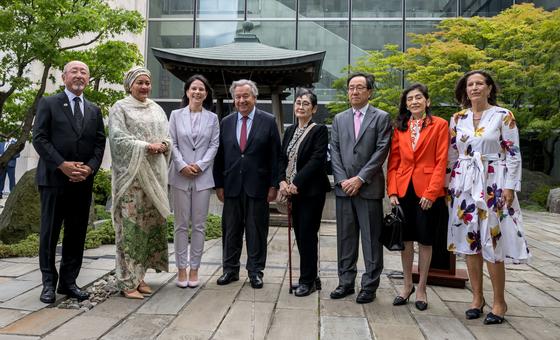
António Guterres issued the call during the annual ceremony on the grounds of UN Headquarters in New York to ring the Peace Bell.

Pursuing the cause of peace is “the beating heart” of the Organization, “but today, peace is under siege,” he said.

“Conflicts are multiplying. Civilians are suffering. Human rights and international law are being trampled – leaving scenes that disgrace our common humanity.” 

Peace requires action

The ceremony comes ahead of the International Day of Peace on 21 September, and the theme this year is “Act Now for a Peaceful World”.

“We know that peace doesn’t happen by accident,” the Secretary-General said. “It is forged – through courage, compromise, and above all, action.”

He called for action “to silence the guns”, amplify diplomacy, protect civilians and uphold the UN Charter.

“We must act – to tackle the root causes of conflict – from inequality and exclusion, to hate speech, and climate chaos. We must act – to invest in prevention, dialogue and trust,” he continued.

“And we must act to support the peacebuilders – especially women and young people – who are on the frontlines of hope.”

Don’t give up: General Assembly President

The President of the UN General Assembly, Annalena Baerbock, also addressed the gathering.

Amid numerous conflicts worldwide, she questioned whether there would be less war without the United Nations, responding firmly that “definitely not.”

“This is not the moment to give up,” she said.  “It’s a moment to try even harder.”

‘Let peace ring’

The Secretary-General said that “peace is the most powerful force for a better future,” insisting that “it is within our grasp – if we choose it.”

This is the message of the Peace Bell, he added, cast in 1952 from coins and medals donated by people from all the over the world, “united in their yearning for peace”.

“This Peace Bell reminds us that even the smallest contributions can forge something enduring,” he said.

“Even in a fractured world, we can come together to let peace ring. Let’s answer that call.”

About the Peace Bell

The Japanese Peace Bell was presented as a gift to the United Nations from the UN Association of Japan on 8 June 1954.

On its side are eight Japanese characters that say, “Long live absolute world peace.”  

It is housed in a wooden structure resembling a traditional Shinto shrine.

The bell is rung twice a year on the first day of Spring, at the vernal equinox, and to commemorate the International Day of Peace.   
Source link

Sanctions relief for Syria offers ‘powerful message of hope,’ says UN migration agency

After more than a decade of conflict and severe economic stagnation, lifting the punitive measures will encourage long-term recovery and peacebuilding in Syria, Amy Pope, IOM Director-General, said in a statement.

“The lifting of sanctions sends a powerful message of hope to millions of displaced Syrians, both within the country and across the region,” she said.

$800 billion lost

UN estimates suggest that the Syrian economy lost over $800 billion during the 14-year civil war. 

According to a UN Development Programme (UNDP) report, if the current annual growth rate continues, Syria’s economy will not return to its pre-conflict gross domestic product (GDP) levels until 2080.

The sanctions relief from the US, UK and EU – covering around $15 billion in restricted assets and trade measures – could unlock important investment opportunities for rebuilding key infrastructure, IOM said.

Most of these sanctions were originally imposed during the Assad era and have long been blamed for Syria’s hindering economic recovery.

Alongside the sanctions relief, Saudi Arabia and Qatar pledged to pay $15.5 million of Syria’s arrears to the World Bank. Together with Türkiye, they also offered to fund public salaries and support energy infrastructure.

These changes reflect “momentum from re-engagement and reconstruction,” IOM added.

A country torn apart

The Syrian conflict, which began March 2011 after pro-democracy protests against Bashar Al-Assad, lasted almost 14 years. During this time, tens of thousands of Syrians were killed and countless more disappeared. The fighting and insecurity also displaced more than 10 million civilians – within the country or as refugees outside its borders.

Poverty rates tripled, affecting 90 per cent of the population, with 66 per cent living in extreme poverty.

Since the end of the war in December 2024 with the overthrow of the Assad regime, half a million Syrian refugees have returned. A further 1.5 million internally displaced persons (IPDs) have also returned to their places of origin.

They returned home amidst great hope for the future of Syria, but also severe economic projections.

“Hope must be matched with concrete support,” Director General Pope said. “Syrians need not just the ability to return but the means to rebuild their lives in safety and dignity.”

Moving from relief to resilience

The UN estimates that over 16.5 million Syrians – roughly 70 per cent of the population – continue to require humanitarian assistance.

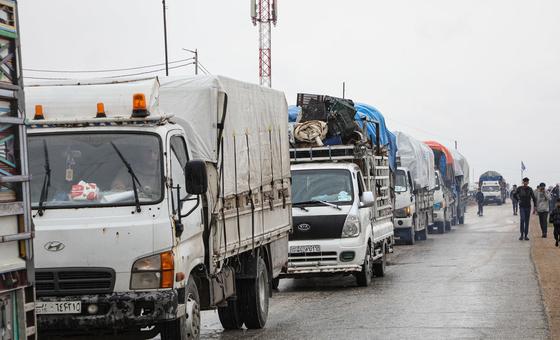
But funding shortfalls have complicated aid efforts. Already in the last week of May, only 10 per cent of the estimated $2 billion needed between January and June to assist eight million Syrians has been received.

Ms. Pope noted that it is important for the Syrian people and economy to begin moving towards longer-term solutions outside of humanitarian aid.

“While humanitarian assistance remains critical, IOM urges donors and development partners to expand their focus to medium- and long-term recovery. A transition from relief to resilience is not only necessary – it is urgent,” she said. 

Source link