UN rights chief decries US treatment of migrants, as deaths in ICE custody rise

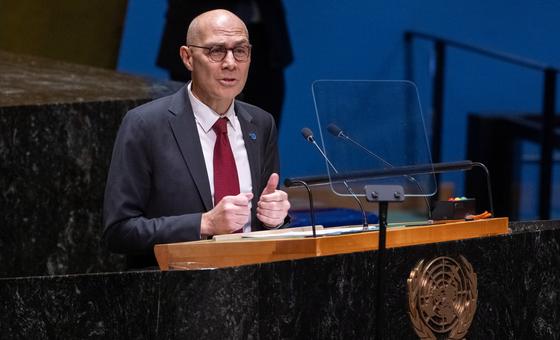
In a news release on Friday, High Commissioner Volker Türk said individuals suspected of being undocumented migrants are being surveilled, arrested and detained – sometimes violently – in locations ranging from hospitals and places of worship to courthouses, schools, markets and private homes.

The UN rights chief said he was “astounded by the now-routine abuse and denigration of migrants and refugees.

He warned that fear generated by such federal operations is rippling through communities, with children missing school and medical appointments, out of concern that their parents may not return.

Those who dare to speak up or protest peacefully against heavy-handed immigration raids are vilified and threatened by officials, and on occasion subjected to arbitrary violence themselves,” Mr. Türk said.

He said numerous migration policies now being implemented by US authorities are resulting in arbitrary and unlawful arrests and detentions, as well as flawed removal decisions. He expressed concern that enforcement actions often lacked sufficient individualised assessments.

Due process

US immigration enforcement is primarily carried out by the Immigration and Customs Enforcement (ICE), a federal agency responsible for identifying, arresting, detaining and removing non-citizens deemed to be in violation of immigration law.

Mr. Türk stressed that while national governments have the authority to establish and enforce migration policies, those powers must be exercised in full accordance with the law. Failure to respect due process, he said, risks eroding public trust, weakening institutional legitimacy and violating individuals’ rights.

He also deplored Washington’s use of large-scale enforcement operations, raising concerns that force has at times appeared unnecessary or disproportionate.

On 7 January 2026, a woman was fatally shot in Minnesota’s largest city, Minneapolis, during an operation involving federal officers.

Under international law, the intentional use of lethal force is only permissible as a measure of last resort against an individual representing an imminent threat to life,” Mr. Türk said.

Families torn apart

The UN rights chief highlighted the human cost of these practices, particularly for families.

Mr. Türk cited cases in which parents were detained or transferred between facilities without adequate information being provided about their whereabouts or access to legal counsel, making it difficult to maintain family contact or pursue legal remedies.

“I call on the administration to end practices that are tearing apart families,” said the High Commissioner. He also called for independent and transparent investigations into a reported rise in the number of deaths in ICE custody.

At least 30 deaths were reported last year, with six more so far this year.

‘Xenophobic hostility’

Mr. Türk also expressed deep concern over what he described as “dehumanising narratives” used by some Government officials to portray migrants and refugees.

I call on leaders at all levels in the US to halt the use of scapegoating tactics that seek to distract and divide, and which increase the exposure of migrants and refugees to xenophobic hostility and abuse,” he said.

He also recognised the efforts of a wide range of public officials, community groups and civil society representatives across the US, who are working to uphold dignity, fairness and accountability in the treatment of migrants and their communities.

Net benefits of migration

He highlighted that the US’ history has been “shaped profoundly” by the contributions that migrants, from all parts of the world, have made and continue to make.

“Demonising migrants and refugees collectively as criminals, threats, or burdens on society – based on their origin, nationality or migration status – is inhuman, wrong, and it goes against the very fabric and foundations of the nation,” he warned.

Source link

UN rights chief decries ‘relentless intensification’ of US sanctions against International Criminal Court staff

His call comes a day after four more Court personnel – two judges and two deputy prosecutors – were slapped with sanctions in connection with efforts to investigate alleged war crimes committed by the US and Israel.

This follows sanctions imposed earlier on four other judges and the ICC Prosecutor. Measures imposed could include blocking financial access to property or assets in the US, as well as travel bans.

‘Assault on the rule of law’

The relentless intensification of US reprisals against international institutions and their personnel must stop,” said Mr. Türk. 

“Sanctioning judges and prosecutors at national, regional or international levels, for fulfilling their mandate in accordance with international law standards, is an assault on the rule of law and corrodes justice.”

The sanctions stem from an executive order signed by US President Donald Trump in February in response to the UN-backed Court issuing arrest warrants for Israeli Prime Minister Benjamin Netanyahu and former defense minister Yoav Gallant for alleged war crimes and crimes against humanity in Gaza.

The ICC is also probing war crimes allegedly committed in Afghanistan by all sides during years of conflict, including the US, following the allied invasion of the country in October 2001.

Neither the US nor Israel are party to the Rome Statute, the treaty that established the ICC.

It’s time countries step up

Mr. Türk called for the withdrawal of the sanctions against the ICC personnel and those targeting the Special Rapporteur on the human rights situation in the Occupied Palestinian Territory.

The independent expert, Francesca Albanese, receives her mandate from the UN Human Rights Council in Geneva. For more details, read our story here.

“In the meantime, I call on States to take immediate steps to protect all of them, including by taking measures to encourage corporations operating within their jurisdiction not to implement the sanctions against these individuals,” Mr. Türk said.

States need to step up to defend the institutions they have created to uphold and defend human rights and the rule of law. Those working to document, investigate and prosecute serious violations of international law should not have to work in fear.”

About the International Criminal Court

The ICC investigates and tries individuals charged with genocide, war crimes, crimes against humanity and the crime of aggression. Read our explainer here.

Some of the cases include situations in Sudan, the Democratic Republic of the Congo and Libya. 

In March 2023, the Court issued an arrest warrant for Russian President Vladimir Putin in connection with alleged war crimes concerning the deportation and “illegal transfer” of children from occupied Ukraine.

The ICC was established in 2002 and is based in The Hague, in the Netherlands.  

Source link

UN official decries deadly Ukraine strikes, urges return to diplomacy

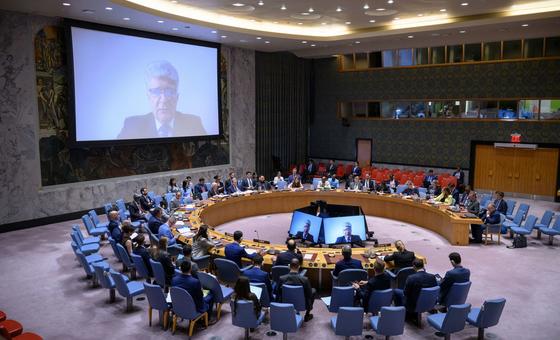
Briefing ambassadors in the Security Council, Miroslav Jenča, Assistant Secretary-General for Europe in the Department of Political and Peacebuilding Affairs (DPPA), renewed the call for an immediate ceasefire and a return to diplomacy to end the devastation.

“Ukrainian people have endured nearly three-and-a-half years of unimaginable horrors, death, devastation and destruction. They urgently need relief from this nightmare,” he said.

He stressed that diplomacy, not fighting, needs to escalate in the coming days and weeks.

“Diplomacy that leads to real, tangible, verifiable and lasting results that would be felt by the long-suffering people on the ground,” he added, reiterating that the UN remains ready to support all efforts toward a just, lasting peace in line with the UN Charter and international law.

ASG Jenča briefs the Security Council.

Brutal attacks continue

Mr. Jenča described the “brutal” scale of the latest attacks.

Overnight between 30 and 31 July, a large-scale Russian aerial assault on Kyiv killed at least 31 people – including five children – and injured 159 others, 16 of them children. It marked the highest number of child injuries in a single night in the capital since the invasion began in February 2022.

The strikes damaged 27 locations across four districts of Kyiv, including a school, a preschool, a paediatric hospital wing, and a university building.

“An entire section of an apartment block was also reportedly destroyed, leaving many trapped beneath the burning rubble,” said Mr. Jenča.

Humanitarian workers, including UN agencies and local partners, responded swiftly, delivering shelter kits, emergency psychosocial support and legal counselling to affected families.

Strikes beyond Kyiv

Beyond Kyiv, attacks were reported across at least seven regions – Vinnytsia, Donetsk, Dnipropetrovsk, Zhytomyr, Zaporizhzhia, Cherkasy and Chernihiv – with a total of at least 120 civilian casualties in a single night.

In Donetsk, two people were reportedly killed and 10 injured; in Kharkiv, one person was killed and seven injured. Additional casualties were confirmed in Sumy, Kherson and Zaporizhzhia.

In Kamianske, a hospital attack left three dead – including a pregnant woman – and 22 injured, many of them medical staff. In Novoplatonivka, Kharkiv region, six were killed while waiting for humanitarian aid.

“These continuing horrendous attacks are simply unacceptable,” said Mr. Jenča.

The UN human rights office, OHCHR, reports that since the start of the full-scale invasion thorugh June this year, more than 13,580 civilians – including 716 children – have been killed, and over 34,000 injured.

Casualties inside Russia

Mr. Jenča also noted civilian casualties inside Russia.

Between 25 and 29 July, Russian authorities reported attacks in Belgorod, Bryansk, Kursk, Leningrad and Rostov regions, resulting in at least six deaths and multiple injuries.

While the UN cannot verify these reports, Mr. Jenča expressed concern and reiterated that “attacks on civilians and civilian infrastructure are prohibited under international law and must stop immediately – wherever they occur.”

Abuses against POWs

He also detailed new allegations of abuse against Ukrainian prisoners of war (POWs).

According to OHCHR interviews with nearly 140 recently released male POWs, “nearly all…reported having been subjected to torture or ill-treatment,” including beatings, electric shocks, and suffocation.

OHCHR also documented credible reports of 106 executions of Ukrainian soldiers in Russian custody.

Source link