
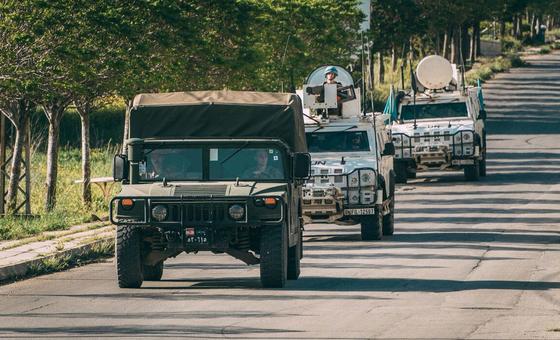
Peacekeeping: A lifeline for millions seeking a ‘future without fear’

Governments and civil society organizations have so far submitted more than 60 contributions to a review process mandated under the Pact for the Future, agreed by Member States last year.

The UN has an 80-year legacy that includes deploying multidimensional peacekeeping operations that combine police, troop and civilian personnel; special political missions engaged in conflict prevention, peacemaking and peacebuilding, and electoral support initiatives.

‘A lifeline for millions’

Peacekeeping is the largest and most visible activity in the field, with more than 60,000 men and women from 115 countries currently serving with 11 missions across the globe.

Peacekeeping is not a luxury; it is a lifeline for millions who count on it for a future without fear,” said Jean-Pierre Lacroix, Under-Secretary-General for Peace Operations.

He warned that today, “achieving lasting political solutions seems increasingly challenging.”  Last year, 61 active conflicts raged across the planet, according to the Sweden-based Uppsala Conflict Data Program – the highest number since 1946. 

“Conflicts have become protracted, involving more actors and often proxy forces, making negotiated solutions more difficult to achieve,” he said, indicating that the future will likely see more civilians who will require protection.

“It means the need for peace operations increases, potentially alongside other types of operations, including peace enforcement,” he added, and that “the contexts for deployment may be more uncertain and full success harder to achieve.”

Responsive and adaptable

Mr. Lacroix said the future requires “a UN that is capable and ready to respond through missions that are adaptable and tailored to the needs on the ground, guided by strong political strategies and leveraging the tools, capacities and expertise” of the UN and partners. 

Peace operations must first have “clear and prioritised mandates” that should also reflect the voice of host states, troop and police contributing countries, regional actors, local communities and other stakeholders.

He called for harnessing “the capacities of digital technologies and artificial intelligence to support the analysis of data as well as to assess the effectiveness of our responses through time.” 

Furthermore, pursuing political solutions to conflict should remain a priority, alongside protecting civilians, supporting the strengthening of government accountability.

Promotion and protection of human rights and the advancement of the women, peace and security agenda must also be prioritised. 

Additionally, “sustained and uncompromising efforts to uphold the UN Secretary-General’s zero tolerance policy on SEA (sexual exploitation and abuse)” must continue.

Political solutions crucial

Mr. Lacroix stressed that while “the UN’s ability to deliver on the imperative to protect people is very often the benchmark by which we are judged,” peacekeeping is not meant to be indefinite.

“To advance durable political solutions that enable peacekeeping to withdraw without a relapse into conflict requires the strong, unified and ongoing support of this Council – through the adoption of clear, prioritized mandates, active political engagement and statements of support,” he said.

These actions must be matched by countries continuing to pay the dues they owe the UN “in full and on time,” he added.

New tech ‘weaponised on an industrial scale’

Rosemary DiCarlo, UN Under-Secretary-General for Political and Peacebuilding Affairs, also commented on the current challenging environment.

She said that “conflicts have become more internationalised”, with influence from regional or global actors.  Meanwhile, non-state armed groups continue to proliferate, with many using terrorist tactics with no clear political agenda.

“New technologies, from AI to drones, are being weaponized on an industrial scale, increasing both the lethality of violence and the likelihood of escalation. And transnational drivers, such as organized crime, are now a regular facet of the conflict landscape,” she said.

Changing landscape

To inform the review, her office analysed the history of UN “special political missions” since the Organization’s establishment, identifying three priorities.

She noted that most missions today are deployed in the absence of a comprehensive peace agreement and often in politically volatile situations, even ongoing civil war.

“In such situations, the initial goals of our missions should be more limited – such as preventing a deterioration of violence, achieving a ceasefire, or helping a fragile incipient peace process get off the ground,” she said. 

The second priority should be improving coordination between peace operations and UN country teams, while the third is to end mandates which attempt to provide a one-size-fits-all approach.

Ms. Di Carlo concluded by highlighting how the failure or weak implementation of mandates is often related to lack of political support, whether in countries where missions are deployed, or the wider region, or among Security Council members themselves.

We will therefore need to engage with a laser-like focus on bringing the emphasis back to the political questions at the heart of each conflict and finding multilateral responses to them,” she said. 
Source link

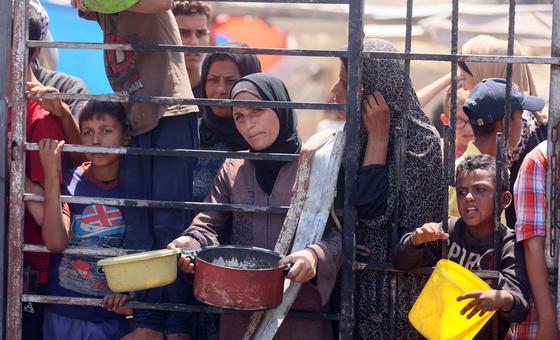
Gaza: Nearly 1,400 Palestinians killed while seeking food, as UN warns airdrops are no solution

Between 30 and 31 July alone, 105 Palestinians were killed and at least 680 more injured along the convoy routes in the Zikim area in North Gaza, southern Khan Younis, and in the vicinity of the GHF sites in Middle Gaza and Rafah, the office (OHCHR) said in a press release issued on Friday

In total, since 27 May, at least 1,373 Palestinians have been killed while seeking food; 859 in the vicinity of the GHF sites and 514 along the routes of food convoys.

OHCHR noted that most of the killings were committed by the Israeli military, and that while it is aware of the presence of other armed elements in the same areas, it does not have information indicating their involvement in the killings.

“[The office] has no information that these Palestinians were directly participating in hostilities or posed any threat to Israeli security forces or other individuals. Each person killed or injured had been desperately struggling for survival, not only for themselves, but also for their families and dependents,” it said.

Uphold international law

The office emphasized that intentionally directing attacks against civilians not taking direct part in hostilities and intentionally using starvation of civilians as a method of warfare by depriving them of objects indispensable to their survival, including willfully impeding relief supplies, are war crimes.  

“If part of a systematic or widespread attack on the civilian population, these may also constitute crimes against humanity,” OHCHR added, noting that the cumulative impact of these incidents and humanitarian access restrictions.

“Each of these killings must be promptly and independently investigated, and those responsible held to account. Urgent measures must be put in place to prevent recurrence,” it said.

Airdrops not effective

Meanwhile, the UN Relief and Works Agency for Palestine Refugees (UNRWA), underscored the need to open road crossings to supply aid at scale across the Gaza Strip.

“Airdrops are at least 100 times more costly than trucks. Trucks carry twice as much aid as planes,” UNRWA Commissioner-General Philippe Lazzarini said on social media.  

“If there is political will to allow airdrops – which are highly costly, insufficient and inefficient, there should be similar political will to open the road crossings,” he stressed.

Mr. Lazzarini further noted that UNRWA has 6,000 trucks loaded with aid stuck outside Gaza waiting permission to enter.  

During the ceasefire earlier this year, UNRWA and other UN agencies were able to bring in 500 to 600 trucks of aid each day.  

“Aid reached the entire population of Gaza in safety and dignity. It succeeded to reverse the deepening starvation without any aid diversion,” the UNRWA head said.

“Let us go back to what works and let us do our job.” 

Source link

Gaza: Guterres condemns killing of people seeking food as humanitarian conditions deteriorate

Stéphane Dujarric was speaking to reporters at UN Headquarters in New York a day after dozens of Palestinians were killed seeking food aid.

He said the Secretary-General deplored the growing reports of both children and adults suffering from malnutrition and strongly condemned the ongoing violence, including the shooting, killing and injuring of people attempting to get food.

Not a target

Civilians must be protected and respected, and they must never be targeted,” said Mr. Dujarric, noting that the population in Gaza remains gravely undersupplied with the basic necessities of life.

He stressed that “Israel has the obligation to allow and facilitate by all the means at its disposal the humanitarian relief provided by the United Nations and other humanitarian organizations.” 

Mr. Dujarric said the Secretary-General noted that the recent intensification of hostilities comes as the humanitarian system in Gaza is being impeded, undermined and endangered.

New evacuation orders

He pointed to a new evacuation order issued for parts of Deir Al-Balah, which is pushing people into more desperate conditions and sparking further displacement, while restricting the UN’s ability to deliver aid.

He reported that two UN guesthouses in Deir Al-Balah were struck, despite the parties being informed about their locations. 

“They suffered damage,” he said, responding a reporter’s question. “The UN staff inside was, to say the least, rattled.”

Mr. Dujarric underscored that the UN intends to remain in Deir Al-Balah.

Ceasefire now

The Secretary-General reiterated his urgent call for the protection of civilians, including humanitarian personnel, and for the provision of essential resources to ensure their survival.

He once again called for the immediate and unconditional release of all hostages.

Mr. Dujarric said the UN stands ready to significantly scale up its humanitarian operations in Gaza, adding “the time for a ceasefire is now.” 

People dying from malnutrition 

Amid the ongoing shelling, displacement and destruction in Gaza, humanitarians continue to receive reports of severely malnourished people arriving at medical points and hospitals in extremely poor health. 

More than a dozen people, including children, have reportedly died from hunger in the last 24 hours, according to the Gaza health agencies. 

The UN Office for the Coordination of Humanitarian Affairs (OCHA) recalled that roughly 88 per cent of Gaza is now under displacement orders or within displacement zones. 

Shelter and fuel 

Gaza’s population is some 2.1 million and about 1.35 million need shelter and household items.  However, no shelter supplies have been allowed to enter for more than four months.   

The dire fuel crisis also continues, with humanitarians continuing to warn that the limited quantities that have been allowed to enter in recent days are hardly sufficient. 

Traditional aid systems critical: UN official 

Meanwhile the new UN Humanitarian Coordinator for the Occupied Palestinian Territory, Ramiz Alakbarov, has met with the Prime Minister of the State of Palestine, Mohammad Mustafa, in Ramallah.  

At a press conference, Dr. Alakbarov called for an immediate and permanent ceasefire, the unconditional release of the hostages, and the lifting of all restrictions on access to people in Gaza.         

He said to address immediate needs, humanitarian organizations must be able to use the traditional systems of aid delivery. 

He noted that these systems are currently undermined by violence, including armed looting and recurrent shootings at civilians seeking aid. which he said must be independently investigated.