Mounting civilian casualties in Sudan as fighting intensifies

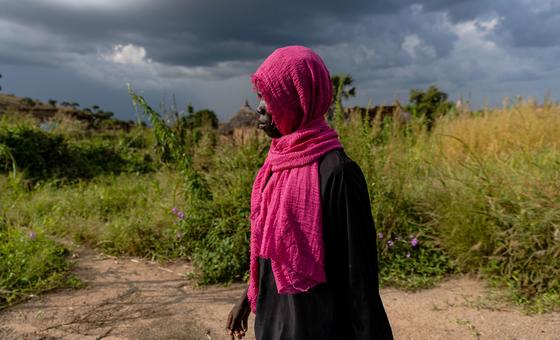
It has now been 842 days since conflict between troops from the military government and their former allies-turned-rivals in the paramilitary Rapid Support Forces erupted in Sudan, turning the country into the world’s largest humanitarian crisis.  

Heavy fighting continues in North Darfur State, with multiple civilian casualties reported in recent days – most notably during clashes in the state capital, El Fasher, on 1 and 2 August – following earlier violence between armed groups near the Abu Shouk camp for displaced people, which currently hosts 25,000 residents.  

Starvation threat

One year after famine was confirmed in Zamzam camp on the outskirts of El Fasher, the city remains under siege, with no food aid deliveries entering by road, leaving residents of the regional capital increasingly facing starvation.  

Prices of food items such as sorghum and wheat are more than four times higher than elsewhere in the country, while many families are unable to afford even the most basic items.  

“Limited cash assistance continues, but it is nowhere near enough to meet rising needs,” said Deputy UN Spokesperson Farhan Haq on Monday during the daily briefing in New York.  

Cholera menace continues

Meanwhile, cholera continues to spread across Darfur, with nearly 1,200 cases reported – around 300 of them children – in the locality of Tawila since late June.  

In South Darfur, health authorities have reported more than 1,100 suspected cases and 64 deaths since late May, as “shortages of medical supplies, clean water and sanitation services are severely hampering the humanitarian response,” said Mr. Haq.  

The UN Children’s Fund (UNICEF) warns that the lives of more than 640,000 under-fives are at heightened risk of violence, disease and hunger in the region.

Compounded crisis

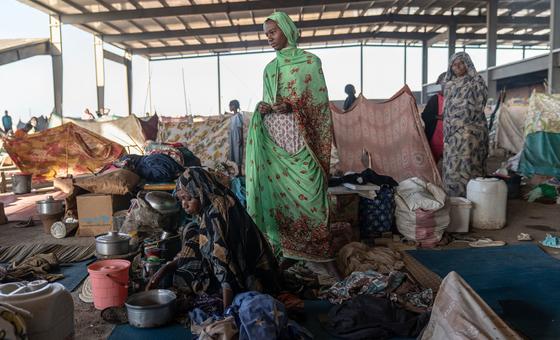
In Blue Nile State, floods in Ed Damazine displaced more than 100 people and destroyed at least 200 tents at Al-Karama camp on 1 August, further compounding the challenges facing people who fled their homes due to conflict.  

Meanwhile, in Khartoum State, the presence of deadly landmines in multiple locations adds a dangerous new layer to the threats already faced daily by civilians.  

As OCHA’s Director of Operations, Edem Wosornu, visits Sudan this week to assess the humanitarian situation, the agency has called for sustained and expanded humanitarian access along with greater international support for the most vulnerable. 
Source link

World News in Brief: Haiti funding cuts bite, civilian suffering intensifies in Myanmar, Belarus deaths in custody alert

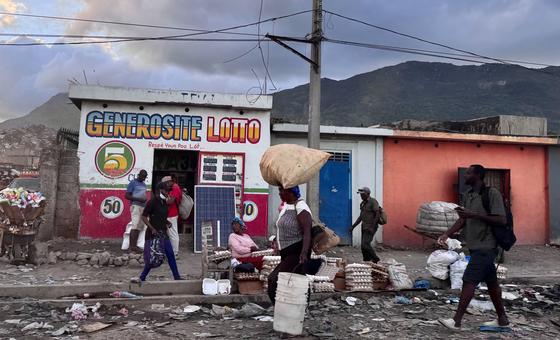
Ongoing violence is compounding the country’s food crisis, disrupting local food production in critical areas such as the commune of Kenscoff and the Artibonite department, often considered the breadbaskets of Haiti.

While the UN and its partners are responding “wherever and whenever possible,” UN Spokesperson Stéphane Dujarric said this Wednesday that humanitarians have only been able to reach 38 per cent of the population they aim to support.

Multiple roadblocks

“This is due to ongoing violence and insecurity, severe underfunding of the response, and the obvious access challenges,” he said.

Over halfway through the year, Haiti is the least-funded of the many humanitarian appeals that the UN coordinates – despite shortfalls for food security in the country being at extreme levels – with just over two per cent of the $425 million needed this year received to date.

Myanmar: Intensifying conflict impedes humanitarian aid

Almost four months after Myanmar’s devastating earthquake, the UN is deeply concerned over the plight of civilians caught up in the country’s devastating and continuing conflict between the military regime and opposition armed groups.

As fighting intensifies, civilians are particularly vulnerable, with increasing attacks on infrastructure.

According to reports, an air strike hit a monastery in Sagan Township in Sagaing Region on 11 July, killing 22 people and injuring at least 50 others. The monastery had been providing shelter to displaced people who had fled nearby villages.

A displacement camp in North Shan State was also reportedly hit by an airstrike over the weekend.

‘Broader pattern’

“These incidents are part of a broader pattern of attacks affecting people across Myanmar,” said Mr. Dujarric, with frequent reports of people being killed, injured or displaced by violence.

Such insecurity also impacts the ability of humanitarian teams to reach people in need: with one in three people now facing acute hunger, and the current monsoon season having caused flooding, “the UN urgently calls on all parties to respect human rights and international humanitarian law,” he said.

Belarus: Rights experts urge probe into deaths in custody of opposition activists

Top independent human rights experts called on Belarus on Wednesday to launch urgent investigations into the deaths of several people jailed for political dissent.

The experts – who are known as Special Rapporteurs – highlighted the case of 61-year-old businessman Valiantsin Shtermer. He died in May 2025 while serving his sentence in a so-called “Correctional Colony” in Šklou.

Mr. Shtermer had been jailed for making critical remarks about Russia’s full-scale invasion of Ukraine. Despite his serious medical condition, he was allegedly denied adequate care in prison.

Fifty-year-old opposition activist Vitold Ashurak meanwhile, also died shortly after being placed in an isolation in the same prison.

According to the Special Rapporteurs, Mr. Ashurak was a member of the Belarusian National Front who was jailed for violating public order during protests related to the disputed 2020 presidential elections.

We must not ignore these deaths

“These deaths must not be ignored,” said the experts, who added that there were strong grounds to believe that they resulted from abuse or neglect linked to the exercise of fundamental rights.

“It is of the utmost importance to thoroughly investigate the alleged instances of ill-treatment and neglect that resulted in the deaths of Shtermer, Ashurak, Puškin and other persons designated as political prisoners by human rights defenders,” the Human Rights Council appointed experts underscored.

“There are strong reasons to believe that these individuals lost their lives in retaliation for exercising their civil and political rights, including the rights to freedom of expression and peaceful assembly.”

The independent experts voiced concern that some opposition figures had been stigmatised and labelled as “extremists” or even “terrorists”.

Special Rapporteurs report regularly to the Human Rights Council. They are not UN staff and do not receive payment for their work.

Source link

Scores killed in Sudan’s Kordofan region as fighting intensifies

Amid ongoing communication disruptions in the area, confirming the exact civilian death toll remains difficult, but reports indicate that at least 300 people – including children and pregnant women – were killed in attacks on villages in Bara locality, North Kordofan State, between 10 and 13 July.

During the same period, a series of attacks – including an air strike on a school sheltering displaced families – reportedly killed more than 20 people, in the villages of Al Fula and Abu Zabad in West Kordofan State.  

OCHA is also alarmed by reports of renewed shelling in Al Obeid, the capital of North Kordofan State, “deepening fears and insecurity among civilians,” the humanitarian coordination agency reported.  

Tragic civilian toll

With thousands of people reportedly killed since the beginning of the conflict between former military allies-turned rivals over two years ago, the crisis in Sudan continues to take a devastating toll on civilians. 

These incidents are yet another tragic reminder of the relentless toll the conflict is taking on civilians across Sudan,” OCHA reported.

The office emphasises that civilians and civilian infrastructures – including schools, homes, shelters and humanitarian assets – must never be targeted, and called on all parties to the conflict to “fully respect their obligations under international humanitarian law.”

Toll from displacement

Described as “the largest as well as the fastest growing displacement crisis globally,” by the UN refugee agency (UNHCR) in February 2025, displacement continues amid the fighting.

People fleeing North Kordofan, as well as El Fasher in North Darfur State, continue to seek shelter in the rest of Sudan, including Northern State, with humanitarian partners on the ground reporting more than 3,000 displaced people arriving in the locality of Ad-Dabbah since June.

Although some have received food assistance, the steady influx of newly displaced families is putting additional strain on already stretched resources.  

With the rainy season approaching, OCHA warned that further hardship is likely, particularly as heavy rain and strong winds destroyed shelters and food supplies for about 2,700 displaced people in eastern Sudan this past Sunday. 

Source link