
The UN Charter “is more than parchment and ink; it is a promise – of peace, dignity and cooperation among nations,” the Secretary-General said.
Almost 80 years after it was signed, Mr. Guterres underlined that the Charter was just the beginning, enshrining ideas and principles which the world works to implement on a daily basis.
Born from war
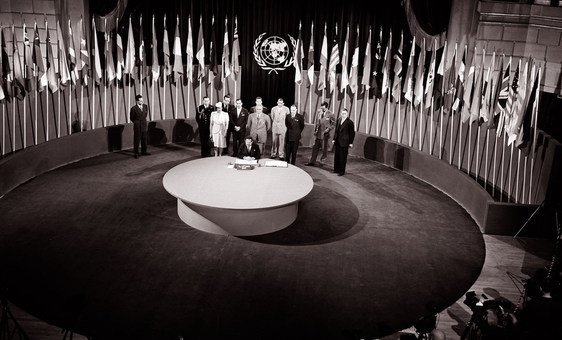
In the wake of the Second World War, representatives from almost 50 nations convened in San Francisco to put together an organization committed to the idea of “never again” — never again would a war of this magnitude devastate the world.
Instead, the world would choose peace and diplomacy, equality and prosperity.
“For a world mired in endless cycles of conflict and human suffering, the Charter and the principles it represented – dialogue, diplomacy, cooperation, and solidarity — was a path to a better, more peaceful, and prosperous future,” said UN General Assembly President Philémon Yang. The Charter was signed on 26 June 1945, almost exactly 80 years ago. However, it did not take effect until 24 October 1945 after the signatories’ legislative bodies had ratified it.
The Charter, which is considered an international treaty, is a legal instrument which binds all Member States to the principles and commitments laid out within it.

Since its ratification, the UN Charter has paved the way for other landmark international agreements including the 1948 Universal Declaration of Human Rights and the 2024 Pact for the Future.
“The decades since have only proven the Charter’s enduring legacy. It has shaped decades of progress — guided international action on decolonisation, protected human rights and promoted justice and sustainable development,” said Mr. Yang.
‘A living miracle’
The exhibit contextualizes the Charter as a document from the past which continues to live in our present and will help shape the future.
“As we look ahead, we would be wise to remember our past, celebrate our successes and build our future on the foundation of the UN Charter,” Mr. Yang said.
Mr. Guterres said that this exhibit is a moment for people to reflect on the artifacts of the UN’s founding — to see the photos, the videos and the documents which have shaped this global organization.
He acknowledged that while the world faces new challenges like climate change and technology, in addition to age-old challenges, the UN Charter can be a guiding force if the world is willing to carry the spirit of the Charter and its commitment to peace into the future.
“The UN is a living miracle — and the women and men of the United Nations bring this miracle to life every day and everywhere,” the Secretary-General said.