Invisible highways: The vast network of undersea cables powering our connectivity

The exchange of data in the blink of an eye has become a given in much of the world – and yet we rarely pause to think about what makes it all possible: a complex global network of cables in the depths of the ocean that silently connects us.

In the modern information age, undersea cables have become a strong foundation for digital connectivity, Tomas Lamanauskas, Deputy Secretary-General of the International Telecommunication Union (ITU) has told UN News, ahead of a global summit on the issue beginning in Portugal on Monday.

Trillions of dollars in transactions in the global economy and the continuous accessibility of information takes place through it.

“About 99 per cent of the international internet traffic goes through submarine cables. Even the conversation you and I are having right now is carried through these cables,” he said.

“People know the visible access points, such as mobile networks, satellites, and fixed internet, but the underlying infrastructure that supports them is the vast network of submarine cables — our digital highways.”

These invisible highways, consisting of fiber-optic wires connecting landing points, are placed hundreds of metres below the surface of the ocean by cable-laying ships.

Mr. Lamanauskas underscored that as our reliance on digital connectivity continues to grow, strengthening the resilience of these cables and developing collective strategies have become increasingly important. 

This will be a key focus of the Second International Submarine Cable Resilience Summit, taking place on Monday and Tuesday in Porto, Portugal.

Rapid data transmission

Connecting different parts of the world through communication cables is not a new idea. In 1850, England and France were linked for the first time by an undersea telegraph cable.

Since then, technology has steadily evolved, from telegraph services to telephone networks, and now to high-speed internet carried by fiber-optic cables. Today, hundreds of terabits of data pass per second through these cables laid along the seabed.

Across the globe, there are over 500 commercial submarine cables, linking continents, markets, and households. 

Relatively thin and roughly the width of a garden hose, these cables stretch for around 1.7 million kilometres – long enough to wrap around the Earth several times.

To lay them, the seabed is surveyed to find routes with fewer risks and less impact on the environment. Then, special ships unroll large reels of fibre-optic cable onto the ocean floor.

Close-up of submarine cable being wound onto industrial reels. The Second International Submarine Cable Resilience Summit will take place on 2–3 February 2026 in Porto, Portugal.

Cable traffic disrupted

With these cables increasingly forming the backbone of the global economy, any disruption in data flow can become instantly noticeable, impacting economic activities, emergency and tech services, security systems, and internet access for billions worldwide. 

There are typically 150 to 200 cable incidents each year, averaging about three to four per week.

The ITU senior official recalled that “in recent years, there have been quite a few high-profile incidents, from the Red Sea to West and East Africa. 

“For example, in 2024, submarine cable incidents in the Red Sea disrupted an estimated 25 per cent of data traffic between Europe and Asia.”

Outages in cable connectivity may result from earthquakes, underwater landslides, and volcanic eruptions. However, statistics show that around 80 per cent of incidents are caused by human activity, from ship anchors or fishing trawlers damaging cables.

Every millisecond matters

Mr. Lamanauskas cited the example of Tonga, which has experienced three major disruptions since 2019, caused by an earthquake, volcanic eruptions and improper anchoring. Because of the lack of a diverse network in remote regions, when a cable is cut, a vast territory can go offline.

Imagine yourself and your entire community being offline for a week, unable to access essential services like digital healthcare, access to information, and education.”

“Imagine the impact on stock traders in New York if even a millisecond delay occurs due to cable congestion or a submarine cable incident. Every moment matters.”

Repairing the invisible highways

Aside from abrasion and natural wear and tear, “a portion of the cable infrastructure laid around the dot-com boom of 2000 is now reaching maturity, as these cables were designed for an average 25-year lifespan,” he added.

DSG Lamanauskas explained that in the event of an incident, engineers are usually quickly able to identify the affected area and “the actual repair work itself is not always the most complicated piece. What’s often more complex is securing all the required permits and licenses, especially when multiple or overlapping jurisdictions are involved.”

Depending on the location and scale of damage, the summoning of cable ships and the repair work can range from days, weeks to months. In busy locations, these ships are usually close by but reaching remote areas can take longer. In many countries, the lack of a clear focal point to manage these operational requirements adds to the challenge.

Worker directing deployment of submarine cable at port. The Second International Submarine Cable Resilience Summit will take place on 2–3 February 2026 in Porto, Portugal.

Mr. Lamanauskas noted that laying new cables is often a multi-year project that takes a significant amount of time. “There’s extensive planning involved, and it’s usually costly too. While shorter cables cost millions, the longer ones can run into the hundreds of millions.”

What is ITU doing?

As the UN agency for digital technologies, ITU works to enhance the resilience of global submarine cables through collaboration, standard setting, and technical guidance. Its priorities include developing resilient measures, streamlining maintenance and repair processes, and adopting more sustainable practices.

“Over the last 40 years, the capacity of these optical cables has been increasing by 40 per cent yearly. It’s an exponential growth which in turn powers the exponential growth of the internet,” Mr. Lamanauskas added.

International Submarine Cable Resilience Summit 2025, ITU Conference

Mr. Lamanauskas clarified that ITU isn’t an operational body and doesn’t repair cables. 

“Instead, we focus on creating the right enabling environment by shortening permitting timelines, establishing clear points of contact, raising awareness to prevent accidental damage, and facilitating faster repairs.”

As demand for connectivity and data surge with unprecedented speed, these efforts will play a key role in bolstering the foundation for shared progress and shaping the future of the global digital landscape.  

Source link

‘Our work is largely invisible’: Journey from outer space to frontline aid worker

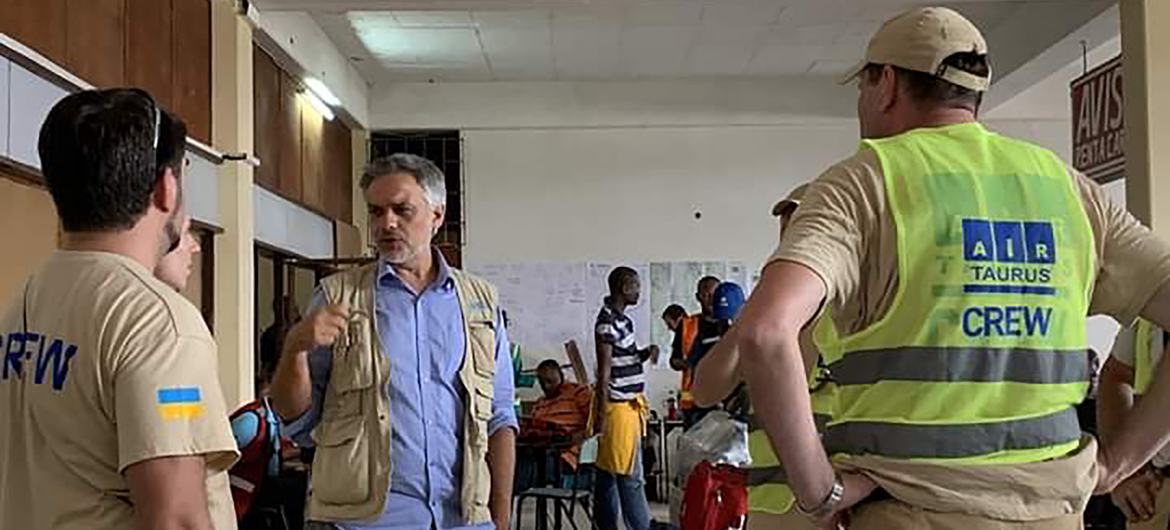
Ahead of donning a beige WFP vest and boots to face hurricanes, wars and refugee camps, the Portuguese scientist worked with satellite imagery and cartography, creating maps to support humanitarian missions, until he realised he didn’t want to stay behind a computer screen.

On the occasion of World Humanitarian Day, marked annually on 19 August, Mr. Matos shared his story with UN News.

Pedro Matos joined the WFP response team following the deadly Cyclone Idai in Mozambique in 2019. (file)

From hurricanes to war

“At a certain point, it just wasn’t enough,” he recalled about his space engineering job. “I didn’t want to be making maps for other people to go and do humanitarian responses. I want to take those maps and be the one to do the responding.”

That’s exactly what he did. At WFP, he first developed maps on the ground and then went on to coordinate the agency’s emergency operations.

Since then, he has visited dozens of countries often at the epicentre of crises, from Hurricane Idai in Mozambique to the outbreak of war in Ukraine.

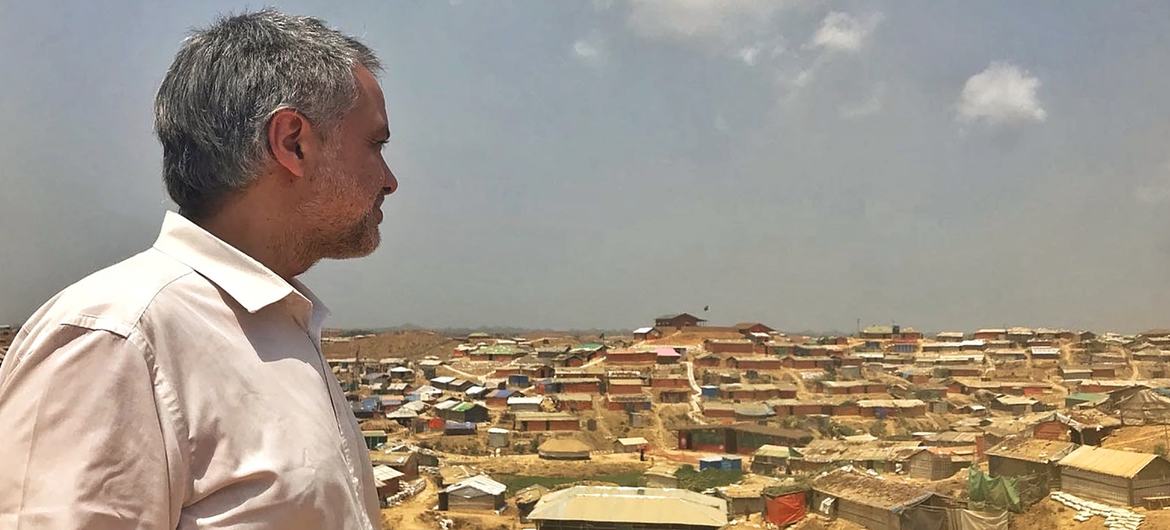
In 2018, Pedro Matos looks at the Kutupalong refugee camp where Rohingya refugees live. (file)

‘Like moving an entire government’

Coordinating in an emergency response is like “moving an entire government”, where each UN agency represents a “ministry” and the response only works when everyone comes together over the four essential areas in a crisis response: food, shelter, water and health.

Having just returned from a mission in Bangladesh, he described efforts to respond at Cox’s Bazar, the world’s largest refugee camp and home to 700,000 people who fled violence in Myanmar.

“We’ve been able to provide better conditions for people to live in this limbo with a little more comfort,” he said, also remembering his visit there in 2018 at the height of the crisis.

At the time, “a million people crossed the border in a month.” Today, although they remain in “limbo”, he pointed to improvements such as more monsoon-resistant homes and roads, gas stoves and reforestation.

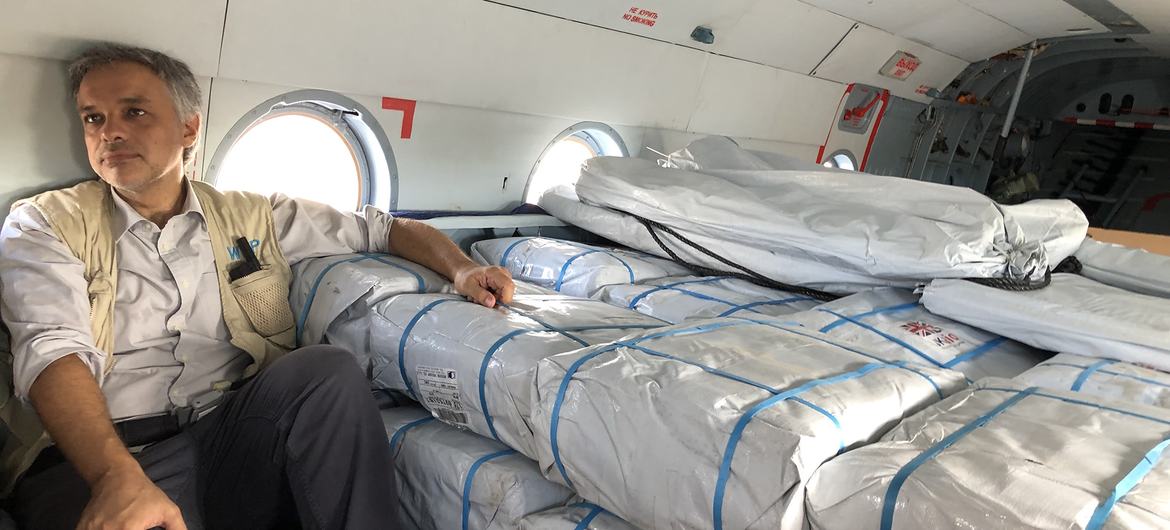
Pedro Matos on board a humanitarian aid flight after Cyclone Idai in Mozambique. (file)

Heart-shredding challenges and profound rewards

The job has meant both challenges and rewards.

“We’ve also had a few instances where we’ve been kidnapped, or come under fire, but it’s not the things that happen to us that impact us the most,” he said. “It’s the things that happen to others that have the most impact.”

Hurricane Idai in Mozambique was a Category 5 hurricane that hit Beira in 2019 was one of the biggest and most intense crisis, but also most rewarding, he said.

“There’s this mix of something that was very intense and hard because we couldn’t reach everyone, but at the same time, the fact was that there were many people – tens or hundreds of thousands of people – who would have died if we hadn’t been there,” he said. “That was the most impactful response in my 17 years at the United Nations.”

When he was in Yemen, “we were bombed 20 times a day” in the capital, Sana’a, he said, adding that “there’s a strange normalcy” that develops.

“We find ourselves saying things like, ‘no, that wasn’t very far; it was only 500 metres from here,’” he said. “It’s something I never thought I’d think or say before doing this work.”

When reaching central Ukraine several weeks after Russia’s full-scale invasion in early 2022, he called the situation “very intense”. Within a week, he and his colleagues began distributing money to people coming from the frontlines.

We couldn’t reach everyone, but there were tens or hundreds of thousands of people who would have died if we hadn’t been there.

“When we interviewed people and asked them what they were doing with the money we gave them, it was very gratifying,” he said. “It was beautiful.”

Those who had been wounded in the war were using the money to buy painkillers. Others used it to pay for gas to escape the frontlines. One mother had been able to buy her daughter a scoop of ice cream for the first time since the war began.

“Her daughter was delighted,” he said. “There are very rewarding moments.”

Feeding millions every day

“We all think we know what the humanitarian or aid sector is,” Mr. Matos explained, adding that the scale during a crisis is much, much larger.

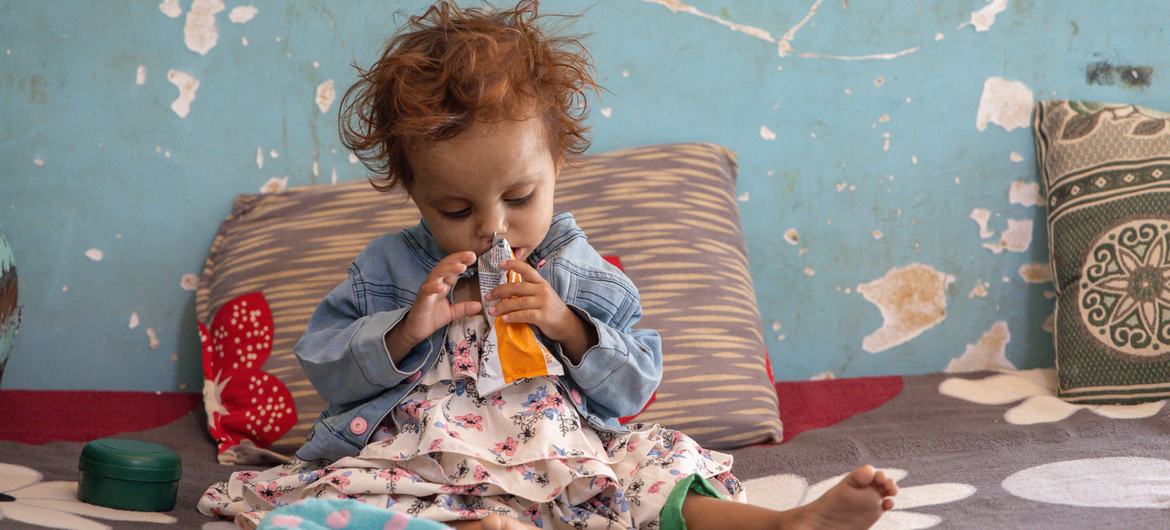
“I thought we’d be rehabilitating schools, feeding 100 people,” he continued. “I never imagined I’d be feeding 13 million people a day in Yemen. The scale is absolutely incredible.”

However, humanitarian work is often seen as a separate job, he said. Almost every profession that exists in private and government sectors also exists in an aid landscape, from lawyers, those who work in procurement, like in supermarkets, and human resources.

“I basically do the same work as social workers or firefighters,” he said. “They do it here every day, and I do it elsewhere. But, our work is in the same field and very similar.”

A toddler eats a food supplement, as part of WFP’s nutrition programme, in Mokha, Taiz, in Yemen.

The value of a Nobel Prize

WFP was awarded the Nobel Peace Prize in 2020, a recognition that Mr. Matos received with humility.

“Our work is largely invisible, despite feeding 120 million people every day,” he said. “It gave us a platform to raise awareness about crises like Congo, Myanmar, Sudan and Gaza, which often go unnoticed.”

Our work is largely invisible, despite feeding 120 million people every day.

He said his job is to give voice to the voiceless when crises fade from news headlines. Despite the difficulties and risks across his career, Mr. Matos has no doubt about the most important lesson he learned.

“People are essentially good,” he said. “When faced with the imminence of tragedy, people are fundamentally good and want to help others, even if that other person is very different. It was good to realise this because it’s not always obvious when we’re far from these crises.”

Source link

Landlocked nations ‘invisible to much of the world’: UN trade and development chief

At a major UN conference underway this week in Awaza, Turkmenistan, calls are growing to tackle the high trade costs, investment gaps and growing digital divide that continue to hold these countries back.

Despite progress in some areas, landlocked developing nations – from Bolivia to Bhutan and Burkina Faso – account for just 1.2 per cent of global exports, even though they represent over seven per cent of the world’s countries. Their populations face some of the highest levels of poverty, food insecurity and economic vulnerability anywhere.

These countries are invisible to much of the world,” not able to draw the attention needed to their unique challenges, said Rebeca Grynspan Secretary-General of the UN trade and development body, UNCTAD, speaking to UN News on the margins of the third UN Conference on Landlocked Developing Countries (LLDC3).

Without international attention and coordinated action, they will remain stuck in structural limbo, she emphasised.

High costs, low returns

One of the most persistent challenges they face is geography itself.

Without direct access to seaports, they must rely on neighbouring transit countries to move goods – often through outdated or inefficient infrastructure.

This translates into trade costs that are, on average, 1.4 times higher than those of coastal countries, according to UNCTAD. In some cases, export procedures can stretch into weeks or months due to border delays, fragmented regulations and limited digital systems.

Ms. Grynspan highlighted that in customs procedures, digital tools can cut waiting times at borders from three days to three hours. To that end, regional agreements and digital initiatives have emerged as lifelines.

UNCTAD head Rebeca Grynspan speaking to UN News.

One standout example is the Framework Agreement on Facilitation of Cross-Border Paperless Trade, championed by the UN Economic and Social Commission for Asia and the Pacific (ESCAP). Now in force among several Asia-Pacific countries, it helps reduce paperwork, automate customs and harmonise standards, making processes faster, cheaper and more transparent.

Paperless trade also has the potential to reduce corruption and ease language-related challenges.

ESCAP estimates that implementing cross-border paperless trade measures could reduce trade costs by up to 30 per cent for countries in the region without direct sea access and increase export potential for the whole of Asia and the Pacific by nearly $260 billion.

Infrastructure and integration

Even when goods reach border crossings, weak domestic transport networks further slow trade down. Roads and railways are often underdeveloped, underfunded or vulnerable to climate shocks.

Regional infrastructure – like the African North Corridor – is crucial,” Ms. Grynspan said, citing examples where wait times at borders have dropped by more than 150 per cent due to corridor investment and coordination.

But infrastructure alone is not enough – it must be paired with digital systems and strong regional partnerships.

“For landlocked countries, regional integration is very important because when you integrate regionally, you are in a better position because goods pass through you…[making you] part of global value chains with value added.”

In landlocked countries like Bhutan (pictured), roads are a vital lifeline. But limited and costly transport infrastructure restricts mobility, inflates trade costs, and hinders access to markets, education, and healthcare.

Escaping the commodity trap

Another structural challenge is heavy dependence on commodities. Over 80 per cent of landlocked developing countries rely on raw materials like minerals, oil or agricultural goods, making them highly exposed to global price swings and long-term decline in terms of trade.

You educate your people, but then they have nowhere to work because commodities do not give you the quality jobs that you need for the future,” said Ms. Grynspan.

The path forward lies in economic diversification, especially toward value-added manufacturing, digital services and knowledge-based sectors – industries that are less constrained by geography.

The investment conundrum

Yet to realise that potential, these countries need investment and they are not getting enough.

Despite more than 135 legal and policy reforms aimed at attracting foreign capital, foreign direct investment has declined by an average of 2 per cent over the past decade.

ESCAP’s analysis confirms this gap: landlocked countries in Asia are receiving far less infrastructure investment per person compared with coastal countries, even though their transport requirements are proportionally higher.

Governments are trying to make their countries more attractive [but] investment is not coming in,” Ms. Grynspan said.

High risk factors, lack of guarantees, and a reliance on short-term financing are deterring investors.

Multilateral development banks need to help us,” she added. “We need long-term, affordable financing and lowered cost of capital.” 

Source link

Millions remain invisible – but Asia-Pacific leaders pledge change by 2030

Now, governments have committed to close that gap by 2030.

At the conclusion of the Third Ministerial Conference on Civil Registration and Vital Statistics in Asia and the Pacific, leaders adopted a renewed declaration to strengthen national civil registration systems – the foundational mechanisms that register births, deaths and other vital events.

The move extends the regional “CRVS Decade” initiative, first launched in 2014, into a new phase aligned with the Sustainable Development Goals (SDGs), especially target 16.9 on ensuring legal identity for all.

These numbers are more than statistics, they represent lives without legal recognition and families left without support,” said Armida Salsiah Alisjahbana, the Executive Secretary of the UN Economic and Social Commission for Asia and the Pacific (ESCAP), which convened the forum.

“This week has been a powerful call to action. We have seen inspiring examples of countries reaching the most marginalized, embracing digital innovation and strengthening legal and institutional frameworks.”

More than statistics

Civil registration and vital statistics (CRVS) systems are essential to establishing legal identity, accessing services, and ensuring inclusion in public policy.

A birth certificate can mean access to healthcare, education and social protection.

A death certificate enables families to claim inheritance, pensions and other rights.

Without these critical documents, individuals – especially women, children and rural populations – risk exclusion, vulnerability, and injustice.

Uneven progress

According to a recent ESCAP report, the region has made remarkable gains since 2012 – the number of unregistered children under five has fallen by over 60 per cent, from 135 million to 51 million.

As of 2024, 29 countries now register more than 90 per cent of births within a year, and 30 do the same for deaths. The number of countries publishing civil registration-based vital statistics nearly doubled in that period.

However, progress remains uneven – about 14 million children in the region reach their first birthday without having their birth registered. And 6.9 million deaths go unrecorded annually, particularly those that occur outside health facilities or in remote areas.

Many countries still face gaps in certifying and coding causes of death, hampering disease surveillance and public health responses, as seen during the COVID-19 pandemic.

ESCAP Photo/Panumas Sanguanwong

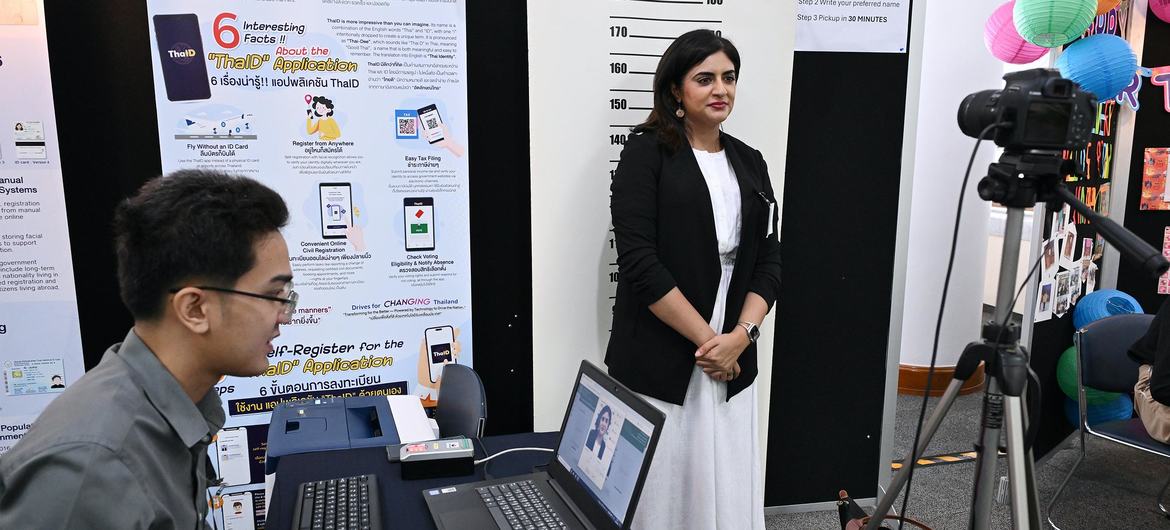
A participant at the Ministerial Conference on Civil Registration and Vital Statistics (CRVS) in Bangkok takes part in a demonstration at the Thai digital ID and verification exhibition booth.

Get everyone in the picture

The new Ministerial Declaration calls for universal and responsive CRVS systems that are inclusive, digitally enabled and resilient.

It emphasizes gender equity in registration, legal protections for personal data, and continuity of services during emergencies.

Governments also pledged to increase training, expand community outreach and improve cause-of-death reporting – including through verbal autopsies and improving certification systems.

Everyone counts. Data saves lives,” Ms. Alisjahbana said, “legal identity is a right, not a privilege. No one should be left behind – simply because they were never counted in the first place.”

Let us finish what we started. Let us get everyone in the picture and ensure every life truly counts.

Source link

No Dark Matter, astronomers find the long missing Universe’s ordinary matter

Astronomers have detected much of the Universe’s ordinary matter, which had long been missing from accounts of its total mass. Not ‘dark matter’ — the mysterious, invisible stuff that makes up the majority of the Universe’s contents. This is normal matter, but it’s spread so sparsely across intergalactic space that more than three-quarters of it is almost undetectable.

Using an array of 36 radio telescopes in remote Western Australia, researchers analysed the light from 6 fast radio bursts (FRBs), unusually energetic events that last just milliseconds and originate in other galaxies. The spectrum was sensitive enough to reveal the exceedingly thin matter that the FRBs met in their travels. “The missing matter was equivalent to only one or two atoms in a room the size of an average office,” says radio astronomer Jean-Pierre Macquart.

More than three-quarters of the baryonic content of the Universe resides in a highly diffuse state that is difficult to detect, with only a small fraction directly observed in galaxies and galaxy clusters. Censuses of the nearby Universe have used absorption line spectroscopy to observe the ‘invisible’ baryons, but these measurements rely on large and uncertain corrections and are insensitive to most of the Universe’s volume and probably most of its mass.

Universe’s invisible baryons

In particular, quasar spectroscopy is sensitive either to the very small amounts of hydrogen that exist in the atomic state, or to highly ionized and enriched gas in denser regions near galaxies. Other techniques to observe these invisible baryons also have limitations — Sunyaev–Zel’dovich analyses can provide evidence from gas within filamentary structures, and studies of X-ray emission are most sensitive to gas near galaxy clusters.

The scientists said a measurement of the baryon content of the Universe using the dispersion of a sample of localized fast radio bursts; this technique determines the electron column density along each line of sight and accounts for every ionized baryon.

“We augment the sample of reported arcsecond-localized fast radio bursts with four new localizations in host galaxies that have measured redshifts of 0.291, 0.118, 0.378 and 0.522. This completes a sample sufficiently large to account for dispersion variations along the lines of sight and in the host-galaxy environments, and we derive a cosmic baryon density of Ωb=0.051+0.021−0.025h−170 (95 per cent confidence; h70 = H0/(70 km s−1 Mpc−1) and H0 is Hubble’s constant,” wrote scientists in their paper published in Nature.

This independent measurement is consistent with values derived from the cosmic microwave background and from Big Bang nucleosynthesis, they wrote in their abstract.