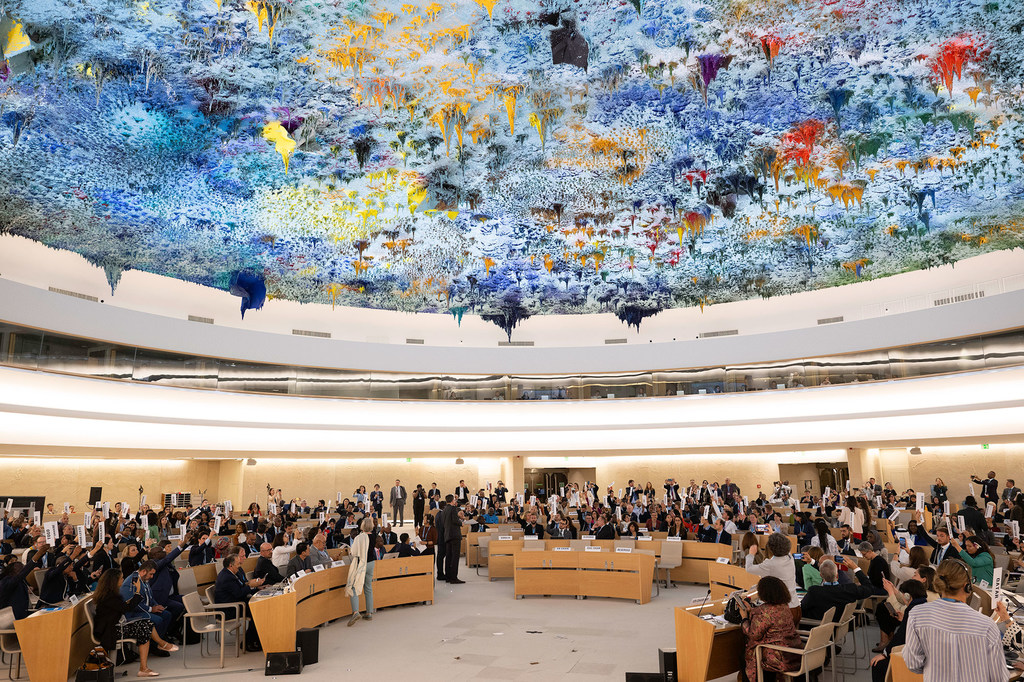
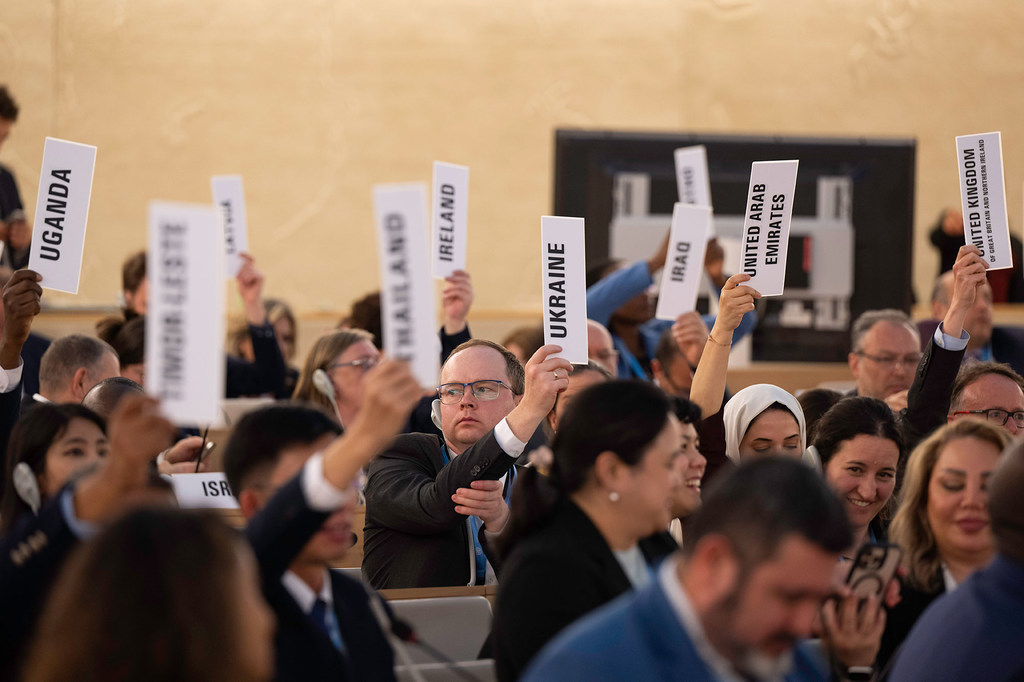
COP30: Climate crisis is a health crisis, WHO warns as philanthropies pledge $300m for solutions

The special report on health and climate change, published by the UN World Health Organization (WHO) and the Brazilian Government, warns that one in 12 hospitals could face climate-related shutdowns. It calls for urgent action to protect health systems in a rapidly warming world.

This follows Thursday’s launch of the Belém Health Action Plan, a flagship COP30 initiative putting health at the centre of climate policy.

What the WHO says

“The climate crisis is a health crisis – not in the distant future, but here and now,” said WHO Director-General Dr Tedros Adhanom Ghebreyesus.

“This special report provides evidence on the impact of climate change on individuals and health systems, and real-world examples of what countries can do – and are doing – to protect health and strengthen health systems.”

Why it matters

Global temperatures are already above 1.5°C. The report finds that 3.3 to 3.6 billion people live in areas highly vulnerable to climate impacts, while hospitals face a 41 per cent higher risk of damage from extreme weather compared to 1990.

Without rapid decarbonisation, the number of health facilities at risk could double by mid-century. The health sector itself contributes around 5 per cent of global greenhouse gas emissions, underscoring the need for a swift transition to low-carbon, climate-resilient systems.

Key gaps in health adaptation

The report highlights stark gaps in health adaptation planning:

  • Only 54 per cent of national health adaptation plans assess risks to health facilities.
  • Fewer than 30 per cent consider income disparities.
  • Just 20 per cent take gender into account.
  • Less than 1 per cent include people with disabilities.

Progress has been made – the number of countries with multi-hazard early warning systems doubled between 2015 and 2023 – but coverage remains uneven, especially in least developed countries and small island states.

What’s being done

Adding momentum, a coalition of more than 35 philanthropies today pledged $300 million to accelerate solutions at the intersection of climate and health.

The Climate and Health Funders Coalition – which includes Bloomberg Philanthropies, the Gates Foundation, IKEA Foundation, The Rockefeller Foundation, and Wellcome – will back innovations, policies and research on extreme heat, air pollution and climate-sensitive diseases, as well as strengthen health systems and data integration. Find out more here.

The coalition’s inaugural funding effort supports the Belém Health Action Plan and aims to deliver “no-regret” interventions that save lives now. With the past decade the hottest on record and temperatures set to remain near historic highs, experts warn that failure to act risks catastrophic consequences for human health.

‘Adaptation is urgent’: COP30 health envoy calls for action

UN News spoke with Ethel Maciel, COP30’s special envoy for health and one of the architects of the Belém Health Action Plan. She stressed that climate change is no longer a distant threat – it is reshaping health systems now.

“Then, how do we prepare our health units, our hospitals, our structures for these extreme events that will happen with increasing frequency? And how can we provide training and capacity-building for health professionals so that they can face these extreme events that will be caused by what we are already experiencing in these climate changes,” she said.

“One example here in Brazil, was last year’s flooding in Rio Grande do Sul, [which triggered] the largest dengue epidemic in history, driven by these climate changes. So, it is not something for us to think about in the future; it’s happening now. So, thinking about how to adapt our system is urgent.”

Ms. Maciel outlined three pillars of the plan:

  • Monitoring to integrate climate and health data, enabling forecasts of heat-related health demand and better reporting of climate-linked cases.
  • Resilient systems and training so health professionals can identify and treat impacts such as dehydration or cardiac stress.
  • Research and innovation to develop heat-resistant medicines and vaccines, cut pollution in health supply chains, and expand renewable energy use.

She warned that implementation is critical in the Amazon, where deforestation could unleash unknown pathogens. “We have … pathogens that we do not yet even fully [understand],” she said, urging leaders to ensure the plan “does not become just another paper and another very beautiful declaration, but that does not happen in practice.”

UN News is reporting from Belém, bringing you front-row coverage of everything unfolding at COP30.

Belém COP30 delivers climate finance boost and a pledge to plan fossil fuel transition

  • Climate disinformation: Commitment to promote information integrity and counter false narratives.

The final decision emphasises solidarity and investment, setting ambitious financial targets while leaving energy transition for later discussion. The burning of fossil fuels emits greenhouse gases that are by far the largest contributors to global warming, making this omission a point of concern for many nations, including negotiators from South America and the EU, as well as civil society groups.

Expectations were high that COP30’s final decision would include explicit reference to phasing out fossil fuels. More than 80 countries backed Brazil’s proposal for a formal ‘roadmap.’

A draft text had included it – until the final hours of talks. The adopted outcome refers only to the ‘UAE Consensus’, the COP28 decision calling for “transitioning away from fossil fuels.”

Before the final plenary, Brazilian scientist Carlos Nobre issued a stark warning: fossil fuel use must fall to zero by 2040 – 2045 at the latest to avoid catastrophic temperature rises of up to 2.5°C by mid-century. That trajectory, he said, would spell the near-total loss of coral reefs, the collapse of the Amazon rainforest and an accelerated melt of the Greenland ice sheet.

A closer look

After two weeks of intense negotiations, the adopted text calls for mobilizing at least $1.3 trillion per year by 2035 for climate action, alongside tripling adaptation finance and operationalizing the loss and damage fund agreed at COP28.  

It also launches two major initiatives – the Global Implementation Accelerator and the Belém Mission to 1.5°C – to help countries deliver on their nationally determined contributions (NDCs), or national climate action plans, and adaptation plans.

For the first time, the decision acknowledges the need to tackle climate disinformation, pledging to promote information integrity and counter narratives that undermine science-based action.  

Last week, Brazil’s President, Luiz Inácio Lula da Silva, opened the summit declaring it would be known as “the COP of truth,” and this landmark decision marks a significant step toward safeguarding public trust in climate policy – even as the absence of fossil fuel transition language underscores the complexity of energy negotiations.

Two new roadmaps

In the closing meeting, COP30 President André Corrêa do Lago acknowledged what was left out of the deal:  

“We know some of you had greater ambitions for some of the issues at hand,” he said, adding, “I know the youth civil society will demand us to do more to fight climate change. I want to reaffirm that I will try not to disappoint you during my presidency.”  

Reflecting on President Lula’s call at the opening of COP30 for ambition, Mr. do Lago announced plans to create two roadmaps: one to halt and reverse deforestation; and another to transition away from fossil fuels in a just, orderly and equitable manner, mobilizing resources for these purposes in a “just and planned manner.”

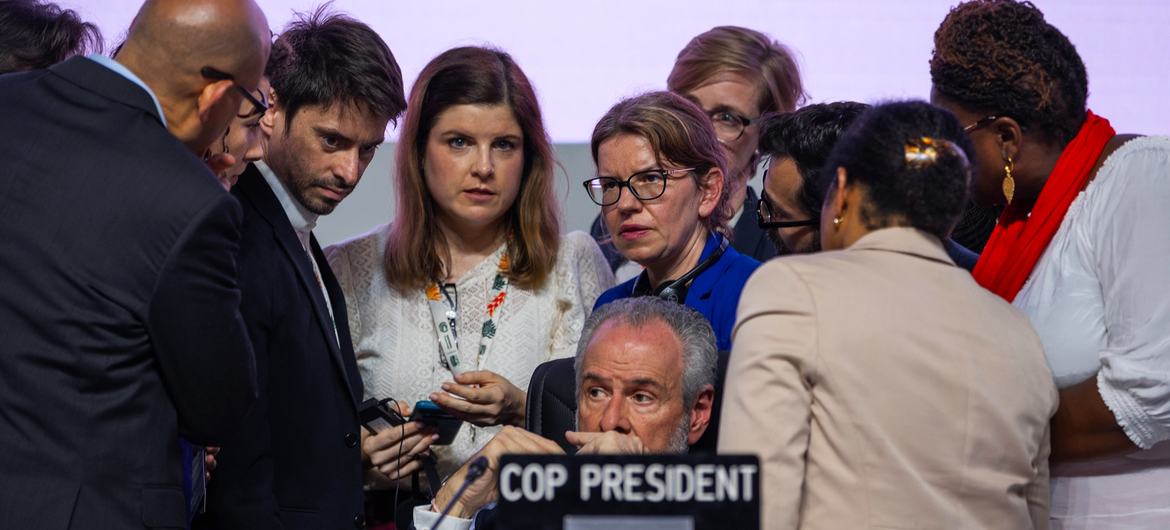
COP30 President André Corrêa do Lago (centre) confers with his team at the closing of the UN Climate Conference.

The road to consensus

The road to consensus at the latest Conference of the Parties to the UN Framework Convention on Climate Change (UNFCCC), as the annual COPs are formally known, was anything but smooth.  

Late last week, Indigenous groups staged blockades demanding stronger protections for the Amazon, and late Thursday afternoon, a fire at the conference venue disrupted talks during a critical phase. 

Negotiators worked through the night on Friday – to bridge gaps on finance and ambition, with Brazil’s presidency steering discussions toward a politically workable outcome focused on support and implementation of agreements from past COPs.

‘Multilateralism is alive’

From the G20 Summit in Johannesburg, UN Secretary-General António Guterres sent a clear message to COP30: At the gateway of the Amazon, Parties reached an agreement that shows nations can still unite to confront challenges no country can solve alone.  

The UN chief said that COP30 delivered progress, such as the launch of the Global Implementation Accelerator to close ambition gaps and reaffirmed the UAE Consensus, including a just, orderly and equitable transition away from fossil fuels.

“But COPs are consensus-based – and in a period of geopolitical divides, consensus is ever harder to reach. I cannot pretend that COP30 has delivered everything that is needed.” Overshoot of 1.5°C is a stark warning: deep, rapid emission cuts and massive climate finance are essential. “COP30 is over, but the work is not,” he said.  

Mr. Guterres vowed to keep pushing for higher ambition and solidarity, urging all who marched, negotiated and mobilized: “Do not give up. History – and the United Nations – are on your side.

Holding the line at 1.5 in ‘turbulent geopolitical waters’

UN climate chief Simon Stiell pointed to a series of major gains as COP30 closed in Belém: new strategies to accelerate Paris Agreement implementation, a push to triple adaptation finance, and commitments toward a just energy transition.

And despite what he called “turbulent geopolitical waters” – marked by polarization and climate denial – 194 nations stood together, “keeping humanity in the fight for a livable planet, determined to hold the line at 1.5°C.”

At the heart of this momentum is COP30’s flagship outcome: the Mutirão text, a sweeping deal that bundles four contentious negotiation tracks – from mitigation to finance and trade barriers – into a single, consensus-based agreement. Seventeen additional decisions were adopted alongside it.

The final document declares that the global shift toward low-emissions and climate-resilient development is “irreversible and the trend of the future.” It reaffirms that the Paris Agreement is working – and must “go further and faster” – strengthening the role of multilateral climate cooperation.

The text also recognizes the economic and social benefits of climate action, from growth and job creation to improved energy access, security and public health. Mr. Stiell pointed to a decisive trend: investments in renewable energy now outpace fossil fuels two to one – “a political and market signal that cannot be ignored,” he said.

A robust action agenda beyond negotiations

The Brazilian Presidency underscored that COP30’s success extends beyond negotiated agreements, highlighting a wave of voluntary commitments under the Action Agenda.

Among them:

  • Tropical Forests Forever Fund: Raised $5.5 billion and now includes 53 participating countries; at least 20 per cent of resources go directly to Indigenous Peoples and local communities.
  • Belém Health Action Plan: The first global initiative targeting climate-related health threats, launched with $300 million from 35 philanthropic organizations.
  • UNEZA Alliance: Public utility companies pledged $66 billion annually for renewable energy and $82 billion for transmission and storage.
  • Cities, regions and companies: A coalition spanning 25,000 buildings reported cutting over 850,000 tons of CO₂ in 2024.

Climate justice at the forefront

Countries also agreed to develop a just transition mechanism, enhancing cooperation, technical support and capacity-building.
Millions remain invisible – but Asia-Pacific leaders pledge change by 2030

Now, governments have committed to close that gap by 2030.

At the conclusion of the Third Ministerial Conference on Civil Registration and Vital Statistics in Asia and the Pacific, leaders adopted a renewed declaration to strengthen national civil registration systems – the foundational mechanisms that register births, deaths and other vital events.

The move extends the regional “CRVS Decade” initiative, first launched in 2014, into a new phase aligned with the Sustainable Development Goals (SDGs), especially target 16.9 on ensuring legal identity for all.

These numbers are more than statistics, they represent lives without legal recognition and families left without support,” said Armida Salsiah Alisjahbana, the Executive Secretary of the UN Economic and Social Commission for Asia and the Pacific (ESCAP), which convened the forum.

“This week has been a powerful call to action. We have seen inspiring examples of countries reaching the most marginalized, embracing digital innovation and strengthening legal and institutional frameworks.”

More than statistics

Civil registration and vital statistics (CRVS) systems are essential to establishing legal identity, accessing services, and ensuring inclusion in public policy.

A birth certificate can mean access to healthcare, education and social protection.

A death certificate enables families to claim inheritance, pensions and other rights.

Without these critical documents, individuals – especially women, children and rural populations – risk exclusion, vulnerability, and injustice.

Uneven progress

According to a recent ESCAP report, the region has made remarkable gains since 2012 – the number of unregistered children under five has fallen by over 60 per cent, from 135 million to 51 million.

As of 2024, 29 countries now register more than 90 per cent of births within a year, and 30 do the same for deaths. The number of countries publishing civil registration-based vital statistics nearly doubled in that period.

However, progress remains uneven – about 14 million children in the region reach their first birthday without having their birth registered. And 6.9 million deaths go unrecorded annually, particularly those that occur outside health facilities or in remote areas.

Many countries still face gaps in certifying and coding causes of death, hampering disease surveillance and public health responses, as seen during the COVID-19 pandemic.

ESCAP Photo/Panumas Sanguanwong

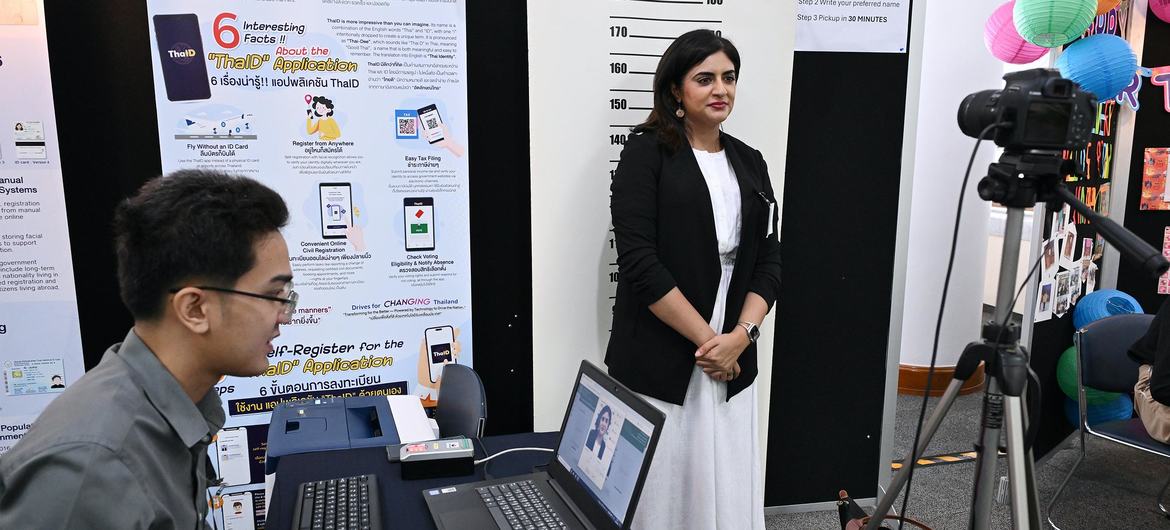
A participant at the Ministerial Conference on Civil Registration and Vital Statistics (CRVS) in Bangkok takes part in a demonstration at the Thai digital ID and verification exhibition booth.

Get everyone in the picture

The new Ministerial Declaration calls for universal and responsive CRVS systems that are inclusive, digitally enabled and resilient.

It emphasizes gender equity in registration, legal protections for personal data, and continuity of services during emergencies.

Governments also pledged to increase training, expand community outreach and improve cause-of-death reporting – including through verbal autopsies and improving certification systems.

Everyone counts. Data saves lives,” Ms. Alisjahbana said, “legal identity is a right, not a privilege. No one should be left behind – simply because they were never counted in the first place.”

Let us finish what we started. Let us get everyone in the picture and ensure every life truly counts.

Source link

Nations adopt historic pledge to guard against future pandemics

The effects of the devastating COVID-19 pandemic are still being felt. Around seven million people died, health systems were overwhelmed, and the global economy was practically driven to a standstill.

The global turmoil prompted a stunned international community to pursue an agreement aimed at preventing such a catastrophic event from happening again – and ensuring the world is far better prepared in the future.

The landmark decision was made at the World Health Assembly, the annual meeting of the World Health Organization (WHO).

Although the formal adoption was on Tuesday, the WHO’s Member States overwhelmingly approved the agrement on Monday (124 votes in favour, 0 objections, 11 abstentions).

This meant that, rather than a nail-biting vote with last-minute surprises (ahead of the conference, Tedros Adhanom Ghebreyesus, WHO Director-General, only felt able to express “cautious optimism”), the adoption by consensus had a celebratory feel.

The agreement is a victory for public health, science and multilateral action,” declared Tedros. “It will ensure we, collectively, can better protect the world from future pandemic threats.

“It is also a recognition by the international community that our citizens, societies and economies must not be left vulnerable to again suffer losses like those endured during COVID-19.”  

WHO Member States approved the first-ever Pandemic Agreement on 19 May 2025

‘Once-in-a-lifetime opportunity’

The pandemic laid bare gross inequities between and within countries, when it came to diagnostics, treatments, and vaccines, and a core aim of the agreement is to plug gaps and treat any future pandemics in a fairer and more efficient way.

“Now that the Agreement has been brought to life, we must all act with the same urgency to implement its critical elements, including systems to ensure equitable access to life-saving pandemic-related health products,” announced Dr. Teodoro Herbosa, Secretary of the Philippines Department of Health, and President of this year’s World Health Assembly, who presided over the Agreement’s adoption.

“As COVID was a once-in-a-lifetime emergency, the WHO Pandemic Agreement offers a once-in-a-lifetime opportunity to build on lessons learned from that crisis and ensure people worldwide are better protected if a future pandemic emerges.”

The issue of national sovereignty has been raised several times during the process of negotiating the accord, a reflection of false online claims that WHO is somehow attempting to wrest control away from individual countries.

The accord is at pains to point out that this is not the case, stating that nothing contained within it gives WHO any authority to change or interfere with national laws, or force nations to take measures such as banning travellers, impose vaccinations or implement lockdowns.

WHO Member States approved the first-ever Pandemic Agreement on 19 May 2025


Next steps

The adoption has been hailed as a groundbreaking step, but this is just the beginning of the process.

The next step is putting the agreement into practice, by launching a launching a process to draft and negotiate a Pathogen Access and Benefit Sharing system (PABS) through an Intergovernmental Working Group.

The result of this process will be considered at next year’s World Health Assembly.

Once the Assembly adopts the PABS annex, the agreement will then be open for signature and consideration of ratification, including by national legislative bodies. After 60 ratifications, it will enter into force.

Other provisions include a new financial mechanism for pandemic prevention, preparedness and response, and the creation of a Global Supply Chain and Logistics Network to “enhance, facilitate, and work to remove barriers and ensure equitable, timely, rapid, safe, and affordable access to pandemic-related health products for countries in need during public health emergencies of international concern, including pandemic emergencies, and for prevention of such emergencies.”

Source link

PM salutes all the women & men who took part in the Quit India movement

PM salutes all the women & men who took part in the Quit India movement, on the 75th anniversary; Urges people to take pledge for creating a ‘New India’ by 2022

The Prime Minister, Shri Narendra Modi has saluted all the women and men who took part in the Quit India movement, on the 75th anniversary. The Prime Minister has also urged people to take pledge for creating a ‘New India’ by 2022.

“On the 75th anniversary of the historic Quit India movement, we salute all the great women & men who took part in the movement.

Under the leadership of Mahatma Gandhi, the entire nation came together with the aim of attaining freedom.

In 1942, the need of the hour was to free India from colonialism. Today, 75 years later the issues are different.

Let us pledge to free India from poverty, dirt, corruption, terrorism, casteism, communalism & create a ‘New India’ of our dreams by 2022.

Let us work shoulder to shoulder to create the India that our freedom fighters would be proud of. #SankalpSeSiddhi”, the Prime Minister said.