
COP30: Climate crisis is a health crisis, WHO warns as philanthropies pledge $300m for solutions

The special report on health and climate change, published by the UN World Health Organization (WHO) and the Brazilian Government, warns that one in 12 hospitals could face climate-related shutdowns. It calls for urgent action to protect health systems in a rapidly warming world.

This follows Thursday’s launch of the Belém Health Action Plan, a flagship COP30 initiative putting health at the centre of climate policy.

What the WHO says

“The climate crisis is a health crisis – not in the distant future, but here and now,” said WHO Director-General Dr Tedros Adhanom Ghebreyesus.

“This special report provides evidence on the impact of climate change on individuals and health systems, and real-world examples of what countries can do – and are doing – to protect health and strengthen health systems.”

Why it matters

Global temperatures are already above 1.5°C. The report finds that 3.3 to 3.6 billion people live in areas highly vulnerable to climate impacts, while hospitals face a 41 per cent higher risk of damage from extreme weather compared to 1990.

Without rapid decarbonisation, the number of health facilities at risk could double by mid-century. The health sector itself contributes around 5 per cent of global greenhouse gas emissions, underscoring the need for a swift transition to low-carbon, climate-resilient systems.

Key gaps in health adaptation

The report highlights stark gaps in health adaptation planning:

  • Only 54 per cent of national health adaptation plans assess risks to health facilities.
  • Fewer than 30 per cent consider income disparities.
  • Just 20 per cent take gender into account.
  • Less than 1 per cent include people with disabilities.

Progress has been made – the number of countries with multi-hazard early warning systems doubled between 2015 and 2023 – but coverage remains uneven, especially in least developed countries and small island states.

What’s being done

Adding momentum, a coalition of more than 35 philanthropies today pledged $300 million to accelerate solutions at the intersection of climate and health.

The Climate and Health Funders Coalition – which includes Bloomberg Philanthropies, the Gates Foundation, IKEA Foundation, The Rockefeller Foundation, and Wellcome – will back innovations, policies and research on extreme heat, air pollution and climate-sensitive diseases, as well as strengthen health systems and data integration. Find out more here.

The coalition’s inaugural funding effort supports the Belém Health Action Plan and aims to deliver “no-regret” interventions that save lives now. With the past decade the hottest on record and temperatures set to remain near historic highs, experts warn that failure to act risks catastrophic consequences for human health.

‘Adaptation is urgent’: COP30 health envoy calls for action

UN News spoke with Ethel Maciel, COP30’s special envoy for health and one of the architects of the Belém Health Action Plan. She stressed that climate change is no longer a distant threat – it is reshaping health systems now.

“Then, how do we prepare our health units, our hospitals, our structures for these extreme events that will happen with increasing frequency? And how can we provide training and capacity-building for health professionals so that they can face these extreme events that will be caused by what we are already experiencing in these climate changes,” she said.

“One example here in Brazil, was last year’s flooding in Rio Grande do Sul, [which triggered] the largest dengue epidemic in history, driven by these climate changes. So, it is not something for us to think about in the future; it’s happening now. So, thinking about how to adapt our system is urgent.”

Ms. Maciel outlined three pillars of the plan:

  • Monitoring to integrate climate and health data, enabling forecasts of heat-related health demand and better reporting of climate-linked cases.
  • Resilient systems and training so health professionals can identify and treat impacts such as dehydration or cardiac stress.
  • Research and innovation to develop heat-resistant medicines and vaccines, cut pollution in health supply chains, and expand renewable energy use.

She warned that implementation is critical in the Amazon, where deforestation could unleash unknown pathogens. “We have … pathogens that we do not yet even fully [understand],” she said, urging leaders to ensure the plan “does not become just another paper and another very beautiful declaration, but that does not happen in practice.”

UN News is reporting from Belém, bringing you front-row coverage of everything unfolding at COP30.

UN searches for solutions to global housing crisis

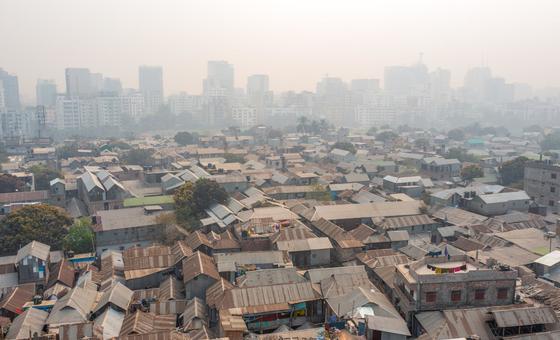
This includes more than 1.12 billion people living in slums or informal settlements. An additional 300 million face absolute homelessness, lacking any form of stable shelter, UN-Habitat estimates.

Living without

The crisis is particularly acute in rapidly urbanising regions such as Africa and the Asia-Pacific. As cities grow, housing development and infrastructure fail to keep pace, leading to a dramatic increase in informal and inadequate living conditions.

In Africa, 62 per cent of urban dwellings are informal. In the Asia-Pacific region, over 500 million people lack access to basic water services, and more than a billion live without adequate sanitation.

As climate change intensifies, those without formal, quality housing and services face growing risks from extreme heat, severe weather events, and water scarcity.

Finding sustainable solutions to the housing crisis is central to advancing global sustainable development. Quality housing is not only a basic human right – it also drives job creation, boosts national income, saves lives, and lays the foundation for better health, education, and economic mobility.

UN-Habitat response

To address this crisis, on Thursday, delegates gathered under the UN’s roof in Nairobi to resume the second session of the UN-Habitat Assembly. Through discussion, collaboration and policy planning, the major summit aims to address this pressing and deeply intertwined issue.

“This Assembly represents the highest global platform for normative discussions on sustainable urbanisation and human settlements. It is a moment of collective reflection, renewed political will and forging consensus for the future we seek for our cities and communities,” said UN-Habitat Executive Director Anacláudia Rossbach in her opening remarks.

Strategic plan

A key focus of the Assembly is the adoption of UN-Habitat’s Strategic Plan for 2026–2029. The plan will prioritise adequate housing, access to land and basic services and the transformation of informal settlements.

It outlines three main impact areas: (1) inclusive prosperity, (2) preparedness, recovery, and reconstruction and (3) climate sustainability. These pillars are designed to accelerate progress toward the Sustainable Development Goals.

The plan also emphasises strengthening collaboration with other UN agencies to achieve shared objectives.

The Assembly will continue through 30 May, with a final decision on the strategic plan expected at the close of the session.

Source link