
World News in Brief: Violence, Terror Attacks And Digital Security Dominate Global Concerns At UN

Rising conflict, humanitarian emergencies and growing concerns over critical digital infrastructure dominated recent discussions involving United Nations agencies and global leaders, with crises unfolding from South Sudan to Pakistan and new efforts launched to safeguard global communications networks.

Fighting In South Sudan Displaces Thousands

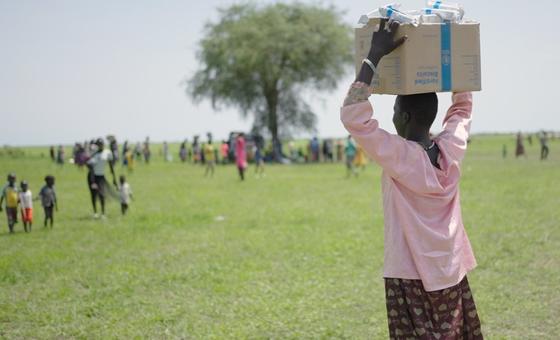
Renewed violence in South Sudan’s Jonglei state has triggered a large-scale humanitarian crisis, forcing at least 250,000 people to flee their homes since the beginning of 2026.

The clashes, concentrated in northern and central parts of the state, have left families cut off from basic services in regions already struggling with some of the country’s worst malnutrition rates.

UNICEF warned that the situation poses a grave threat to children, many of whom are already suffering from severe food shortages.

“We are extremely concerned for women and children impacted by these violent clashes,” said UNICEF’s country representative in South Sudan, Noala Skinner. “A malnourished child without treatment is 12 times more likely to die.”

Humanitarian agencies face major obstacles in reaching affected communities. Movement by road, river and air remains heavily restricted, making it difficult to deliver emergency assistance.

Several areas are running dangerously low on therapeutic food used to treat severely malnourished children. Six counties in Jonglei are close to exhausting these supplies.

Across the country, at least 17 health facilities have been forced to shut down due to insecurity, further weakening an already fragile healthcare system.

UNICEF has also reported ten incidents in which health and nutrition supplies were looted.

Despite the challenges, aid workers continue to deliver support where possible. The organisation has sent water purification equipment to prevent potential cholera outbreaks and delivered malaria treatment kits, emergency medical supplies and therapeutic food intended to reach more than 10,000 people.

UN Condemns Deadly Attacks In Pakistan

Meanwhile, the United Nations has strongly condemned a series of violent attacks in Pakistan’s southwestern province of Balochistan that left dozens of people dead, including children.

UNICEF expressed deep concern after reports confirmed that children were among those killed or injured during the attacks last weekend.

“Children cannot be targets nor collateral damage, and their lives must always be protected,” said UNICEF representative in Pakistan Pernille Ironside.

She extended condolences to the victims’ families and warned that escalating violence is creating fear and insecurity among communities.

The attacks took place on January 31 and were later condemned by the UN Security Council.

In a statement issued on Tuesday, council members described the violence as “heinous and cowardly” acts of terrorism that resulted in the deaths of 48 people, including 31 civilians.

Among the civilian victims were five women and three children.

Authorities say the attacks were claimed by the Balochistan Liberation Army, a separatist militant group. Local officials later told reporters that security forces killed 145 members of the banned organisation in subsequent operations.

The Security Council expressed its deepest sympathy to the victims’ families and to the government and people of Pakistan, while wishing those injured a full recovery.

Global Summit Focuses On Submarine Cable Security

In a separate development, governments and industry representatives from more than 70 countries gathered in Porto, Portugal, to address growing concerns over the security and resilience of submarine communication cables.

These undersea cables carry the majority of the world’s digital traffic and form the backbone of global internet connectivity.

During the International Submarine Cable Resilience Summit 2026, participants adopted a declaration aimed at strengthening international cooperation to protect the network.

Today roughly 500 submarine cables stretch across more than 1.7 million kilometres of ocean floor, linking continents and supporting the global digital economy.

ITU Secretary-General Doreen Bogdan-Martin said safeguarding these systems is a shared responsibility.

“When it comes to critical digital infrastructure like submarine cables, resilience is both an end-to-end imperative and a shared responsibility,” she said.

Participants also discussed ways to improve repair times, strengthen monitoring systems and increase investment in infrastructure protection.

Protecting Connectivity For Vulnerable Regions

Experts at the summit warned that cable disruptions can have serious consequences, particularly for smaller countries and remote island communities that rely on only a few connections to the global network.

Sandra Maximiano, chairwoman of Portugal’s telecommunications regulator ANACOM, said international cooperation would be key to reducing the risks.

“I firmly believe the advisory body is already delivering concrete and meaningful impact,” she said, pointing to ongoing efforts to improve preparedness and response capabilities.

The Porto meeting followed the first global summit on submarine cable resilience held in Abuja, Nigeria, as governments and technology leaders seek stronger collaboration to protect one of the world’s most critical digital systems.

Invisible highways: Undersea Cables Power 99% Of Global Internet Traffic, Despite Growing Risks

The world’s digital economy depends heavily on a vast network of undersea cables stretching across the ocean floor, quietly carrying nearly all international internet traffic and enabling trillions of dollars in financial transactions every day.

Despite their central role in modern connectivity, these cables remain largely invisible to the public, even as governments and technology experts grow increasingly concerned about their security and resilience.

Tomas Lamanauskas, Deputy Secretary-General of the International Telecommunication Union (ITU), highlighted the importance of the infrastructure ahead of a global summit on submarine cable resilience in Porto, Portugal.

“About 99 per cent of the international internet traffic goes through submarine cables. Even the conversation you and I are having right now is carried through these cables,” he said in an interview with UN News.

Backbone Of The Digital Economy

While most people associate internet access with mobile networks, satellites or broadband connections, the global exchange of data actually relies on a complex system of fibre-optic cables lying hundreds of metres beneath the ocean surface.

These cables act as the “digital highways” of the modern world, linking continents and enabling the rapid movement of information across countries and markets.

Today more than 500 commercial submarine cables connect different parts of the world, carrying vast volumes of data every second. Together, they stretch across roughly 1.7 million kilometres of ocean floor, long enough to circle the Earth multiple times.

Though relatively thin, roughly the width of a garden hose, the cables transmit hundreds of terabits of information per second using fibre-optic technology.

A Technology With Deep Historical Roots

The idea of connecting nations through underwater cables dates back more than a century.

The first undersea telegraph cable was laid between England and France in 1850, marking the beginning of a technological transformation in global communications.

Over time, these systems evolved from telegraph lines to telephone networks and eventually to high-speed fibre-optic cables capable of transmitting massive volumes of digital data.

Before cables are installed, engineers survey the seabed to identify routes that minimise environmental impact and reduce the risk of damage. Specialised ships then deploy the cables, unrolling large reels onto the ocean floor.

Disruptions Can Have Global Impact

Because submarine cables form the backbone of international communications, any disruption can quickly affect economies, financial markets and essential services.

According to the ITU, between 150 and 200 cable incidents occur globally each year, averaging three to four disruptions every week.

Some of the most significant disruptions in recent years occurred in the Red Sea, where cable damage in 2024 interrupted roughly a quarter of data traffic flowing between Europe and Asia.

Outages can also be triggered by natural disasters such as earthquakes, underwater landslides or volcanic eruptions.

However, experts say human activity accounts for the majority of incidents. Around 80 percent of cable damage is caused by fishing trawlers or ship anchors dragging across the seabed.

Remote Regions Face Greater Risks

When cables fail, the consequences can be particularly severe for remote island nations and regions with limited connectivity.

Lamanauskas pointed to the Pacific island nation of Tonga as an example. Since 2019, the country has experienced three major internet disruptions linked to an earthquake, volcanic eruptions and accidental damage caused by ship anchoring.

In areas with only a single cable connection, even minor damage can leave entire populations without internet access for days or weeks.

“Imagine your entire community being offline for a week, unable to access digital healthcare, information or education,” he said.

Even small delays in data transmission can have significant economic consequences. For instance, a millisecond delay caused by cable congestion could affect financial trading systems in major global markets.

Repairs And Maintenance Challenges

Maintaining the vast network of undersea cables presents logistical challenges.

Some of the infrastructure installed during the early 2000s technology boom is now nearing the end of its typical 25-year lifespan, increasing the need for maintenance and replacement.

When a cable is damaged, engineers can usually identify the problem quickly using monitoring systems. However, the repair process often involves complex international coordination.

Obtaining permits and approvals from multiple jurisdictions can sometimes delay repair operations more than the technical work itself.

Depending on the location of the damage and the availability of specialised repair vessels, restoring a cable may take anywhere from several days to several months.

Global Efforts To Strengthen Cable Resilience

The growing dependence on digital connectivity has prompted governments and industry leaders to focus more closely on protecting submarine cables.

The International Telecommunication Union is working with countries and private companies to strengthen the resilience of the global network.

Its efforts include developing technical standards, improving coordination between countries and encouraging faster permitting processes for repairs.

The agency also promotes measures to prevent accidental damage and ensure that cable maintenance can be carried out more efficiently.

Lamanauskas said the rapid expansion of internet use continues to drive massive growth in cable capacity.

“Over the last 40 years, the capacity of these optical cables has been increasing by about 40 per cent every year,” he said, describing the growth as exponential.

As global demand for data continues to surge, strengthening the reliability and security of these underwater connections will remain a critical challenge for governments, businesses and international organisations alike.