UN lauds $6 billion US funding approval towards ending HIV/AIDS

This US investment will provide lifesaving support for millions of people in partner countries and help to ensure that the global HIV response remains efficient, data-driven and delivers results,” said Winnie Byanyima, Executive Director of UNAIDS.

“I thank President [Donald] Trump and the US Congress for their continued commitment to HIV and global health.”

The UN agency said the $5.88 billion spending package approved on Tuesday “reinforces the continued commitment and leadership of the United States in the global response to HIV”.

Where are the funds going?

For more than two decades, US investments have been the leading driver of the global HIV response, saving millions of lives and supporting countries’ efforts to end their AIDS epidemics, the UN agency said.

The package allocates:

  • $4.6 billion to bilateral HIV support through the America First Global Health Strategy
  • $1.25 billion to the Global Fund to Fight AIDS, Tuberculosis and Malaria
  • $45 million to UNAIDS

The law advances the America First Global Health Strategy, which emphasises the achievement of UNAIDS’ 95-95-95 targets as an integral part of ending AIDS as a public health threat by 2030 and accelerates the strategic shift towards country ownership and self-reliant HIV responses.

UNAIDS in the lead 

The Joint UN Programme on HIV/AIDS (UNAIDS) coordinates and drives the efforts of 11 UN organizations, including the UN Children’s Fund (UNICEF), the World Food Programme (WFP) and World Health Organization (WHO), towards ending AIDS as a public health threat by 2030. 

Since the establishment of UNAIDS in 1996, the US Government has been a leading partner of UNAIDS and recently renewed its membership in the UNAIDS Programme Coordinating Board through to 2028.

As for the new bipartisan law, UNAIDS said the agency is committed to leverage the funding to provide data and rigorous technical and strategic support to countries and communities most affected by HIV and for the implementation of the America First Global Health Strategy, working closely with the US Government, the Global Fund, partner governments and communities.

Learn more about UNAIDS work here

Building healthy bridges towards peace: WHO launches $1 billion appeal

“This appeal is a call to stand with people living through conflict, displacement and disaster to give them not just services, but the confidence that the world has not turned its back on them,” WHO Director-General Tedros Adhanom Ghebreyesus said.

The 2026 appeal seeks to respond to 36 emergencies worldwide, including 14 “grade 3” crises requiring the highest level of organizational response at a time of stinging funding cuts as humanitarian and health financing is experiencing its sharpest decline in a decade, the agency said.

“Around one quarter of a billion people are living through humanitarian crises that have stripped away safety, shelter and access to healthcare [while] global defence spending now exceeds $2.5 trillion a year,” Tedros said at the launch in Geneva.

‘Not charity’

With the requested resources, WHO can sustain lifesaving care in the world’s most severe emergencies while “building a bridge towards peace”, said the lead agency for health response in humanitarian settings, which coordinates more than 1,500 partners across 24 crisis settings globally, ensuring that national authorities and local partners remain at the centre of emergency efforts.

“It is not charity,” the WHO chief said.

“It is a strategic investment in health and security. Access to healthcare restores dignity, stabilises communities and offers a pathway toward recovery.”

Priority response areas

As global humanitarian financing continues to contract, the 2026 appeal comes at a time of converging global pressures as protracted conflicts, escalating climate change impacts and recurrent infectious disease outbreaks drive increasing demand for health emergency support.

WHO’s priority emergency response areas will include Afghanistan, the Democratic Republic of the Congo, Haiti, Myanmar, the Occupied Palestinian Territory, Somalia, South Sudan, Sudan, Syria, Ukraine and Yemen.

Efforts will also address ongoing outbreaks of cholera and mpox.

‘Forced to make difficult choices’

“Renewed commitments and solidarity are urgently needed to protect and support the people living in the most fragile and vulnerable settings,” WHO said.

With shrinking funding, WHO and other humanitarian partners have been “forced to make difficult choices” to prioritise the most critical interventions, the UN agency said, adding that what remains are the most impactful activities, including:

  • keeping essential health facilities operational
  • delivering emergency medical supplies and trauma care
  • preventing and responding to outbreaks
  • restoring routine immunisation
  • ensuring access to sexual and reproductive, maternal and child health services in fragile and conflict-affected settings.

Emergency services reach millions

Early, predictable investment enables WHO and partners to respond immediately when crises develop, reducing death and disease, containing outbreaks and preventing health risks from escalating into wider humanitarian and health security emergencies with far greater human and financial costs, the agency said.

In 2025, WHO and partners supported 30 million people funded through its annual emergency appeal. These resources helped to:

  • deliver lifesaving vaccination to 5.3 million children
  • enable 53 million health consultations
  • support more than 8,000 health facilities
  • facilitate the deployment of 1,370 mobile clinics

Last year, humanitarian funding fell below 2016 levels, leaving WHO and partners able to reach only one third of the 81 million people originally targeted to receive humanitarian health assistance.

Find out more about WHO’s efforts here.

Source link

WHO sounds alarm as mental health conditions soar past one billion worldwide

Disorders such as anxiety and depression are exacting a heavy toll on individuals, families and economies, yet most countries are failing to provide adequate support.

Mental health problems are widespread across every society and age group and remain the second leading cause of long-term disability. They drive up healthcare costs for families and governments while costing the global economy an estimated $1 trillion each year in lost productivity, UN health experts said.

Way off track

The findings are detailed in two new reports: World mental health today and the Mental Health Atlas 2024.

Together, they show that while there has been some progress since 2020, the world is still far off track in tackling the scale of the crisis. The reports will help to inform debate at a UN high-level meeting on noncommunicable diseases and mental health, to be held late this month in New York.

Transforming mental health services is one of the most pressing public health challenges,” said WHO Director-General Dr Tedros Adhanom Ghebreyesus.

Investing in mental health means investing in people, communities and economies, an investment no country can afford to neglect. Every leader has a responsibility to act urgently and to ensure mental health care is treated not as a privilege, but as a basic right.”

Troubling gaps, uneven progress

The reports highlight several stark findings:

  • Women are disproportionately affected by mental health conditions, with anxiety and depression most common among both sexes.
  • Suicide claimed an estimated 727,000 lives in 2021 and is a leading cause of death among young people. On current trends, the world will fall far short of the UN target to reduce suicide deaths by a third by 2030, managing only a 12 per cent reduction.
  • Median government spending on mental health remains at just two per cent of health budgets, unchanged since 2017. While high-income countries spend up to $65 per person on mental health, low-income countries spend as little as four cents.
  • The mental health workforce is dangerously thin in many regions. There are just 13 mental health workers for every 100,000 people worldwide.
  • Fewer than one in 10 countries has fully moved to community-based care, with most still relying heavily on psychiatric hospitals. Almost half of inpatient admissions are involuntary, and more than one in five patients remain hospitalised for over a year.

Despite these challenges, there have been some positive developments. More countries are integrating mental health into primary healthcare and expanding early intervention programmes in schools and communities.

Over 80 per cent of countries now include mental health and psychosocial support in emergency response, up from less than 40 per cent in 2020. Telehealth services are also becoming more widely available, though access is still uneven.

Call for systemic change

WHO is urging governments to step up investment and reform, warning that the current pace of progress is too slow to meet global goals. Key priorities include:

  • Fairer financing of mental health services
  • Stronger legal protection and rights-based legislation
  • Greater investment in the mental health workforce
  • Accelerated shift towards community-based, person-centred care

The UN health agency stresses that mental health should be treated as a fundamental human right. Without urgent action, millions will continue to suffer without support, and societies will bear rising social and economic costs.

For more information on how the UN overall is advocating for more resources to support mental health and wellbeing, check out this story from our colleagues at www.un.org

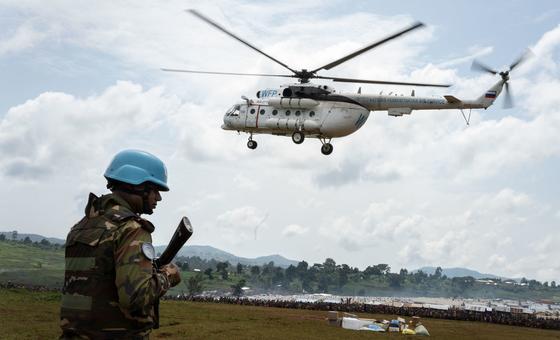
General Assembly approves $5.4 billion UN peacekeeping budget for 2025-2026

Acting on the recommendation of its Fifth Committee (Administrative and Budgetary), the Assembly endorsed the budgets for 12 missions, the logistics centres in Entebbe (Uganda) and Brindisi (Italy), and the support account for peacekeeping.

The budgets were adopted without a vote, except for the resolution on the UN Interim Force in Lebanon (UNIFIL), which was adopted by 147 votes in favour to 3 against (Argentina, Israel, and United States), with 1 abstention (Paraguay).

The adoption of UNIFIL’s budget followed an Israeli-proposed oral amendment, which was rejected by 5 votes in favour (Argentina, Canada, Israel, Paraguay, and US) to 83 against, with 57 abstentions.

Last year, the peacekeeping budget stood at $5.59 billion for 14 operations, meaning the 2025-2026 figure reflects a modest decrease, following final settlements of former missions in Côte d’Ivoire and Liberia.

Pressing liquidity challenges

Despite the agreement on the budgets, UN Controller Chandramouli Ramanathan outlined a sobering picture about the fragility of the UN’s broader liquidity situation.

You manage somehow to find common ground three times a year. But I only wish you had gone a little bit further to solve one of the underlying problems of the UN, which has been plaguing us for 80 years,” he told delegates last week as they concluded negotiations in the Fifth Committee.

He described how approved budgets are often undermined by cash shortages, forcing immediate instructions to slash spending by 10, 15, or even 20 per cent.

No money, no implementation. There is not enough cash. I cannot emphasize enough a massive effort needed on your side to somehow take us over that line and deal with a problem that’s plagued the UN for the last so many years,” he said.

UN peacekeeping operations

UN peacekeeping remains one of the most iconic UN activities, with nearly 70,000 military, police and civilian personnel deployed across Africa, the Middle East and Europe.

Missions include long-standing deployments such as MONUSCO in the Democratic Republic of the Congo, UNFICYP in Cyprus, and MINUSCA in the Central African Republic. Mandated by the Security Council, these operations work to stabilize conflict zones, support political processes, protect civilians, and assist in disarmament and rule-of-law efforts.

UN’s peacekeeping budget is separate from its regular budget, which supports the Organization’s core programs, including human rights, development, political affairs, communications and regional cooperation.

The peacekeeping budget cycle runs from July-June, while the regular budget is aligned with the calendar year.

Source link

‘The margins of the budget’: Gender equality in developing countries underfunded by $420 billion annually

“The money simply is not reaching the women and girls who need it most,” UN Women said in a news release issued on Monday.  

This estimate comes in the midst of the Fourth International Conference on Financing for Development underway in Sevilla, Spain.

There, world leaders are working to revitalize the international financing structure to better support the Sustainable Development Goals (SDGs), one of which is gender equality.  

“We cannot close gender gaps with budgets that are lacking a gender lens … Gender equality must move from the margins of the budget lines to the heart of public policy,” said Nyaradzayi Gumbonzvanda, Deputy Executive Director of UN Women.

Move from promise to action

In order to remedy this shortfall, UN Women said that the world needs a decade of targeted and consistent investment to end gender gaps and ensure that no one is left behind.

This includes expanding gender-responsive budgeting which carefully tracks where funding is most needed and supporting programs which target those areas.

Currently, three-fourths of countries do not have systems to track the allocation of public funds in relation to gender equality.  

Specifically, investment in public care systems – such as child and elder care programmes – is essential to ensuring that women can enter the workforce.

Overwhelmed by debt

Additionally, UN Women called for urgent debt relief, citing that many countries are so burdened by debt financing that they cannot dedicate money to advancing gender equality.  

In this vein, UN Women welcomed the Compromiso de Sevilla, the outcome of the Conference adopted by Member States, which lays out new commitments to development financing, including on promoting gender equality.

Ms. Gumbonzvanda emphasised the need for governments to back the commitments they made in this document with real action.  

“[Gender equality] takes money. It takes reform. And it takes leadership that sees women not as a cost, but as a future.”

Source link