
Hunger and disease in Gaza will only worsen from ‘man-made’ famine: WHO

In an online alert, the UN agency said that disease and hunger will only increase, unless all Israeli impediments to aid delivery at scale are removed and access is allowed across the Strip.

The UN aid coordination office, OCHA, confirmed on Wednesday that some aid is allowed into the enclave every day, albeit far too little to meet the huge level of needs.

OCHA’s Olga Cherevko returned this week to a UN-supported community kitchen in Gaza City that she last visited in March, which had been struggling to stay open even then during the total blockade.

Community resilience

It had been forced to close – but managed to reopen again 10 days ago: “They’re now feeding 5,000 people a day, making meals hot meals for people in need in the neighbouring communities,” she said.

“Of course, the number of meals being cooked every day remains severely insufficient because the volume of supplies entering remains severely insufficient, and the only way for us to stop famine is by ensuring that more supplies are entering every day.”

The WHO appeal comes two days after at least 20 people were killed in a double strike on Nasser hospital in southern Gaza, with four health workers and five journalists among the victims.

Across the Gaza Strip today, WHO said that more than half a million people are trapped in famine, with destruction to food and health services, and to water and sanitation systems.

‘Act without delay’

The UN General Assembly-mandated Palestinian rights committee issued a statement on Wednesday reminding that the famine is projected to spread in the coming days, if Israel fails to allow in more food aid.

“This catastrophic man-made disaster comes on the heels of two years of near total Israeli destruction and blockade of Gaza and relentless military assaults that have decimated civilian infrastructure, including food production capacities and all other means of subsistence,” the committee said.

“This is a grave breach of international law. States must act without delay to fulfill their legal obligations towards bringing a rapid end to this catastrophe and illegal situation.”

More to follow…

UN warns Gaza crisis could worsen without safe, unrestricted aid flow

In his regular daily briefing, UN Spokesperson Stéphane Dujarric highlighted that ongoing delays, bottlenecks at holding points and interference in the loading process at crossing platforms are undermining efforts to collect and distribute supplies to those in need.

It is imperative that the UN and its humanitarian partners are enabled to deliver aid at scale, using community-based mechanisms to reach the most vulnerable,” he said.

Injured trying to reach food

Recent figures illustrate the scale of the challenge. Between May 27 and August 8, the Red Cross Field Hospital in Rafah treated more than 4,500 wounded patients – most reporting injuries sustained while attempting to reach food distribution sites.  

Many were hurt in crowd crushes or subjected to theft or violence immediately after receiving critical food aid.

Of 12 aid missions requiring coordination with Israeli authorities on Thursday, five were facilitated without impediments. Four missions were cancelled by the organisers, and three others were impeded and only eventually fully accomplished – these included the collection of food aid from Zikim and Kerem Shalom/Karem Abu Salem crossings.

The UN Spokesperson also highlighted an ongoing starvation crisis, with increasing numbers of deaths, particularly among children.

Hospitals are struggling to cope with rising cases of malnutrition and many facilities have reportedly run out of bedspace to treat patients, he said.

No cooking fuel

Energy shortages are compounding the crisis, Mr. Dujarric said, noting that cooking gas has been unavailable in Gaza’s markets for five months, while firewood has become increasingly unaffordable.

More people are resorting to using waste and scrap wood as alternative fuel sources for cooking, which only makes worse health and protection risks, and causes environmental hazards,” he added.

Protect fleeing civilians

He also stressed that civilians must be protected in the event of expanded military operations in Gaza City.

Fleeing civilians must be protected and they must have their essential needs met, and they must be able to voluntarily return when the situation allows. And if they choose to stay, they should not be threatened or put at risk,” he said.

Mr. Dujarric also reiterated the UN’s long-standing call for the immediate and unconditional release of hostages held in the Strip.

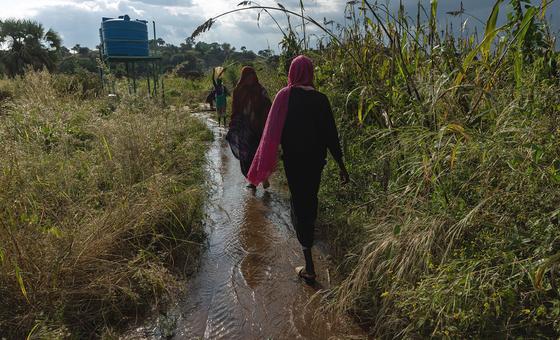
Sudan: UN sounds the alarm as health and food crises worsen across the country

As conflict between rival militaries rages on, millions of people keep on being displaced.

While the UN and its partners continue to provide assistance to newly displaced families in North Darfur, “nearly 60 per cent of displaced families still lack adequate shelter support,” said Deputy Spokesman for the Secretary-General, Farhan Haq, at a daily press briefing on Monday.

In Abu Shouk camp in El Fasher, the North Darfur capital, displaced families are facing acute shortages of food and medicine, with local sources reporting four hunger-related deaths last week, as food insecurity continues to worsen across the entire country.

In North Darfur state notably, low cereal supply, poor harvests and a prolonged food deficit have severely affected food availability.

Health crisis

Meanwhile, cholera cases continue to rise in Tawila. More than 1,500 suspected and confirmed serious infections have been reported since June, with over 500 people currently receiving treatment.

While local authorities have introduced emergency measures, including market closures and a ban on public gatherings, humanitarian organizations urgently require $120 million to scale up life-saving support in Tawila over the next three months.

“This funding is essential to contain the outbreak and sustain critical services,” according to OCHA.

Meanwhile, in Port Sudan, the main entry point for humanitarian personnel and supplies, a sharp increase in heatstroke cases linked to extreme temperature and prolonged power outages is raising concerns, as one death was recorded over the past two days.

Food crisis

In El Fasher, food prices continue to rise to alarming levels.  The Integrated Food Security Phase Classification (IPC) has  already identified famine conditions in multiple areas of North Darfur and the eastern Nuba Mountains, with more locations at risk.

In May, the average cost of the local food basket in El Fasher was more than six times the national average, as the city recorded the highest prices for nearly all essential items among assessed localities.

An IPC alert earlier this month noted that Sudan’s food security and nutrition situation is set to further deteriorate over the lean season from July to October, notably in areas of active conflict with limited access and experiencing high levels of displacement. 

Source link

‘Still reeling’: Myanmar quakes worsen humanitarian crisis in fractured country

The 28 March quake measuring 7.7 on the Richter scale, struck central regions with deadly force, killing some 3,800 people and injuring over 5,000, according to UN estimates.

The disaster devastated infrastructure and homes across Mandalay, Sagaing and Magway, displacing tens of thousands more in a country already grappling with over 3.2 million internally displaced persons (IDPs) since the 2021 military coup.

Communities are still reeling from the earthquakes – the strongest the country has experienced in a century,” said Jorge Moreira da Silva, Executive Director of the UN Office for Project Services (UNOPS), speaking to journalists at the UN Headquarters in New York via video from Beijing after a three-day visit to Myanmar.

The devastation caused by the quakes compounded the existing challenges of conflict, displacement and severe humanitarian needs.

Needs outpace resources

UNOPS, which maintains the largest UN presence in Myanmar with nearly 500 staff, mobilized $25 million within weeks of the disaster and has reached half a million people with lifesaving support.

“My colleagues worked swiftly with partners to deliver emergency shelters, clean water, and deploy infrastructure specialists for rapid assessments,” Mr. da Silva said.

However, he warned that far greater international support is needed to meet the scale of needs.

The World Bank estimates total damages at nearly $11 billion, with full reconstruction expected to cost two to three times more. Over 2.5 million tonnes of debris must also be cleared to enable recovery.

Mr. da Silva emphasized that reconstruction must be people-centred, inclusive, and linked to peacebuilding efforts.

“We echo calls from across the UN for an end to violence,” he said. “Recovery and reconstruction should support Myanmar’s journey to peace and reconciliation. Protection of civilians must be a priority.

Women and girls face disproportionate risks

The humanitarian fallout has hit women and girls particularly hard – many of whom were among those killed or injured – and now face growing protection risks.

According to the UN reproductive health agency, UNFPA, more than 4.6 million women of reproductive age – including over 220,000 currently pregnant – are at heightened risk.

Damage to health facilities, worsened by monsoon flooding and insecurity, has disrupted access to emergency obstetric care and menstrual hygiene. Gender-based violence meanwhile, is rising sharply in overcrowded, poorly lit shelters.

UNOPS Executive Director Jorge Moreira da Silva meets with a woman and her newborn child at a health clinic.

Health system under pressure

The risk of waterborne diseases such as cholera and vector-borne illnesses like dengue and malaria is also rising.

According to the World Health Organization (WHO) while no major outbreaks had been reported as of 31 May, cases of acute watery diarrhoea and skin infections are ticking up.

Monsoon rains have worsened conditions in temporary shelters, where overcrowding and poor sanitation raise serious health concerns. Mental health remains fragile, with 67 per cent of respondents in a recent survey reporting emotional distress linked to the quake and ongoing conflict.

WHO and its partners have delivered more than 300,000 vaccine doses – including tetanus and rabies – but access remains limited, and health services underfunded.

Protracted crisis

More than 3.25 million people remain displaced within Myanmar since the military coup of February 2021, with at least another 176,000 seeking refuge in neighbouring countries, according to refugee agency, UNHCR.

This excludes the hundreds of thousands of Rohingya refugees from earlier waves of violence.

Myanmar also remains one of the world’s deadliest countries for landmines and explosive remnants of war.

In the first nine months of 2024 alone, 889 casualties were reported – raising fears the toll could surpass the record 1,052 deaths and injuries documented in 2023.