

Under-Secretary-General Jean-Pierre Lacroix and Assistant Secretary-General Marta Pobee briefed the Council on priorities for adapting UN peace operations to foster political solutions.
They emphasised the urgent need for the Council and the broader UN membership to overcome divisions and strengthen support for peace operations as unique platforms for advancing diplomacy in conflict zones.
“Peacekeeping missions often operate in highly volatile environments, where political processes are stalled, trust among conflict parties is low and humanitarian conditions dire,” Mr. Lacroix said.
“Progress is incremental, fragile and uneven. A breakthrough in one moment may be followed by setbacks the next. Yet, even modest gains can be critical in preventing a relapse into widespread violence and saving lives.”
He pointed to missions that have made measurable contributions to peace processes, such as MINUSCA in the Central African Republic (CAR), which helped broker the 2019 Political Agreement and launched disarmament efforts, or MONUSCO in the Democratic Republic of the Congo (DRC), which contributed to reduced violence during the 2023 elections.
Security Council unity crucial
Mr. Lacroix stressed that political coherence and unity among Security Council members are essential for missions to realise their potential.
Without “strong, united political support”, he warned, peace operations are limited to managing conflicts and protecting civilians rather than supporting durable peace agreements.
The Council’s role, he added, must extend beyond mandate authorisation to sustained political engagement. He cited the unanimous adoption of resolution 2773 in February 2025 on the DRC as an example of Council unity reinforcing diplomatic efforts on the ground.

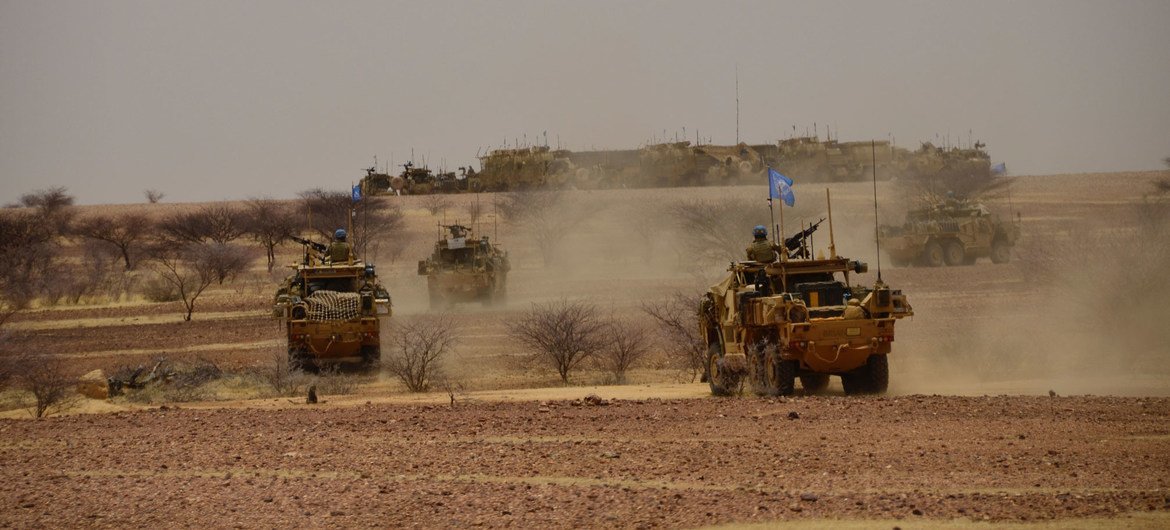
UN peacekeeping missions, such as the one in Mali (MINUSMA, 2013-23), have had to adapt to complex challenges, including harsh environment and myriad armed groups.
Field leadership and flexibility
Mr. Lacroix also highlighted the importance of dynamic mission leadership, calling on senior officials to serve as “steadfast ambassadors for peace” who maintain trust with host governments and conflict actors while adapting to shifting political contexts.
He underscored the importance of regional partnerships, particularly with the African Union (AU). Resolution 2719 (2023), which allows assessed contributions for AU-led operations, was described as a “historic milestone” in UN-AU collaboration.
“Leveraging the investments of troop- and police-contributing countries more purposefully is critical,” he added, noting the example of Pakistan’s dual role as a major troop contributor and elected Security Council member.
Lessons from the cold war
Ms. Pobee’s briefing reinforced these themes while offering historical perspective.
She recalled how during the cold war, despite global tensions, UN special political missions facilitated peaceful dispute resolution, such as diplomatic efforts in Equatorial Guinea in 1969, Bahrain in 1970 and the border dispute between Iraq and Iran in 1974.
She identified several key elements behind those successes: clearly focused, timebound mandates; the pro-active use of the Secretary-General’s good offices; discreet diplomacy and crucially, consent from host governments and conflict parties.
This foundation of trust, she noted, is increasingly absent today, representing a “trust deficit” that complicates peace efforts.
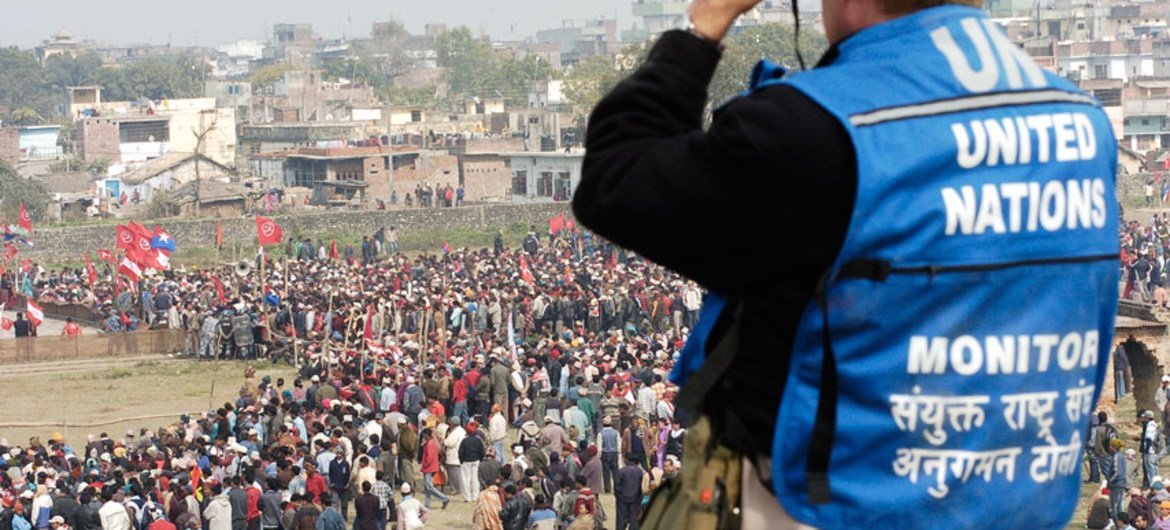
UN special political missions in post‑conflict settings, such as the mission in Nepal (UNMIN, 2007-11) help maintain stability, dialogue and support democratic processes.
A unique tool
Both briefers acknowledged the difficult global context, with deepening Security Council divisions, eroding norms and increasingly complex conflicts involving non-State actors, organized crime and climate-driven risks.
Nonetheless, peace operations, with their combination of civilian and uniformed capabilities, remain indispensable for stabilising fragile settings and enabling political dialogue, they maintained. The longstanding mission in Cyprus was cited as an example of how sustained UN presence can prevent escalation, even amid persistent deadlock.
Mr. Lacroix also urged Member States to pay assessed contributions on time, warning that insufficient resources undermine missions’ ability to fulfil their mandates.
Ms. Pobee added that the UN has repeatedly navigated polarised eras before.
“We have been there…but, one clear lesson is that amid acute geopolitical tensions, peace operations have helped Member States mount tailored responses to challenges to international peace and security,” she said.