Prison breaks and renewed clashes raise alarm in northeast Syria

Secretary-General António Guterres is following the continuing violence “with great concern,” Deputy UN Spokesperson Farhan Haq said on Tuesday in New York. 

The Secretary-General called for full respect for international law and the protection of civilians while also stressing the importance of securing detention facilities. 

He urged the parties to continue dialogue, move forward in good faith, and work together to secure the implementation of all agreements. 

Fearing for families 

The UN human rights office, OHCHR, was “concerned about reports of renewed fighting between the Syrian Army and the SDF, despite the 18 January ceasefire agreement,” Spokesperson Ravina Shamdasani said earlier in Geneva. 

Rolando Gómez of the UN Information Service (UNIS) there described the overall situation as “worrying, in particular the damage to critical infrastructure.”   

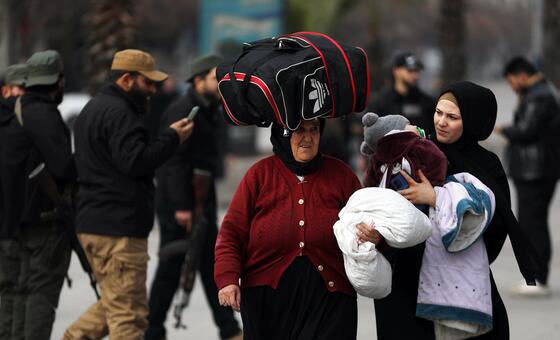
He expressed concern for families unable to leave conflict areas and those who have been newly displaced.  

A fragile transition 

Syria remains on a fragile path to political transition following the fall of the Assad regime in December 2024 and nearly 14 years of civil war.   

The transitional government has been taking back territory in the northeast under Kurdish control and fighting has occurred in Aleppo, Raqqa, Deir-ez-Zor and Al Hassakeh governorates. 

Speaking in New York, Syria’s UN ambassador Ibrahim Olabi told journalists that the government and the SDF had reached “a common understanding” on several issues regarding the future of Al Hassakeh governorate. 

The SDF will be granted “a four-day period for internal consultations to develop a detailed plan for the practical mechanisms for integrating the area,” he said during a media stakeout at UN Headquarters. 

Syrian troops will not enter Al Hassakeh and Qamishli cities and will remain on their outskirts until a plan is finalised.

ISIL detention camps 

Northeast Syria is home to several prisons holding thousands of ISIL fighters. The terrorist group, also known as Daesh, once controlled large swaths of the country and neighbouring Iraq in its attempt to establish an Islamist caliphate, committing mass executions, rape, forced recruitment and other atrocities along the way. 

Tens of thousands of civilians with suspected ties to the militants, mainly women and children, are housed in separate detention camps such as notorious Al-Hol camp – home to over 30,000 people.   

Ceasefire and clashes 

The ceasefire announced on Sunday followed weeks of deadly fighting.  The truce calls for the authorities to take over SDF-controlled areas and for its forces to be integrated into the national army, among other points. 

Clashes resumed a day later during which roughly 120 ISIL fighters escaped from the prison in Al-Shaddadi city, according to media reports, though most have been captured. 

Ms. Shamdasani recalled that OHCHR has long stated that any integration of security forces into Syrian State institutions, particularly SDF forces, “must take place within a proper human rights-based vetting process to ensure that any individuals involved in human rights violations or abuses are not integrated.”   

Humanitarian support 

Meanwhile, humanitarians have been providing assistance in the four affected governorates, incluidng trauma care, water and hygiene support, and psychosocial support, the UN aid coordination office OCHA reported on Monday. 

Public services have been suspended in Deir-ez-Zor city and key transport routes temporarily closed, leaving civilians cut off from education and healthcare. 

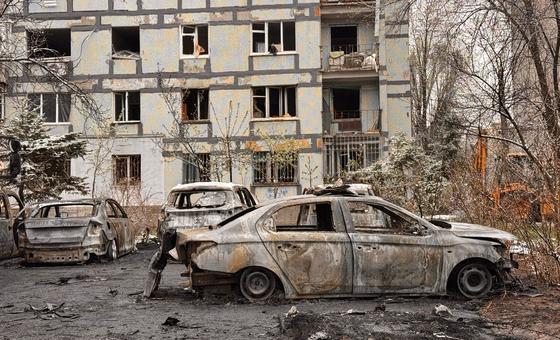
Furthermore, damage to critical infrastructure in Raqqa city has curtailed access between neighbourhoods and disrupted the main water supply. 

OCHA noted that people continue to flee Raqqa and Tabqa cities, as well as Thawra town, and are heading towards Al Hassakeh and Qamishli governorates.  

Hundreds of families remain unable to leave Tabqa and are sheltering in public facilities. 

Assessments are underway to determine people’s needs as humanitarians continue to call for sustained, safe access to the population. 
Source link

Russian attack on Ukrainian prison kills 16: UN rights monitors

Meanwhile, another attack on Tuesday reportedly killed five civilians and injured three in the Kharkiv region, located in eastern Ukraine.

According to authorities, Russian armed forces dropped several powerful glide bombs on Bilenkivska Penal Colony No. 99 on 28 July. The prison is located about 25 kilometres from the frontline in the Zaporizhzhia region.

All those killed were prisoners, according to HRMMU. The mission plans to visit the site as soon as possible to gather additional information.

Russia has denied responsibility for the attack.

Violation of international law

“Prisoners are civilians, and they must be protected under international humanitarian law,” said Danielle Bell, head of HRMMU.

International humanitarian law stipulates that attacks must only be directed at military objectives, not at civilians or civilian objects. Since a prison is a civilian object, it should not be attacked unless it is being used for military purposes.

Deadly civilian attacks

Also on Monday, Russian forces reportedly struck near a hospital in Kamianske in the Dnipropetrovsk region. The attack damaged the hospital and its maternity ward, killing three and injuring 22, according to authorities.

At least two of the dead were reportedly patients, including a woman who was seven months pregnant.

Source link

Societies grappling with a ‘silent but growing’ prison crisis

A decade ago, the UN General Assembly adopted the Nelson Mandela Rules — a set of 122 guidelines setting minimum standards for the treatment of prisoners, inspired by one of the world’s most influential former political prisoners – the South African civil rights icon, Nelson Mandela.

These rules aim to ensure safety, security and respect for human dignity, offering clear benchmarks for prison staff.

Despite this, prison systems worldwide continue to face deep-rooted challenges. The General Assembly  convened on Friday to discuss how to better protect societies from crime by focusing on rehabilitation and preparing inmates for life after prison.

Overcrowded cells

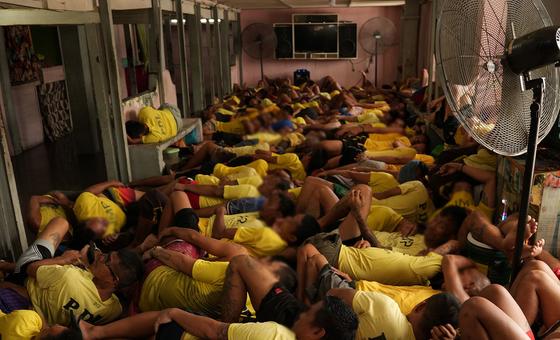
“Prison cells are overflowing,” said Ghada Waly, Executive Director of the UN Office on Drugs and Crime (UNODC), noting that 11.5 million people are currently imprisoned globally.

Overcrowding deprives people of their most basic rights, including access to healthcare, clean water and sanitation,” she warned. Yet prison services remain underfunded, under-prioritised and undervalued.

These systemic failures not only endanger inmates and staff but also weaken efforts to reintegrate former prisoners — posing risks for the wider community, added General Assembly President Philémon Yang.

Women behind bars

The number of women in prison has increased by 57 per cent over the past 20 years — nearly triple the rate of men.

Most systems are not equipped to meet their specific needs. “This is not safe. And this is not humane,” said Ms Waly.

Women in detention are especially vulnerable, facing greater risks of sexual violence, limited access to reproductive healthcare and separation from their children.

Time for bold reform

We need a bold vision — one that goes beyond bricks and bars to focus on people and their potential,” said Ms Waly, urging governments to reimagine how prisons are managed.

Handled responsibly, prisons can support public safety, justice and the rule of law. But today’s prison environments often remain dangerous and counterproductive.

UN officials stressed that rehabilitation must be at the heart of reforms, including support systems that reduce the likelihood of reoffending and help former prisoners reintegrate into society.

“The true measure of justice is not how we punish,” Mr Yang concluded, “but how we protect, rehabilitate, and build a better future for everyone, everywhere.” 

Source link

Inauguration of 2-day National Conference on “Uniformed Women in Uniformed Women in Prison Administration”

The Minister of State for Home Affairs Shri Kiren Rijiju will inaugurate the 2-day National Conference on “Uniformed Women in Prison Administration” here tomorrow.

The Conference is being organised for women officers of the rank of Jailors to Dy. Superintendents of Prisons. This Conference will have Panel Discussions, Deliberations and Syndicate Discussions on 4 themes:

• Are Woman Prison Officers getting mainstream duties?

• Difficulties in balancing family and work environment of Women Prison Officers.

• Training needs of Woman Prison Officers and Correctional Staff

• Is there need for change of uniform for Woman Prison Officers?

All the syndicates will make presentations based on their interactive session with different State Prison Officers, Academicians, Representatives from NGOs and students. It will be followed by an open house interaction, in which participants will be encouraged to interact to share their problems, ideas and experiences in connection with their day-to- day work in prisons as well as dealing with prison inmates.

The Conference is expected to benefit the participants being in their impressionable stage of service, by implementation of the knowledge gained through the Conference. Repeated exposure/training will inculcate attitudinal change and reorientation of work culture of officers, leading to tangible deliverables. The sharing of best practices will motivate the prison officers and correctional staff and encourage others to evolve and adopt similar practices in their districts. It will help acquire latest technology to provide citizen-centric services in a time bound manner. The Uniformed Woman Officers will navigate towards gender equality in working environment. It will help bridge the gap between theory and practice through exchange of ideas.

The BPR&D charter includes study of problems affecting the Prison Administration and promotion of research and training in this field. Our country has 1401 prisons, 17834 women prison inmates and around 3200 women officers out of the 55000 total prison officers and staff. Review and discussion on circumstances and environment under which prison officers discharge their duties is imperative in the context of the objectives of correctional administration including reformation rehabilitation and re-socialisation of prison inmates.