
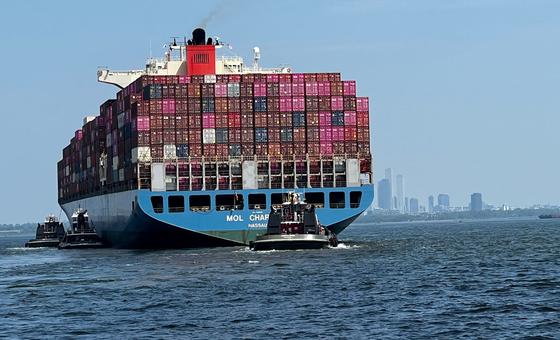
Shipping faces ‘stormy seas’ as trade slows and costs rise

After firm expansion last year, seaborne trade volumes are forecast to rise by just 0.5 per cent in 2025, the slowest pace in years, according to the agency’s Review of Maritime Transport 2025, launched in Geneva.

The slowdown comes as geopolitical tensions, new trade barriers and climate pressures reshape shipping routes, push up costs and expose vulnerabilities in the global economy.

The transitions ahead – to zero carbon, to digital systems, to new trade routes – must be just transitions,” said UNCTAD Secretary-General Rebeca Grynspan. “They must empower, not exclude. They must build resilience, not deepen vulnerability.”

Routes in flux, costs rising

Shipping carries over 80 per cent of the world’s merchandise for export and import, making it a critical barometer of global commerce.

UNCTAD reported that rerouting caused by crises in the Red Sea in 2024 and continuing tensions near the Strait of Hormuz have forced ships onto longer journeys, adding delays and costs.

At the Geneva launch, Regina Asariotis, Chief of UNCTAD’s Trade Logistics Branch, warned that vulnerable economies are paying the heaviest price:

“The global environment has become more complex. Geopolitical tensions are forcing costly reroutings, tariffs are disrupting trade flows, and freight rates are high and volatile.

Small island developing States, least developed countries, and net food importing nations are the most vulnerable, because higher freight costs quickly translate into more expensive imports and food insecurity.”

Ports under pressure

Global ports are struggling with congestion, longer waiting times and the pressure to modernise. UNCTAD highlighted the urgent need to invest in digital systems such as maritime single windows and port community platforms to cut costs and delays.

But many developing countries continue to lag behind in digitalisation. With cyber threats on the rise, the report warns that cybersecurity has become a critical priority for maritime logistics.

Climate challenge

The shipping industry’s greenhouse gas emissions rose by five per cent in 2024, the report said. Yet only eight per cent of the world fleet’s tonnage is currently equipped to use alternative fuels.

The International Maritime Organization will consider a Net-Zero Framework in October, including a global fuel standard and carbon pricing mechanism. UNCTAD says clear regulatory signals, fleet renewal and new fuel infrastructure are vital to reduce emissions.

Human cost at sea

Beyond trade flows and emissions, the report stressed the human toll. Seafarer abandonment cases reached a record high in 2024, leaving crews stranded without pay or support.

Amendments to the Maritime Labour Convention entering into force in 2027 will strengthen rights to repatriation and shore leave, but UNCTAD stressed that effective enforcement is essential.

Policy priorities

The review calls for governments and industry to work together on:

  • Stable trade policies to reduce uncertainty and restore confidence in supply chains;
  • Investment in sustainable, green and resilient port and shipping infrastructure;
  • Faster digitalisation and stronger cybersecurity;
  • Fleet renewal and cleaner fuels; and
  • Support for vulnerable economies to mitigate higher costs.

“Persistent high transport costs risk hitting developing countries the hardest,” Ms. Grynspan said. “Maritime transport must be resilient, inclusive and sustainable if we are to weather the turbulent waters ahead.”
World News in Brief: Global growth slows, deadly Ukraine attacks, Haiti hurricane hunger risk, legal migration for refugees

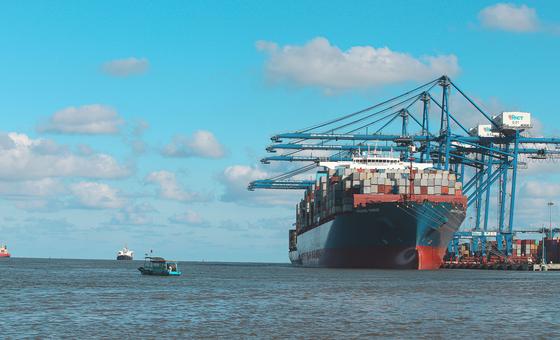
Growth is projected to weaken to 2.3 per cent, or nearly half a percentage point lower than expected at the start of the year, according to the Global Economic Prospects report.

“The global outlook is predicated on tariff rates close to those of late May prevailing,” it said.

“Accordingly, pauses to previously announced tariff hikes between the United States and its trading partners are assumed to persist.”

Although a global recession is not expected, average global growth is on track to be the slowest of any decade since the 1960s.

Poor countries suffer

Growth forecasts are being slashed in nearly 70 per cent of all economies, with the poorest countries most affected.

In most developing countries, nearly 60 per cent, growth should average 3.8 per cent in 2025 before reaching an average 3.9 per cent in the following two years – more than a percentage lower than the average in the 2010s.

The slowdown will impact efforts by developing countries in areas such as job creation, poverty reduction and closing income gaps with richer economies.

“The world economy today is once more running into turbulence. Without a swift course correction, the harm to living standards could be deep,” said Indermit Gill, Senior Vice President and Chief Economist.

The report calls for rebuilding trade relations as “economic cooperation is better than any of the alternatives – for all parties,” he said.

Countries are also urged to improve business climates and to promote employment by ensuring workers are equipped with necessary skills.

At least three dead in new Russian drone assault on Ukrainian cities 

A massive new wave of Russian drone attacks has killed at least three civilians and left Kyiv, Odesa and Zaporizhzhia engulfed in clouds of thick smoke, aid teams said on Tuesday. 

The attack was reportedly one of the largest since Russia’s full-scale invasion more than three years ago.

In an online update, the UN aid coordinating office, OCHA, said that a maternity ward in Odesa had come under fire, causing injuries and widespread damage to homes. 

Another terrible night

The UN Children’s Fund, UNICEF, underscored the impact of the violence on civilians, citing 16-year-old Sonya from Kyiv in an online post. “It was a terrible night,” she said. “The sounds were so frightening – a buzzing sound that was getting closer and explosions every five minutes.”

Russia has intensified its airstrikes on Ukraine in recent days. 

According to Moscow, it stepped up its bombing campaign in retaliation for Ukraine’s suprise drone attacks deep inside Russian territory last week codenamed operation spiderweb.

Amid the ongoing conflict, UN humanitarian teams and partners continue to work to help civilians in cities across Ukraine.

They provide first aid, protection services, food, construction materials and other support including counselling and legal advice.

Haiti: Hurricane season is here, but there are no food supplies

The World Food Programme (WFP) has reported that for the first time ever, it has no prepositioned food supplies in Haiti for the hurricane season, which lasts from June to November. 

WFP also said staffers do not have the financial resources to respond quickly to an emergency weather event in the country. 

Other UN agencies have prepositioned water and sanitation kits for 100,000 and health supplies for 20,000 people. However, these are not sufficient, especially in the absence of food, to meet needs during an emergency. 

“The current lack of contingency stocks and operational funds leaves Haiti’s most at-risk communities dangerously unprotected at a time of heightened vulnerability,” Deputy Spokesperson Farhan Haq said in a briefing Tuesday. 

Famine-like conditions

Food insecurity and malnutrition are already rampant, with over half the population facing acute hunger. Haiti is one of five countries worldwide which is experiencing famine-like conditions. 

Continuing armed violence by gangs in the capital and in other regions has displaced over one million people, compounding the hunger crisis and limiting access to other basic services such as clean water and health care. 

UN agencies in the country estimate that they will need $908 million to continue providing life-saving resources in Haiti, but currently, they have only received $78 million in emergency support. 

Refugees find hope through legal migration

Nearly one million refugees from eight countries with high asylum recognition rates were granted entry permits to 38 destination countries between 2019 and 2023, according to a new report from UN refugee agency, UNHCR, and the Organisation for Economic Co-operation and Development (OECD), Safe Pathways for Refugees

These permits were issued through existing systems for work, study, or family reunification.

“Refugees are using the same legal channels that millions rely on every day,” said Ruven Menikdiwela, UNHCR’s Assistant High Commissioner for Protection. 

“We don’t need new systems – just safer access to the ones already in place.”

In 2023 alone, nearly 255,000 permits were issued, marking a 14 per cent increase from 2022 and the highest number recorded since tracking began in 2010. 

Countries such as Germany, Canada, the United States, the United Kingdom and Sweden have played a leading role. 

UNHCR is urging States to remove obstacles for refugees and integrate them into regular migration systems. It also calls for stronger partnerships to expand access to legal pathways amid growing displacement and strained asylum systems. 

Source link