Deadly storms sweep South and Southeast Asia, leaving over 1,600 dead

Since mid-November, overlapping tropical storms and intensified monsoon systems have triggered catastrophic flooding and landslides across Sri Lanka, Indonesia, Thailand, Malaysia and Viet Nam.

UN teams across the region are supporting government-led emergency operations with food, health, water and sanitation aid, medical deployments and early recovery assessments, as heavy rains continue and fears grow that the crisis could deepen.

“We continue to closely monitor the situation and remain in close contact with national authorities,” UN Spokesperson Stéphane Dujarric told reporters in New York on Thursday.

The UN stands ready to support any ongoing efforts.

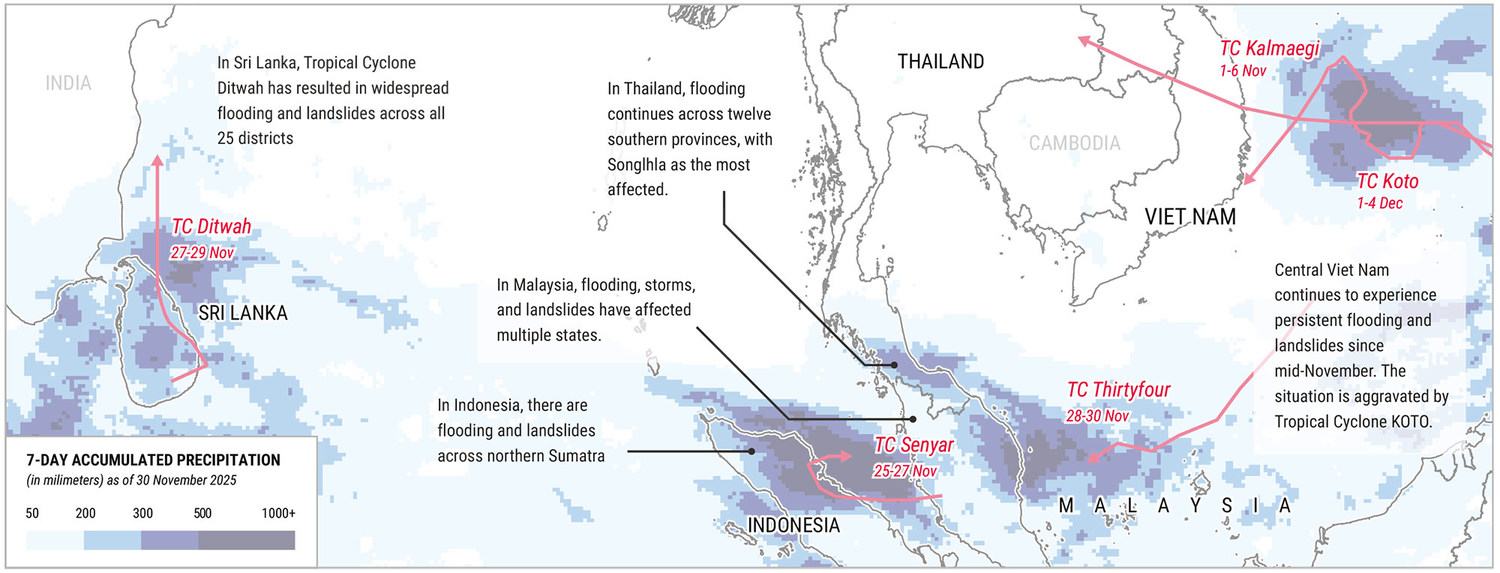
Storms and cyclones across south and southeast Asia from 17 November to 3 December.

Overlapping storms

Experts say the disasters were driven by an unusual convergence of powerful weather systems, including Cyclones Ditwah and Senyar, alongside a strengthened northeast monsoon.

Warm ocean temperatures and shifting storm tracks have produced extreme rainfall in areas that historically faced lower cyclone risk.

Across the region, nearly 11 million people have been affected, including about 1.2 million forced from their homes into shelters, while roads, utilities and farmlands have been washed away.

Heavy toll on children

Children are bearing a devastating share of the storms, with millions cut off from schools, clean water and basic services. More than 4.1 million children across the region have had their education disrupted since late November alone, according to the UN Children’s Fund (UNICEF).

Some three million students in Viet Nam have been unable to attend class, while nearly one million were affected in the Philippines, and hundreds of thousands more in Indonesia, Thailand and Malaysia.
Many children are now living in overcrowded evacuation shelters, exposed to disease, malnutrition and heightened protection risks.

Children are sitting at the frontline of the climate crisis, experiencing firsthand what it means when extreme weather becomes more frequent, more intense, and less predictable,” UNICEF Deputy Spokesperson Ricardo Pires said, calling for urgent action to protect them and their futures.

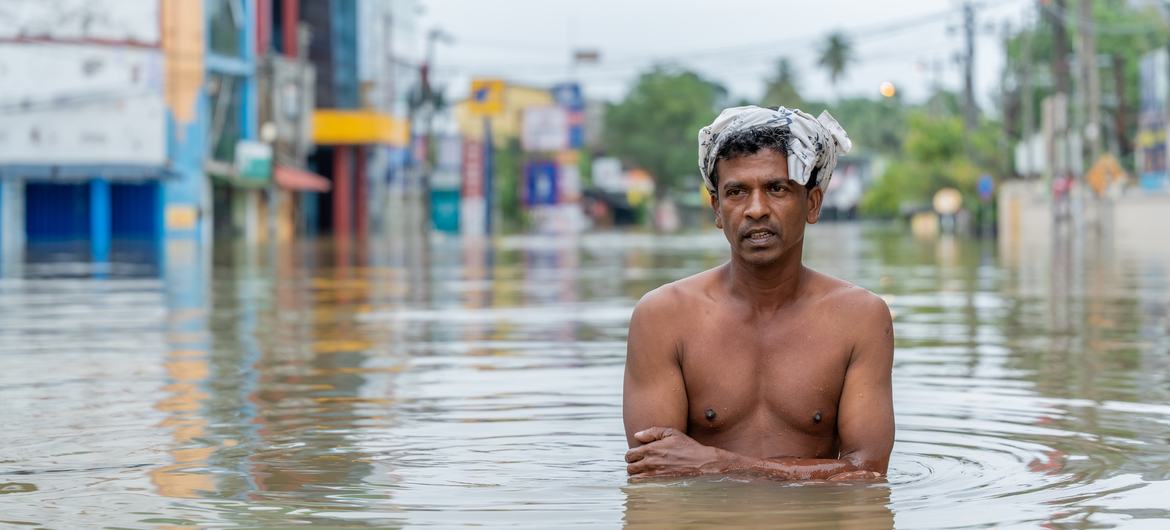
A man stands in over three feet of floodwaters in Gampaha, Sri Lanka.

Sri Lanka: Nationwide devastation

Sri Lanka bore some of the worst impacts after Cyclone Ditwah made landfall on 28 November, triggering floods and landslides across nearly the entire island.

The highest death tolls were reported in the hill districts of Kandy, Nuwara Eliya and Badulla, where landslides swept through plantation communities. Severe flooding also inundated western and north-western districts – including Colombo’s outer suburbs – disrupting markets, transport and water supplies.

Early assessments point to heightened gender-specific risks in the aftermath of the disaster.

With livelihoods disrupted and thousands sheltering in overcrowded centres, women and girls face increased exposure to gender-based violence, economic insecurity and interruptions to sexual and reproductive health services, particularly in rural and plantation communities already grappling with poverty and limited access to care.
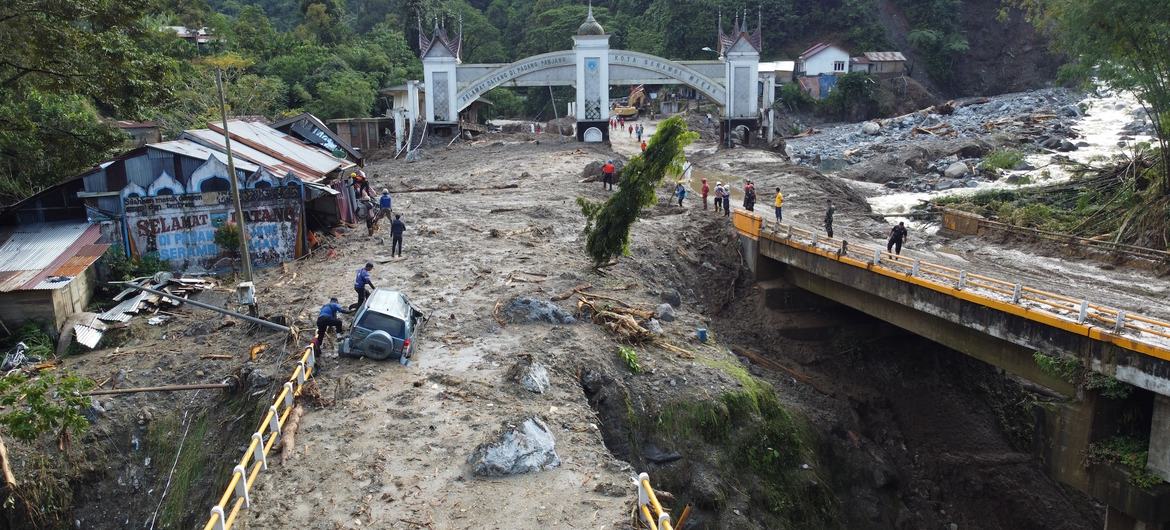
Bridges and access roads swept away by a landslide in West Sumatra, Indonesia.

Indonesia: Flash floods and landslides

In Indonesia, relentless downpours between 22 and 25 November triggered deadly floods and landslides across Aceh, West Sumatra and North Sumatra, devastating dozens of districts.

Official figures indicate more than 830 deaths, with at least 500 people still missing, and more than 880,000 displaced. In total, over three million people have been affected by floodwaters, collapsed hillsides and destroyed infrastructure.

Entire villages have been submerged, bridges washed away and roads cut off, isolating communities and slowing rescue efforts. Emergency teams are relying on helicopters and boats to deliver aid to areas unreachable by land.

“We are working closely with the government on water, sanitation and hygiene (WASH), logistics, and coordination with local partners,” UN Spokesperson Dujarric said.
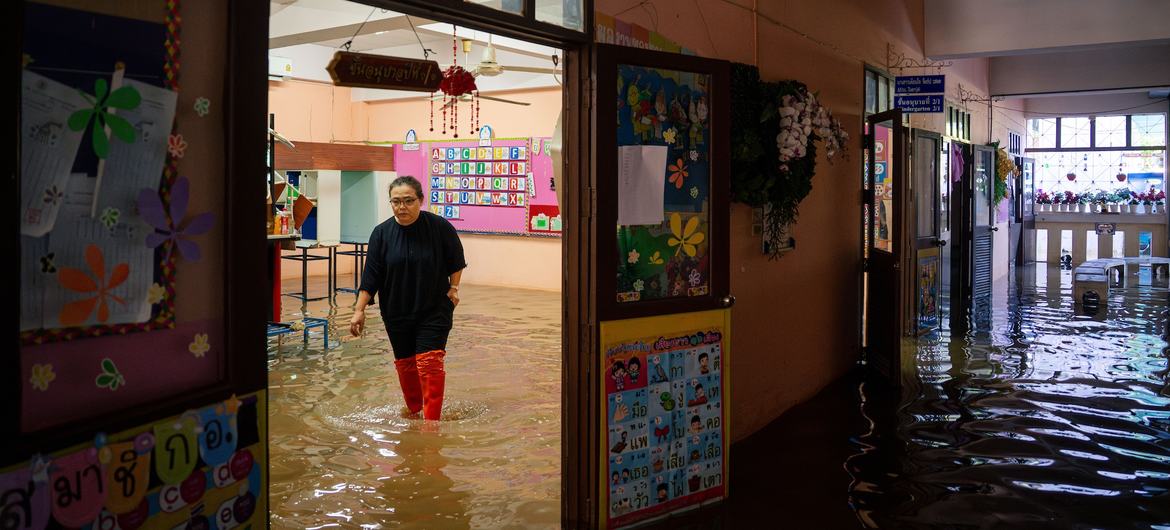
A teacher inspects the damage in a kindergarten classroom at a school in Thailand.

Thailand and Malaysia: Mass evacuations

Moving east, intensified monsoon rains have battered southern Thailand, where 12 provinces have been affected.

At least 185 people have died, with 367 missing and over four million people impacted. More than 219,000 residents have been displaced as rivers burst their banks and low-lying coastal areas flooded.

In neighbouring Malaysia, flooding across eight northern and central states has displaced around 37,000 people. Authorities continue to issue evacuation orders and weather warnings as rain persists.
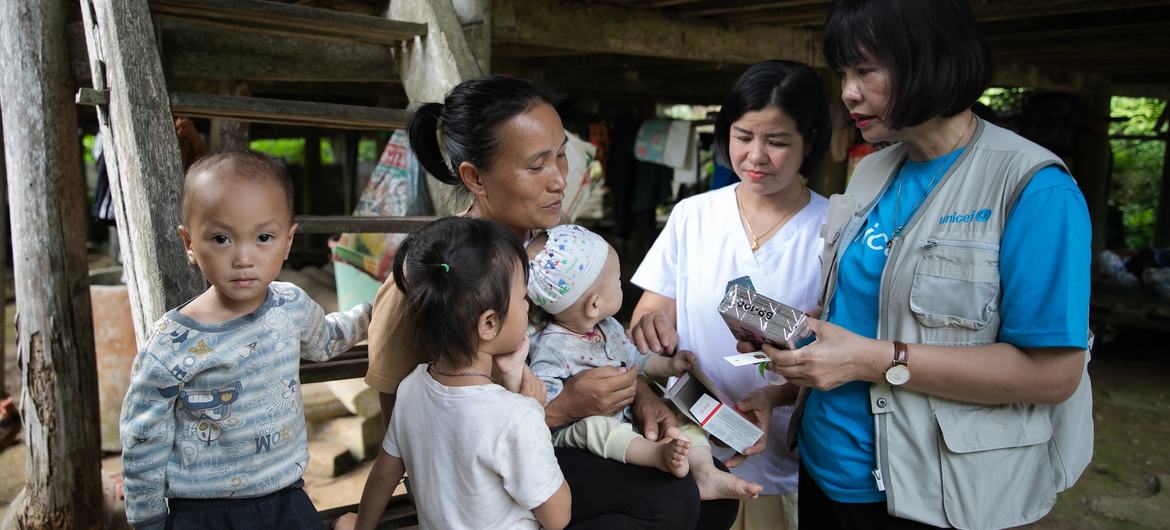
A UNICEF staff member hands ready to eat food to a family in Tuyên Quang, Viet Nam.

Viet Nam: A relentless typhoon season

Viet Nam is confronting the cumulative toll of one of its harshest typhoon seasons in years. Since October, a succession of storms has flooded and damaged large swathes of the country, particularly in northern and central provinces.

Persistent downpours since mid-November, compounded by Tropical Cyclone Koto, have triggered new landslides and prolonged displacement. A national joint response plan is under way to address food insecurity, health risks and damaged infrastructure.

To support the response, $2.6 million has been allocated from the UN Central Emergency Response Fund (CERF).
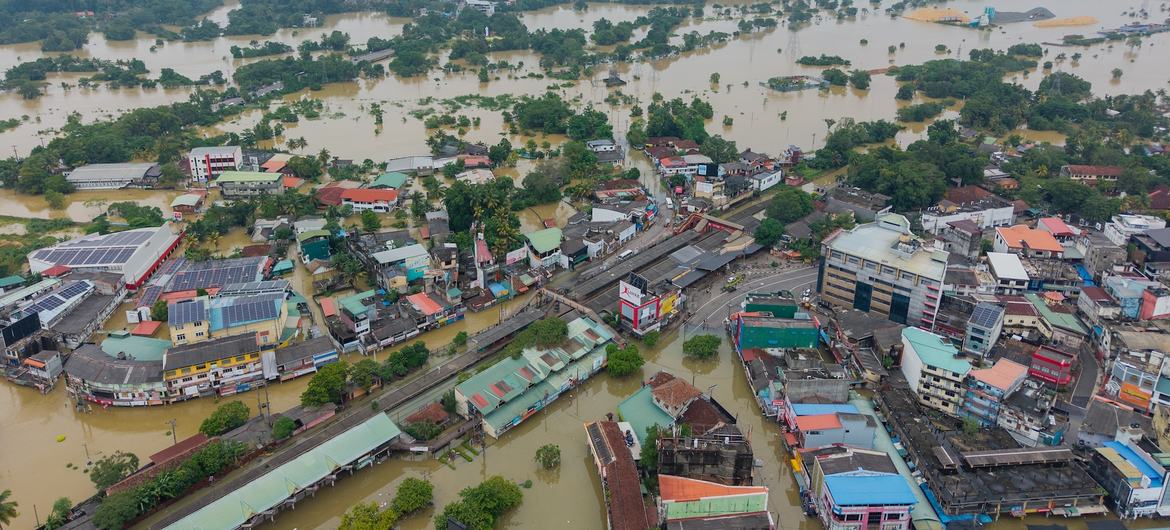
Gampaha (pictured), a district on Colombo’s outskirts, has been among the areas hardest hit by flooding after Cyclone Ditwah.

Disasters supercharged by climate change

UN agencies say the storms reflect a broader shift toward more intense and unpredictable weather across the Asia-Pacific. Cyclone Ditwah tracked unusually far south along Sri Lanka’s coast, while Cyclone Senyar formed near the equator in the Strait of Malacca – a rare occurrence.

The UN Economic and Social Commission for Asia and the Pacific (ESCAP), in its latest report issued last week, warned that rising temperatures are fundamentally reshaping the region’s risk landscape.

Warmer ocean waters are increasing the potential for extreme rainfall, while rapid urban growth, deforestation and wetland loss are magnifying flood impacts. Even where early warnings were issued, fast-rising waters overwhelmed evacuation routes in some locations.

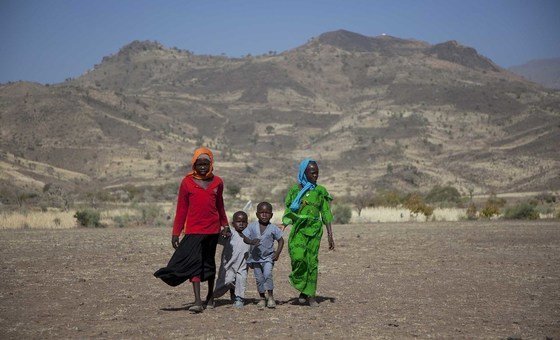
Sudan: Hundreds feared dead in Darfur landslide

Up to 1,000 people are feared dead in the tragedy, which occurred on Sunday in Tarsin village, located in the Jebel Marra range on the border of Central and South Darfur states.

The landslide was triggered by days of heavy rain.

“I extend my heartfelt condolences to the families of the victims and to the people of Sudan at this tragic time,” Luca Renda, interim UN Humanitarian and Resident Coordinator in the country said in a statement.

Meanwhile, the UN and partners are mobilizing to provide support to the affected population.

The humanitarian community stands in solidarity with the people of Sudan and will spare no effort to ensure that aid can reach those in need without delay,” he said.

Refuge amid war

The UN migration agency IOM expressed sadness over the loss of life due to the catastrophic landslide, which is among the deadliest disasters in Sudan’s recent history.

The tragedy comes amid the brutal ongoing war between the Sudanese Armed Forces (SAF) and a militia group known as the Rapid Support Forces (RSF) that has displaced millions since April 2023.

The Marrah Mountains have become a refuge for families fleeing violence in the besieged city of El Fasher in North Darfur and surrounding areas.

“The area remains largely inaccessible to humanitarian organizations due to ongoing conflict and restrictions, compounding the hardship of those affected,” IOM said.

The agency urged all parties to the conflict to ensure the safety of aid workers and civilians, in line with international humanitarian law. 

Source link

Gaza: 875 people now confirmed dead trying to source food in recent weeks

“As of 13 July, we have recorded 875 people killed in Gaza while trying to get food; 674 of them were killed in the vicinity of GHF sites,” said Thameen Al-Kheetan, OHCHR spokesperson.

The remaining 201 victims were killed while seeking food “on the routes of aid convoys or near aid convoys” run by the UN or UN-partners still operating in the war-shattered enclave, Mr. Al-Kheetan told journalists in Geneva.

Killings linked to the controversial US and Israeli-backed aid hubs began shortly after they started operating in southern Gaza on 27 May, bypassing the UN and other established NGOs.

The latest deadly incident happened at around 9am on Monday 14 July, when reports indicated that the Israeli military shelled and fired towards Palestinians seeking food at the GHF site in As Shakoush area, northwestern Rafah.

According to OHCHR, two Palestinians were killed and at least nine others were injured. Some of the casualties were transported to the International Committee of the Red Cross (ICRC) hospital in Rafah. On Saturday medics there received more than 130 patients, the “overwhelming majority” suffering from gunshot wounds and “all responsive individuals” reporting they were attempting to access food distribution sites.

Deadly hunger

The UN agency for Palestinian refugees, UNRWA, expressed deep concerns about the continuing killing of civilians trying to access food, while deadly malnutrition spreads among children.

“Our teams on the ground – UNRWA teams and other United Nations teams – have spoken to survivors of these killings, these starving children included, who were shot at while on their way to pick up very little food,” said Juliette Touma, UNRWA Director of Communications.

Speaking via video from Amman, Ms. Touma insisted that the near-total Israeli blockade of Gaza has led to babies dying of the effects of severe acute malnutrition.

“We’ve been banned from bringing in any humanitarian assistance into Gaza for more than four months now,” she said, before pointing to a “significant increase” in child malnutrition since the Israeli blockade began on 2 March.

Ms. Touma added: “We have 6,000 trucks waiting in places like Egypt, like Jordan; it’s from Jordan to the Gaza Strip it’s a three-hour drive, right?”

In addition to food supplies, these UN trucks contain other vital if basic supplies including bars of soap. “Medicine and food are going to soon expire if we’re not able to get those supplies to people in Gaza who need it most, among them one million children who are half of the population of the Gaza Strip,” Ms. Touma continued.

West Bank: ‘Silent war is surging’

Meanwhile in the occupied West Bank including East Jerusalem, Palestinians continue to be killed in violence allegedly linked to Israeli settlers and security forces, UN agencies said.

According to OHCHR, two-year-old Laila Khatib was shot in the head by Israeli security forces on 25 January while she was inside her house in Ash-Shuhada village, in Jenin.

On 3 July, 61-year-old Walid Badir was shot and killed by Israeli security forces, reportedly while he was cycling back home from prayers, passing through the outskirts of the Nur Shams camp, the UN rights office continued, pointing to intensifying “killings, attacks and harassment of Palestinians in past weeks.

“This includes the demolition of hundreds of homes and forced mass displacement of Palestinians,” OHCHR’s Mr. Al-Kheetan noted, with some 30,000 Palestinians forcibly displaced since the launch of Israel’s operation “Iron Wall” in the north of the occupied West Bank earlier this year.

“We should recall that international law is very clear about this in terms of the obligations of the occupying power,” he said. “Bringing about a permanent demographic change inside the occupied territory may amount to a war crime and is tantamount to ethnic cleansing.”

“We continue to have a silent war that is surging, where heavy restrictions on movement continue, where poverty is increasing as people are cut off from their livelihoods and unemployment soars,” said UNRWA’s Ms. Touma.

With its current focus on the northern occupied West Bank, the Israeli military operation has impacted the refugee camps of Jenin, Tulkarem and Nur Shams.

“It is causing the largest population displacement of the Palestinians in the West Bank since 1967,” Ms. Touma continued.

Four children dead in ‘horrific’ attack on school bus in Baluchistan: UNICEF

The attack which left others wounded, took place in the district of Khuzdar, about 250 kilometres south of Quetta, Balochistan’s provincial capital. The area has long been troubled by separatist insurgency and militant activity.

Deadly journey

The school bus, which was reportedly transporting students to a Pakistani military-run school, was completely destroyed in the explosion that occurred around 10 kilometers from the centre of Khuzdar. News reports said more than 40 students were on board when it was targeted by a vehicle-borne explosive device. 

The UN Children’s Fund (UNICEF) strongly condemned the horrific attack, calling for an end to the devastating violence.

“Earlier today, children in Balochistan set out on what should have been a routine journey – eager to begin another day of learning alongside friends,” the agency said.

Instead, they were caught in a brutal act of violence. Young lives, dreams, and futures shattered. Families devastated. The physical and emotional scars left for child survivors to bear.”

Never target children

According to news reports, no militant group has claimed responsibility so far for the bus bombing.

Children are not, and must never be, the targets of violence,” UNICEF said. The agency extended deepest condolences to the families impacted, reiterating that simply going to school should never be a “dangerous act” for any child.

Source link

Gaza: 57 children reported dead from malnutrition, says WHO

Since the aid blockade began on 2 March, 57 children have reportedly died from the effects of malnutrition, according to the Ministry of Health.

If the situation persists, nearly 71,000 children under the age of five are expected to be acutely malnourished over the next 11 months.

Briefing journalists in Geneva, WHO’s representative in the Occupied Palestinian Territory Dr. Rik Peeperkorn said that that Israel’s complete aid embargo has left only enough WHO supplies to treat 500 children with acute malnutrition – “a fraction of the urgent need”

“People are trapped in this cycle where a lack of diversified food, malnutrition and disease fuel each other,” he warned.

Dr. Peeperkorn’s comments follow the publication on Monday of a new analysis by the UN-backed food security alert scale known as the IPC showing that one in five people in Gaza – 500,000 – faces starvation, while the entire 2.1 million population of the Strip is subjected to prolonged food shortages. WHO is a member of the IPC.

An escalating hunger crisis

“This is one of the world’s worst hunger crises, unfolding in real time,” Dr. Peeperkorn said.

The UN health agency representative spoke of his recent visit to Kamal Adwan hospital in north Gaza, where each day more than 300 children are screened at a WHO-supported nutrition centre. During the visit, the hospital reported more than 11 per cent of cases with global acute malnutrition.

Describing the affected children, he said, “I’ve seen them [in the] wards… A child of five years old, and I thought he’s two and a half”.

WHO supports 16 outpatient and three inpatient malnutrition treatment centres in the enclave with lifesaving supplies, but the stopping of aid by Israel and shrinking humanitarian access are threatening its ability to sustain these operations.
Dr. Peeperkorn insisted on the long-term damage from malnutrition which “can last a lifetime”, with impacts including stunted growth, impaired cognitive development and health.

“Without enough nutritious food, clean water, access to health care, an entire generation will be permanently affected,” he warned.

The WHO official stressed that the agency was “constantly” raising with Israeli authorities the need to get supplies into the Strip. Some 31 WHO aid trucks are at a standstill in Al-Arish in Egypt just a few dozen kilometres away from the Rafah border crossing with Gaza and more supplies are positioned in the West Bank, ready to move “any day when this is allowed”.

‘Health care is not a target’

Turning to attacks on health care, Dr. Peeperkorn said that the burn unit of Nasser Medical Complex in the southern town of Khan Younis was reportedly hit by an Israeli airstrike on Tuesday, killing two and injuring 12. The attack has resulted in the loss of 18 hospital beds in the surgical department including eight “critical” intensive care beds.

Media reported that a Palestinian journalist was killed in the attack during treatment for injuries sustained in a previous airstrike.

“Health care is not a target,” Dr. Peeperkorn concluded. He reiterated calls for the protection of health facilities, an immediate end to the aid blockade, the release of all hostages held by Palestinian armed groups and for a ceasefire “which leads to lasting peace”. 

Breaking News: Malawi’s Vice President Saulos Chilima Confirmed Dead in Tragic Plane Crash

In a devastating turn of events, Malawi’s Vice President, Saulos Chilima, has been confirmed dead following a fatal plane crash. President Lazarus Chakwera made the somber announcement on Tuesday, revealing that Chilima, along with nine other passengers aboard a military aircraft, lost their lives after the plane disappeared on Monday morning.

The wreckage of the aircraft, which was carrying Vice President Chilima, has been discovered with no survivors, President Chakwera declared.

Chilima, aged 51, was en route to attend the funeral of Ralph Kasambara, Malawi’s former Attorney General and Minister of Justice, who was found deceased in a lodge in Lilongwe last Friday.

The ill-fated journey was marred by adverse weather conditions, leading to the aircraft’s inability to land at its intended destination, Mzuzu Airport in northern Malawi. The pilot was instructed to return to Kamuzu International Airport in Lilongwe, but tragically, the plane vanished from radar screens at approximately 10 a.m. local time (0800 GMT) on Monday.

A tireless search effort ensued, with soldiers combing through Chikangawa Forest overnight and into the morning in hopes of locating the missing aircraft.

During a news briefing on Tuesday, President Chakwera conveyed the news that the Malawi Defence Force commander had confirmed the completion of the search and rescue operation, with the discovery of the wreckage. Expressing profound sorrow, Chakwera extended his condolences to the nation, acknowledging the immense loss suffered.

The President revealed that the aircraft was found in a completely demolished state. In a poignant tribute, Chakwera hailed Chilima as “a good man,” a “devoted father,” and a “formidable VP.” He reflected on the honor of working alongside Chilima, describing him as a valued deputy and counselor.

The nation of Malawi mourns the untimely loss of Vice President Saulos Chilima, as investigations into the cause of the tragic plane crash are set to commence.