Climate science and early warnings key to saving lives

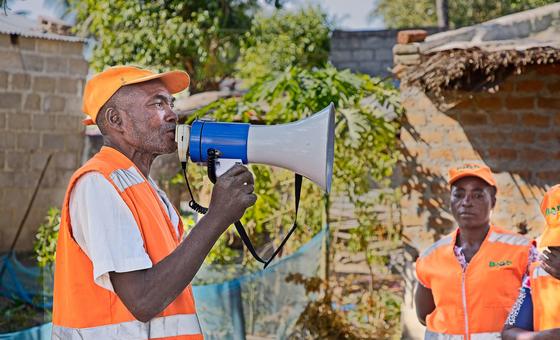
“Early-warning systems work,” he told the World Meteorological Organization (WMO) in Geneva. “They give farmers the power to protect their crops and livestock. Enable families to evacuate safely. And protect entire communities from devastation.”

“We know that disaster-related mortality is at least six times lower in countries with good early-warning systems in place,” the UN chief said.

He added that just 24 hours’ notice before a hazardous event can reduce damage by up to 30 per cent.

In 2022, Mr. Guterres launched the Early Warnings for All initiative aiming to ensure that “everyone, everywhere” is protected by an alert system by 2027.

Progress has been made, with more than half of all countries now reportedly equipped with multi-hazard early-warning systems. The world’s least developed countries have nearly doubled their capacity since official reporting began “but we have a long way to go,” the UN chief acknowledged.

At a special meeting of the World Meteorological Congress earlier this week, countries endorsed an urgent Call to Action aiming to close the remaining gaps in surveillance.

Extreme weather worsens

WMO head Celeste Saulo, who has been urging a scale-up in early-warning system adoption, warned that the impacts of climate change are accelerating, as “more extreme weather is destroying lives and livelihoods and eroding hard-won development gains”.

She spoke of a “profound opportunity to harness climate intelligence and technological advances to build a more resilient future for all.”

Weather, water, and climate-related hazards have killed more than two million people in the past five decades, with developing countries accounting for 90 per cent of deaths, according to WMO.

Mr. Guterres emphasized the fact that for countries to “act at the speed and scale required” a ramp-up in funding will be key.

Surge in financing

“Reaching every community requires a surge in financing,” he said. “But too many developing countries are blocked by limited fiscal space, slowing growth, crushing debt burdens and growing systemic risks.”

He also urged action at the source of the climate crisis, to try to limit fast-advancing global warming to 1.5 degrees Celsius above pre-industrial era temperatures – even though we know that this target will be overshot over the course of the next few years, he said.

“One thing is already clear: we will not be able to contain global warming below 1.5 degrees in the next few years,” Mr. Guterres warned. “The overshooting is now inevitable. Which will mean that we’re going to have a period, bigger or smaller, with higher or lower intensity, above 1.5 degrees in the years to come.”

Still, “we are not condemned to live with 1.5 degrees” if there is a global paradigm shift and countries take appropriate action.

At the UN’s next climate change conference, where states are expected to commit to reducing greenhouse gas emissions over the next decade, “we need to be much more ambitious,” he said. COP30 will take place on 10-21 November, in Belén, Brazil.

“In Brazil, leaders need to agree on a credible plan in order to mobilize $1.3 trillion per year by 2035 for developing countries, to finance climate action,” Mr. Guterres insisted.

Developed countries should honour their commitment to double climate adaptation funding to $40 billion this year and the Loss and Damage Fund needs to attract “substantial contributions,” he said.

Mr. Guterres stressed the need to “fight disinformation, online harassment and greenwashing,” referring to the UN-backed Global Initiative on Climate Change Information Integrity.

“Scientists and researchers should never fear telling the truth,” he said.

He expressed his solidarity with the scientific community and said that the “ideas, expertise and influence” of the WMO, which marks its 75th anniversary this week, are needed now “more than ever”.
Tsunami alert highlights worth of global early warning system

While the UN-backed International Atomic Energy Agency (IAEA) reported 
that there had been no damage to Japan’s nuclear facilities after an 8.8 magnitude quake was recorded off Russia’s Kamchatka Peninsula, coastal communities have been taking no chances and evacuating to higher ground or moving further inland.

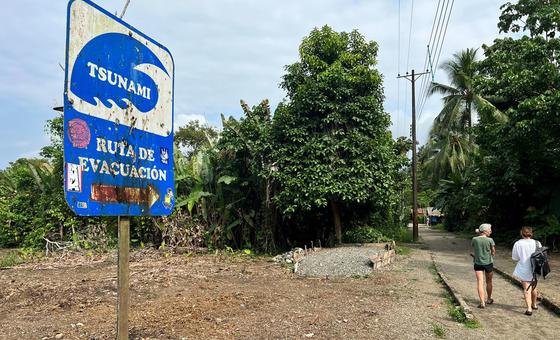
Alerts were sent out within a few minutes of the Russia quake, the UN Office for Disaster Risk Reduction (UNDRR) confirmed. Although the authorities have now downgraded the threat across Japan as waves of 1.3 metres (4ft 2in) have been recorded, the advice is for people to stay in shelters until the danger diminishes from continuing sea surges.

“It is very complex; we are observing the tsunami data in real time, so we need people to stay at the shelter until the tsunami is completed,” said tsunami engineer Professor Fumihiko Imamura from Tohoku University.

Deadly legacy

In the Asian island nation, memories are still raw from the 11 March 2011 Tohoku earthquake and tsunami which killed more than 18,000 people.

Just last year, the 7.6 magnitude Noto quake left approximately 500 dead and damaged 150,000 homes.

The disaster also caused a major accident at the Fukushima Daiichi Nuclear Power Plant, forcing tens of thousands of people from their homes. 

Today’s developments come amid reports that the latest earthquake was among the 10 most powerful ever recorded, hence why the authorities are monitoring its impact so closely.

So far, alerts have been triggered off the west coast of the United States, in South America from Chile to Mexico and from Papua New Guinea to Vanuatu in the Pacific. 

A 8.8 magnitude earthquake is a very large earthquake,” explained Kamal Kishore, Special Representative of the UN Secretary-General for Disaster Risk Reduction. 

“As you go from magnitude eight to nine, or seven to eight, at every step the strength of the earthquake increases exponentially. So, an earthquake which is magnitude eight as opposed to seven would be 30 times bigger.” 

Faster than a jet liner

Speaking to UN News, Mr. Kishore highlighted the huge distances tsunamis can cover, picking up enormous energy they then dump on coastal communities. 

Their progress can be as fast as a passenger jet and can be tracked by deep sea pressure change sensors, or tsunameters, that are connected to surface buoys which relay information in real time to satellites. This data is then modelled by national weather centres, influencing whether alerts are issued.

“It’s a real threat because the tsunamis travel really fast from one coast to the other,” continued Mr. Kishore. “The Indian Ocean tsunami of 2004 was one of the most devastating in our memory, which travelled from all the way from the coast of Indonesia to the Sri Lankan shores within a little over an hour.”

Lessons learned

In addition to the coordination role of UNDRR in the global early warning system, other UN entities also closely involved include the World Meteorological Organization (WMO) and the Intergovernmental Oceanographic Commission of the UN agency for Education, Science and Culture (UNESCO-IOC).  

The IOC’s role is critical in making sure that countries that use tsunami-tracking instrumentation follow the same standard. 

These efforts are in line with the UN Secretary-General’s Early Warnings for All initiative to ensure that everyone on Earth is protected from hazardous weather, water or climate events through lifesaving early warning systems.

Today, one in three people – and mainly in least developed countries and Small Island Developing States – lacks access to adequate multi-hazard early warning systems.

“Tsunami prevention really highlights how important it is to have multilateral action” such as sharing data to run the algorithms behind wave modelling systems, insisted the UN’s Mr. Kishore. 

“There are countries which are separated by thousands of kilometres of ocean, but they are affected by the same hazard,” he continued. 

“If you do not share information on observing these hazards, not just in the location where they have occurred, but on what is happening in the intermediate locations in the ocean…we will not be able to warn our citizens.”  

Source link

‘Very limited time to react’: Texas flash floods expose challenges in early warning

The UN World Meteorological Organization (WMO) said that the tragedy highlights growing global challenges around extreme rainfall, warning dissemination and community preparedness.

Flash floods are the most lethal form of flooding, responsible for over 5,000 deaths annually and 85 per cent of all flood-related fatalities worldwide, according to WMO data, and result in economic losses of more than $50 billion annually.

Unlike slow-onset river floods, flash floods leave very limited time for reaction,” the agency said in a news release on Wednesday.

That makes accurate short-term forecasting and community preparedness essential.

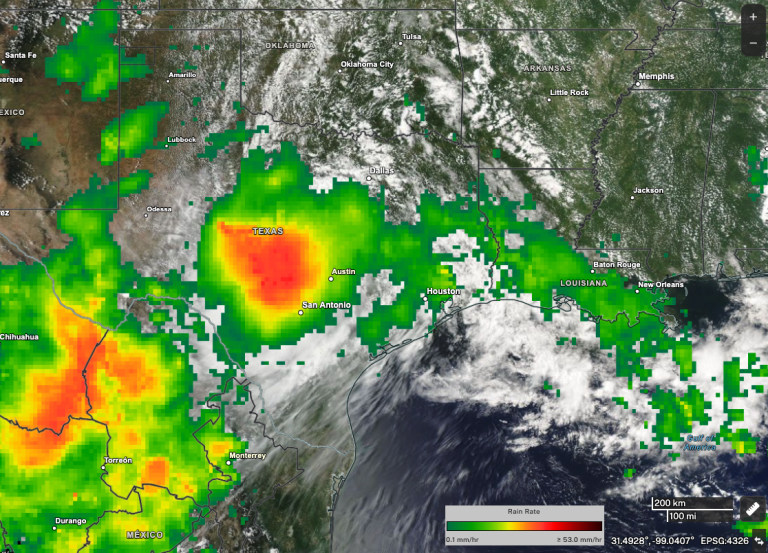
One-day precipitation totals from NASA’s IMERG multi-satellite precipitation product show heavy rainfall over central Texas on July 4, 2025.

Months of rains in hours

Overnight 3 into 4 July, torrential rains – up to 46 centimetres (about 18 inches) in a matter of hours – sent a wall of water surging through Kerr County’s Guadalupe River basin at around 4 AM, catching many residents and vacationers off guard.

The US National Weather Service issued timely alerts – including a flash flood watch more than 12 hours in advance, upgraded to a flash flood emergency about three hours before impact.

The warnings were disseminated by Weather Radio, emergency management systems and television and radio stations, but many people, including hundreds of children at summer camps, were not reached in time.

Floodwaters surged dramatically as the Guadalupe River rose nearly 8 metres (about 26 feet) in about 45 minutes.

Among the hardest hit was the all-girls summer camp, Camp Mystic, along the river, where at least 27 campers and counsellors died, according to media reports. Texas state authorities report that more than 160 people remain missing.

The disaster has triggered one of the largest search-and-rescue efforts in state history.

More frequent and severe floods

Flash floods are not new, but their frequency and intensity are increasing in many regions due to rapid urbanization, land-use change and a warming climate.

A warmer atmosphere holds more moisture and so this means that extreme rainfall events are becoming more frequent,” WMO said.

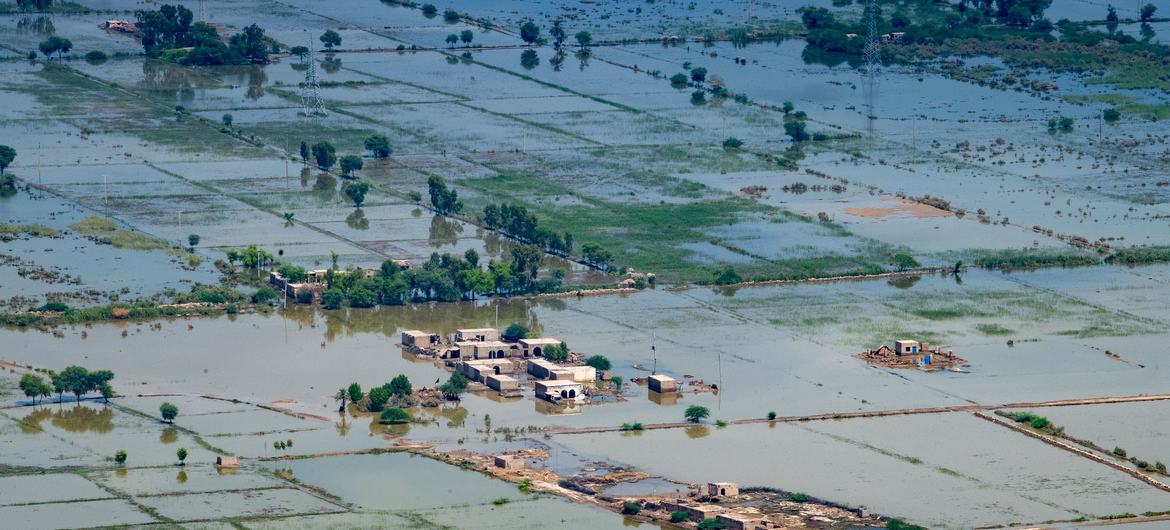
The Texas disaster joins a string of recent catastrophic floods. In 2022, flash floods in Pakistan killed over 1,700 people and displaced millions. In 2024, floods in Europe, the Middle East and Africa saw $36 billion in economic damages.

And just this week, a flash flood along the Nepalese-Chinese border swept away the main bridge linking the two countries.

In September 2022, Pakistan was hit by devastating flooding which left large swathes of the country under water.

Supporting countries

To help countries predict such hazards, WMO operates the Flash Flood Guidance System, a real-time forecasting platform used in over 70 countries. It integrates satellite data, radar, and weather models to detect local flash flood threats and supports training programs to build national capacity.

Beyond technology, the agency plays a convening role by building national capacity, certifying experts, and facilitating real-time coordination between forecasting agencies and disaster managers.

Source link