Three women in Jamaica whose lives were upended by the destructive force of a hurricane which battered the Caribbean island are looking to rebuild their future.
Right before Hurricane Melissa swept across Jamaica in late October 2025, Rose* took her two children to a friend’s sturdy concrete home to keep them safe. When they returned the next morning, everything had vanished.
“The house was gone,” she said. “I didn’t even see the roof, just a piece of lumber.”

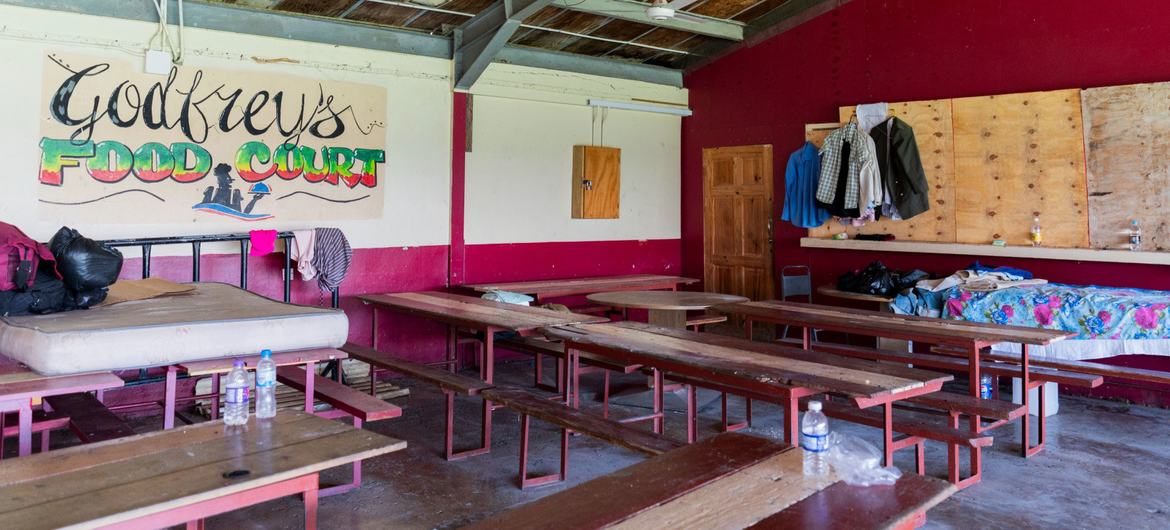
A school serves a temporary shelter for people whose lives were upended by Hurricane Melissa.
Entire neighbourhoods were reduced to splinters by the hurricane which left 36 per cent of houses in the western part of the country either damaged or destroyed.
Schools became shelters overnight, turning classrooms into temporary homes. Roads disappeared under water, power outages spread, and thousands were cut off for days.
Nearly half a million people were left in precarious living conditions, facing profound uncertainty.
Among them are Rose, Sharon, and Sonia – three mothers whose lives changed overnight.
‘I have a key but no house’
For nine years, Rose lived in her small wooden home, a donated structure that had become her family’s refuge.
Now, only the foundation remains. “I have a key to the house but no house,” she said. The air reeked of mud and decay. Nothing could be saved.
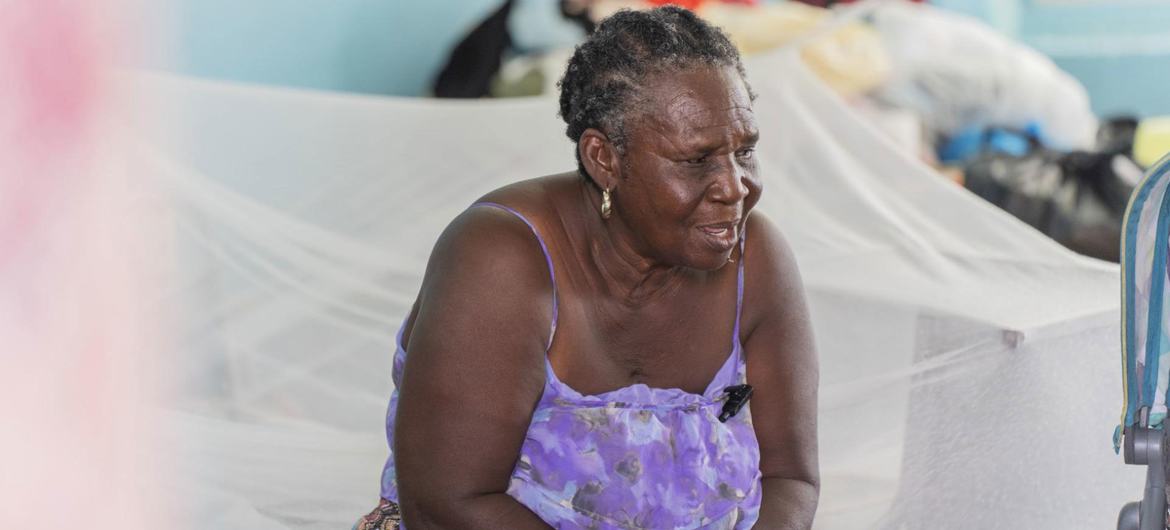
Sonia sits on a bed at a shelter for people who lost their homes due to Hurricane Melissa.
Before the storm, Rose worked as a cruise dispatcher in Negril, and her son as a hotel photographer. Both lost their jobs when the tourism industry shut down.
A few classrooms away, Sharon* faces a similar struggle. She arrived at the shelter with her two small children the same day her home, and her father’s collapsed.
Before the storm, she worked as a gas station supervisor, now her workplace is closed indefinitely. Her children sleep on desks in the sweltering heat.
Between the rows of desks and makeshift beds, families share what little they have: a meal, a blanket, a few words of comfort. Amid loss, small acts of kindness create fragile connections.
Living in limbo
More than 1,100 people remain in 88 shelters in Jamaica, and over 120,000 households need urgent repairs after Melissa’s destruction.
Among them is Sonia*, who fled her coastal home carrying her grandson with a heart condition.
“I can’t swim, so I grabbed him and ran,” she recalled.
Since the start of the emergency, the International Organization for Migration (IOM) teams have supported the Government of Jamaica and the wider UN response, delivering tarpaulins, shelter repair materials, hygiene kits, generators, and other essentials to families whose homes were damaged or destroyed.
For women like Rose, Sharon, and Sonia, each day is a test of endurance and solidarity. Their homes are gone, but the support of their communities helps them move forward.
Their lives, once far apart, are now linked by loss, uncertainty, and the slow process of rebuilding.
*Names changed to protect identities