
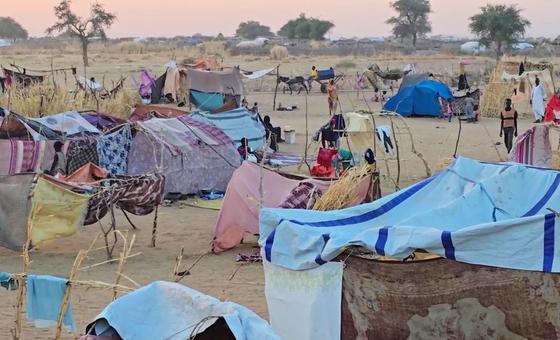
Sudan: UN rights chief says worse is to come without international action

We can only expect worse to come” unless action is taken to halt the bloodshed, Mr. Türk told Member States at the Human Rights Council in Geneva, as he reiterated his call for the extension of an arms embargo from Darfur to include all of Sudan.

Rival militaries from the national army and Rapid Support Forces (RSF) militia have been battling for control of the country for nearly three years.

Something must be done to address the “continuous inflow of weapons”, the High Commissioner for Human Rights insisted, after recounting testimonies of survivors of atrocity crimes in El Fasher, the capital of North Darfur, by paramilitary Rapid Support Forces (RSF) who overran the city last October.

Mass killings

“In one horrific example, people who fled to separate locations, thousands of kilometres apart, gave consistent accounts of the mass killing of hundreds of people sheltering at El Fasher University,” he said, describing convincing testimony that some victims were targeted based on their non-Arab ethnicity – in particular, members of the Zaghawa ethnic group. 

“Survivors also spoke of seeing piles of dead bodies along roads leading away from El Fasher, in an apocalyptic scene that one person likened to the Day of Judgment,” the High Commissioner continued, his comments echoing the International Criminal Court’s (ICC) conclusion last month that war crimes and crimes against humanity had taken place in El-Fasher, linked to the RSF’s siege. 

“Our own findings are fully consistent” with that ICC assessment, Mr. Türk told the Human Rights Council, at a meeting held specifically on the Sudan emergency.

Dire warnings

Previously, the UN rights chief noted that his office has warned about previous atrocity crimes such as the RSF offensive to capture Zamzam camp for displaced people in April 2025. 

Responsibility for these atrocity crimes lies squarely with the RSF and their allies and supporters,” he said.

The war in Sudan erupted in April 2023, after a power-sharing agreement broke down in the resource-rich central African nation between the Sudanese Armed Forces (SAF) and the RSF. 

The resulting humanitarian emergency has affected more than 30 million people in Sudan; many have faced repeated displacement and others have been impacted by famine and systematic sexual violence, including gang rape.

As the fighting continues away from the Darfurs in the west to the central Kordofans regions, observers fear that further grave abuses are bound to happen, including by “advanced drone weaponry systems used by both sides”, Mr. Türk warned.

Deadly drone war

“In the last two weeks, the SAF and allied Joint Forces broke the sieges on Kadugli and Dilling,” the High Commissioner said. “But drone strikes by both sides continue, resulting in dozens of civilian deaths and injuries. 

Civilians are at risk of summary executions, sexual violence, arbitrary detention, and family separation.”

Mediation measures

In a bid to prevent further bloodshed, the High Commissioner announced a series of measures “to support mediation efforts” and de-escalate violence. 

These include commitments not to target civilians or residential areas with explosive weapons, to enable the unimpeded delivery of humanitarian aid, to end arbitrary detention and cease attacks on civilian infrastructure.

“I witnessed the damage done by RSF attacks on Merowe dam and hydroelectric power station, which once supplied 70 per cent of Sudan’s electricity. Repeated drone strikes have disrupted power and water supplies to huge numbers of people, with a serious impact on healthcare,” he said.

Source link

Yemen: Children are dying and it’s going to get worse, warns aid veteran

“The simple narrative is, children are dying and it’s going to get worse,” said Julien Harneis, UN Resident and Humanitarian Coordinator in Yemen. “My fear is that we won’t hear about it until the mortality and the morbidity significantly increases in this next year.”

The alert follows an attempt by forces affiliated with the Southern Transitional Council (STC) to expand their presence in the resource-rich and strategically important eastern governorates of Hadramout and Al Mahra, a move reportedly reversed earlier this month by Government-aligned forces backed by Saudi Arabia.

The latest crisis comes after well over a decade of fighting between Houthi-led forces – who control the capital, Sana’a – and the internationally recognized government in Aden, backed by a Saudi-led military coalition. 

Complex operating environment

“It’s an extraordinarily complicated situation,” Mr. Harneis told journalists in Geneva. “Just in the last month in Aden, we went through a situation where you have the Government of Yemen in charge, then over 48 hours, the Southern Transitional [Council] situation took over the whole of the Government of Yemen areas, including areas they’ve never been in.”

Just four weeks later, however, a delegation from the STC released a statement while in Riyadh, Saudi Arabia, announcing that they had in fact “dissolved” their movement, allowing the Government in Yemen to retake the recently captured areas. “But at the same time, we’ve got demonstrations in Aden saying that, ‘No, we’re not [disbanded], we’re still there,’” Mr. Harneis explained.

Last week, UN Special Envoy for Yemen Hans Grundberg told the Security Council that this latest political and security upheaval underscored how quickly stability could unravel without a credible, inclusive political process to bring a negotiated end to the debilitating war.

Securing a peaceful future for the people of Yemen and providing lifesaving help has also been complicated by the ongoing detention of UN staff and diplomatic workers, among others, by Houthi rebels, who are backed by Iran and control Sana’a. 

Mr. Harneis described the torment for the families of the 69 staff members still being held: “It’s terrible for them; some families haven’t seen their loved ones in five years. They don’t know the conditions of their detention, they don’t know where they are, they don’t know if they’re going to be sentenced to death in the coming days.”

Millions going hungry

Latest UN data shows that more than 20 million Yemenis – about half the population – will face acute food insecurity next month, while tens of thousands could face famine-like conditions.

“We are expecting things to be much worse in 2026,” Mr. Harneis said.

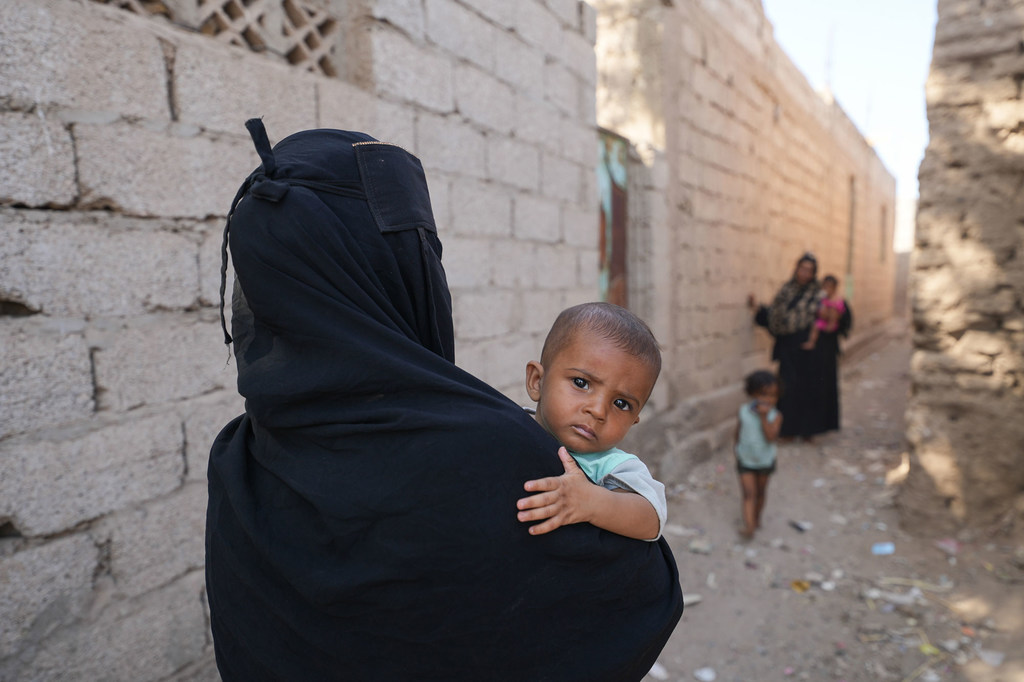
A young boy is carried by his mother thorough a neighbourhood in Al Hawtah, Lahj Governate in Yemen.

The country’s health system is also collapsing. More than 450 facilities have already closed and thousands more are at risk of losing funding. Vaccination programmes are also under threat and only two-thirds of Yemen’s children are fully immunised, largely owing to a lack of access in the north.

“The way that economic and political decisions are playing out…food insecurity is only getting worse across all parts of the country”, the UN aid official maintained.

“We’re going to see a major change where the health system is not going to be supported in the way it has been in the past.”

Despite access restrictions, UN partners reached 3.4 million people with food assistance last year, along with emergency support during floods and disease outbreaks. 

The UN has been working in Yemen since the 1960s, helping to make development gains and protect the country’s most vulnerable people. “And then suddenly in the last couple of years this breakdown…inexplicably,” Mr. Harneis said. “That has a terrifying effect on the humanitarian workers.”

Source link