‘Deadly floods’ displace over 100,000 in South Sudan

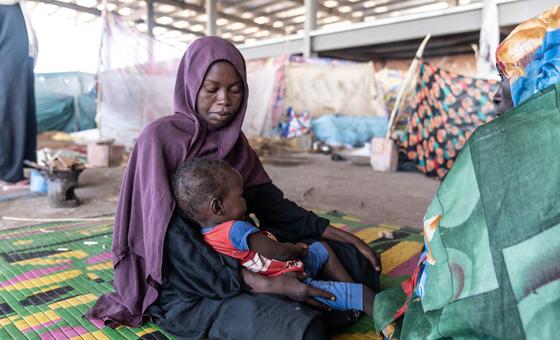
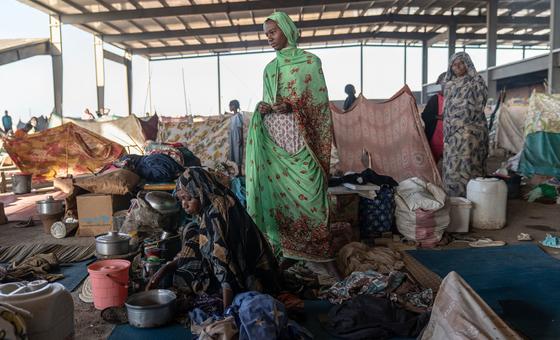
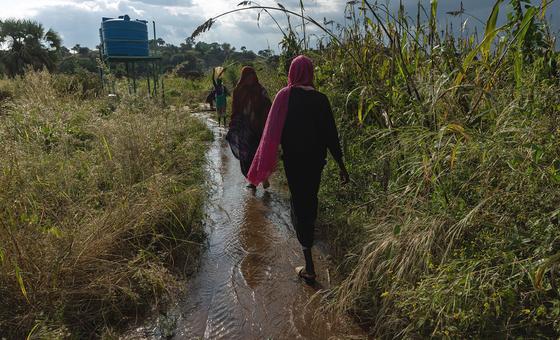
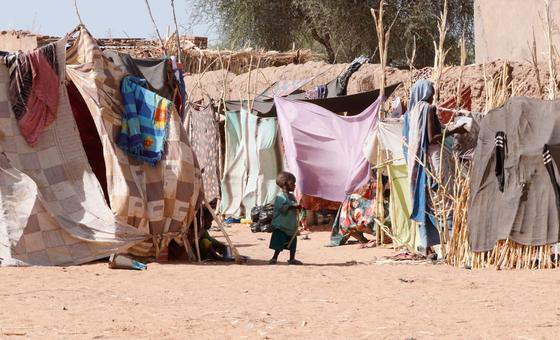
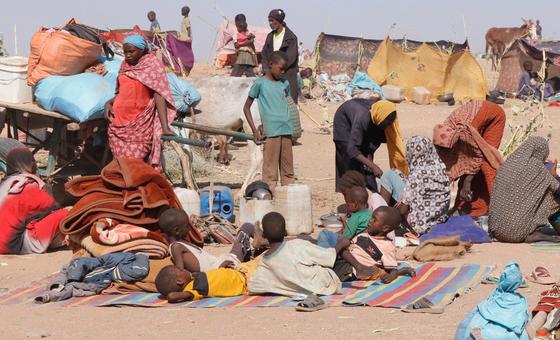
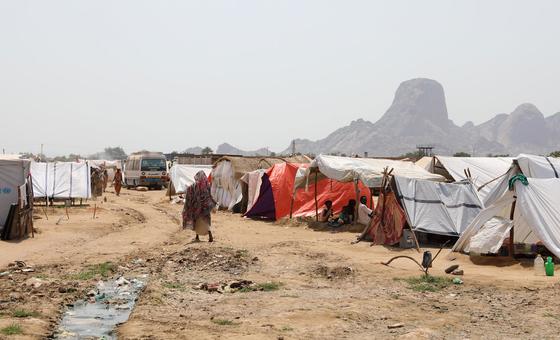
In recent weeks, widespread flooding has engulfed large parts of Jonglei, Upper Nile and Unity states in the north of the country.

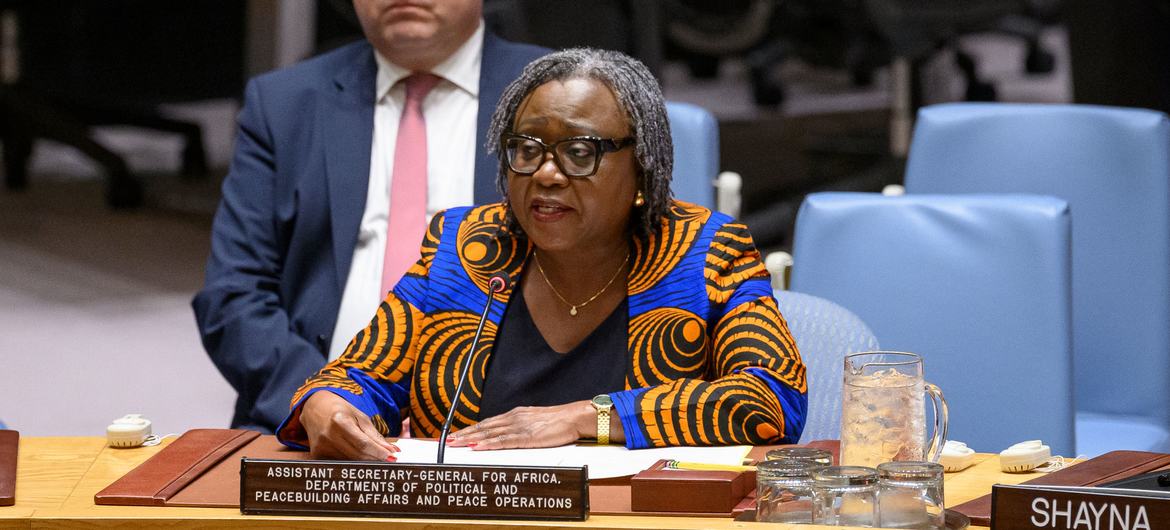
The agency’s representative in South Sudan, Marie-Helene Verney, said that “if the flooding continues, up to 400,000 people are likely to be displaced by the end of the year, exceeding flood displacement levels seen in 2024.”

The situation is expected to be at its worst between September and October and threatens to “cut off entire communities, exacerbate hunger and heighten protection risks, particularly for women and girls,” Ms. Verney added.

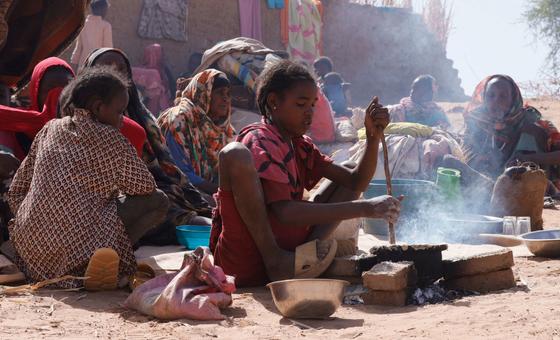
For several years, South Sudan has faced an ongoing humanitarian crisis due to underdevelopment, disasters and conflict that has displaced many communities. Recurrent floods have exacerbated this displacement, destroyed homes, and threatened livelihoods across the nation.

“Homes, schools, health facilities, farmlands, and pastures have been flooded,” said the UNHCR representative, “devastating livestock and inundating safe water sources and latrines, which have worsened sanitation and heightened health risks.”

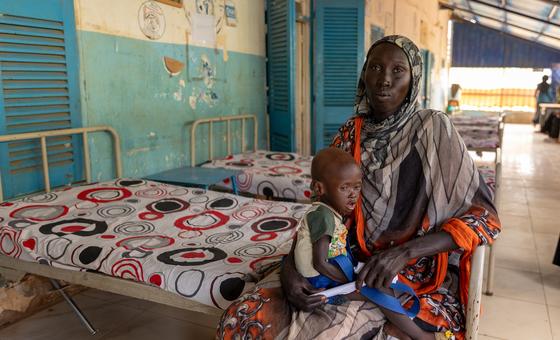
Stagnant water, combined with limited access to safe drinking water, is raising the threat of further disease outbreaks on top of the ongoing cholera crisis, which had already affected over 12,000 internally displaced persons (IDPs) and 3,100 refugees by the end of August.

UN continues providing aid

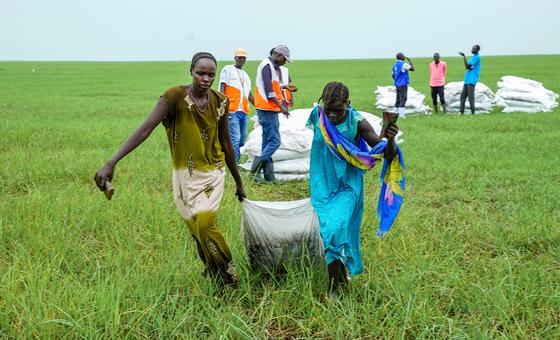
In 2025, UNHCR, in collaboration with the South Sudanese authorities and UN partners, has continued to provide life-saving aid, including cash, emergency shelters, and plastic sheeting to 150,000 of the most vulnerable flood-affected individuals.

Over the past five years work has been carried out to mitigate flood impacts by reinforcing dykes, prepositioning supplies, supporting livelihoods, and assisting displaced communities, including IDPs.

UNHCR has appealed for more funds to carry out its life-saving work. As of 31 July, it had only received a third of the nearly $300 million required to protect and assist displaced people and local host communities in the country.

In Unity state, which is 70 per cent underwater, UNHCR has significantly scaled down operations due to the funding shortfall, leaving thousands of people in a more precarious situation.

Supporting climate resilience

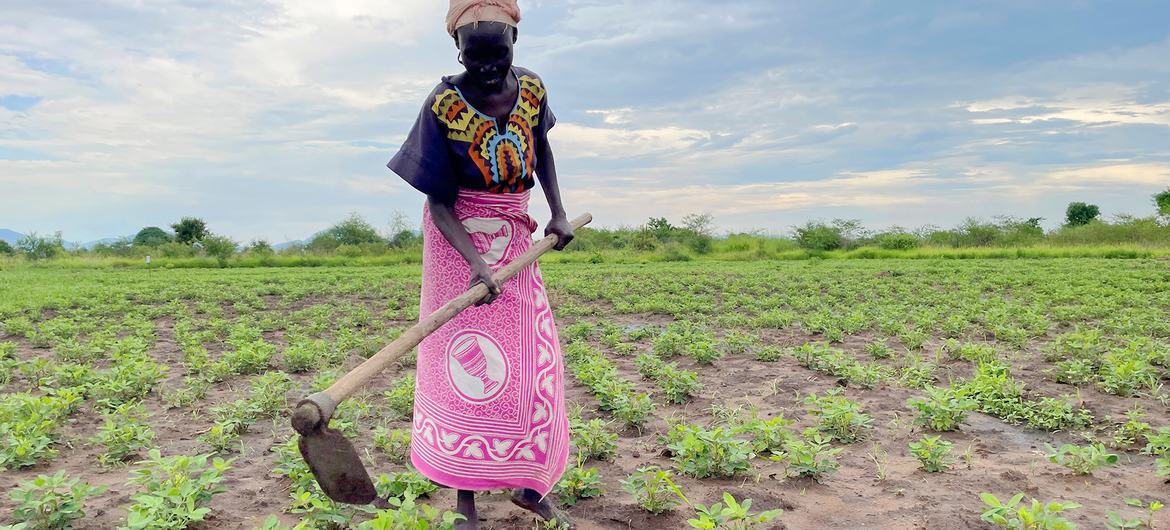
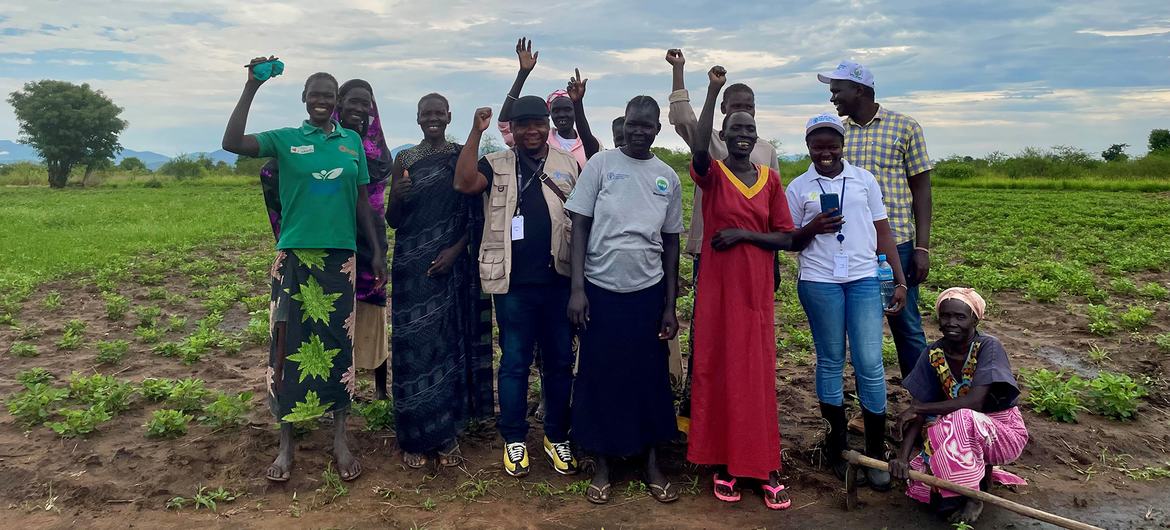
To mitigate the ongoing crisis in South Sudan, the United Nations Office for Project Services (UNOPS) recently signed a $9.9 million Climate Resilience Project in South Sudan with the Ministry of Water Resources.

UNOPS continues to support efforts to strengthen climate resilience and assist flood-affected and refugee-hosting communities in South Sudan.


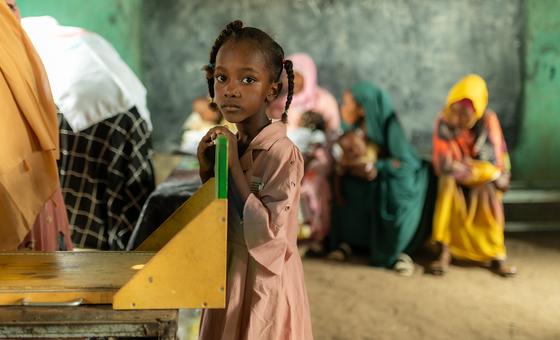
Sudan: As children continue to suffer, school remains a distant hope

After more than two years of civil war, more than 25 million people are now acutely hungry and at least 20 million require health services urgently.

The UN World Food Programme (WFP) also warned that displaced families in some areas have not received any aid for three months, as it announced that for the first time, funding shortfalls have forced it to pull back support in areas where it does not have access.

The scale of needs in Sudan are so big that we have to make tough decisions on who receives assistance and who doesn’t. Those are heartbreaking decisions to make,” said WFP’s Leni Kinzli, in an urgent appeal for more international funding to help all those affected by more than two years of war.

Children are especially vulnerable, humanitarians have warned, with malnutrition “surging”, particularly among youngsters and their mothers.

Education the latest victim

According to the UN reproductive health agency UNFPA, and partners working in education, around 13 million of the 17 million youngsters who have remained in Sudan are now out of school.

This includes seven million who are enrolled but unable to attend classes because of the conflict or displacement – plus six million school-age children who haven’t registered for the school year.

Nonetheless, UNFPA said that as of this month, 45 per cent of schools in Sudan – nearly 9,000 – have now re-opened, citing the Global Education Cluster that groups 60 UN and NGO entities.

And while the situation in Sudan remains so dire, going back to school might not appear to be a priority, but aid agencies insist that without it the impact on young lives can be devastating, given how much additional support can be provided in schools, over and above learning.

In schools helped to reopen by UN-partner Save The Children, for instance, additional support includes meals, safe water, sanitation and counselling training for teachers to help youngsters process their trauma.

Picking up the pieces

From November 2024 to July this year, more than two million people have returned to their former homes across Sudan, to some 1,611 locations.

The bulk of these returnees have reached Aj Jazirah (48 per cent), Khartoum (30 per cent), Sennar (nine per cent), Blue Nile (seven per cent) and White Nile (five per cent). The UN migration agency (IOM)’s Displacement Tracking Matrix notes that only around one per cent went to River Nile and West Darfur.

breakdown of IOM data indicates that around 77 per cent (or 1.5 million) returned from temporary homes inside Sudan, while 23 per cent (around 455,000) came back from abroad.

This is a fraction of the more than 4.2 million refugees who crossed into neighbouring countries since war erupted on 15 April 2023, between the Sudanese Armed Forces (SAF) and the paramilitary Rapid Support Forces (RSF).

Other key IOM findings of Sudanese displacement impacting all 18 states:

  • When war erupted, people were uprooted primarily from Khartoum (31 per cent), South Darfur (21 per cent), and North Darfur (20 per cent).   
  • The highest proportion of internally displaced people were in South Darfur (19 per cent), North Darfur (18 per cent), and Central Darfur (10 per cent).
  • Over half (53 per cent) of those fleeing violence were reportedly children.

Case study: Life slipping away

Among the young victims of the conflict, 18-month-old Aysha Jebrellah has been admitted for treatment for severe acute malnutrition in Port Sudan Paediatric Hospital.

Her mother, Aziza, has been by her daughter’s side as medical teams provide lifesaving nutritional support and address the medical complications that Aysha has suffered, linked to her condition.

Aziza was displaced with her family from Khartoum when conflict erupted more than two years ago, fleeing first to Kassala, then moving to Port Sudan where she lives with relatives.

She described how her daughter had diarrhoea and fever for about two weeks before she was admitted to hospital. By that time she had stopped eating and appeared to be slipping away before their eyes.

“When she refused to even taste anything and kept getting weaker, I was afraid I would lose her,” Aziza says. “Now I have hope that she will recover.”

To support health needs in Sudan, the UN World Health Organization (WHO)’s $135 million appeal is just one-fifth funded. “It’s only a fraction of what is urgently needed,” the agency said.

Source link

World News in Brief: Afghan quake update, diplomacy continues to end Sudan war, UN honours victims of 9/11

Women and children face heightened risks, while operational challenges – including restrictions on female UN staff – threaten life-saving relief efforts.

The twin quakes, measuring 6.0 and 6.2, struck on 31 August and 4 September, flattening entire villages in Kunar, Nangarhar, Laghman and Nuristan provinces. Mountainous terrain and landslides blocked key roads, leaving air transport as the only reliable access. 

Assessments indicate over 6,700 homes were destroyed or damaged, forcing most families to shelter in the open without privacy, clean water, or basic services.

Ensuring critical healthcare

UNFPA, the UN reproductive health agency, has deployed health teams to the hardest-hit areas, providing maternal and reproductive healthcare, psychosocial support and counselling. More than 9,500 people have received assistance so far.

“Women and children in particular are extremely traumatized,” said a psychosocial counsellor. “Our goal is to support their emotional and mental health and provide whatever assistance we can, including medicines and dignity kits.”

Among the affected, UNFPA estimates some 11,600 pregnant women face heightened risk due to limited access to health services.

“For pregnant women, a natural disaster can turn an already challenging time into a life-threatening crisis,” said UNFPA Representative Kwabena Asante-Ntiamoah.

World Health Organization (WHO) mobile teams have been deployed to provide trauma care, maternal and child health services, mental health support, immunizations, and emergency nutrition.

The agency has also dispatched 43 tonnes of medical supplies and provided over 4,500 consultations through its clinics.

Sudan: UN envoy heads to region in call for dialogue towards peace

The UN Secretary-General’s Personal Envoy for Sudan, Ramtane Lamamra, has travelled to East Africa to address the ongoing civil conflict there and push for negotiations towards a peace deal.

 In a post on X earlier this week, Mr. Lamamra called on combatants and political actors in Sudan “to engage in constructive dialogue leading to a sustainable solution.”

The goal of the visit is to make progress on the protection of civilians and to strengthen multilateral mediation efforts in the country.

Push for high level consultations

To achieve that, he is working together with the African Union to organize a ministerial-level consultative group meeting in Addis Ababa.

As the rival militaries continue to attack civilians and vital infrastructure, many displaced people and other communities are receiving reduced food assistance, or none at all.

“We continue to reiterate our calls for an end to this conflict that has left 25 million people acutely hungry,” said the UN Secretary General’s Spokesperson Stéphane Dujarric at a press conference on Thursday.

UN honours 9/11 anniversary, stands with New Yorkers

Marking the 24th anniversary of the 11 September terror attacks, the UN reaffirmed its enduring solidarity on Thursday with the people of New York, the city where it has been headquartered for nearly 80 years. 

“New York has hosted the United Nations for 80 years and has been the home to many of our colleagues, as well as to diplomats, staff, and of course all the Secretaries-General. We continue to stand in solidarity with the people of New York, as we did 24 years ago,” said UN Spokesperson Stéphane Dujarric. 

The attacks on the twin towers of the World Trade Center in downtown Manhattan claimed nearly 3,000 lives from over 90 countries and left thousands more injured. 

Decades later, survivors and first responders continue to face long-term health challenges, including respiratory illnesses, cancer, and mental health struggles. 

A place to call home

“New York City has hosted our UN Headquarters for decades and is the place many colleagues call home – so do I,” said Secretary-General António Guterres.

“Today, my thoughts are with everyone who lost loved ones on 9/11, and with all the people of New York City,” he added, in a social media post. 

The UN emphasised its ongoing commitment to commemorate the worst terror attack in US history, honouring the victims, and supporting New Yorkers as the city continues its journey of resilience and healing. 

Source link

Downpours stymy aid teams following deadly landslide in war-torn Sudan

The death toll has not yet been verified as ongoing downpours and rugged terrain are making it extremely difficult to reach the impacted communities, according to the UN migration agency, IOM.

To date, an estimated 150 people were displaced from Tarseen and neighbouring villages, with families now sheltering in nearby communities.

The UN humanitarian agency, OCHA, and partners have put a rapid response plan into operation. On Thursday, teams comprising nearly a dozen local and international non-governmental organizations and UN agencies went to the site, travelling part of the way by donkey because of the rugged terrain.

Their mission focused on confirming the number of people affected and assessing and responding to urgent needs, OCHA said.

Transporting critical supplies

Teams also transported critical supplies for up to 750 people, including medical kits, nutrition support, food rations, non-food items and other essential materials.

Mobile health clinics and emergency medical teams were also deployed to provide immediate care on the ground.

The response aims to support the survivors in Tarseen and neighbouring villages affected by the disaster.

The assessment’s findings will guide the scale-up of assistance, with UN agencies preparing to send more supplies to meet additional needs,” Mr. Dujarric said.

Flooding, escalating violence in North Darfur

Meanwhile, OCHA warned that the situation in El Fasher in North Darfur is worsening, amid escalating violence and now flooding. Local sources report that heavy artillery fire has killed dozens of civilians in recent days.

At the same time, humanitarian access continues to be impeded, and women and girls face grave protection risks, including from sexual violence.

Compounding the crisis in the area, heavy rains and flooding displaced 350 people in Korma Town on Monday, with latrines destroyed at the displacement site. Families have sought shelter with host communities.

Famine and cholera

In recent days, flooding in the Zamzam and Abu Shouk camps for displaced people close to El Fasher impacted 4,300 residents, destroyed 900 tents and damaged 2,300 houses, according to UN partners on the ground.

These incidents further deepen the horrific situation in a place that knows famine, and it has been fired upon and been abused,” the UN Spokesperson said.

Meanwhile, cholera continues to surge, with aid partners reporting nearly 8,000 cases in North Darfur and more than 3,800 cases in South Darfur since May, he said.

The outbreak has been heightened by the severe malnutrition, which has doubled in North Darfur over the past year, leaving children particularly vulnerable.

Sudan has been embroiled in war between rival militaries since April 2023.

“We and our partners are supporting the response to the outbreak by providing clean water, health services and conducting cholera vaccination campaigns, despite the serious logistical challenges,” Mr. Dujarric said.

Source link

World News in Brief: Afghanistan quake update, Guterres in Papua New Guinea, Ebola returns to DR Congo, UN condemns attack on peacekeepers in South Sudan

Since the initial earthquake on Sunday in eastern Nangarhar province, landslides and several strong aftershocks have disrupted the work of rescue teams.

In an update, the UN Children’s Fund, UNICEF, said that access routes remain blocked in various locations including the districts of Chawkay and Nurgal, both in Kunar province, although the authorities have deployed earth-moving machinery to restore access.

Latest estimates indicate that approximately half a million people have been affected – including 263,000 children – while at least 5,000 homes have suffered partial or total damage.

Tremors continue

Among the UN agencies operating there, UN Habitat noted that the earthquake had caused massive upheaval in a remote region where recent returnees from Pakistan and Iran were just beginning to settle.

“There are still more earthquakes every day in the region, causing landslides and making access even harder,” said UN Habitat’s Stephanie Loose in the capital, Kabul.

She noted that women and girls were the main victims because of strict rules preventing them from leaving their homes alone.

“Many of them, due to cultural norms or restrictions imposed, didn’t dare to leave their houses; nor are there sufficient female doctors in the country, and I understand they are not able to reach the women who would need it,” Ms. Loose said.

Papua New Guinea’s on the frontline of climate change, warns Guterres

Papua New Guinea and the Pacific islands are climate change’s “Ground Zero” whose precious rain forests and ecosystems deserve the world’s support to ensure they’re protected, the UN Secretary-General said on Thursday.

Speaking from Papua New Guinea where he visited the world’s third largest rainforest and sat down with civil society representatives, António Guterres highlighted the challenges brought about by climate change in the region.

It’s the first ever visit to the southwest Pacific nation by a sitting Secretary-General.

Earlier, he repeated his warning that the 1.5 degree limit on the rise in global temperatures agreed to under the 2015 Paris Agreement remains in jeopardy.

And although scientists say that it is still possible to limit global warming, the UN chief urged countries to unveil their new national climate plans to reduce emissions and “seize the opportunities” arising from the renewable energy revolution.

New Ebola outbreak declared in DR Congo

Health authorities in the Democratic Republic of the Congo (DRC) have declared an outbreak of Ebola virus disease in Kasai province where 28 suspected cases and 15 deaths – including four health workers – have been reported as of Thursday.

The outbreak is concentrated in the Bulape and Mweka health zones in Kasai Province, in the south-central region of DRC. Symptoms of the rare – but severe – and often fatal illness, include fever, vomiting, diarrhoea and haemorrhaging.

Samples tested on 3 September at the country’s National Institute of Biomedical Research in the capital Kinshasa confirmed the cause of the outbreak as the Ebola Zaire strain.

Experts deployed

A national Rapid Response Team assisted by UN World Health Organization (WHO) experts in epidemiology, infection prevention and control – as well as case management – has been deployed to Kasai province.

Communication experts have also been deployed to reach communities and help them understand how to protect themselves.

Additionally, WHO is delivering two tonnes of supplies including personal protective equipment, mobile laboratory equipment and medical supplies.

The area is difficult to reach and at least a day’s drive from the provincial capital Tshikapa, with few air links.   

“We’re acting with determination to rapidly halt the spread of the virus and protect communities,” said Dr Mohamed Janabi, WHO Regional Director for Africa.

“Banking on the country’s long-standing expertise in controlling viral disease outbreaks, we’re working closely with the health authorities to quickly scale up key response measures to end the outbreak as soon as possible.”

Cases likely to rise

Case numbers are likely to increase as transmission is ongoing.

The country has a stockpile of treatments, as well as 2,000 doses of the Ervebo Ebola vaccine already prepositioned in the capital city Kinshasa that will be quickly moved to Kasai to vaccinate contacts and frontline health workers.   

The DRC’s last outbreak affected the northwestern Equateur province in April 2022.

It was brought under control in under three months thanks to the robust efforts of the health authorities. In Kasai province, previous outbreaks of Ebola virus disease were reported in 2007 and 2008. In the country overall, there have been 15 outbreaks since the disease was first identified in 1976.

UN condemns attack on peacekeepers in South Sudan

The UN peacekeeping mission in South Sudan, UNMISS, has condemned an attack by a local armed group which targeted “blue helmets” in Western Equatoria state.

The militants subsequently seized a small cache of weapons and ammunition. The incident occurred while peacekeepers were conducting a patrol between Tambura and Mapuse.

“We emphasise that any attack against peacekeepers may constitute a war crime,” UN Spokesperson Stéphane Dujarric said at the daily press briefing in New York on Thursday.

“These peacekeepers are deployed to protect civilians at a time when access and security remain fragile across Western Equatoria,” he added.

Meanwhile, widespread flooding is also impacting hundreds of thousands of people in several parts of the world’s youngest nation, which became embroiled in civil war soon after gaining independence in 2011.

A fragile 2018 peace accord is in danger of unravelling amid fresh offensives and deteriorating humanitarian conditions.

Flooding affects 270,000

Local reports suggest that over 270,000 people are affected by flooding in 12 counties across four states.

These areas were already grappling with floods, displacement, food security and cholera, said Mr. Dujarric, with farmland, homes and humanitarian facilities now submerged, disrupting access to education, health, nutrition and water services.

UN humanitarians say overcrowding at relocation sites has led to tensions among displaced families at the same time, reports of waterborne diseases and snake bites are increasing public health risks.

Peacekeepers serving with the UN Mission in South Sudan (UNMISS) have increased their presence and intensified vehicle patrols, navigating treacherous, rain-soaked routes both day and night.

Sudan: Hundreds feared dead in Darfur landslide

Up to 1,000 people are feared dead in the tragedy, which occurred on Sunday in Tarsin village, located in the Jebel Marra range on the border of Central and South Darfur states.

The landslide was triggered by days of heavy rain.

“I extend my heartfelt condolences to the families of the victims and to the people of Sudan at this tragic time,” Luca Renda, interim UN Humanitarian and Resident Coordinator in the country said in a statement.

Meanwhile, the UN and partners are mobilizing to provide support to the affected population.

The humanitarian community stands in solidarity with the people of Sudan and will spare no effort to ensure that aid can reach those in need without delay,” he said.

Refuge amid war

The UN migration agency IOM expressed sadness over the loss of life due to the catastrophic landslide, which is among the deadliest disasters in Sudan’s recent history.

The tragedy comes amid the brutal ongoing war between the Sudanese Armed Forces (SAF) and a militia group known as the Rapid Support Forces (RSF) that has displaced millions since April 2023.

The Marrah Mountains have become a refuge for families fleeing violence in the besieged city of El Fasher in North Darfur and surrounding areas.

“The area remains largely inaccessible to humanitarian organizations due to ongoing conflict and restrictions, compounding the hardship of those affected,” IOM said.

The agency urged all parties to the conflict to ensure the safety of aid workers and civilians, in line with international humanitarian law. 

Source link

Sudan: Guterres calls for ceasefire in El Fasher, deplores ‘relentless’ militia attacks

António Guterres said he was “appalled by the relentless attacks” by the Rapid Support Forces (RSF) militia on the North Darfur state capital, UN Spokesperson Stéphane Dujarric said in a statement.

The paramilitary group and the Sudanese Armed Forces (SAF) have been battling for control of devastated country since April 2023 and El Fasher has been the epicentre of fighting for more than 500 days.

Shelling, incursions and summary executions

Recent weeks have seen near-continuous shelling in the city and repeated deadly incursions into the adjoining Abu Shouk displacement camp, where famine conditions were identified last December.

Since 11 August, the UN has documented the killing of at least 125 civilians in the El Fasher area, including summary executions – although the actual number is likely to be higher.

“The Secretary-General is alarmed at the grave risks of serious violations of international humanitarian law as well as violations and abuses of international human rights law, including ethnically motivated ones,” said Mr. Dujarric.

Aid awaiting entry

Meanwhile, supplies are pre-positioned near El Fasher, but the UN and partners continue to face obstacles in moving them into the city.  

Some 70 trucks of humanitarian assistance are currently waiting in Nyala, South Darfur, a top official with the UN aid coordination office OCHA said on Thursday in New York.

Mr. Dujarric also noted that repeated attacks on humanitarian personnel and assets in North Darfur have occurred over recent months.

Ceasefire and a lasting peace

“The Secretary-General calls for an immediate ceasefire in and around the El Fasher area,” he said.

Furthermore, the UN chief “insists that immediate steps must be taken to protect civilians and enable the safe, unhindered and sustained delivery of humanitarian assistance into the area, and to allow any civilians seeking to leave the area voluntarily to do so safely.” 

 In the interim, the Secretary-General’s Personal Envoy for Sudan, Ramtane Lamamra, continues to engage the warring parties and “stands ready to support genuine efforts to halt the violence and establish an inclusive political process that the people of Sudan demand.” 

Source link

Sudan: A staggering 30 million are in need, as war grinds on

Edem Wosornu, Director of Operations and Advocacy for the humanitarian affairs office, OCHA, briefed journalists on her recent visit to Sudan and neighbouring Chad – a critical entry point for aid and a haven for some 850,000 people who have fled fighting between the Sudanese army and the Rapid Support Forces (RSF) militia. 

The war erupted in April 2023 and has created one of the world’s largest humanitarian crises, with some 30 million people needing assistance.  

Homes, hospitals and schools have been destroyed, and basic services have ceased. Malnutrition and food insecurity are on the rise.

Aid trucks waiting

Ms. Wosornu voiced concern over the situation in El Fasher, which has been under siege for 500 days, with fresh shelling reported that morning. The North Darfur capital is also in the grip of deadly cholera which “doesn’t care whether you’re in uniform or a civilian”.

She said some 70 trucks from the World Food Programme (WFP), the UN Children’s Fund (UNICEF), and the World Health Organization (WHO) are waiting in Nyala, South Darfur, to enter the city.

Meanwhile, two other cities – Kadugli in South Kordofan state and El Obeid in North Kordofan – are also under siege.

“We have some good news”, Ms. Worsonu said, announcing that UNICEF trucks have delivered assistance to hundreds of thousands of people in Kadugli in recent days. 

Khartoum now ‘a ghost town’

The senior OCHA official recalled that Sudan was once the “breadbasket” of the Horn of Africa, but last year famine conditions were reported in the Zamzam camp in North Darfur. 

The current lean season finds some 680,000 people nationwide in a state of catastrophic food insecurity.

Although fighting has died down in the capital, Khartoum, she said the sheer scale and destruction is devastating, with “streets and buildings littered with explosive remnants of war”. The once vibrant city is now “completely a ghost town” with a “palpable sense of trauma everywhere”. 

However, she also witnessed signs of hope.  She saw “a city trying to come back to life, people sweeping the streets, a population determined to come back to what they once were. But it will take, of course, many, many, many years.”

In Chad, she thanked the authorities for their support, including ensuring that the Adre border with Sudan remains open. 

The war has made travel within Sudan extremely difficult, so humanitarian aid has to go from Douala in Cameroon through Chad’s capital, N’Djamena, and onto several more cities before arriving at Adre for entry into Darfur – “a mammoth effort”, she said.

More funding and aid access

Ms. Wosornu concluded by making four “key asks” to the international community, including for sustained improvements in aid access and more funding. 

“What we need is 55 cents per person, per day. That’s it for Sudan,” she said. 

Harder to deliver were her final plea to the warring parties for a lasting peace and an end to the fighting.

“Our humanitarian partners are also saying that this needs to stop so we can continue to deliver assistance,” she said. “Because after the war and everything has stopped, and when the guns are silenced, people still need recovery.”  

Source link

Sudan: ‘Devastating tragedy’ for children in El Fasher after 500 days of siege

Around 260,000 civilians – including 130,000 children – remain trapped in the area’s main camp for internally displaced people, enduring desperate conditions without aid for more than 16 months.

The Rapid Support Forces (RSF), which has been battling forces of the military government for control of Sudan for over two years, has cut off all supply lines.

RSF militia have been besieging the city since May last year and it is the last urban area still under government control.

“We are witnessing a devastating tragedy – children in Al Fasher are starving while UNICEF’s lifesaving nutrition services are being blocked,” said Catherine Russell, UNICEF Executive Director.

Deadly violence

Reports this week point to yet another mass-casualty incident, with seven children reportedly killed in an attack on Abu Shouk camp for internally displaced people, on the outskirts of El Fasher.

Since the start of the siege in May 2024, more than 1,100 grave violations have been verified in El Fasher alone, including the killing and maiming of over 1,000 children.

Meanwhile, at least 23 children have been subjected to rape, gang rape, or sexual abuse. Others have been abducted, recruited, or used by armed groups, said UNICEF.

Health and education facilities have also come under sustained attack, with 35 hospitals and six schools struck, killing and injuring many, including children.

Aid blocked

Meanwhile, the UN aid coordination office (OCHA) warned Wednesday that the already dire situation in North Darfur continues to worsen.

“Blocking humanitarian access is a grave violation of children’s rights, and the lives of children are hanging in the balance,” Ms. Russell said, reiterating UNICEF’s call for immediate and full access to El Fasher.

The toll on children is catastrophic, the agency suspension of medical services due to depleted supplies has left an estimated 6,000 children suffering from Severe Acute Malnutrition (SAM) without treatment, UNICEF said.

Without therapeutic food and medical care, these children face an extremely high risk of death. News reports indicate at least 63 people, mostly women and children, died of malnutrition in just a single week.  

UNICEF continues to call for unimpeded humanitarian access for the delivery of therapeutic food, medicines, clean water, and other essentials.

Cholera outbreak

The siege is colliding with Sudan’s worst cholera outbreak in decades. More than 2,400 deaths have been reported since July 2024.

In overcrowded camps around Tawila, Zamzam and El Fasher, children weakened by hunger are now especially vulnerable to cholera and other deadly waterborne diseases.

“Children must be protected at all times, and they must have access to life-saving aid,” said Ms Russell.

Source link

World News in Brief: Gaza humanitarian update, more killings in Sudan, ending impunity in Myanmar

Multiple strikes overnight into Friday were reported in the Jabalya Al Balad and An Nazla neighbourhoods, the UN Office for the Coordination of Humanitarian Affairs (OCHA) said in its latest update.

As a result, around 900 people reportedly fled towards the Sheikh Radwan neighbourhood and western Gaza City.

Safe passage, more aid

The UN and partners again reminded parties to the conflict of their obligation to protect civilians, in line with international law, including humanitarian workers and people who cannot or choose not to move. 

“Those fleeing must be allowed to do so safely. They must also be allowed to return if they wish to do so, as the situation allows,” OCHA said.

The agency underscored the need to ensure that people have access to aid and basic services, whether they leave or stay.

Supplies also must be allowed to enter the Gaza Strip through all available crossings and corridors, and humanitarians must have safe, predictable and sustained access to deliver aid at scale.

Hospitals under strain

Meanwhile, as strikes continue to intensify across the enclave, casualties are flooding hospital emergency departments.  

Humanitarians warned that the expansion of military operations would further cripple the collapsing healthcare system. 

Nearly half of all hospitals and field hospitals are located in Gaza City, accounting for some 40 per cent of bed capacity in the entire enclave.  Additionally, many medical facilities in the south are operating several times over their bedspace capacity.

Humanitarians stressed that access to healthcare must be immediately restored to avert more preventable deaths. 

Sudan: UN rights office horrified by recent killings in El Fasher 

Recent brutal attacks by the paramilitary Rapid Support Forces (RSF) in Sudan have left at least 89 people dead in North Darfur state, the UN human rights office, OHCHR, said on Friday

The RSF have been battling the Sudanese Armed Forces (SAF) for control of the country for more than two years.

OHCHR said RSF attacks on the besieged North Darfur capital El Fasher and the adjoining Abu Shouk camp for displaced people resulted in the killing of at least 89 civilians, though the actual number could be higher.

The attacks took place over a 10-day period ending on 20 August.

Apparent summary executions 

At least 32 civilians were killed in attacks between 16 and 20 August, while at least 57 were killed in previous attacks on 11 August.

OHCHR was particularly horrified that 16 of the most recent killings appear to have been summary executions, Spokesman Jeremy Laurence told journalists in Geneva.

“Most of the victims were killed in Abu Shouk camp and belonged to the African Zaghawa tribe, according to information gathered by our Office,” he said.

“In another case in the El Fasher area, a victim was asked which tribe he belonged to. He was killed after responding that he was from the African Berti tribe.” 

Meanwhile, the humanitarian situation in El Fasher has reached a critical stage after more than a year of siege, and there is growing risk of famine in the city and other areas of North Darfur.

OHCHR was appalled by two separate attacks on UN humanitarian convoys in North Darfur this month and in June, saying such attacks only worsen the human rights situation for civilians.

© UNICEF/Ilvy Njiokiktjien

Ending impunity for violence critical for Rohingya in Myanmar

The UN human rights office has also called for ending impunity in the violence against the Rohingya people in Myanmar and ensuring their rights to security, citizenship and equality.

It said the Rohingya – a mostly Muslim minority community in predominantly Buddhist Myanmar – continue to suffer, eight years after a deadly crackdown by the military.

More than 700,000 fled to Bangladesh in the wake of the assault which began on 25 August 2017, joining others who had escaped earlier waves of attacks. 

Break the cycle

OHCHR said that ending impunity and ensuring the Rohingya’s rights to security, citizenship and equality, are essential for breaking the cycle of violence.

The Rohingya mainly live in Myanmar’s Rakhine state, and the office noted that the human rights and humanitarian situation there have sharply deteriorated since November 2023, further deepening the already life-threatening conditions they face.

OHCHR urged the international community to step up support for the Rohingya by increasing humanitarian funding to secure access to basic needs, essential services, and to ensure accountability. 

Source link

World News in Brief: Sudan hospitals under fire, world remembers victims of terrorism, DR Congo

A grenade attack inside Zalingei Hospital in Darfur State, led Médecins Sans Frontières (MSF) to suspend all of its activities there yesterday.  

MSF had previously led a cholera emergency response at the medical facility, providing life-saving treatment for 160 patients in the past two weeks alone.  

“The rules of war are clear that the wounded and sick, medical personnel and hospitals be protected at all times,” said UN Spokesperson Stéphane Dujarric, at the regular briefing on Wednesday.  

Do not give up on Sudan

In concert with the Sudanese Ministry of Health and humanitarian partners, the UN continues working to expand access to cholera vaccines across the country, including more than two million reached during a recent campaign across Khartoum, Al Jazirah and Sennar States.

With famine having been confirmed in parts of Sudan, the UN and its partners are also working to deliver food assistance wherever they can — but ongoing conflict has threatened their ability to access some locations.  

For the first time since the conflict began in April 2023, the World Food Programme (WFP) reached rural areas of North Darfur State on 14 August and provided over 50,000 displaced people with food.  

On 19 August, Luca Renda, the Sudan representative of the UN Development Programme (UNDP) in Sudan, lauded the work of humanitarians who continue to provide lifesaving assistance despite extreme risk to their own safety.  

“Sudanese humanitarians continue to deliver. They cross frontlines. They navigate insecurity and bureaucracy. They risk everything to reach people in need. They have not given up and neither must we.”

International Day honours victims of terrorism

Thursday, 21 August, marks the eighth commemoration of the International Day of Remembrance of and Tribute to the Victims of Terrorism.  

Although the violent scourge is condemned worldwide, victims and survivors of terrorism often feel their voices are not heard and struggle to have their needs supported and rights upheld, especially when few Member States have the resources to help them recover.

This year’s theme is United by Hope: Collective Action for Victims of Terrorism, highlighting the power of solidarity among victims to turn pain into purpose and drive meaningful change.

In observance of the day, the UN Office of Counterterrorism will host a virtual event and a panel discussion featuring five survivors of terrorism from different regions.

“On this solemn day, we honour the victims and survivors of terrorism everywhere – saluting their courage, acknowledging their pain, and reaffirming our enduring commitment to peace, justice, and human rights, Secretary-General António Guterres, said in a video message.

Mr. Guterres welcomed the launch of the UN-supported Victims of Terrorism Associations Network, which works to empower victims and amplify their voices.

“Victims of terrorism are showing the way: supporting one another, speaking out, and championing the rights of all those affected,” he continued, urging governments, civil society and the international community to “match their courage.”

DR Congo: Deadly violence continues in the east 

Violence continues in eastern Democratic Republic of the Congo (DRC) in the form of deadly attacks by the Allied Democratic Forces militia across North Kivu between 9 and 16 August.  

“Yesterday, gunfire was reported near the UN Mission’s base in Bayoo and also close to the base of Uganda People’s Defence Forces (UPDF) in Bule, in Ituri Province,” said UN Spokesperson Stéphane Dujarric during Wednesday’s briefing in New York.  

The UN mission, MONUSCO, activated security protocols and deployed patrols to secure the area and nearby sites hosting internally displaced people.

Peacekeeping efforts

Meanwhile, MONUSCO’s Commander led a delegation to Komanda in Ituri Province, to meet community representatives and honour victims of a massacre perpetrated by the ADF in July, which killed hundreds of civilians.  

From 15 to 18 August, at the request of local communities, UN peacekeepers also deployed a Mobile Operating Base in Soleniama, Ituri, to support demobilisation efforts, with the help of religious leaders. 

Source link

First Person: From aid worker to refugee and back in war-torn Sudan

Sudan is one of the world’s largest and most complex humanitarian crises, with more than 30.4 million people – over half the population – urgently needing humanitarian assistance, yet the 2025 Sudan humanitarian needs and response plan is severely underfunded, with only 13.3 per cent of the required resources received so far.

Forced to flee the country with his family after the war intensified, Mr. Ibrahim returned to help people affected by the war in Darfur. Ahead of World Humanitarian Day, marked annually on 19 August, he described his journey, from aid worker to refugee and back again to Sudan.

“I was at home helping my daughter revise for her grade six exams, scheduled for the next day. Then, out of nowhere, the sound of heavy gunfire shattered the silence in my hometown, Zalingei, the capital of Central Darfur state, which remains gripped by insecurity and critical shortages of basic services.

The former Humanitarian Aid Commission Building in Khartoum, Sudan.

At first, I thought the gunfire would pass quickly. I rushed to stock up on food supplies and water, enough for six days. But, the streets became battlegrounds. All I could do was try to keep my family safe.

Despite the chaos, I continued to work. Electricity and Internet access were sporadic, but I kept my phone charged to send daily updates to the OCHA Head of Office. It gave me purpose amid the uncertainty.

Eventually, it became too dangerous to stay.

The journey of displacement

On the 39th day, we fled. Our family of 10 began a harrowing journey with no clear destination, only the desperate need to escape. We left behind more than just walls and belongings; we left behind a life built with love and hope.

Adam with two of his daughters in Uganda.

Our journey took us first to Nyala in South Darfur, then to Kosti in White Nile State. From there, we crossed the border into neighbouring South Sudan and eventually reached Uganda, a country I had heard offered stability and a good education system for children. The journey by car took 23 days. My children had no passports, and there were no refugee camps for Sudanese nationals at the time.

To my relief, migration authorities in both countries were kind and supportive. In Kampala, we rented a house and received asylum status within three days. The moment I held our refugee cards, I exhaled deeply and thought ‘we’ve made it.’

I enrolled my children in school and began working online, finally finding a sense of stability.

Here I was, an aid worker now a refugee, needing the same support I once provided to others.

Returning to Zalingei

Months later, I faced a difficult decision. Do I stay with my family or return to Darfur and continue the work I had done for years? I chose to return.

Leaving my family behind was incredibly hard, but their safety was paramount.

I returned to Zalingei with a renewed sense of duty to serve those still trapped in the hardship I had endured. I was also the sole breadwinner for my family and needed to ensure they could survive in Uganda.

My hometown changed

When I arrived in Zalingei, I barely recognised it. Buildings were scarred with bullet holes.

I found another family sheltering inside our house, a doctor and his family whose own home had been destroyed. I let them stay, setting aside a small section for myself and a colleague. The house had been looted. Windows were gone and our belongings had vanished. I had hoped to find my children’s school certificates, photos, any documents left behind. But, they were gone.

Everyone was armed, even children as young as 15. People were tense, traumatised and always bracing for the next wave of violence.

Google Earth image of Zalingei as of 21 March 2025 with visible signs of house destruction on the southern part of the city.

Machine guns and wreckage in West Darfur

I didn’t stay long in Zalingei. Soon I was called to El Geneina in West Darfur, a town devastated by violence, and whose people desperately needed humanitarian support.

El Geneina’s streets were strewn with the wreckage of burned-out military vehicles. Armed men patrolled in pickup trucks mounted with machine guns.

The humanitarian needs were immense. People lacked food, shelter, household essentials, healthcare, clean water and protection, but we never had enough resources for them.

Family, sacrifice and hope for Sudan

It’s heartbreaking to witness the suffering caused by the recent donor funding cuts. Many organizations have been forced to scale back their operations, leaving countless people without help.

It’s heartbreaking to witness the suffering caused by the recent donor funding cuts.

Still, we did all we could.

Between 2023 and 2025, we reached more than 800,000 displaced people with critical assistance, in West and Central Darfur.

I also went on to work with OCHA colleagues in Chad to coordinate cross-border humanitarian convoys into Darfur.

These convoys were lifelines, delivering food, medicine and supplies to communities cut off by conflict.

Today, I remain in Sudan. 

My family is still in Uganda. I visit them once a year, but the separation is painful.”

Source link

World News in Brief: Cholera strikes Sudan and beyond, humanitarian needs grown for returning Afghans, rising insecurity in DR Congo

So far this year, cholera has killed more than 4,300 people across 31 countries. These figures are underestimates and there is particular concern for those impacted by war in Sudan, Chad, the Democratic Republic of the Congo, South Sudan and Yemen.  

In Sudan, the disease has already claimed over 1,000 lives since 1 January. It has reached every state in the country, one year after the outbreak started, according to WHO.

Cases rise in war-torn Darfur

With the sub-Saharan rainy season now underway, the UN agency is worried about a spike in the waterborne disease, linked to the huge numbers of people fleeing ongoing violence.

“While cases have plateaued or decreased in some areas, including Khartoum, they are rising in the Darfur region and neighboring Chad. In Tawila, North Darfur,” said WHO’s Kathryn Alberti.

Refugees have quadrupled the population from close to 200,000 to over 800,000, causing immense strain on water and sanitation systems, she added.

“People have as little as three litres of water daily and this is for cooking, washing, cleaning and drinking.”  

To respond to the problem, WHO and partners have set up task forces, deployed rapid response teams for surveillance and stockpiled essential cholera supplies in Darfur – although “large parts” of Darfur and Kordofan remain unreachable.

Humanitarian needs keep growing in Afghanistan

Four years after the de-facto Taliban regime took over Afghanistan, more than half of the population needs vital aid, according to the UN humanitarian office (OCHA).

Women and girls are particularly vulnerable due to the increasingly restrictive policies that Taliban authorities have imposed, excluding them from education, the workforce and public life.

“Humanitarian aid is a lifeline for women and girls who are otherwise unable to access essential services and assistance,” said UN Spokesperson Stéphane Dujarric, at Friday’s daily briefing in New York.  

1.7 million returnees 

OCHA also warned that the return of 1.7 million Afghan citizens from Iran and Pakistan this year has further increased humanitarian needs, as most have limited community ties and are struggling to find shelter and ways of making a living.

To support the response of the under-resourced host communities, the UN Central Emergency Response Fund (CERF) recently released $10 million, and additional funding is in the pipeline from the Afghanistan Humanitarian Fund.

But more resources are urgently needed. This year’s Humanitarian Needs and Response Plan in Afghanistan is just 25 per cent funded, with $624 million received of the $2.4 billion that are needed, and another influx of refugees is expected ahead of Pakistan’s 1 September deadline for Afghan Proof of Registration cardholders to exit.

Insecurity also rising in DR Congo’s restive east

In the war-torn eastern parts Democratic Republic of the Congo, OCHA says insecurity is on the rise in Djigu territory, in Ituri province.

Clashes between multiple armed groups and the Congolese armed forces in several areas has resulted in nearly 50 civilian deaths and more than 30 injuries in the past month alone there.

In the same period, violence and insecurity have led to the displacement of more than 80,000 people in Djugu.

In the attacks, homes were looted or burned, and those who fled are now sheltering in schools, churches and other public buildings.

Targeted killings

There have been three targeted attacks on sites hosting internally displaced people.

These clashes have severely limited humanitarian access, depriving around 250,000 people of essential services. In the Nizi health district in the Ituri territory, nine out of 12 health facilities are now out of service.

The UN and its humanitarian partners are ready to respond, but they need unimpeded, safe access to do so.

“All parties must take urgent measures to protect civilians and facilitate humanitarian access. Civilians must be protected at all times, in line with international law,” stressed Mr. Dujarric on Friday. 

Source link

Security Council rejects creation of rival government in Sudan

In a statement issued on Wednesday, Council members said the step posed “a direct threat to Sudan’s territorial integrity” and could fragment the country, fuel the fighting, and deepen an already dire humanitarian crisis.

Ambassadors reaffirmed “unwavering” support for Sudan’s sovereignty, independence and unity, stressing that unilateral actions that undermine these principles jeopardise not only Sudan’s future but also peace and stability across the wider region.

The Council called on the RSF and Sudanese Armed Forces to return to talks aimed at reaching a lasting ceasefire and creating the conditions for a political settlement involving all political and social groups.

The goal, they said, is a credible, inclusive transition to a civilian-led government that can lead the country towards democratic elections and deliver “a peaceful, stable and prosperous future” in line with the Sudanese people’s aspirations.

Flashpoints in Darfur and Kordofan

The statement recalled the Council’s resolution 2736 (2024), which demands the RSF lift its siege of El Fasher, halt the fighting, and de-escalate tensions in and around the North Darfur capital.

Famine and extreme food insecurity are at risk of spreading in the city, which has been under siege since April 2024.

Members voiced alarm over reports of a renewed RSF offensive this week in El Fasher and urged the group to allow “unhindered humanitarian access” to the city.

The Council also expressed grave concern over reported attacks in Sudan’s Kordofan region in recent weeks, reportedly carried out by both sides, which have caused large numbers of civilian deaths. They also voiced deep concern about the impact of the conflict on humanitarian operations.

Demands for access

Council members pressed all parties to allow safe and unhindered humanitarian access in line with international law, to protect civilians, and to abide by their obligations under both resolution 2736 and the 2023 Jeddah Declaration.

They stressed that perpetrators of serious violations must be held to account. 
They also urged all UN Member States to avoid any external interference that fuels conflict and instability, support efforts for durable peace, and comply with relevant international law and Council resolutions, including resolution 2750.

Backing for UN envoy

The Council reiterated its commitment to supporting the people of Sudan in their quest for peace, security, stability and prosperity.

It also voiced full support for the Secretary-General’s Personal Envoy, Ramtane Lamamra, and his work with the warring sides and civil society to secure a sustainable settlement through dialogue. 

Source link

Sudan: UN ‘deeply alarmed’ by major attack on besieged El Fasher

Monday’s attack left 40 civilians dead and 19 injured within Abu Shouk, according to humanitarian partners. The International Organization for Migration (IOM) reported that the renewed violence forced at least 500 residents of the camp to flee to other parts of North Darfur.

Acting Humanitarian Coordinator for Sudan, Sheldon Yett, condemned “all deliberate and indiscriminate attacks on civilians” in the strongest terms.

All parties to the conflict have a clear obligation under international humanitarian law to ensure the protection of civilians,” UN Spokesperson Stéphane Dujarric stressed at Tuesday’s daily press briefing in New York.

“Displacement camps and other places of refuge for civilians must not be targeted. And the fact that we have to repeat this almost every day is tragic in itself.”

No exit

Amid the current escalation of violence in and around El Fasher – the last Government held bastion in Darfur – there are also reports that exit routes from the city have been blocked and civilians are trapped under siege, cut off from safety and aid.  

Mr. Yett emphasised that the immediate provision of safe and unhindered passage for those fleeing El Fasher and other areas of active hostilities is crucial.  

He also reiterated the Secretary-General’s repeated calls for a humanitarian pause in and around the city to allow for the much-needed delivery of food, water, medicine and other life-saving supplies, underscoring that those trapped are facing acute hunger and starvation.

Deepening catastrophe in Kordofan

To the east in the Kordofan region, violence and displacement are still raging.  

In South Kordofan State, IOM estimates 3,000 people fled the town of Kadugli between 6 and 10 August because of deepening insecurity.

Humanitarian access to the town is extremely limited, as the primary supply route is inaccessible due to active hostilities, making road access virtually nonexistent.  

This humanitarian crisis is worsening an already dire economic situation and causing further shortages of vital goods.  

UN humanitarians reiterate that all combatants have obligations under international humanitarian law to refrain from attacking civilians, take constant care to spare them and facilitate unimpeded humanitarian access to everyone in need. 

Source link

Sudan: You can run – but we will find you, militias warn terrified civilians

“People told me multiple times that when they were fleeing from Zamzam [displacement camp], armed people would threaten them while they were in flight, saying sure, ‘Flee, go to that place, run here, run there, we will follow you, we will find you’,” said Jocelyn Elizabeth Knight, a Protection Officer for the UN refugee agency, UNHCR.

Briefing journalists in Geneva, Ms. Knight described speaking to one traumatized child at a UNHCR shelter, whose experience mirrors that of countless other youngsters across the nation.

“A tiny boy told me, ‘You know, during the day things are okay here, but I’m afraid to go to sleep at night in case the place where we’re living is attacked again’.

UNHCR’s Jocelyn Knight speaks with UN News on the situation on the ground.

Forced into squalor

In Darfur in western Sudan, many people uprooted by violence gather in disused public buildings with few essentials to water and sanitation.  

Meanwhile, new displacement and attacks on civilians continue within Darfur and neighbouring Kordofan region, UNHCR warned, in communities “that are already devastated and have been subjected to unspeakable atrocities”.

The ongoing fighting has also severely constrained humanitarian access and disrupted aid delivery for over two years. With seasonal rains underway, many roads will be impassable for months, further complicating the delivery of aid, the UN agency noted.  

The persistent insecurity has also impeded farming, deepening deprivation in areas at risk of famine or already experiencing famine-like conditions.

Latest UNHCR data indicates that more than 873,000 Sudanese refugees have fled Darfur and crossed into Chad, which now hosts the largest number of registered Sudanese refugees since the start of the conflict. One in three people in eastern Chad is now a refugee.

Deadly disease

In addition to heavy fighting between the Sudanese Armed Forces (SAF) and their former allies-turned opponents – the Rapid Support Forces (RSF) paramilitaries – that began in April 2023, civilians now face a fast-spreading and deadly cholera outbreak.

Cholera has swept across Sudan with all the states reporting outbreaks,” said Dr. Ilham Nour, Senior Emergency Officer with the UN World Health Organization (WHO).

She noted that since last July, nearly 100,000 cases have been reported.

Lives on the line

The highly contagious disease spreads rapidly in unsanitary conditions. As of early August, 264 cases and 12 deaths have been identified at Dougui refugee settlement in eastern Chad hosting Sudanese arrivals from Darfur.

Surrounding villages have also reported suspected cases, while others have emerged in Treguine settlement, one of many UNHCR camps in eastern Chad that host Sudanese refugees.

Help to contain the disease is urgent, insisted UNHCR’s Dossou Patrice Ahouansou, Principal Situation Coordinator for Eastern Chad.

“We still have more than 230,000 refugees at the border in very difficult situation,” he said. “Without urgent action including enhancing access to medical treatment, to clean water, to sanitation, to hygiene and most important, relocation from the border, many more lives are on the line.

As part of the response and to prevent new cases, the UN agency has suspended the relocation of refugees from border points.

UNHCR is seeking $130 million in flexible funding to provide life-saving aid to an estimated 800,000 people in Darfur. In addition, the UN agency will respond to the cholera outbreak and relocate 239,000 Sudanese refugees from the Chad-Sudan border.

Unexploded weapons alert

Meanwhile, the UN Mine Action Service (UNMAS) confirmed fears that unexploded ordnance from ongoing battles are killing and maiming non-combatants who are unaware of the extent of the danger.

The sad reality of this ongoing conflict is it is not happening in rural areas, it’s mainly happening in urban areas, in the areas which are highly populated,” said Mohammad Sediq Rashid, Chief of UNMAS Sudan.

Last week, six minefields were confirmed in Khartoum and three of them contained anti-personnel landmines – the first time this has been reported – he told journalists in Geneva.

Contamination is on the roads, in homes, in schools and airstrips, medical facilities, humanitarian bases,” the UNMAS official continued.

This is a population [that] is largely unaware of the dangers that are waiting for them…this problem is only growing every day.

Source link

UN officials warn of starvation amid ‘gender emergency’ in war-torn Sudan

Particularly hard hit is El Fasher, where hunger is growing, with the Office for the Coordination of Humanitarian Affairs (OCHA) warning of a deteriorating situation that is putting even more civilians’ lives at risk.

OCHA’s Director of Operations and Advocacy, Edem Wosornu, who is currently in the country, said the suffering is immense, with people trapped, displaced or returning to face communities in ruins. She called for unimpeded access and urgent support to reach those on the frontlines of hardship.

Briefing reporters at UN Headquarters in New York, UN Deputy Spokesperson Farhan Haq said “with increasingly alarming food shortages and spiraling prices, people in El Fasher are reported to be resorting to eating animal feed in what is an increasingly catastrophic situation.”                       

Thousands face starvation, cholera threat

El Fasher has the highest cost of basic goods nationwide at nearly $1,000 per household per month, which is far beyond the reach of most families. This includes more than $700 for food alone – more than eight times the cost of basic food items in other parts of the country, Mr. Haq said.

These steep costs, coupled with the siege and lack of aid delivery by road for over a year, have left thousands facing starvation,” he added, noting that engagement around the calls from the Secretary-General and the UN Emergency Relief Coordinator for a pause in the area is “more important than ever.

In an effort to curb public health risks in North Darfur, UN humanitarian partners and local authorities launched a sanitation campaign on 5 August targeting 11,000 people in the localities of El Fasher and Dar As Salam with a goal of preventing disease outbreaks in overcrowded displacement sites during the ongoing rainy season.

They are also scaling up efforts to respond to a cholera outbreak in the locality of Tawila, which has absorbed 330,000 displaced people fleeing conflict in Zamzam and El Fasher since April.

In Blue Nile State, cholera cases have surged to nearly 2,800 since late June, with over 40 new infections recorded yesterday alone, with 14 deaths have been reported, the UN Deputy Spokesperson said.

‘Gender emergency’

Warnings also came from gender equality agency, UN Women.

“This crisis is a gender emergency,” said Salvator Nkurunziza, the agency’s representative in Sudan, told UN News.

Displaced women and girls can be subject to the risks of exploitation and abuse, especially during the delivery of aid, where protection mechanisms are weak or absent in some locations,” he said.

According to the agency’s Unit for Combating Violence Against Women in Sudan, as of March 2025, there have been 1,138 cases of rape recorded since April 2023, including 193 children, most of whom were in conflict-affected areas, he said.

“The actual number may be higher as fear of stigma and other social and security reasons prevent accurate reporting of gender-based violence crimes,” he warned.

Women, girls ‘most affected’ by food insecurity

“Certainly, these crimes including rape and harassment can prevent women and girls from access food assistance,” he said.

Unreported gender-based violence crimes in besieged areas can be higher than shown in recent statistics, he continued, emphasising that women and girls are the most affected by food insecurity in those areas, and the situations there indicate a looming hunger crisis.

“Women are central to the survival of their households, especially in displacement settings, but their ability to access food assistance is deeply compromised,” Mr. Nkurunziza said. “Female-headed households, already three times more likely to be food insecure, are now the hungriest group in the country.”

Source link

Children are ‘skin and bones’ as Sudan marks a grim milestone

It is a grim milestone for Sudan, the world’s worst humanitarian crisis. But with insufficient funding, lack of access to key regions and intensifying violence, milestones like this have become the grim norm.  

This is not hypothetical. It is a looming catastrophe,” said Sheldon Yett, the UN Children’s Fund (UNICEF) representative in Sudan.

And it is a catastrophe that is unduly affecting women and children, many of whom have been displaced multiple times and lack access to even the most basic of services such as clean water, food and protection.  

“Every day the conflict continues in Sudan, innocent lives are lost, communities are torn apart and trauma continues to haunt generations,” said Radhouane Nouicer, the UN’s designated expert on human rights in Sudan.  

Emotional scar tissue 

Children in Sudan are among those most affected by the crisis – 3.2 million  children under five are projected to suffer from acute malnutrition in the next year.

On a recent trip Jebel Aulia, a locality in Khartoum state which is at extreme risk of famine, Mr. Yett was horrified by what he saw.  

Many of the children are reduced to just skin and bones,” Mr. Yett said.

However, these children are not only contending with malnutrition – some of them have also been displaced four or five times, and over three-quarters of Sudanese children are out of school.  

“The emotional scar tissue is massive – children don’t know where they are going next … often feeling like aliens in their own land,” Mr. Yett said.  

He spoke with one mother in Jebel Aulia whose daughter may be forever changed by the violence.  

Since the war started, my daughter has fallen into a state of silence, and I can feel her heart racing with fear,” one mother said.  

A gendered crisis

Around Sudan, as the food insecurity crisis spirals, women and girls are the “hungriest face of the crisis,” according to Salvator Nkurunziza, the UN Women representative in Sudan.

“With conditions now at near famine thresholds in several regions in the country, it is not just a food crisis but a gender emergency caused by a failure of gender-responsive action,” said Mr. Nkurunziza at a Tuesday press briefing in Geneva.  

A recent report further drove home the gendered nature of the crisis, revealing that women-led households in Sudan are three times more likely to experience severe insecurity than households led by men.  

This is especially concerning as the death, displacement or forced disappearance of men has left more and more women the sole bread winners. In total 75 per cent of women-led households cannot meet basic food needs.

The data is unequivocal: female-headed households are slipping deeper into starvation, with fewer coping mechanisms, less access to income, and even more systemic barriers than last year,” the report said.  

Nevertheless, Mr. Nkurunziza reminded the international community that women are not just victims but also agents of change in crisis settings.  

Women-led organizations are on the frontlines, providing food through soup kitchens and supporting displaced families. And yet, they remain excluded from many of the decision-making processes and exposed to undue risks.  

An unchanged human rights landscape

Food security and displacement are not the only challenges that the Sudanese face. Rather, the human rights situation is also deteriorating, according to Mr. Nouicer who visited Sudan to meet key government officials in July.  

“I remain gravely concerned that civilians in Sudan continue to suffer widespread violations and abuses, including extrajudicial killings, sexual violence, forced displacement and arbitrary detention,” he said.  

He specifically highlighted the unique challenges that women, children and people with disabilities face when confronting displacement and violence.  

“The ongoing war has devastated civilian lives and turned daily survival into a constant struggle.”  

‘Irreversible damage’

Mr Yett said that in his most recent trip, he saw the best and worst of humanity – the devastating impact of violence and inaction coupled with the hopeful possibilities that peace and action could provide.  

We are on the verge of irreversible damage to an entire generation of children, not because we lack the knowledge or the tools to save them but because we are collectively failing to act with the urgency and at the scale this crisis demands,” he said.  

The first step is ensuring access to regions of Sudan like Zamzam which have been cut off from aid. With the rainy season approaching – and some roads already impassable – this is only becoming more difficult.  

Mr. Nouicer highlighted that even if a ceasefire between the warring rival militaries happened, the level of devastation and abuse is so extreme that the future will require more than just peace.  

“The path forward demands more than ceasefires and peace talks. It requires a sustained commitment to justice, accountability, and inclusive governance.” 

Source link

Mounting civilian casualties in Sudan as fighting intensifies

It has now been 842 days since conflict between troops from the military government and their former allies-turned-rivals in the paramilitary Rapid Support Forces erupted in Sudan, turning the country into the world’s largest humanitarian crisis.  

Heavy fighting continues in North Darfur State, with multiple civilian casualties reported in recent days – most notably during clashes in the state capital, El Fasher, on 1 and 2 August – following earlier violence between armed groups near the Abu Shouk camp for displaced people, which currently hosts 25,000 residents.  

Starvation threat

One year after famine was confirmed in Zamzam camp on the outskirts of El Fasher, the city remains under siege, with no food aid deliveries entering by road, leaving residents of the regional capital increasingly facing starvation.  

Prices of food items such as sorghum and wheat are more than four times higher than elsewhere in the country, while many families are unable to afford even the most basic items.  

“Limited cash assistance continues, but it is nowhere near enough to meet rising needs,” said Deputy UN Spokesperson Farhan Haq on Monday during the daily briefing in New York.  

Cholera menace continues

Meanwhile, cholera continues to spread across Darfur, with nearly 1,200 cases reported – around 300 of them children – in the locality of Tawila since late June.  

In South Darfur, health authorities have reported more than 1,100 suspected cases and 64 deaths since late May, as “shortages of medical supplies, clean water and sanitation services are severely hampering the humanitarian response,” said Mr. Haq.  

The UN Children’s Fund (UNICEF) warns that the lives of more than 640,000 under-fives are at heightened risk of violence, disease and hunger in the region.

Compounded crisis

In Blue Nile State, floods in Ed Damazine displaced more than 100 people and destroyed at least 200 tents at Al-Karama camp on 1 August, further compounding the challenges facing people who fled their homes due to conflict.  

Meanwhile, in Khartoum State, the presence of deadly landmines in multiple locations adds a dangerous new layer to the threats already faced daily by civilians.  

As OCHA’s Director of Operations, Edem Wosornu, visits Sudan this week to assess the humanitarian situation, the agency has called for sustained and expanded humanitarian access along with greater international support for the most vulnerable. 

Source link

Sudan gripped by deadly crisis as hunger, disease and heat intensify

In El Fasher, the capital of North Darfur that has been under siege for 15 months, the catastrophic humanitarian situation is worsening. Food shortages and soaring prices have forced community-run kitchens to shut down. Widespread hunger and malnutrition have reportedly caused several deaths and driven some residents to eat animal feed.

In the Tawila locality of North Darfur, humanitarian organizations have had to strengthen their responses to rising cholera cases. They have expanded the capacities of treatment centres, but needs remain dire. With medical supplies running low, clean water supplies and the construction of latrines are urgent necessities.

In East Darfur state, the Lagawa displacement site, hosting over 7,000 people, is facing severe food shortages and repeated armed attacks. Doctors are warning that the ongoing conflict continues to block the delivery of aid, so vulnerable families are left without access to food or healthcare.

Extreme heat and torrential rains

Meanwhile, floods and storms are displacing families and destroying homes across the country.  

In the Rahad locality of North Kordofan state, heavy rains on Monday displaced around 550 people and damaged or destroyed more than 170 homes.

Torrential rains in the eastern state of Kasssala have devastated the Gharb Almatar displacement site, affecting more than 6,000 people. Many tents were flooded, exposing children to cold, hunger and unsanitary conditions. Displaced families urgently need cash assistance, shelter and protection.

In the coastal city of Port Sudan, extreme heat continues to endanger lives, with three reported deaths and 50 cases of sunstroke this week amid soaring temperatures and widespread power outages.  

As temperatures reach 47 degrees Celsius (116.6 degrees Fahrenheit), overwhelmed hospitals are prompting health workers to call for urgent support, including cooling equipment, medical supplies and personnel.

Call for increased funding

With these crises compounding, international support is desperately needed. The 2025 response plan, which seeks $4.2 billion to assist 21 million of the most vulnerable people across Sudan, is only 23 per cent funded to date.

OCHA once again calls on international donors to scale up funding for the response. 

Source link