
For too long, ‘unbound horrors’ have unfolded in Sudan

Since civil war erupted in April 2023 between the generals of the national army and their former allies-turned rivals, the Rapid Support Forces (RSF) militia, vast areas of the country have been left in ruins.

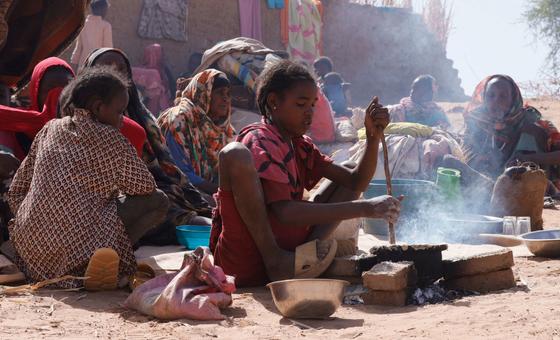
The conflict has fuelled the world’s largest displacement crisis, with more than 12 million people forcibly displaced, the majority of them women and children.

The recent escalation poses a grave risk of further deterioration in what is already a “brutal and deadly conflict”, raising serious concerns for civilian protection, said Volker Türk, the UN High Commissioner for Human Rights (OHCHR), in a statement.

Displacement camps under siege

Following a year-long siege, the RSF launched a renewed assault on the displacement camps around El Fasher on Monday, after months of intensified mobilisation, including the recruitment of children across Darfur.

The operation echoed the RSF’s ground offensive on Zamzam camp in April, which resulted in hundreds of civilian deaths, widespread sexual violence, and a deepening humanitarian emergency.

Between 10 and 13 April alone, the RSF reportedly killed more than 100 civilians in areas around El Fasher.

Trapped civilians

In South Kordofan state, fighting between the parties vying for control of the strategic town of Al Debibat has trapped thousands of civilians.

Meanwhile, in North Kordofan state, the RSF have reportedly surrounded the city of El Obeid, which is currently held by the SAF and allied groups.

The RSF commander has announced that the group may attack the city in the coming days.

“We know where further escalation will lead,” said Mr Türk.

For too long, “the world has witnessed the unbound horrors unfolding in Sudan”, he said, “civilians must be protected at all costs.”

Duty to protect

The UN rights chief urged “the parties to ensure civilians can safely leave El Fasher, Al Debibat, and El Obeid,” as well as other locations where people may be trapped.

Mr. Türk called on all parties to refrain from “attacking civilian objects,” and to ultimately lay down their weapons and put an end to hostilities.

OHCHR also called on “all States to exert their influence to press for a durable political solution,” and to ensure that parties to the conflict respect international humanitarian law, calling for an end to the flow of arms into the country.

Source link

‘Justice is long overdue’: Guterres calls for reparations for enslavement and colonialism

“Africa is a continent of boundless energy and possibility. But for too long, the colossal injustices inflicted by enslavement, the transatlantic slave trade and colonialism have been left unacknowledged and unaddressed,” he said.

The United Nations has repeatedly said that slavery and the transatlantic slave trade constituted crimes against humanity, and the Secretary-General has repeatedly called for redress for these injustices.

Speaking to the Africa Dialogue Series — which is focused on the theme of justice through reparations — the Secretary-General noted that the movement for reparatory justice is gaining momentum around the world as reflected by the declaration of the Second Decade for People of African Descent, which runs through 2035. 

The last decade, which ended in 2024, yielded tangible results, with over 30 Member States revising laws to better tackle racial discrimination. However, the Secretary-General noted that much work remains.

“We point to the poisoned legacies of enslavement and colonialism, not to sow division but to heal them,” he said.

‘Long shadow of colonialism’

Mr. Guterres underlined the entrenched nature of racism and exploitative systems, saying that these systems have disadvantaged African countries and people of African descent beyond the end of colonialism and enslavement.

“Decolonization did not free African countries, or people of African descent, from the structures and prejudices that made those projects possible,” he said.

In fact, when the United Nations was founded and many of the global structures established, some African countries were still colonies.

“When African countries gained their independence, they inherited a system built to serve others — not them,” the Secretary-General said.

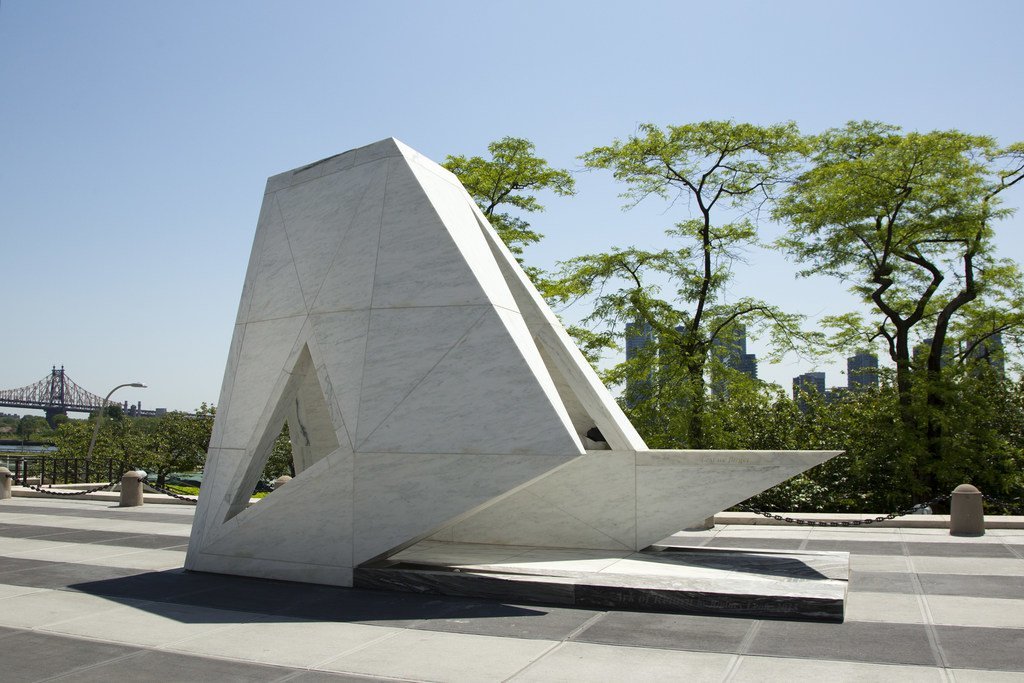
The President of the General Assembly, Philémon Yang, underlined the importance of teaching this history through national curricula and monuments such as The Ark of Return at UN Headquarters.

“Knowledge of our true history can serve as a powerful compass in our onward march towards progress,” he said.

The Ark of Return, the Permanent Memorial to Honour the Victims of Slavery and the Transatlantic Slave Trade, located at the Visitors’ Plaza of UN Headquarters in New York.

Transforming ‘poisoned legacies’

To address the inequities of this system, the Secretary-General called upon the global community to take action on international financial systems which are burdening developing economies in Africa and the Caribbean. Specifically, he emphasized the importance of restructuring debt systems which are “suffocating” these countries’ economies.

Previous UN reports have noted that some poor countries spend more on debt repayments than they do on health, education and infrastructure combined

Mr. Guterres also called for massive investments into clean energy infrastructure in Africa which has been deeply impacted by climate change.

“African countries did not cause the climate crisis. Yet the effects of our heating planet are wreaking havoc across the continent,” he said.

He also reiterated his call for the establishment of a permanent Security Council position for an African Member State.

Mr. Yang, the General Assembly President, underlined the urgency of the Secretary-General’s remarks, urging member states to act imminently.

“Now is the moment to turn recommendations into rights, apologies into action and aspirations into accountability.”  

Source link