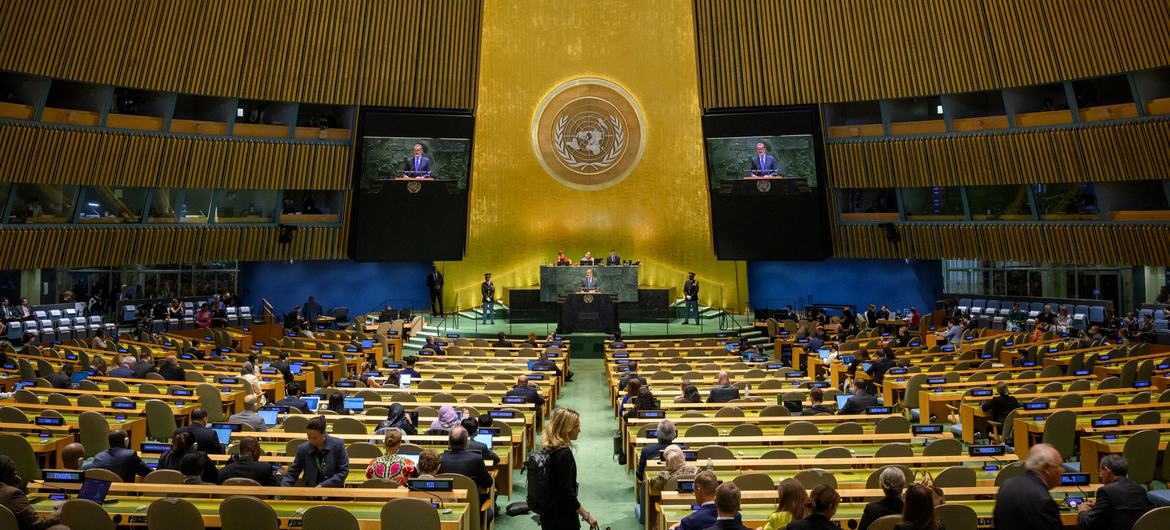
Sinking islands, vanishing forests: World leaders call for urgent climate action

Their appeals, sharpened by rising seas, failed harvests and disappearing ecosystems, echoed Secretary-General António Guterres’s warning at a climate summit that the world is already in the “dawn of a new energy era” – one where clean energy must replace fossil fuels, and where finance and justice remain at the heart of the global response.

“The bottom-line: clean is competitive and climate action is imperative,” he declared, calling for “dramatic emissions cuts” aligned with 1.5°C goal of the landmark Paris Agreement on climate change, agreed by all nations in 2015.

“We know it can be done … COP30 in Brazil must conclude with a credible global response plan to get us on track,” he added, referring to the 30th UN climate change conference in November, which aims to accelerate global efforts to limit temperature rise and advance commitments on emissions, adaptation and climate finance.

The UN chief’s urgency provided the backdrop as world leaders presented compelling accounts of climate peril and promise on the second day of the Assembly’s annual general debate.

Spain – Accelerate energy transition

King Felipe VI of Spain addresses the general debate of the General Assembly’s eightieth session.

The “triple planetary crisis” – climate change, pollution and biodiversity loss – featured prominently in the address by King Felipe VI of Spain, who underscored that governments must accelerate a just energy transition.

He pressed for tripling renewable capacity, doubling efficiency and advancing decarbonisation in time for COP30, where Spain hopes to see consensus and ambition.

“These objectives are as ambitious as they are necessary,” he said, cautioning that hesitation can no longer be part of the global equation.

▶ Watch the address.

Panama – Nature, the first line of defense
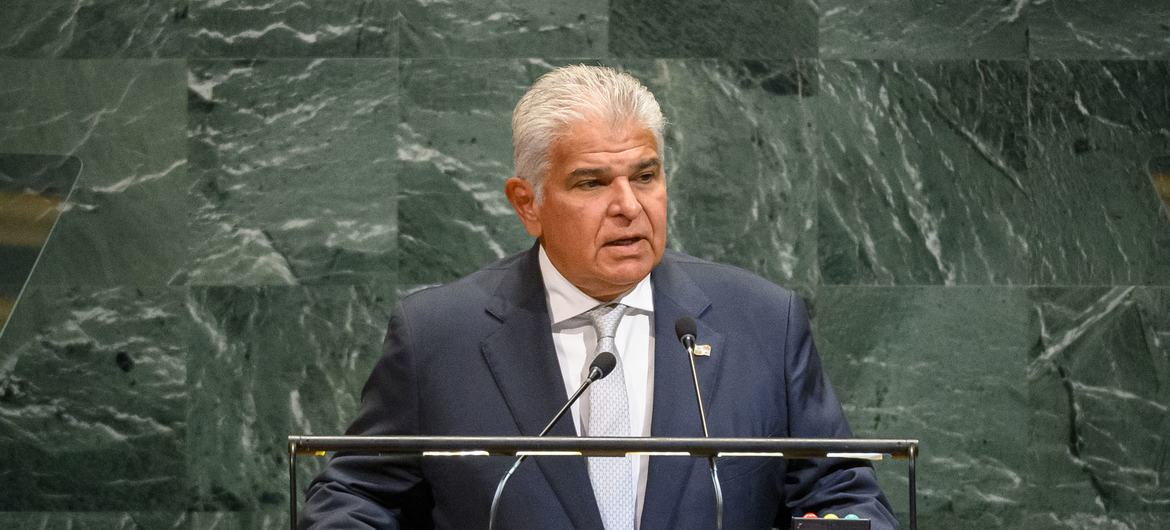
President José Raúl Mulino Quintero of Panama addresses the general debate of the General Assembly’s eightieth session.

For Panama, which has long championed conservation despite contributing little to global emissions, the call was for integrated action.

President José Raúl Mulino Quintero unveiled the country’s ‘Nature Pledge,’ a single framework, uniting commitments on climate, biodiversity and land.

He stressed that as a carbon-negative country, Panama will go even further by restoring 100,000 hectares of priority ecosystems, from mangroves to watersheds.

“Nature is our first line of defense against climate change,” he said, linking national resilience to global solidarity.

▶ Watch the address.

Comoros – Small island, big stakes

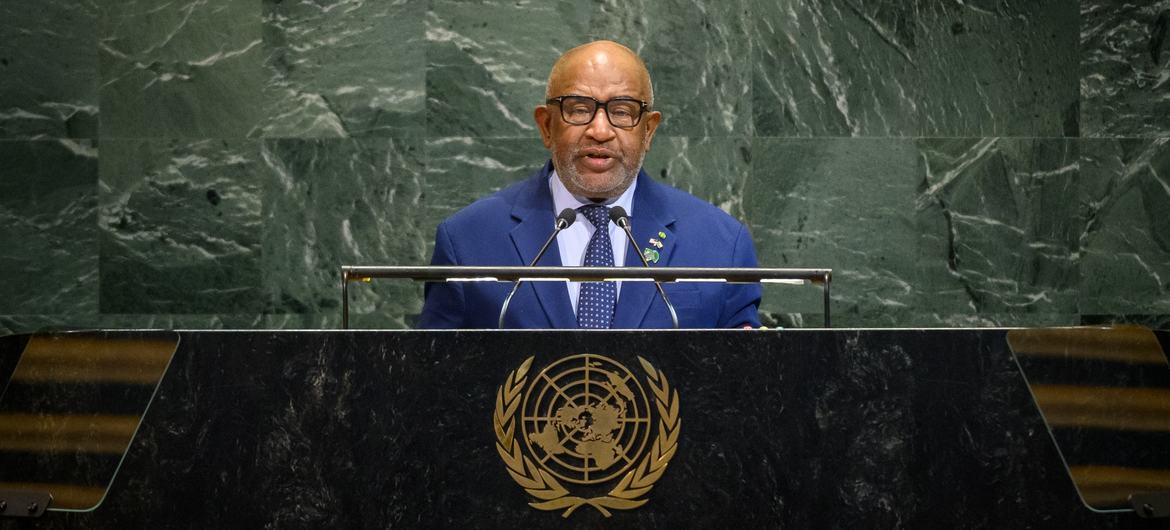
President Azali Assoumani of Comoros addresses the general debate of the General Assembly’s eightieth session.

In the Indian Ocean, the Comoros faces a different frontline.

President Azali Assoumani spoke of rising seas, coastal erosion and intensifying cyclones that threaten the archipelago’s villages and ecosystems.

He urged equitable, simplified access to climate finance, insisting that small island states cannot wait on cumbersome mechanisms while their homes wash away.

At the same time, he highlighted his country’s ‘Emerging Comoros Plan,’ built on renewable potential, blue economy resources and digital transition.

But without international support, he warned, such plans risk being hampered by debt and global inaction.

▶ Watch the address.

Namibia – Linking climate action to desertification
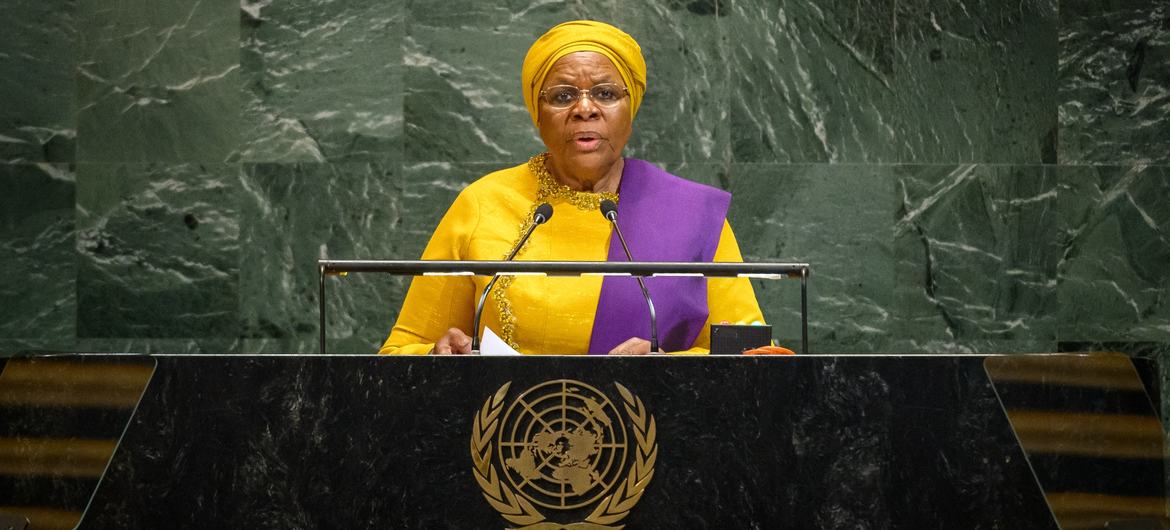
President Netumbo Nandi-Ndaitwah of Namibia addresses the general debate of the General Assembly’s eightieth session.

Namibia’s President Netumbo Nandi-Ndaitwah tied climate impacts directly to her country’s daily struggles, citing prolonged droughts and floods that have dried rivers and disrupted lives.

She announced Namibia’s bid to host the Africa regional hub of the Green Climate Fund, positioning the country as a bridge for climate finance on the continent.

And she reinforced the need to implement the ‘Namib Declaration’ to combat land degradation, linking climate action with the fight against desertification.

▶ Watch the address.

Guyana – Nature’s tangible value

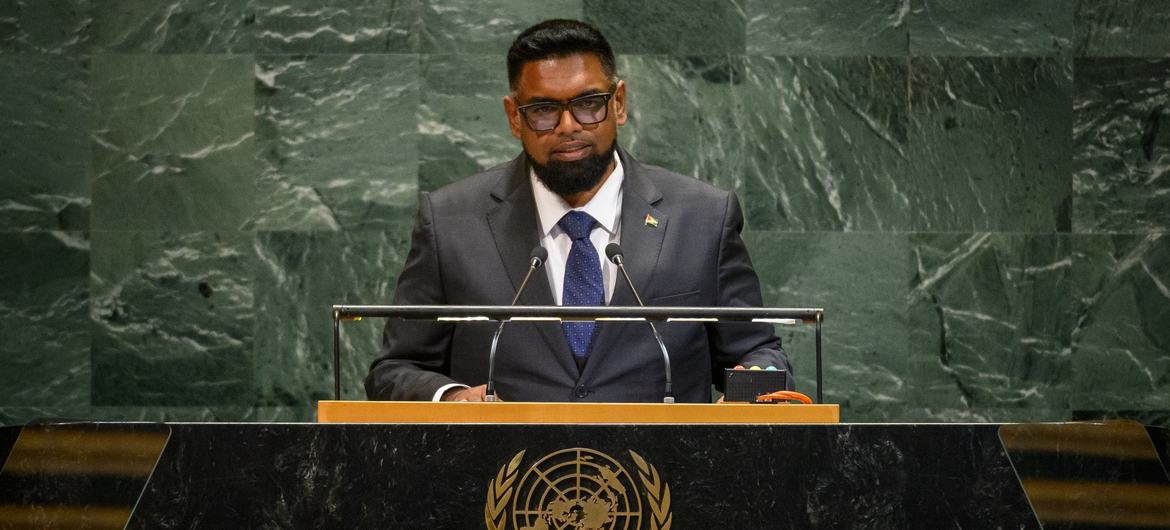
President Mohamed Irfaan Ali of Guyana addresses the general debate of the General Assembly’s eightieth session.

In South America, Guyana’s President Mohamed Irfaan Ali emphasised that climate and development cannot be separated.

He described how his country is protecting forests, strengthening sea defenses and advancing a low carbon development strategy to prove that economic growth can go hand-in-hand with environmental stewardship.

Guyana, he noted, has become a seller of carbon credits under international standards, showing that “nature has tangible value.”

▶ Watch the address.

Marshall Islands – Promises won’t save sinking atolls
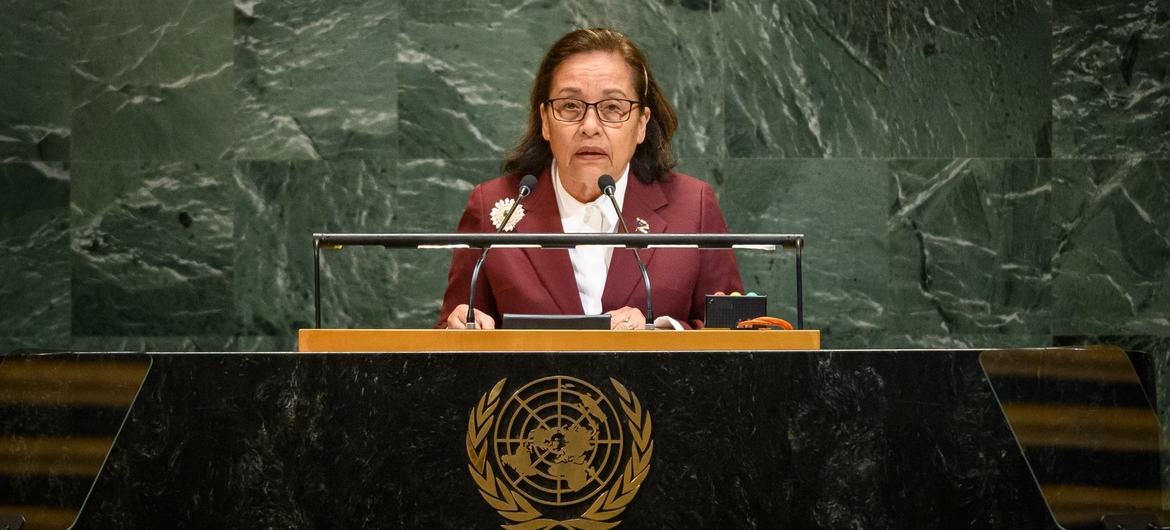
President Hilda Heine of Marshall Islands addresses the general debate of the General Assembly’s eightieth session.

For the Marshall Islands, a Pacific nation of more than 1,200 islands and 29 coral atolls climate change is a question of survival.

President Hilda Heine delivered one of the day’s most urgent interventions, warning that promises alone cannot save sinking atolls.

“We’ve heard the promises – but promises don’t reclaim land in atolls. They don’t develop mangrove defenses, shore up our hospitals and schools against rising seas or preserve cultural stability tied to land that is slipping under waves,” she said.

“Those things require money.”

Ms. Heine pressed the international community to close the trillion-dollar climate finance gap, particularly for adaptation and loss and damage.

As COP30 approaches, she said nations must not only honor their pledges but also deliver stronger plans that show a clear pathway to phasing out fossil fuels and halving global emissions within this decade.
▶ Watch the address.

‘No Ocean Declaration without small islands’: Delegates push for inclusion as UN summit nears end

With the conference, known as UNOC3, set to close Friday, the stakes couldn’t be higher.

Li Junhua, the UN’s Under-Secretary-General for Economic and Social Affairs, told UN News on Thursday that the past four days have been marked by a rare sense of solidarity around Sustainable Development Goal 14 (SDG 14) – protection life below water.

“This is the true testament to the impact of this Conference on the future of our ocean,” he added.

Draft outcome signals sense of urgency

Under way since Monday on France’s sun-drenched Côte d’Azur, UNOC3 is set to conclude with the adoption of a consensus-backed package aimed at securing the future of the world’s oceans.

Delegates are preparing to endorse a political declaration alongside a sweeping set of voluntary commitments from participating nations – collectively known as the Nice Ocean Action Plan.

The declaration itself, titled ‘Our Ocean, Our Future: United for Urgent Action,’ has undergone four rounds of intense intergovernmental negotiations at UN Headquarters in New York since January, alongside informal consultations with key delegations and civil society groups.

At the heart of the conference’s mission – mobilizing action to safeguard and sustainably manage marine ecosystems – the declaration, in draft form, signals a marked shift in tone, underscoring an unprecedented sense of urgency.

It calls for immediate and transformative measures to protect oceans, reflecting growing concerns over climate change, biodiversity loss, and the depletion of marine resources.

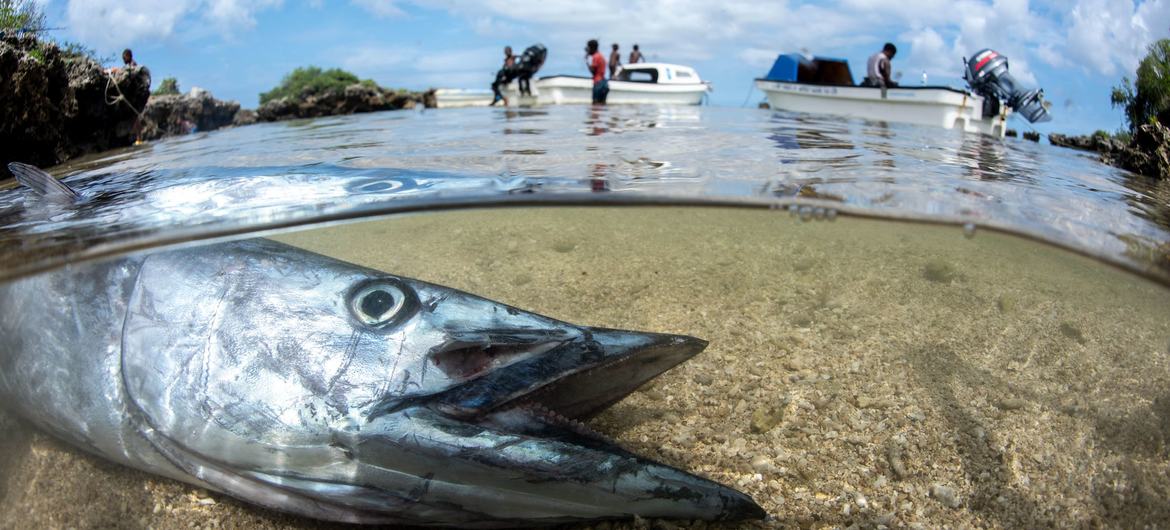
© Coral Reef Image Bank/Tom Vierus

The people of Galoa Village and their ancestors have depended on the reef system for hundreds of years for sustenance and income.

In addition, the draft declaration outlines measures to protect marine ecosystems and foster sustainable ocean-based economies. It also emphasizes accelerating action, highlighting that SDG 14 remains one of the least funded UN goals. 

To drive global ocean initiatives forward, the draft declaration calls for significant, accessible financing and the fulfillment of existing commitments under international agreements.

The draft highlights the ocean’s deep ties to climate and biodiversity, urging nations to fully implement the Convention on Biological Diversity. It also reaffirms commitment to an international, legally binding agreement on plastic pollution, emphasizing a comprehensive approach that addresses plastics across their entire life cycle.

Final negotiations are under way, and tomorrow we’ll report on whether nations have reached a consensus to tackle the global ocean emergency, turning decades of pledges into meaningful marine protection.

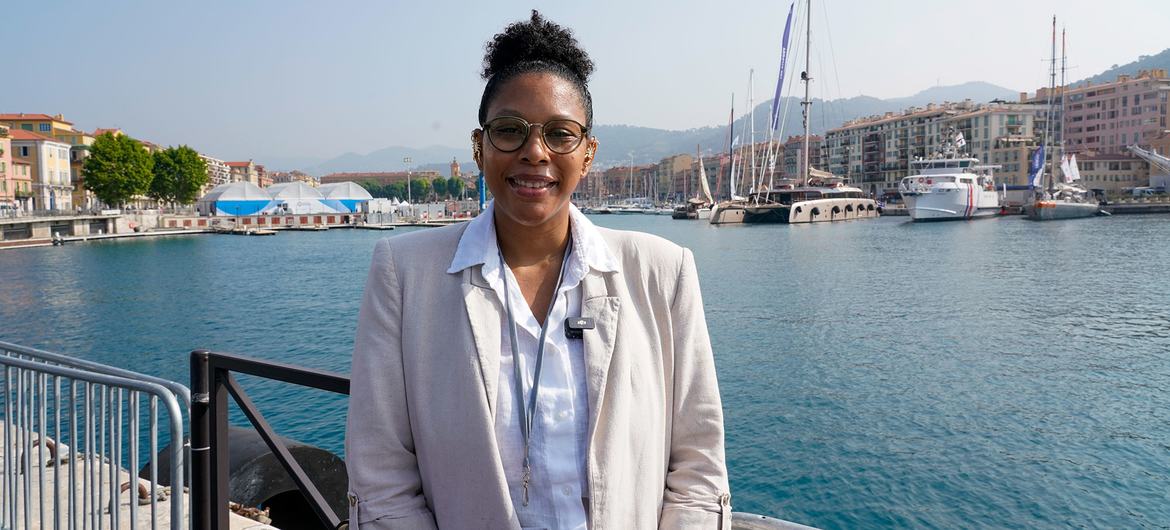
H.E. Safiya Sawney, Special Envoy and Ambassador for Climate, Government of Grenada.

Small island voices are vital to ocean policy

Among all the stakeholders, small island nations have a key role in shaping the Declaration. As communities most vulnerable to rising seas and marine degradation, their firsthand experience and leadership are essential to crafting effective, inclusive ocean policy.

Safiya Sawney, Special Envoy and Ambassador for Climate of Grenada, told UN News that she is pleased to see the reference in the draft outcome to the Antigua and Barbuda Agenda for Small Island Developing States, or ABAS, which was adopted during the fourth International Conference on Small Island Developing States on May 2024.

Ms. Sawney said that including the Antigua and Barbuda Agenda in the UNOC3 political declaration signals growing unity among island nations. She emphasized that, despite numerous challenges, small islands are committed to implementing every obligation under ABAS, demonstrating their determination to turn commitments into action.

“A big part of our heritage, of our culture, of our economy is derived from the ocean,” she said, “So for us, you cannot have an ocean declaration without SIDS.”

‘No compromise with nature’

As for the negotiation process on the draft declaration, Ms. Sawney said that Grenada and other delegations in the Alliance of Small Island States (AOSIS) affirmed that they were leveraging strength and experience from past climate talks and bringing that to the ocean space.

“Part of healthy multilateralism is knowing that you have to compromise,” she admitted, but also adding that “the one thing that we cannot compromise with, however, is nature”.

To ensure that “we’re able to all be successful together in supporting this ocean agenda”, she suggested that “there are some countries that need to do more than others”. She added that small island developing States are asking those countries to show their leadership, not just through offsets or financing, but through “real action”.

Ocean Coordination Mechanism Secretariat

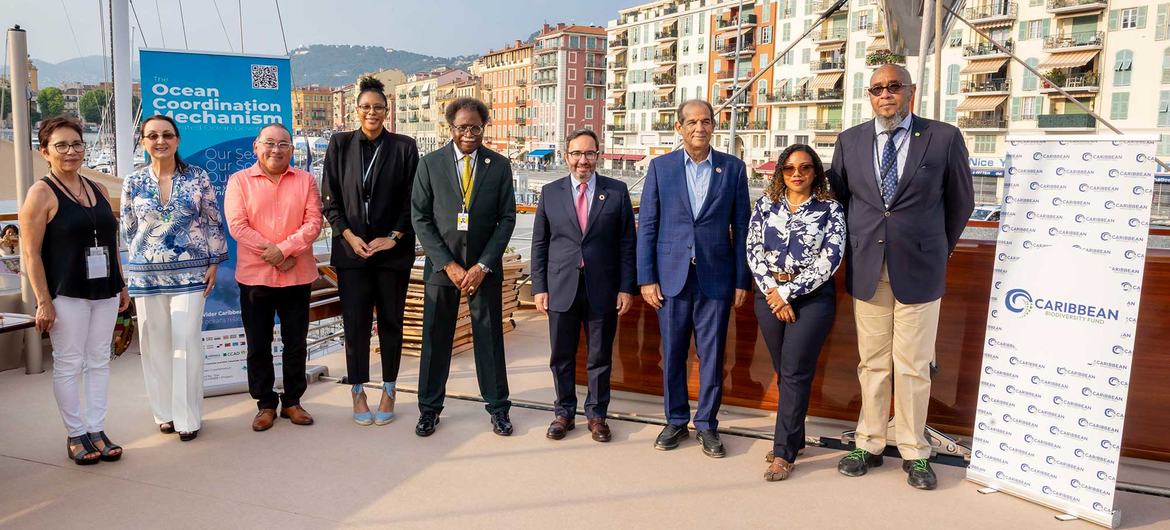
Representatives from 14 Caribbean countries sign the Declaration Of Actioning Blue: The Caribbean 30×30 Vision and Roadmap For Our Ocean at a high-level launch event at the 3rd United Nations Ocean Conference (UNOC3) in Nice, France.

Caribbean governments acting together

Calling themselves “large ocean nations” at UNOC3, small island developing States are aggregating their weight to not only participate in but shape the global ocean agenda, said Ms. Sawney. Among these efforts, Caribbean governments have been keen to demonstrate political unity and regional ambition throughout the run of the conference.

On the opening day of UNOC3, the Actioning Blue: Caribbean 30×30 Vision for the Ocean was officially launched. It reflects an urgent call by political leaders of the Caribbean to advance collective regional advocacy aligned with the Kunming-Montreal Global Biodiversity Framework, as well as SDG14.

“Coming into UNOC3, we endorsed 12 Caribbean governments, including independent states and territories, and we’ve had one additional signature and expression of interest from three different governments,” explained Ms. Sawney.

Changing the tide of over-reliance

Recalling the 2008 Caribbean Challenge Initiative that advanced the protection of roughly 49,000 km of marine protected areas in the region, Ms. Sawney said part of what the newly launched Vision does is remind the international community that “we will continue to work, we’ll continue to show up, and we really like their help”.

Describing the Caribbean as “capacity-constrained”, she however pointed to the region’s over-reliance on external help, experts, and capacity.

“We’re trying to change the tide,” she continued, by stressing the importance of letting donors know that the region is very invested in building its own capacity and owning its own implementation.

Seeing UNOC3 as an important opportunity to get across this message, Ms. Sawney stated that Caribbean Islands are not just looking forward to the end of the Conference, but what happens afterwards.

“The real work begins after all of this is over,” she concluded with hope.

Source link

World News in Brief: UK cedes sovereignty over Chagos Islands, suffering in Sudan deepens, UN releases new emergency relief funds

Before granting Mauritius independence in 1968, Britain unlawfully separated the Chagos archipelago to create the British Indian Ocean Territory.

In doing so, it expelled 1,500–2,000 islanders to lease Diego Garcia, the largest island, to the United States for joint military use.

Under the agreement, the UK will lease the island of Diego Garcia for the next 99 years to continue operating its joint military base with the United States.

Value of diplomacy

The agreement signed on Thursday between the UK and Mauritius is “a significant step towards resolving a long-standing dispute in the Indian Ocean region” and “demonstrates the value of diplomacy in addressing historical grievances”, said UN Spokesperson Stéphane Dujarric in Thursday’s briefing.

Welcoming the signature of the agreement, the UN Secretary-General, urged both the UK and Mauritius to “continue engaging in constructive discussion”, in order to ensure that “the rights and aspirations of the Chagossians people are fully respected,” said Mr. Dujarric.

Sudan: Civilian Suffering Deepens Amid Drone Strikes

The civil war in Sudan, which erupted in April 2023 between the Sudanese Armed Forces (SAF) and the paramilitary Rapid Support Forces (RSF), has killed over 18,000 people and displaced 13 million, triggering a regional migration crisis.

Even before the war, humanitarian conditions and human rights protections were fragile, but in the past two years, they have become dire.

Of the 30.4 million Sudanese in need of assistance, the UN World Food Programme (WFP) is currently reaching 2.3 million with emergency food and nutrition support, as ongoing violence and infrastructure destruction compound the crisis.

Urgent ceasefire needed

Recent drone attacks on Port Sudan, once a vital entry point for aid, have further deepened the crisis. UN-designated expert Radhouane Nouicer warned Monday that these strikes on critical infrastructure “are putting lives at risk, worsening the humanitarian crisis, and violating basic human rights.”

On Thursday, Mr. Dujarric reported that attacks in Khartoum state have triggered a total electricity blackout, disrupting access to clean water and healthcare amid rising food prices and cholera outbreaks.

The blackout has exacerbated the spread of cholera and other waterborne diseases.

Mr. Dujarric also noted that ongoing insecurity displaced 47,000 people from Khiwai and Nuhud in West Kordofan this month, while another 1,000 were displaced this week from Abu Shouk camp and El Fasher in North Darfur.

At the Arab League Summit in Iraq over the weekend, UN Secretary-General António Guterres called for urgent multilateral action to end “appalling violence, famine and mass displacement,” and met with African Union leaders to encourage a push for a ceasefire.

Emergency relief funds released for DR Congo

The UN Central Emergency Response Fund (CERF) has allocated new funds to crisis situations, from Afghanistan to Zambia.

On Wednesday, CERF made $750,000 available to support cholera response in the Democratic Republic of the Congo, said Stéphane Dujarric, Spokesperson for the UN Secretary-General.

The emergency funds will enable the World Health Organization (WHO), the UN Children’s Fund (UNICEF), and partners to deliver critical aid, including timely cholera detection and response, medical treatment, risk communication, and community engagement.

In addition, CERF allocated $10 million to help more than 270,0000 people in vulnerable communities across South Sudan, where the threat of renewed civil war looms.

Ahead of the rainy season, CERF’s life-saving aid will notably target communities who have been impacted by overlapping crises, especially conflict and displacement in the states of Jonglei and Upper Nile.

CERF also allocated $9.5 million to support climate action initiatives in eight countries: Afghanistan, the Central African Republic, Chad, Mauritania, Niger, Somalia, Venezuela, and Zambia.

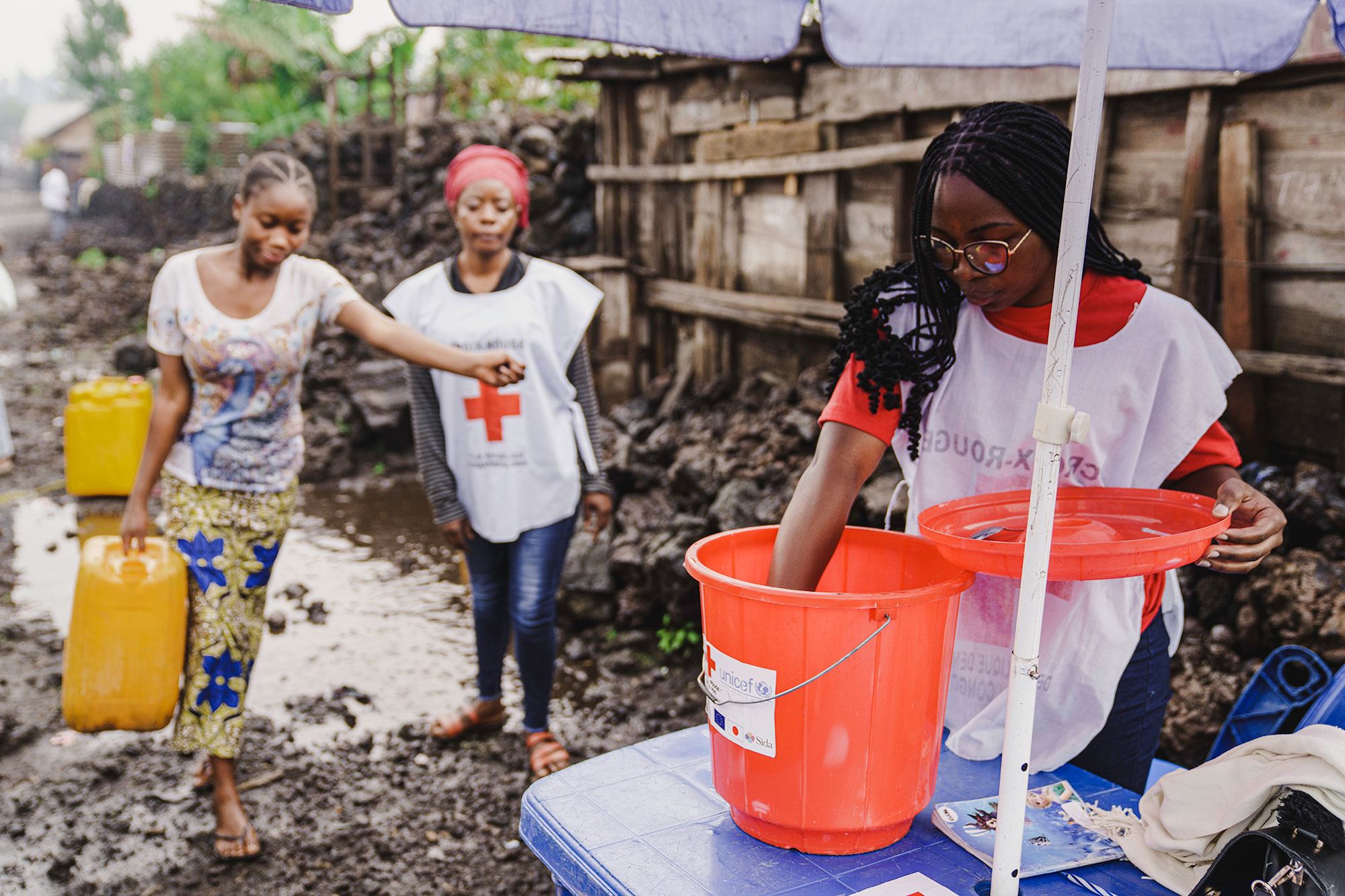
© UNICEF/Jospin Benekire

A UNICEF-supported cholera team add chlorine to water collected from a reservoir in Goma, in the DR Congo.


Source link