‘A wave of truth’: COP30 targets disinformation threat to climate action

Brazil’s President Luiz Inácio Lula da Silva set the tone at the opening session, declaring that the battle for truth has become just as critical as the fight to cut emissions. COP30 must mark “a new defeat for climate denialists,” he said. 

On Wednesday, 12 nations – including Brazil, Canada, France, Germany and Spain – signed onto the first-ever Declaration on Information Integrity on Climate Change, pledging to fight back against the flood of false content and protect those on the frontlines of truth: environmental journalists, scientists and researchers.

The declaration, unveiled under the Global Initiative for Information Integrity on Climate Change, calls for concrete steps to dismantle networks of climate lies and shield evidence-based voices from harassment and attacks.

João Brant, Brazil’s Secretary for Digital Policies, said the goal is simple but urgent: to “create a wave of truth.”

The initiative, launched this past November, is a partnership between Brazil, the UN Department of Global Communications and UNESCO

“Disinformation, the harassment of expert voices, polarizing echo chambers, and the demise of independent journalism are eroding trust in what is real. At the same time, powerful interests are weaponizing climate change to stall and sabotage action,” said Charlotte Scaddan, Senior Adviser on Information Integrity at the United Nations.

She warned that climate disinformation goes far beyond denial. “It undermines climate action by attacking researchers and journalists, questioning scientific consensus, and creating false narratives around solutions,” she said. “We’re seeing sophisticated ‘information laundering’ – false claims cycled through multiple platforms to appear credible.”

The UN’s new Global Initiative for Information Integrity on Climate Change aims to turn the tide. Built on three pillars – research funding, evidence gathering, and integration into COP processes – the initiative has already secured a breakthrough: information integrity is now part of the COP Action Agenda for the first time. “We cannot achieve climate action and a liveable future without information integrity,” Ms. Scaddan stressed.

“The coming months will determine whether we can preserve the information environment essential for democratic decision-making and global cooperation.”

Disinformation: a direct threat to COP30 

Frederico Assis, COP30’s Special Envoy for Information Integrity, warned that the stakes could not be higher. “Disinformation, driven by obscurantist worldviews, fuels political extremism and puts lives at risk,” he told UN News, adding that there is a real danger of interference in climate negotiations.

“There is broad recognition that disinformation can affect and compromise every part of the COP process – process diplomatic negotiations, the action agenda, or mobilization and summits. All our efforts will be at risk if we fail to tackle disinformation properly, which stems from denialism,” Mr. Assis said.

He flagged the role of algorithms amplifying “conspiratorial and manipulative” content, often using “sophisticated tactics to spread false messages.” His mandate: keep the issue in the public eye and mobilize political, religious and social leaders, civil society and the media to push back. 

Cracking the code behind climate lies 

For the first time, information integrity has made it onto the official COP agenda – a milestone UNESCO’s Guilherme Canela says is long overdue.

Speaking to UN News, Mr. Canela stressed that the global initiative aims to expose the machinery driving climate disinformation.

“We still know very little about what’s behind this. For example, who funds these posts, and why do they spread faster than other types of content? How does that happen? If we don’t understand these mechanisms, it’s very difficult to design effective strategies to combat this phenomenon. The core of this global initiative is precisely to finance, especially in the Global South, investigative journalism and research projects to uncover what’s really happening,” he said.

The Global Fund for Information Integrity on Climate Change, created under the initiative, has already attracted 447 proposals from nearly 100 countries. Backed by an initial $1 million from Brazil, the fund is supporting its first round of projects – almost two-thirds from developing nations.

Mr. Canela called it “very rewarding” to see the issue “embraced so strongly at COP30.” 

Disinformation’s shape-shifting tactics 

Maria Clara Moraes, a UN Verified Champion and co-founder of the Marias Verdes platform, knows the battle well. With over half a million TikTok followers, she says the fight against climate disinformation is “completely possible, but also extremely challenging.”

She warns that these campaigns are highly organized and “backed by powerful forces, particularly the fossil fuel industry.” Their narratives, she says, “change their disguise” over time.

“There are several types of disinformation. One of the most powerful is saying that it’s too late – that nothing can be done, or that these events like COP30 don’t make a difference. That’s also disinformation. Saying, ‘This isn’t working, it’s too slow, too complex, too frustrating.’ But yes – it’s important. We must constantly reaffirm the value of multilateralism and the importance of spaces like this one,” she said. 

A generation that refuses to give up 

Despite the challenges, Ms. Moraes told us that she sees hope in younger generations. By producing content rooted in science and sustainability, she says awareness of the climate emergency is growing fast.

According to her, young people are “a great source of hope and optimism.” She urges everyone to play their part in creating “micro-revolutions” through everyday choices that support climate action and drive systemic change. 

UN News is reporting from Belém, bringing you front-row coverage of everything unfolding at COP30.
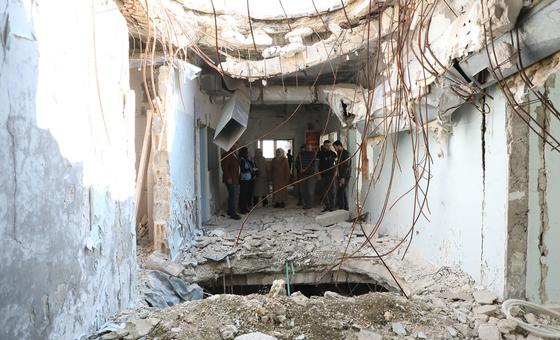
‘Syria simply cannot withstand another wave of instability,’ Security Council hears

“Syria simply cannot withstand another wave of instability,” UN Deputy Special Envoy Najat Rochdi said on Tuesday in a briefing to the Security Council in New York. 

The risks of further escalation in the region are not hypothetical – they are immediate, severe, and risk unraveling the fragile progress toward peace and recovery in Syria.” 

She echoed the Secretary-General’s condemnation of military escalation in Middle East and his call on Israel and Iran to show maximum restraint. 

The UN Special Envoy for Syria, Geir Pedersen, has also expressed growing alarm over the potential consequences of any further escalation, which she also conveyed. 

‘Constructive and cooperative’ engagement 

Ms. Rochdi reported on the Special Envoy’s ongoing engagement in recent months, such as meetings with senior officials in Damascus, including interim foreign minister Asaad Hassan al-Shaibani. 

Their discussions focused on recent positive developments in international relations as well as the importance of prioritizing domestic affairs towards a genuinely inclusive political transition in which all Syrians have a stake. 

Overall, the meetings with Syrian officials “were marked by a constructive and cooperative tone, with a shared interest in strengthening engagement with the United Nations across multiple sectors,” she said.  

Road to transition 

“Particular attention was given to the next steps in the transition and to coordinating efforts with the newly established committees on transitional justice and missing persons,” she added. 

Among the important next steps is the establishment of a new People’s Assembly as the transitional legislative authority.  In this regard, she welcomed the recent presidential decree announcing the appointment of a supreme committee for elections to the Assembly. 

The committee will be responsible for supervising the indirect election of 100 of the 150 members of the People’s Assembly via electoral colleges, she explained.  It will also define the electoral timeframe and eligibility conditions for electors and candidates.  

“We encourage the Supreme Committee to take measures that safeguard inclusivity, transparency and openness in all stages of this process,” she said.

Developments in the northeast 

Turning to the northeast, Ms. Rochdi referred to the 10 March deal reached between the interim authorities and the Syrian Democratic Forces (SDF), which controls the region, to integrate the Kurdish-led group into the national army. 

The agreement “continues to present a historical opportunity to solve one of the key outstanding issues in this conflict and restore Syria’s sovereignty and unity, a priority which the Special Envoy discussed with interim Foreign Minister Shaibani.”

She also welcomed recent detainee exchanges as well as cooperation that enabled several Syrian families at the Al-Hol camp to return to the northwest. Thousands of people from several countries have been held for years at the notorious complex for their alleged ties to ISIL extremists.

“We stress the importance of negotiations moving forward in earnest with bold steps and an active spirit of compromise from both sides to implement the 10 March agreement,” Ms. Rochdi told ambassadors.

“This is a priority for stability in Syria and the region, for the restoration of Syria’s sovereignty, unity, independence and territorial integrity, and for the success of the overall political transition.”  

Women and civil society

Special Envoy Pedersen also engaged with a broad spectrum of Syrians including women, who continue to seek greater representation in leadership positions, including as candidates and delegates in the process for the People’s Assembly.

“Syrian civil society representatives also continue to be active on all fronts working for a new Syria founded on the principles of inclusivity, openness, and transparent participatory processes,” she added.

She stressed that the protection and safety of all components of society, along with prevention of incitement of communal tensions, “are absolute cornerstones for stability.” 

Attacks against specific communities

She noted that sporadic violent incidents continued in Homs, Hama and other regions, including killings, kidnappings and infringements on individual liberties. 

Furthermore, some of the people that the Special Envoy met in Damascus voiced concern over ongoing attacks targeting specific communities and groups, including Alawites, Druze, and women. 

 “While many interlocutors emphasized that these incidents did not appear to be systematic or part of official policy, they highlighted the persistent challenges faced by the interim authorities in controlling certain groups – whether affiliated with the interim authorities or operating independently,” she said.

Ms. Rochdi also pointed to encouraging signs the interim authorities have taken to ease tensions such as the recent issuance of a fatwa that prohibits revenge killings and extrajudicial retaliation. Additionally, recent decisions to reinstate judges who were removed by the former regime represent a welcome step towards rebuilding trust between the judiciary and the population.

Respect Syria’s sovereignty

Meanwhile, other security challenges persist, with sporadic and limited acts of violence this month, including at a border post with Iraq and on contact lines in Deir-ez-Zor, and in rural Homs. 

“The southwest saw a serious incident of Israeli artillery fire and airstrikes on military sites and weapons depots across southern Syria, in response to a rare incident of small rocket fires out of Syria into the Israeli-occupied Syrian Golan,” she continued, noting that two groups unaffiliated with the interim authorities claimed responsibility. 

Additionally, Israeli incursions, arrests, and drone strikes occurred last week in Beit Jinn in the Damascus countryside, which she said are unacceptable and must cease. 

Syria’s sovereignty, independence, and territorial integrity must be respected, along with the 1974 Disengagement of Forces Agreement. Diplomacy is possible and must be prioritised,” she said. 

Ms. Rochdi further reported that “ongoing activity by ISIL remains notable, including attacks on SDF positions, and a US drone strike on an ISIL figure in northwest Syria.”

Returnees and economic measures

Before concluding, Ms. Rochdi reported that despite the fragile security and socioeconomic situation in their homeland, nearly 600,000 people are estimated to have returned to Syria in the past six months, mostly from neighbouring countries.

An estimated 1.34 million displaced people inside Syria have also gone back to their areas of origin during the same period.  

She said the UN continues to welcome and encourage international actions which contribute to the reactivation of Syria’s economy. They include a six-month waiver of some US sanctions, the European Union’s (EU) lifting of economic sanctions, and a broad range of transactions authorized by the United Kingdom to facilitate commercial activity in some key sectors.

She also hailed a large contract for the construction of several gas and solar energy plants, signed between the interim authorities and a consortium of regional and international actors. 

“These projects are expected to supply more than half of Syria’s national electricity needs, representing a big leap toward energy security, economic revival, and infrastructure resilience,” she said.

More to follow on this story… 

Source link

UN ocean summit in Nice closes with wave of commitments

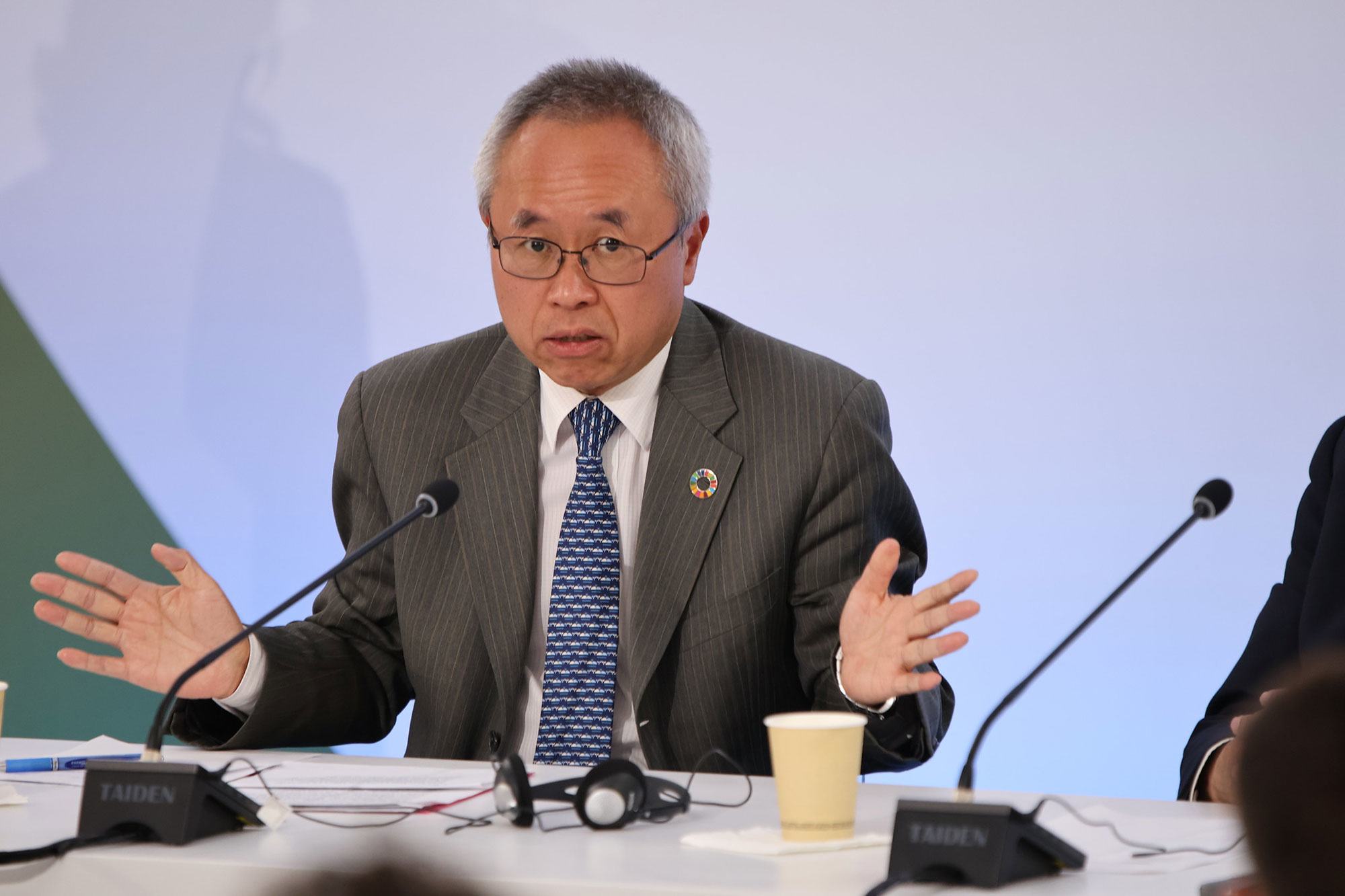
“We close this historic week not just with hope, but with concrete commitment, clear direction, and undeniable momentum,” Li Junhua, the UN’s Under-Secretary-General for Economic and Social Affairs and Secretary-General of the summit, told reporters.

Co-hosted by France and Costa Rica, the five-day event brought 15,000 participants, including more than 60 Heads of State and Government, to France’s Mediterranean coast.

With over 450 side events and nearly 100,000 visitors, the gathering, dubbed UNOC3, built on the momentum of previous ocean summits in New York (2017) and Lisbon (2022). It culminated in a shared call to expand marine protection, curb pollution, regulate the high seas, and unlock financing for vulnerable coastal and island nations.

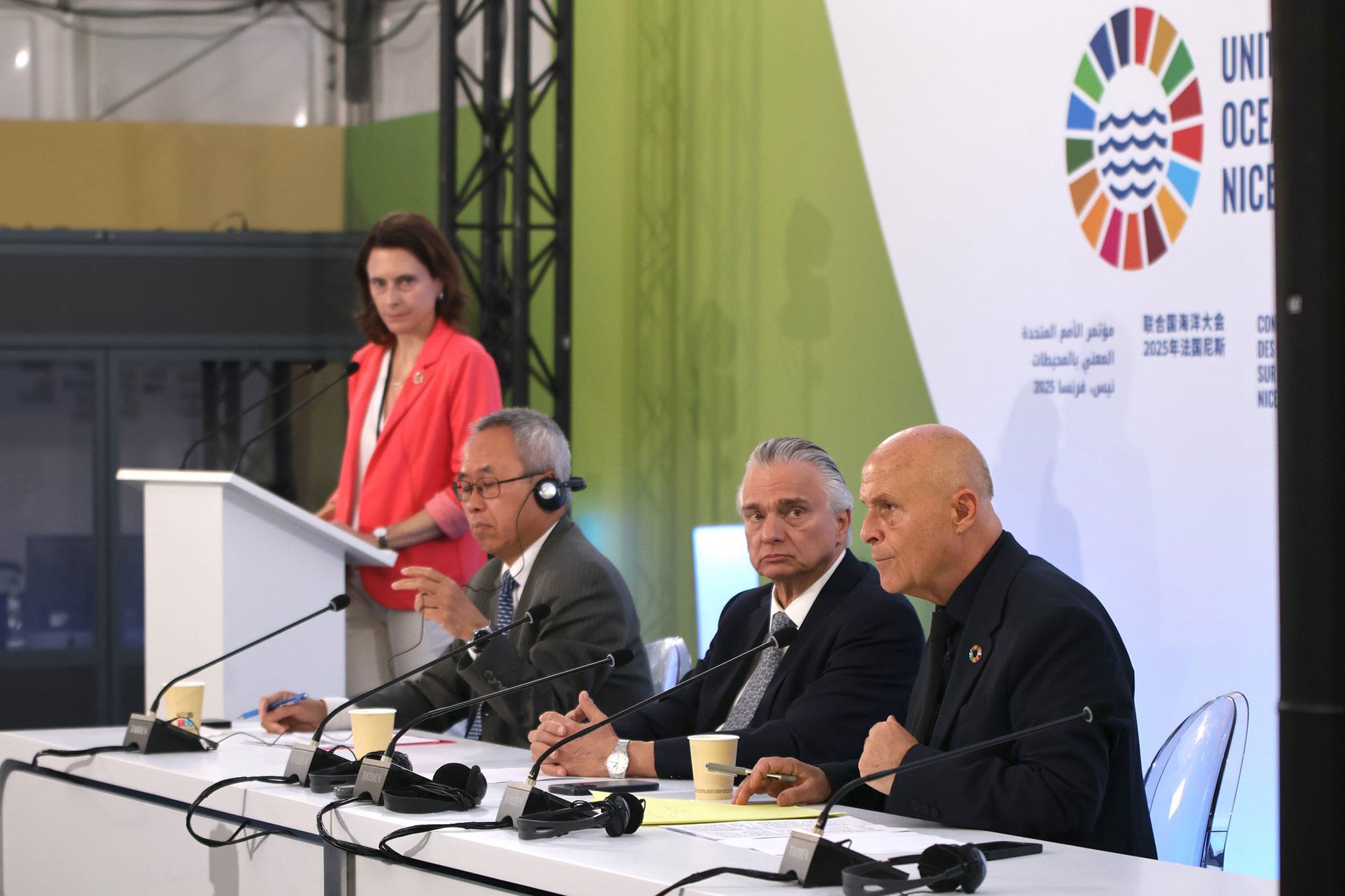
Li Junhua, the UN’s Under-Secretary-General for Economic and Social Affairs and Secretary-General of UNOC3, at the closing press conference, in Nice.

Ambitious pledges

The conference’s outcome, known as the Nice Ocean Action Plan, is a two-part framework that comprises a political declaration and over 800 voluntary commitments by governments, scientists, UN agencies, and civil society since the previous conference.

“These range from advocacy by youth to deep-sea ecosystem literacy, capacity building in science and innovation, and pledges to ratify intergovernmental treaties,” Mr. Li said.

The pledges unveiled this week reflected the breadth of the ocean crisis. The European Commission announced an investment of €1 billion to support ocean conservation, science, and sustainable fishing, while French Polynesia pledged to create the world’s largest marine protected area, encompassing its entire exclusive economic zone – about five million square kilometers.

Germany launched a €100-million programme to remove underwater munitions from the Baltic and North Seas. In addition, New Zealand committed $52 million to strengthen ocean governance in the Pacific, and Spain announced five new marine protected areas.

A 37-country coalition led by Panama and Canada launched the High Ambition Coalition for a Quiet Ocean to tackle underwater noise pollution. Meanwhile, Indonesia and the World Bank introduced a ‘Coral Bond’ to help finance reef conservation in the country.

“The waves of change have formed,” Mr. Li said. “It is now our collective responsibility to propel them forward – for our people, our planet, and future generations.”

Olivier Poivre d’Arvor (right), France’s special envoy for the conference, at UNOC3;s closing press conference, in Nice.

A diplomatic stage

The summit opened Monday with stark warnings. “We are not treating the ocean as what it is – the ultimate global commons,” said UN Secretary-General António Guterres, alongside the presidents of France and Costa Rica, Emmanuel Macron and Rodrigo Chaves Robles, who called for a renewed multilateralism anchored in science.

On Friday, France’s special envoy for the conference, Olivier Poivre d’Arvor, recalled the stakes: “We wanted in Nice… to take a chance on transformative change. I believe we have moved forward, but we can no longer go backwards.”

One of the conference’s main objectives was to accelerate progress on the High Seas Treaty – known as the BBNJ agreement – adopted in 2023 to safeguard marine life in international waters. Sixty ratifications are needed for it to enter into force. Over the past week, 19 countries ratified the accord, bringing the total number as for Friday, to 50.

“This is a significant victory,” said Mr. Poivre d’Arvor. “It’s very difficult to work on the ocean right now when the United States is so little involved.”

The French envoy was alluding to the absence of a senior US delegation, as well as President Donald Trump’s recent executive order advancing deep-sea mining. “The abyss is not for sale,” he said, echoing remarks made earlier in the week by President Macron.

Still, Mr. Poivre d’Arvor emphasized the broad agreement achieved at the summit. “One country may be missing,” he said. “But 92 per cent of the ‘co-owners’ were present today in Nice.”

His counterpart, Arnoldo André-Tinoco, the Foreign Minister of Costa Rica, urged other nations to accelerate financing for ocean protection. “Each commitment must be held accountable,” he said at the conference’s closing meeting.

Momentum – and a test

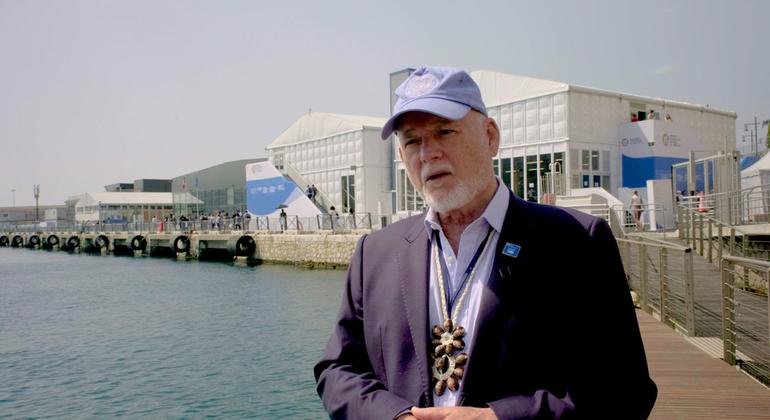
For Peter Thomson, the UN’s Special Envoy for the Ocean, Nice marked a turning point. “It’s not so much what happens at the conference, it is what happens afterwards,” he told UN News, recalling the early days of ocean advocacy when Sustainable Development Goal 14 (SDG14), on life below water, was first established.

“From the desert we were in back in 2015… to where we are now, where you see this incredible engagement.”

Looking ahead, attention is already turning to the Fourth UN Ocean Conference, slated to be co-hosted by Chile and South Korea in 2028.

“We’re going to again see a big surge upwards from here,” Mr. Thomson predicted. He expressed hope that major global agreements — including the BBNJ treaty, the WTO Fisheries Subsidies Agreement, and the future Global Plastics Treaty – will all be ratified and implemented by then.

The 2028 summit will also mark a moment of reckoning, as SDG 14 approaches its 2030 target.

“What do we do when SDG 14 matures in 2030?” Mr. Thomson asked. “Obviously, it’s got to be raised ambition. It’s got to be stronger.” He emphasized that while SDG14 had aimed to protect 10 per cent of the ocean by 2020 – a target the world failed to meet – the new benchmark is 30 per cent by 2030.

Wearing a shell necklace gifted by the Marshall Islands, the Fiji native praised small island nations and atoll collectives for setting ambitious marine protections.

“If small countries can make big measures like that, why can’t the big countries follow suit?” he said.

He also saluted the 2,000 scientists who gathered for the One Ocean Science Congress ahead of the summit. “What a great way to run things,” he said.

A show of unity

Despite the celebratory tone, tensions lingered. Small Island Developing States pushed for stronger language on loss and damage – harms inflicted by climate change that go beyond what people can adapt to. “You cannot have an ocean declaration without SIDS,” one delegate warned earlier this week.

Others, including President Chaves, of Costa Rica, called for a moratorium on deep-sea mining in international waters until science can assess the risks – a step not included in the final declaration.

Still, the political declaration adopted in Nice, titled Our ocean, our future: united for urgent action, reaffirms the goal of protecting 30 percent of the ocean and land by 2030, while supporting global frameworks like the Kunming-Montreal Biodiversity Agreement and the International Maritime Organization’s climate goals.

“The real test,” Mr. Li said, “is not what we said here in Nice – but what we do next.”

As the sun dipped behind the Promenade des Anglais and the conference’s final plenary adjourned, the sea – ancient, vital, and imperiled – bore silent witness to a fragile but shared promise.