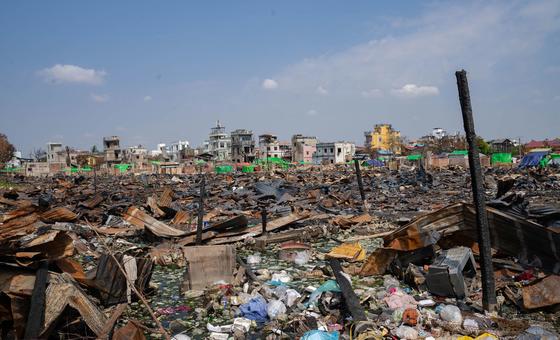
But hunger has followed them. Over 57 per cent of the population in the world’s youngest country to the south is already facing high levels of acute food insecurity.
Sudan and South Sudan are among five global hunger hotspots of “highest concern”, trapped in a worsening cycle of conflict, climate shocks and economic decline.
Continued fighting in Sudan, anticipated flooding impacting its southern neighbour and deteriorating economic conditions in both countries are set to intensify hunger in the coming months.
A new report released on Monday by the World Food Programme (WFP) and the Food and Agriculture Organization (FAO) also identified Palestine, Mali and Haiti as the other top-priority hunger hotspots, with a further seven countries likely to see worsening food security over the next five months.
The report, which analyses existing data to project the nature of food insecurity, emphasised that without immediate humanitarian assistance, people living in these hotspots will face severe food conditions and high risks of starvation and death.
“This report makes it very clear: hunger today is not a distant threat – it is a daily emergency for millions. We must act now and act together to save lives and safeguard livelihoods,” said FAO Director General QU Dongyu.
Conflict-driven hunger
The report identified that the main driver of hunger is conflict which is often compounded by climate and economic shocks.
“There’s an on-going famine in Sudan and also a risk of famine in the case of Gaza. And all of those are driven by conflict and lack of access for humanitarians,” said Jean-Martin Baucer, FAO food security analysis director.
In Gaza, the entire population of 2.1 million people is projected to experience crisis levels of food insecurity in the next months as a result of protracted military operations, with almost 500,000 projected to face catastrophic levels of food insecurity.
Sawsan was an artist in Gaza before the conflict began. Since then, she and her four children have been displaced, losing everything that they owned. They do not have enough to eat: Sawsan described to WFP that she now reduced to crushing macaroni to make bread for her children.
The report also noted that climate shocks and conflict often cause protracted economic declines, diminishing the purchasing power and self-sustaining capacity of households and communities.
Window closing fast
In recent months, humanitarian food operations have faced significant food shortages and have been geographically impeded by security crises which make the delivery of aid simply dangerous.
WFP and FAO are calling for the international community to drastically step up funding for food and nutrition related humanitarian aid in the coming months and advocate for an end to the fighting.
“Urgent, sustained investment in food assistance and recovery support is crucial as the window to avert yet more devastating hunger is closing fast,” said WFP executive director Cindy McCain.
‘Red alert’
In May, the food aid sector estimated that it would need $12.2 billion, but only nine per cent of this was funded.
The report also underlined the importance of moving towards longer-term humanitarian strategies which equip communities with self-sustaining capabilities and are less expensive.
“This report is a red alert. We know where hunger is rising and we know who is at risk. We have the tools and experience to respond but without funding and access, we cannot save lives,” said Ms. McCain.