World News in Brief: Casualties in Ukraine, Burkina Faso aid helicopter blast, Uganda urged to release opposition leaders

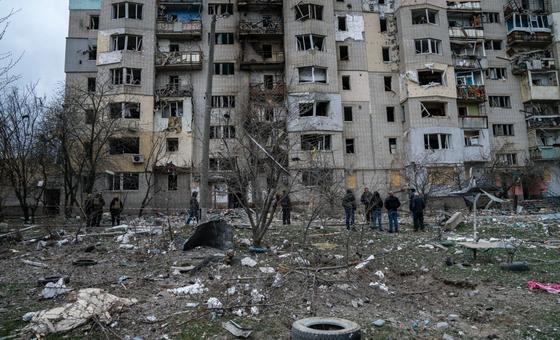
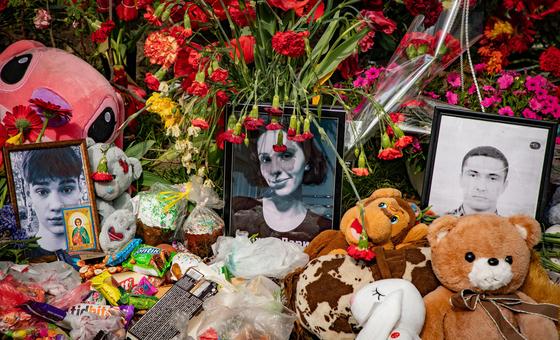
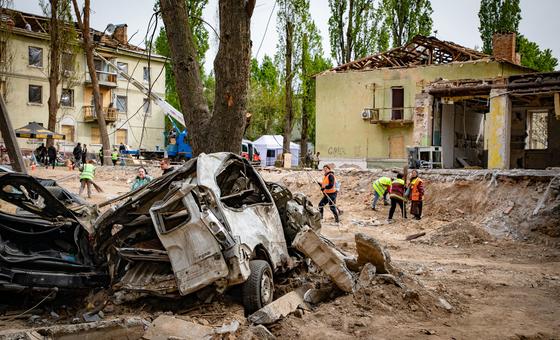
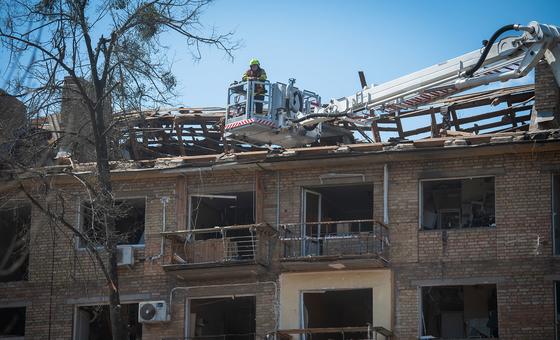
The monthly total also marked a three-year high, topping June’s figure, with HRMMU verifying civilian deaths and injuries in 18 of Ukraine’s 24 regions.  

“For the second month in a row, the number of civilian casualties in Ukraine hits a new three-year high,” said Danielle Bell, Head of HRMMU.

“Only the first three months after the Russian Federation launched its full-scale invasion of Ukraine saw more killed and injured than in this past month,” she added.  

Rising toll 

Numbers for the first seven months of 2025 were 48 per cent higher than in the same period last year.

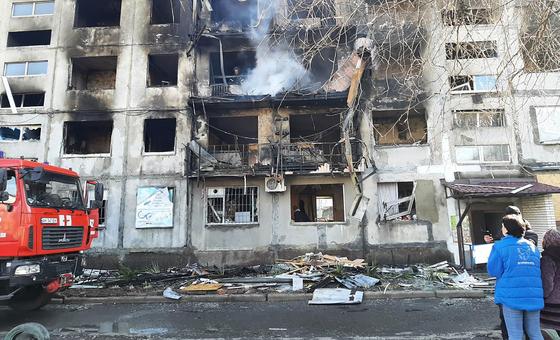
Long-range weapons, including missiles and suicide drones, accounted for nearly 40 per cent of casualties. On 31 July, Kyiv saw its deadliest attack since the start of the full-scale invasion, with 31 people killed, including five children, when a missile struck a residential building.

Short-range drones alone caused 24 per cent of casualties, reflecting a sharp rise since mid-2024, as documented in a bulletin published by HRMMU in June 2025.  

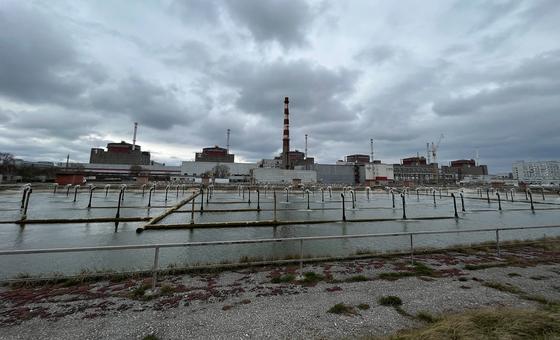
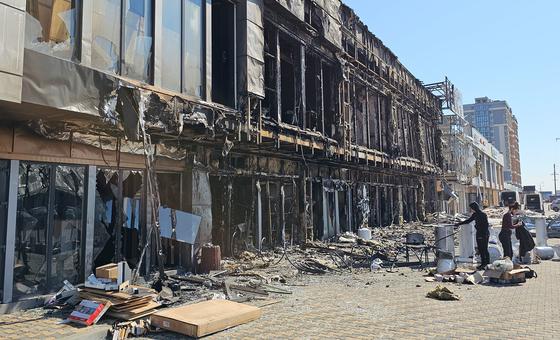
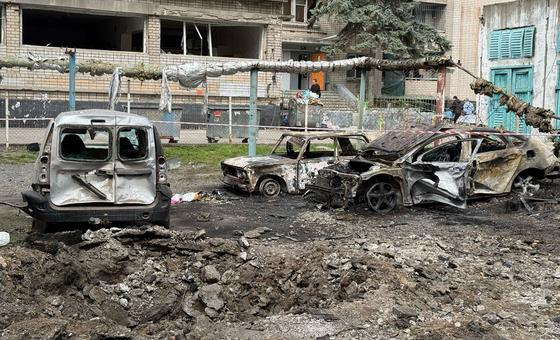
The steepest monthly increase came from aerial bombs, which killed 67 and injured 209 in July, compared with 114 casualties in June. Strikes hit a penal colony in Zaporizhzhia and an apartment building in Donetsk, killing at least 21 people in total.

“Whether you are in a hospital or a prison, at home or at work, close to or far away from the frontline, if you are in Ukraine today, you are at risk of getting killed or injured by the war,” Ms. Bell said. 

Burkina Faso: Blast hits near UN aid helicopter in Solle

A UN chartered helicopter delivering food aid to the town of Solle in northwest Burkina Faso was caught in an explosion shortly after landing on Tuesday, injuring two people.

The aircraft, chartered by the World Food Programme (WFP), had just unloaded humanitarian supplies when the blast occurred nearby. One crew member and a Government partner were hurt and are now receiving medical treatment.

The helicopter sustained only minor damage and was moved to safety, WFP said. Flights to Solle have been temporarily halted while authorities investigate the incident.

Critical operation

In conflict-affected areas of Burkina Faso, WFP’s humanitarian air operations are critical for delivering life-saving assistance to hard-to-reach communities most in need.  

WFP aims to assist 315,000 of the most vulnerable people during the lean season from June to August, when families have exhausted their food stocks.

In a statement, WFP reaffirmed the agency’s “unwavering commitment to support populations in need and to reach the most remote communities with humanitarian assistance.”

Rights office urges Uganda to release opposition leaders on bail

The UN human rights office (OHCHR) on Wednesday expressed serious concern at repeated denials of bail in Uganda for opposition leader Kizza Besigye and his associate Obeid Lutale.

Both individuals have been denied bail three times since they were abducted in neighbouring Kenya and returned to Uganda last November. 

In dismissing their latest request, the High Court found them ineligible for mandatory bail merely because they had been detained in civil prison for less than the 180 days required to qualify for release, a duration that did not account for their prior deprivation of liberty following their abduction and forced return.

“We urge the authorities to reconsider the decision and grant them bail, and to ensure that any legal proceedings against them are fully in line with international human rights law,” said OHCHR spokesperson Liz Throssell.

Human rights concerns  

The UN human rights office in Uganda closed its operations there in 2023 after the Government decided to end cooperation with OHCHR.  

At the time, High Commission Volker Türk expressed concern about the run-up to the 2026 elections, amid an increasingly hostile environment impacting human rights defenders, civil society actors and journalists.

Other UN human rights mechanisms also condemned laws criminalizing same sex relations and the call for the use of the death penalty for convicted offenders. 

Source link

UN official decries deadly Ukraine strikes, urges return to diplomacy

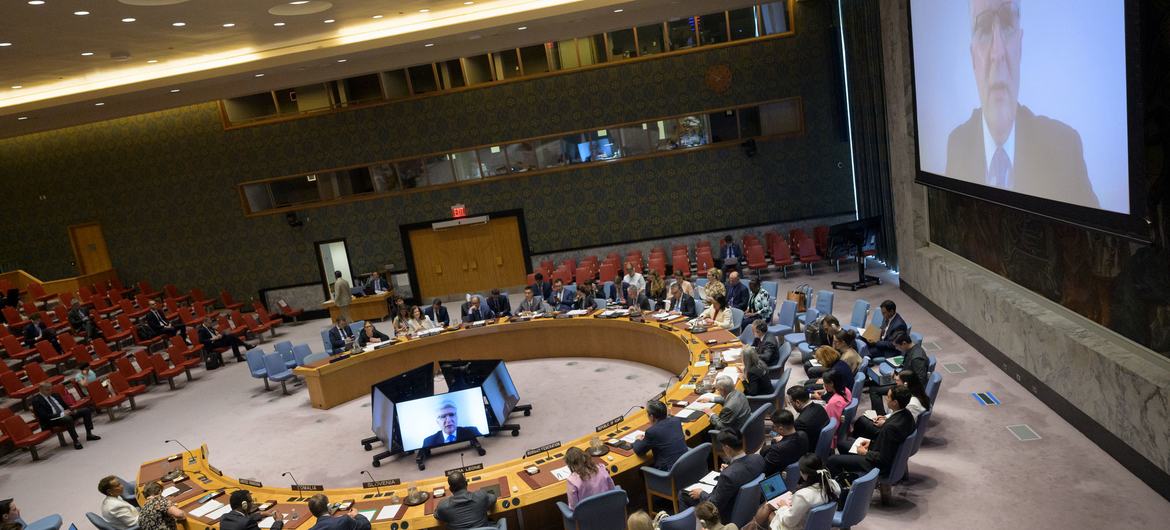
Briefing ambassadors in the Security Council, Miroslav Jenča, Assistant Secretary-General for Europe in the Department of Political and Peacebuilding Affairs (DPPA), renewed the call for an immediate ceasefire and a return to diplomacy to end the devastation.

“Ukrainian people have endured nearly three-and-a-half years of unimaginable horrors, death, devastation and destruction. They urgently need relief from this nightmare,” he said.

He stressed that diplomacy, not fighting, needs to escalate in the coming days and weeks.

“Diplomacy that leads to real, tangible, verifiable and lasting results that would be felt by the long-suffering people on the ground,” he added, reiterating that the UN remains ready to support all efforts toward a just, lasting peace in line with the UN Charter and international law.

ASG Jenča briefs the Security Council.

Brutal attacks continue

Mr. Jenča described the “brutal” scale of the latest attacks.

Overnight between 30 and 31 July, a large-scale Russian aerial assault on Kyiv killed at least 31 people – including five children – and injured 159 others, 16 of them children. It marked the highest number of child injuries in a single night in the capital since the invasion began in February 2022.

The strikes damaged 27 locations across four districts of Kyiv, including a school, a preschool, a paediatric hospital wing, and a university building.

“An entire section of an apartment block was also reportedly destroyed, leaving many trapped beneath the burning rubble,” said Mr. Jenča.

Humanitarian workers, including UN agencies and local partners, responded swiftly, delivering shelter kits, emergency psychosocial support and legal counselling to affected families.

Strikes beyond Kyiv

Beyond Kyiv, attacks were reported across at least seven regions – Vinnytsia, Donetsk, Dnipropetrovsk, Zhytomyr, Zaporizhzhia, Cherkasy and Chernihiv – with a total of at least 120 civilian casualties in a single night.

In Donetsk, two people were reportedly killed and 10 injured; in Kharkiv, one person was killed and seven injured. Additional casualties were confirmed in Sumy, Kherson and Zaporizhzhia.

In Kamianske, a hospital attack left three dead – including a pregnant woman – and 22 injured, many of them medical staff. In Novoplatonivka, Kharkiv region, six were killed while waiting for humanitarian aid.

“These continuing horrendous attacks are simply unacceptable,” said Mr. Jenča.

The UN human rights office, OHCHR, reports that since the start of the full-scale invasion thorugh June this year, more than 13,580 civilians – including 716 children – have been killed, and over 34,000 injured.

Casualties inside Russia

Mr. Jenča also noted civilian casualties inside Russia.

Between 25 and 29 July, Russian authorities reported attacks in Belgorod, Bryansk, Kursk, Leningrad and Rostov regions, resulting in at least six deaths and multiple injuries.

While the UN cannot verify these reports, Mr. Jenča expressed concern and reiterated that “attacks on civilians and civilian infrastructure are prohibited under international law and must stop immediately – wherever they occur.”

Abuses against POWs

He also detailed new allegations of abuse against Ukrainian prisoners of war (POWs).

According to OHCHR interviews with nearly 140 recently released male POWs, “nearly all…reported having been subjected to torture or ill-treatment,” including beatings, electric shocks, and suffocation.

OHCHR also documented credible reports of 106 executions of Ukrainian soldiers in Russian custody.

Source link

LIVE: UN Security Council meets on crisis in Ukraine

The UN Security Council meets Friday afternoon to discuss the ongoing crisis in Ukraine, where recent attacks have left dozens dead or injured. A senior UN political affairs official is expected to brief on the situation. Follow our live coverage from UN News, in coordination with UN Meetings Coverage, for real-time updates and key developments from the chamber. UN News App users can follow the coverage here.

Source link

SECURITY COUNCIL LIVE: Meeting on the situation in Ukraine

The UN Security Council meets Thursday morning to discuss threats to international peace and security, with a focus on the situation in Ukraine. The meeting was requested by Russia. Follow our live updates as UN News, in coordination with UN Meetings Coverage, brings you key highlights and takeaways from today’s session. UN News App users can follow the coverage here.

Source link

World News in Brief: Cambodia-Thailand ceasefire, bloody weekend in Ukraine, stop hepatitis deaths

The deal was announced on Monday by Malaysia’s Prime Minister Anwar Ibrahim, current chair of the Southeast Asian bloc ASEAN, and was due to take effect at midnight local time.

The clashes, which began on 24 July, reportedly displaced more than 130,000 people in Thailand and over 4,000 in Cambodia, UN aid partners said last week.

Nearly 40 people were killed and some 200 injured, according to media reports, which cited Thai and Cambodian sources

The UN Security Council met behind closed doors on Friday afternoon to discuss the crisis, which goes back decades.

‘A positive step’

The Secretary-General hailed the ceasefire “as a positive step towards ending current hostilities and easing tensions,” UN Deputy Spokesperson Farhan Haq said in a statement.

The UN chief urged both countries “to respect the agreement fully and to create an environment conducive to addressing long-standing issues and achieving lasting peace.

He commended Malaysia, the current ASEAN Chair, as well as the United States and China, for their dedicated efforts towards the peaceful resolution of the situation.

Media reports said Prime Minister Ibrahim of Malaysia mediated talks between the sides at his official residence near the country’s capital, Kuala Lumpur.

The statement concluded by underlining that the UN stands ready to support efforts aimed at promoting peace and stability in the region.

Ukraine: 20 dead and 120 injured in weekend attacks

Since Friday, at least 20 people were killed and a further 120 injured in Ukraine as attacks continued to devastate the country, the UN Office for the Coordination of Humanitarian Affairs (OCHA) said on Monday.

The most severe attacks occurred in the Sumy region where a civilian bus was hit, killing three women over the age of 65 and injuring 19 more. Sumy also experienced electricity outages as a result of the attacks. 

These attacks come in the midst of a three-year high for civilian casualties, with 6,574 killed in the first half of 2025 and 5,000 long-range munitions launched by Russia in July alone. 

Civilian structures damaged

Residential buildings, shops and schools were hit across the border region this weekend, damaging structures which civilians rely upon for their livelihoods. A hospital in Kharkiv was also struck on Friday, the World Health Organization (WHO) said. 

To support families and people impacted by the attacks, aid workers delivered assistance in the form of shelter materials and psychosocial support. They also helped with repairs to some structures. 

“Aid workers continue to coordinate with local organizations to support the most vulnerable people in the Sumy region,” UN Deputy Spokesperson Farhan Haq told journalists at Headquarters in New York.

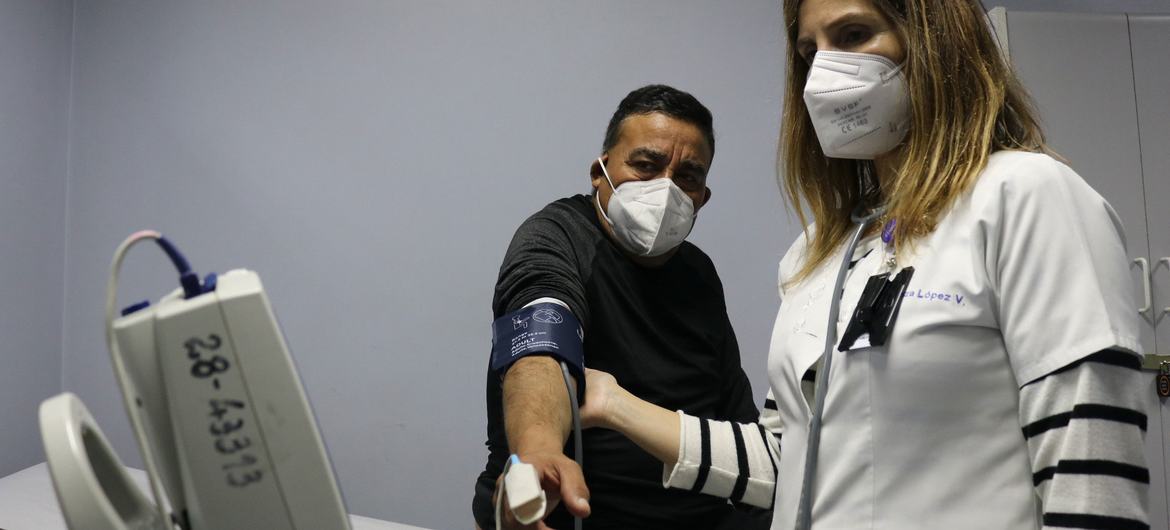
In Chile, new hepatitis treatments mean around 98 per cent of patients recover completely.

UN health agency calls for urgent action on hepatitis

The World Health Organization (WHO) is urging governments and partners to step up efforts to eliminate viral hepatitis as a public health threat and reduce liver cancer deaths.

The UN agency issued the appeal on Monday, World Hepatitis Day.

“Every 30 seconds, someone dies from a hepatitis-related severe liver disease or liver cancer. Yet we have the tools to stop hepatitis”, said WHO Director-General Tedros Adhanom Ghebreyesus.

Viral hepatitis – types A, B, C, D and E – are the main causes of acute liver infections, but only hepatitis B, C and D can lead to chronic disease, significantly increasing the risk of cirrhosis, liver failure and liver cancer.

However, most people with hepatitis are unaware that they are infected. Types B, C, and D affect over 300 million people globally and cause more than 1.3 million deaths each year, mainly from liver cirrhosis and cancer.

Break down the barriers

World Hepatitis Day is observed annually on 28 July. This year’s theme, Let’s Break It Down, calls for urgent action to dismantle the financial, social and systemic barriers that stand in the way of hepatitis elimination and liver cancer prevention.

Last month, the International Agency for Research on Cancer (IARC) – a specialized branch of WHO – classified hepatitis D as a human carcinogen, along with types B and C. 

Hepatitis D, which only develops in people already infected with hepatitis B, increases the risk of liver cancer two to six times compared with hepatitis B alone. 

WHO said the disease’s reclassification “marks a critical step in global efforts to raise awareness, improve screening, and expand access to new treatments for hepatitis D.”

Oral treatment can cure hepatitis C in two to three months and effectively suppress hepatitis B with lifelong therapy, the agency said.

Although treatment options for hepatitis D continue to evolve, reducing the incidence of cirrhosis and liver cancer will only occur with significant expansion and deepening of vaccination, testing, and treatment programmes. 
Source link

UN warns of escalating human toll in Ukraine amid relentless aerial attacks, mounting aid shortfall

“Nowhere is safe in Ukraine,” said Miroslav Jenča, Assistant Secretary-General for Europe at the UN Department of Political Affairs (UNDPPA).

Citing figures from the UN human rights office, OHCHR, he said civilian casualties reached a three-year high in June, with 6,754 civilians killed or injured in the first half of 2025 alone.

Russian forces launched over 5,000 long-range munitions against Ukraine so far in July, including a record-breaking 728 drones in a single day. Major cities such as Kyiv and Odesa have been hit by swarms of missiles and drones.

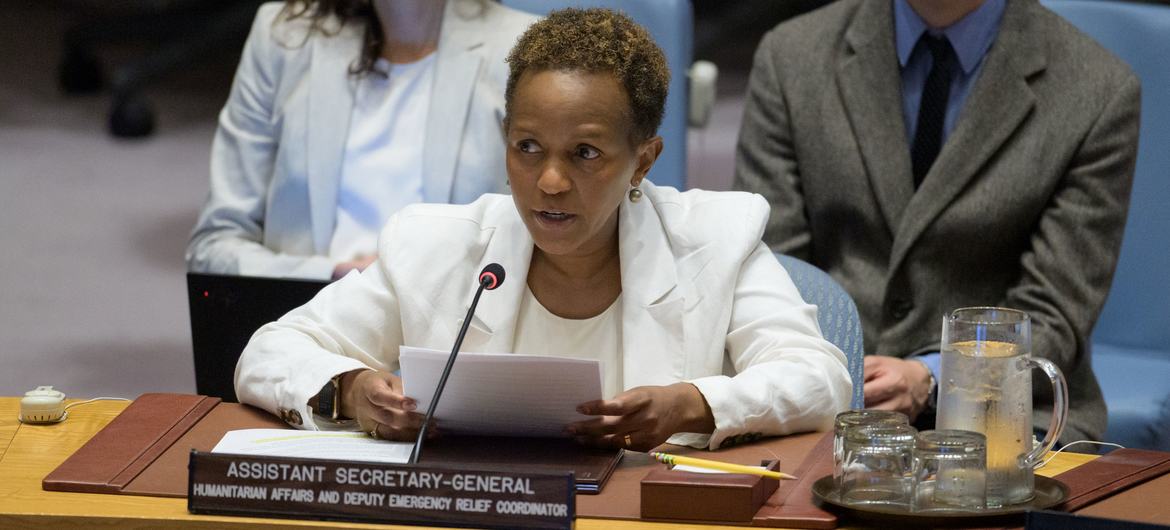
Assistant Secretary-General for Humanitarian Affairs Joyce Msuya echoed those words, saying “there is no safe place left in Ukraine” as the use of explosive weapons in populated areas has left cities reeling.

A rehabilitation centre for persons with disabilities in Kharkiv, maternity wards, schools, and energy infrastructure have all come under fire in recent weeks.

Joyce Msuya, UN Deputy Emergency Relief Coordinator, briefs the Security Council meeting on maintenance of peace and security of Ukraine.

Spiralling humanitarian situation

The humanitarian impact is worsening sharply, she continued.

“Nearly 13 million people need assistance, but limited funding means we can reach only a fraction of them,” Ms. Msuya warned. As of now, only 34 per cent of the $2.6 billion required for this year’s humanitarian response has been received.

Ukraine’s displacement crisis also continues to grow. Over 3.7 million people remain displaced within the country, while nearly six million are refugees abroad. More than 26,000 people have newly registered at transit centres since April alone.

Strikes in Russia

The senior UN officials also expressed concern over reported civilian casualties from Ukrainian drone strikes inside Russia, including in Belgorod, Kursk and Moscow.

While the UN could not independently verify these incidents, Mr. Jenča reiterated: “International law clearly prohibits attacks against civilians and civilian infrastructure. We strongly condemn all such attacks – wherever they occur.”

Concerns over nuclear safety

Attacks near Ukraine’s nuclear facilities have further alarmed the UN.

Earlier this month, drone strikes hit Enerhodar, where Zaporizhzhia Nuclear Power Plant staff live, and drones have been detected near other operating plants.

“Any nuclear incident must be avoided at all costs,” Mr. Jenča said.

ASG Miroslav Jenča (on screen) briefs the Security Council meeting on the maintenance of peace and security of Ukraine.

Political momentum needed

While some diplomatic movement continues – including recent prisoner exchanges and talks in Istanbul – UN officials called for intensified political will toward a ceasefire.

“The heartbreaking and rising human toll of the past nearly three-and-a-half years of war underscores the urgency of a complete, immediate and unconditional ceasefire,” Mr. Jenča said, “as the first step towards a just and lasting peace.”

Source link

SECURITY COUNCIL LIVE: Situation in Ukraine

The UN Security Council is meeting on Friday morning to discuss the situation in Ukraine amid mounting concerns over the intensifying hostilities and growing humanitarian needs. Senior UN political affairs and humanitarian officials are expected to brief the Council. Follow our live coverage from UN News, in coordination with UN Meetings Coverage, for updates from the chamber. UN News App users can follow here.

Source link

World News in Brief: Thailand-Cambodia border hostilities, humanitarian efforts in Syria and attacks across Ukraine

The dispute dates to 1953 when France first mapped the border, but tensions resurfaced in May after the death of a Cambodian soldier in a border skirmish.

Secretary-General António Guterres is “following with concern” reports of the clashes, his Deputy Spokesperson Farhan Haq told journalists in New York.

“The Secretary-General urges both sides to exercise maximum restraint and address any issues through dialogue and in a spirit of good neighbourliness, with a view to finding a lasting solution to the dispute,” he said.

Inter-agency humanitarian assistance in Syria

The Office for the Coordination of Humanitarian Affairs (OCHA) led an inter-agency visit to Rural Damascus governorate in Syria on Thursday to assess needs and provide assistance to more than 500 families displaced by recent violence in nearby Sweida governorate.

The UN agencies visited the Sayyeda Zeinab community and plan to visit the neighbouring Dar’a Governorate in the coming days, where humanitarians are supporting tens of thousands of people displaced by violence.

In Rural Damascus and Dar’a, OCHA and its partners are expanding protection services for displaced people. This includes psychosocial first aid and case management support for children.

Also on Thursday, the World Food Programme (WFP) distributed urgent food assistance to displaced families. The agency additionally continues to provide assistance across the country, including to Syrians returning home after a decade of conflict.

Limited access to Sweida

On Wednesday, a second convoy from the Syrian Arab Red Crescent (SARC) arrived in Sweida, with UN agencies providing support.

The convoy included food, wheat flour, fuel, medicines and health supplies. Medical supplies were delivered to the Sweida national hospital, and wheat flour was dispatched to bakeries.

Across Sweida, Rural Damascus and Dar’a governorates, the UN has distributed over 1,600 dignity kits to displaced women and girls. UN partners are also providing recreational activities, awareness sessions on gender-based violence and support for women and children.

But despite efforts in neighbouring governorates and increasing support in Sweida, full and direct access to the conflict-ridden governorate itself is limited due to security constraints.

Nonetheless, the UN is continuing dialogue with Syrian authorities to facilitate direct access to Sweida.

Nationwide attacks in Ukraine

OCHA further reported that at least five civilians were killed, and 46 others injured, in attacks across several regions of Ukraine over the past two days.

Kharkiv in the northeast was one of the more affected regions, where a glide bomb strike injured at least 16 people on Thursday, and fighting killed three and injured five others on Wednesday.

Additionally, overnight attacks in central Ukraine injured seven people in Cherkasy and four in Odesa City, damaging homes, health centres, schools, shopping areas and a market.

Civilians in the southern Kherson region, the eastern Donetsk region and the southeast Zaporizhzhia region were also affected.

Evacuations and humanitarian response

Following the overnight attacks in Cherkasy and Odesa, aid workers assisted first responders by providing first aid, meals, shelter materials, hygiene kits, emotional support and legal assistance to affected families.

Amid the hostilities, nearly 600 people were evacuated from the Donetsk region, and, in the past day, another 24 were evacuated from the northeastern region of Sumy.

Source link

‘Peace is a choice’: UN chief urges diplomacy as wars spread from Gaza to Ukraine

This is the only sustainable path to global security, he told ministers at a high-level open debate of the Security Council on Tuesday.

The Secretary-General emphasised that the UN Charter’s tools – negotiation, mediation, conciliation, arbitration and more – remain a lifeline when tensions escalate, grievances fester and states lose trust in each other.

These tools are needed now more than ever, he stressed, as conflicts rage and international law is violated with impunity.

The cost is staggering – measured in human lives, shattered communities and lost futures. We need look no further than the horror show in Gaza – with a level of death and destruction without parallel in recent times.”

The risk of starvation looms and aid operations are being denied the space and safety to function. UN premises, such as the UN Office for Project Services (UNOPS) and the World Health Organization (WHO)’s main warehouse, have been hit despite parties being notified of their locations.

“These premises are inviolable and must be protected under international humanitarian law – without exception,” Mr. Guterres reiterated.

Peace is a choice – make it

From Gaza to Ukraine, from the Sahel to Sudan, Haiti and Myanmar, “conflict is raging, international law is being trampled, and hunger and displacement are at record levels,” he continued, adding that terrorism, violent extremism and transnational crime also remain “persistent scourges” pushing security further out of reach.

Peace is a choice. And the world expects the Security Council to help countries make this choice.

Mr. Guterres pointed to the UN Charter’s bedrock obligation in Article 2.3 that “all Members shall settle their international disputes by peaceful means”, and to Chapter VI, which empowers the Security Council to support “negotiation, enquiry, mediation, conciliation, arbitration, judicial settlement, resort to regional agencies or arrangements, or other peaceful means of their own choice.”

Action 16 of last year’s Pact for the Future urges states to recommit to preventive diplomacy, he said, commending Pakistan – the Council President for July – for tabling a resolution encouraging fuller use of those tools, which was adopted unanimously at the meeting.

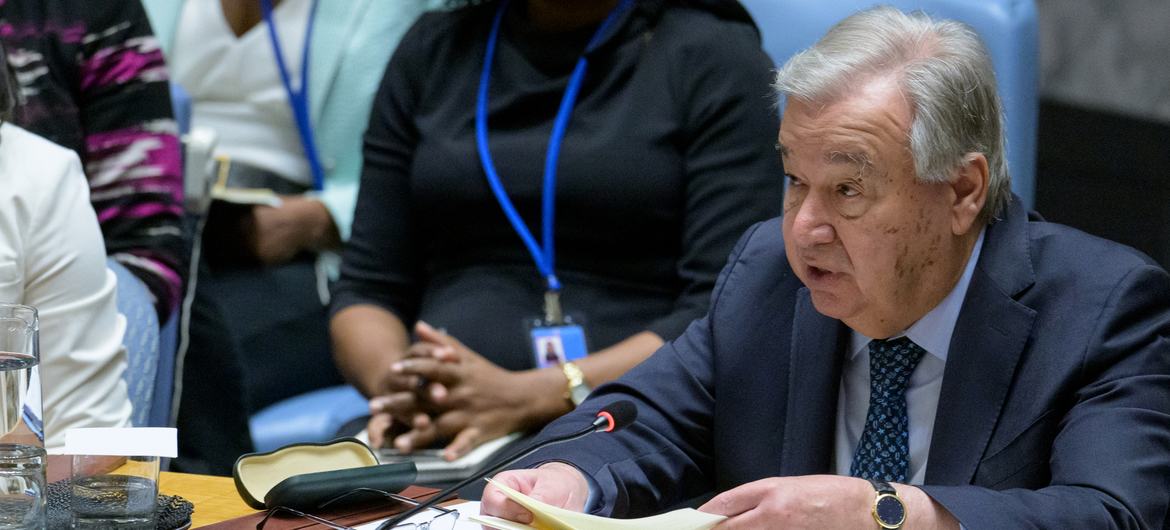
Secretary-General António Guterres addresses the Security Council high-level open debate.

P5 must overcome divisions

Security Council members – “in particular its permanent members” – must overcome divisions, the Secretary-General said, reminding them that even during the Cold War, Council dialogue underpinned peacekeeping missions and humanitarian access, and helped prevent a third world war.

He urged members to keep channels open, build consensus and make the body “more representative” of today’s geopolitical realities with more inclusive, transparent and accountable working methods.

Mr. Guterres also urged deeper cooperation with regional and subregional organizations.

Mediation can work even amid war, he said, noting the third anniversary of the Black Sea Initiative and a related memorandum with Russia that enabled grain movements during the conflict in Ukraine.

Renew commitment to multilateralism

States must honour their obligations under the Charter; international human rights, refugee and humanitarian law, and the principles of sovereignty, territorial integrity and political independence, Mr. Guterres said.

As we mark the 80th anniversary of our Organization and the Charter that gave it life and shape, we need to renew our commitment to the multilateral spirit of peace through diplomacy,” he said.

I look forward to working with you to achieve the international peace and security the people of the world need and deserve.

Security Council open debate

A signature event of the Pakistani presidency, Tuesday’s open debate was chaired by Deputy Prime Minister and Foreign Minister Mohammad Ishaq Dar.

The session aimed to assess the effectiveness of existing mechanisms for pacific dispute settlement, examine best practices and explore new strategies for tackling protracted conflicts.

It also sought to enhance cooperation with regional organizations, boost capacity-building and resource mobilisation, and align future efforts with the conflict-prevention vision outlined in the Pact for the Future.

Source link

World News in Brief: Houthi-Israel tensions, Sudan cholera cases rise, deadly attacks in Ukraine

These strikes occurred while the UN Mission to support the Hudaydah Agreement – established in 2018 to support the ceasefire between the Government of Yemen and the Houthis – was patrolling at locations to the northern parts of the Port. 

The Secretary-General also expressed deep concern about the continuing missile and drone strikes conducted by the Houthis against Israel. 

Risk of further escalation

Concerned about the risk of further escalation, the UN recalled that international law, together with international humanitarian law, must be respected by all parties at all times, including the obligations to respect and protect civilian infrastructure. 

“The Secretary-General remains profoundly concerned about the risk of further escalation in the region,” said Mr. Dujarric. 

As the UN Chief reiterated his call for “all involved to cease all military actions and exercise maximum restraint,” he also renewed his call for the immediate and unconditional release of all UN and other personnel arbitrarily detained by the Houthi authorities. 

Sudan: Crisis worsens as cholera and floods drive needs higher  

The humanitarian crisis in Sudan continues to deepen as cholera spreads, flooding displaces communities, and thousands of people return to areas with little to no support, according to the UN Office for the Coordination of Humanitarian Affairs (OCHA).

In the locality of Tawiola, in North Darfur State, over 1,300 confirmed cases of cholera in just one week were reported on Sunday by an association of Sudanese doctors. 

While local and international partners have set up cholera treatment centres, the current capacity is far from sufficient to cope with the rising caseload.  

As Tawila hosts several hundred thousand displaced people, partners on the ground have been struggling to keep pace with the growing needs, notably as such needs are set to increase as the upcoming rainy season sets in. 

Vulnerable returnees 

Across Sudan, people returning to their communities face serious challenges, including the lack of essential services and the threat posed by explosive remnants of war. 

In White Nile State, some residents have begun returning after being displaced for a year. Yet, an assessment by OCHA and its partners last week found that health, water, sanitation and hygiene support is urgently needed, even more so ahead of the rainy season.

Similarly, in eastern Sudan, OCHA warns that many families returning to Kassala State are struggling to cope with the impact of heavy rains and flooding, as heavy rains destroyed more than 280 homes in the village of Tirik earlier in July. 

Additionally, as insecurity continues to impede the work of humanitarians, challenges faced by returnee families often lead them to return to displacement sites, undermining the sustainability of return efforts. 

In this context, OCHA called for increased international support to meet soaring needs across Sudan. 

Ukraine: At least 20 civilians reportedly killed in recent attacks  

In Ukraine, attacks over the weekend and into Monday reportedly killed over 20 civilians and injured more than 100 others, including several children, according to authorities.

The strikes affected the capital Kyiv, as well as western and front-line regions, damaging homes, schools, and a health facility.

In Kyiv, a kindergarten, metro stations, shops and residential buildings were hit. 

The Ivano-Frakivsk region in western Ukraine which hosts many displaced people and had previously been less affected by hostilities, suffered the largest attack since the full-scale Russian invasion in February 2022.  

Frontline regions  

Meanwhile, in areas near the frontlines in the Donetsk, Dnipro and Kherson regions, hostilities caused civilian casualties and further damage to schools, a health facility, and apartment buildings. Odesa, Kharkiv, Sumy and other regions also reported that homes and shops were destroyed.  

With support from UN agencies, and coordinating with local authorities and first respondents, humanitarian organizations on the ground continue to provide shelter materials, non-food items, legal aid, psychosocial support and assistance for children across the country.  

Source link

As war rages on in Ukraine, organised crime is taking new forms

Since February 2022, both legal and illegal economies in Ukraine have been severely disrupted by the war. 

The report examines the evolution of organised crime structures in the country and focuses on six distinct areas: drug trafficking and production, online scams and fraud, arms trafficking, economic crime, trafficking in persons, and the facilitation of illegal exit and draft evasion.

“The war has not only inflicted untold suffering on the Ukrainian people, but has also triggered a marked evolution in organised crime – which can have profound implications for the country’s journey towards recovery and reconstruction,” said Angela Me, Chief of Research and Analysis at UNODC.

Drug trafficking

While the trafficking of cocaine and heroin through Ukraine has decreased drastically since 2022, the production and trafficking of synthetic drugs such as cathinones and methadone have increased.

The expansion of cathinone trafficking in recent years has been facilitated by the darknet, notably through market platforms such as Hydra, which was dismantled in April 2022.

Regarding methadone, the report noted that most of the Ukrainian production is trafficked within the country and not abroad, as domestic demand for the drug is on the rise.

Arms trafficking

The war has also increased the availability of weapons in the country, notably due to a massive influx of arms from the battlefield.

This surplus is resulting in a rise in arms seizures and violence among civilians, marked notably by an increase in domestic and intimate partner violence.

Although there is no evidence to suggest large-scale arms trafficking outside Ukraine, UNODC highlighted the importance of monitoring the situation in light of the sheer number of weapons available and the historic regional presence of criminal actors specialising in arms trafficking.

While there is, as of now, no evidence of drones being used in a non-military context, civilian drones and 3D-printed components for frontline attacks could fuel new illicit markets, the report found.

Trafficking in persons

As roughly 14 million people have been displaced by the war, some criminal groups have exploited these populations by luring them into shelters or accommodations disguised as humanitarian assistance providers, where they are subjected to forced labour.

While intensified patrolling of the borders, paired with the near-complete closure of the eastern and north-eastern borders, has limited the smuggling of migrants through Ukraine, traffickers have instead turned to facilitating draft evasion by Ukrainian men.

“Curtailing organised crime is a key requirement for achieving sustainable peace, justice, national security and the protection of human rights,” said Matthias Schmale, UN Resident and Humanitarian Coordinator in Ukraine, as the global body stands ready to support the country in this critical work. 

Source link

Ukraine: UN and partners launch Winter Response Plan amid escalating hostilities

Amidst escalating hostilities and continued strikes on critical infrastructure, Ukraine is once again bracing for another harsh winter.  

As the cold season brings heightened risks, especially for people near the frontline, displaced persons living in collective sites, and other vulnerable populations, the Winter Response Plan aims to deliver essential multisectoral humanitarian assistance to over 1.7 million people from October through March.  

Serving as a tool for advocacy, resource mobilisation and coordination with Government authorities, the plan caters to the most vulnerable groups, including older people, persons with disabilities, and children.  

Life-saving assistance

“As temperatures drop, millions across Ukraine will struggle to keep warm -especially in communities near the front line and among vulnerable displaced people,” said Mathias Schmale, the UN Humanitarian Coordinator for Ukraine.  

Humanitarian organizations will help insulate and repair damaged homes, provide heaters, fuel, blankets, and warm clothing, prepare shelters for extreme cold, deliver cash for heating and utilities, and coordinate services in high-risk areas.  

Additional strain

“Every winter puts additional strain on people already worn down by years of war,” Mr. Schmale said.  

Areas most affected by cold in the winter are predominantly concentrated in northern and eastern Ukraine along the frontline.  

People in these areas are exposed to harsh winter conditions, compounded by heightened vulnerability, and severely damaged infrastructure resulting from ongoing conflict and persistent airstrikes.

Displaced people residing in collective sites are also among the most vulnerable during winter, as recent monitoring of such sites indicates that nearly 60 per cent of these sites continue to face winter-related gaps.  

Source link

Ukraine: Civilians under fire in record numbers as attacks surge

According to the UN human rights office, OHCHR, at least 139 civilians have been killed and 791 injured so far in July alone.

“The devastating physical and psychological impact on civilians of repeated attacks in this and other conflicts cannot be captured by numbers alone,” said OHCHR spokesperson Liz Throssell on Tuesday.

Escalating attacks

On the night of 12 July, Russian forces reportedly launched nearly 600 Shahed-type unmanned attack and decoy drones, along with 26 missiles, killing two civilians and injuring 41.

Damage was reported across multiple regions, including Chernivtsi, Lviv, Cherkasy, Volyn and Kirovohrad – all far from active combat zones. Earlier that same week, Russian forces reportedly launched a record-breaking 728 long-range drones in a single 24-hour period.

June marked the deadliest month for civilians in over three years.

“People are having to spend hours sheltering (…) in basements, corridors and available refuges such as metro stations,” said Ms. Throssell. “In some cases, they’re unable to get to shelter at all.”

Health under pressure

The UN World Health Organization (WHO) meanwhile has verified 2,504 attacks on health facilities and personnel in Ukraine since the start of the full-scale invasion by the Russian Federation on 24 February 2022.

These strikes have hit hospitals, ambulances and first responders, including in so-called “double tap” attacks where secondary strikes follow the initial impact.

“This means more than two attacks every day…Healthcare is not a safe place for patients and healthcare workers,” said Dr. Jarno Habicht, WHO Representative in Ukraine.

Access to healthcare remains especially limited in frontline areas, where personnel and supplies are scarce.

Only 69 per cent of residents in those areas have seen a primary care doctor, compared to 74 per cent nationally. WHO mobile teams operating in 82 locations have conducted more than 7,500 consultations in 2025 so far.

The psychological toll is also wearing people down. A recent assessment found that seven out of 10 people reported anxiety, depression or severe stress over the last 12 months, while one in two said they had experienced significant stress in just the past two months.

To address this, WHO and national partners have trained more than 125,000 health workers and expanded mental health services through more than 220 community resilience centres.

Despite continued deliveries of trauma kits and medical supplies by UN and humanitarian partners, the response remains critically underfunded. As of mid-July, only 35.5 per cent of the required $129 million for 2025 has been secured, leaving more than two million people without adequate medical support.

Call for accountability

In Geneva, Ms. Throssell highlighted the UN human rights chief’s calls for an immediate end to hostilities and for efforts toward a just and lasting peace.

“The Russian Federation’s full-scale armed attack on Ukraine must urgently be halted and work on a lasting peace in line with international law must intensify,” Volker Türk said in a statement.

The High Commissioner emphasized that any sustainable solution must include accountability for serious human rights violations, the return of deported children, protection for civilians in occupied areas, humane treatment of prisoners of war, and restoration of humanitarian corridors.

Source link

UN warns of record civilian casualties in Ukraine

Russian forces launched an attack overnight focused on Kyiv, deploying 397 Shahed unmanned attack and decoy drones, along with 18 high-powered missiles, killing two and injuring at least 16, according to the UN Human Rights Monitoring Mission in Ukraine (HRMMU).

UN Spokesperson Stéphane Dujarric noted during his daily briefing in New York that four Kyiv districts were hit, damaging residential buildings, a clinic and a TV station, while an outpatient clinic was destroyed during the bombardment.

Mr. Dujarric also relayed reports from local authorities of recent attacks in other regions which left more than nine dead and at least ten civilians injured.

Grim June record

These attacks come after June saw the highest monthly civilian casualty count in Ukraine since the Russian invastion began in February 2022, with 232 people killed and 1,343 injured.

This data reflects a worsening trend: 6,754 civilians were killed or injured in the first half of 2025 – a sharp 54 per cent rise compared to the same period in 2024, when 4,381 civilian casualties were documented.

This breaks down to a 17 per cent increase in civilian deaths and a 64 per cent increase in injuries.

Russia’s increased use of long-range missiles and drones in urban areas – and their enhanced destructive power – were key drivers behind the spike in casualties.

The growing number of attacks also played a crucial role, as Russia launched ten times more missile and unmanned drone strikes in June 2025 than in June 2024.

Civilians across Ukraine are facing levels of suffering we have not seen in over three years,” said Danielle Bell, Head of HRMMU. “The surge in long-range missile and drone strikes across the country has brought even more death and destruction to civilians far from the frontline.”

Child suffering intensifies

Also on Thursday, the UN Children’s Fund (UNICEF) reported that an estimated 70 per cent of children in Ukraine (3.5 million) are experiencing “material deprivation” – up from 18 per cent in 2021.

Material deprivation refers to a lack of essential goods and services, including nutritious food, appropriate clothing, heating at home and access to education.

According to UNICEF’s report, one in three children in Ukraine lives in a home without a functioning water supply or sewage system, and nearly half lack access to a space to play.

This deprivation is driven by continued attacks on infrastructure – including water, sanitation, and energy systems – as well as on homes, schools, and healthcare facilities, along with rising poverty across the country.

Looking towards recovery

These warnings come as the fourth Ukraine Recovery Conference opened in Rome on Thursday. It aims to build global awareness and maintain momentum for international support and investment in Ukraine’s recovery, rebuilding, reform, and modernisation.

The Director General of the UN migration agency (IOM), Amy Pope, is among those attending. The agency plays a major role in Ukraine, where nearly four million people remain internally displaced, and another five million refugees reside across Europe.

“Displacement on this scale imposes numerous challenges for Ukraine and its people,” she said.

“Recovery must begin with a focus on the people in need – connecting them to services and restoring their livelihoods, so it becomes more than just returning home, but about regaining their place in society.”

Source link

Ukraine: UN refugee agency helps repair homes amid ongoing conflict

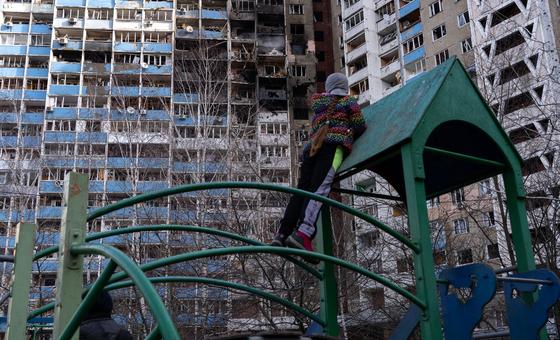
In the fourth year of Russia’s full-scale invasion of Ukraine, housing remains one of the country’s most urgent humanitarian and recovery challenges. The destruction has been widespread and ongoing.

According to the latest Rapid Damage and Needs Assessment, 13 per cent of Ukraine’s housing stock has been damaged since February 2022, impacting an estimated 2.5 million families.

More than buildings 

In coordination with Ukrainian authorities and partners, UNHCR has invested over $114 million in durable housing solutions since July 2022, supporting both durable home repairs and emergency shelter assistance.

“By helping repair houses and apartments, we are enabling people to stay in or return to their homes – places that hold profound meaning, often passed down through generations,” said Karolina Lindholm Billing, UNHCR’s representative in Ukraine.  

“These are not just buildings. These are treasured spaces where couples raised their children, families celebrated milestones, cared for older relatives and built their lives together,” she said.

UNHCR’s support includes a range of solutions: contracting local builders, providing construction materials or offering cash assistance to homeowners. 

Repairs may include roofs, windows, insulation and in some cases, major reconstruction. The agency also helps restore common areas in apartment buildings.

Emergency shelter and long-term needs

UNHCR also provides emergency shelter kits – tarpaulin, wooden boards, nails and other materials – to help protect homes from further weather damage.  

Since 2022, more than 470,000 people have received such kits.

With millions still internally displaced – many from areas under temporary occupation and with little prospect of return – UNHCR supports broader shelter options, including restoring social housing, repairing rural homes and refurbishing collective centres for the most vulnerable. 

Source link

UN chief condemns Russian strikes on Ukraine, warns of nuclear safety risk

In a statement issued by his spokesperson, António Guterres expressed alarm over the dangerous escalation and the rising toll on civilians.

He reiterated that attacks against civilians and critical infrastructure are prohibited under international law and called for an immediate and unconditional ceasefire.

“These strikes disrupted the power supply to the Zaporizhzhia Nuclear Power Plant, once again underlining the ongoing risks to nuclear safety,” UN Spokesperson Stéphane Dujarric said.

“The Secretary-General reiterates his call for a full, immediate and unconditional ceasefire in Ukraine as a first step towards a just, comprehensive and sustainable peace, in line with the UN Charter, international law and relevant UN resolutions.”

Fragile situation

The airstrikes on Friday severed the nuclear plant’s last external power connection, forcing the ZNPP to rely on emergency diesel generators for more than three hours, according to the International Atomic Energy Agency (IAEA).

Power was eventually restored, but the incident marked the ninth time the plant has lost all off-site electricity since the full-scale invasion began in 2022.

Rafael Mariano Grossi, Director General of the nuclear watchdog, warned that the situation remains extremely fragile.

“What was once virtually unimaginable – that a major nuclear power plant would repeatedly lose all of its external power connections – has unfortunately become a common occurrence,” he said.

Nuclear safety deterioration

Located in southern Ukraine, the Zaporizhzhia plant is the largest nuclear power facility in Europe. Although its six reactors have been in cold shutdown since 2024, they still require electricity to cool reactor cores and spent fuel pools to prevent overheating and potential radioactive release.

During the blackout, 18 diesel generators were activated to maintain critical cooling functions. The plant has enough diesel on site for at least ten days, with contingency plans in place to secure further supplies if needed, IAEA reported.

The ZNPP has become dramatically more vulnerable since the war began. Prior to the conflict, it had access to ten external power lines; it now relies on just one.

IAEA teams remain based at the site and continue to monitor the situation closely.

Source link

UN Human Rights Council hears grim updates on Ukraine, Gaza and global racism

Escalating conflict in Ukraine

In an oral update, Ilze Brands Kehris, UN Assistant Secretary-General for Human Rights, reported a sharp escalation in hostilities in Ukraine.

Civilian casualties have surged, with April to June seeing nearly 50 per cent more deaths and injuries compared to the same period in 2024.

“More than 90 per cent of these casualties occurred in territory controlled by Ukraine,” she said, attributing the spike in part to intensified Russian drone and missile attacks.

Attacks using airburst warheads and repeated strikes on hospitals have instilled “terror and anxiety” among urban populations, she added. A June 16-17 nighttime attack in Kyiv killed more civilians than any other assault in the past year.

While ceasefire negotiations have produced some humanitarian gains – such as the exchange of prisoners of war and the return of deceased soldiers – Ms. Kehris underscored harrowing conditions in detention.

Over 117 former Ukrainian POWs interviewed by the UN rights office, OHCHR, reported torture, including sexual violence, in Russian captivity. Though less widespread, similar abuses have also been documented in unofficial Ukrainian detention facilities, prompting calls for transparent investigations.

The report also noted ongoing human rights violations in territories occupied by Russia, including restrictions on civic space and the exercise of freedom of expression.

“Peace is more imperative than ever,” Ms. Kehris said, reiterating calls for an immediate cessation of hostilities in line with international law.

Structural racism and intersectionality

Ashwini K.P., Special Rapporteur on contemporary forms of racism, delivered a thematic report focused on intersectionality as a tool for racial justice.

Drawing from experiences of Black feminists and expanded by studies focusing on Dalit, Indigenous, Muslim and Roma community members, the concept of intersectionality was presented as essential to dismantling systemic discrimination.

“Women of African descent, caste-oppressed communities, Roma, Arab and Muslim women, and other marginalized groups are disproportionately impacted due to overlapping forms of discrimination,” Ms. Ashwini said.

Her report detailed how states can integrate an intersectional approach, emphasising data disaggregation, participatory policymaking, legal recognition of multiple discrimination and historical accountability.

Ms. Ashwini highlighted the importance of reparatory justice for communities affected by colonialism and slavery and called on states – particularly those historically complicit – to implement bold reforms.

People search through the rubble of a destroyed building in the central Gaza Strip.

Deepening crisis in Gaza

Francesca Albanese, Special Rapporteur on the situation of human rights in the Palestinian territories occupied since 1967, also reported to the Council, with grim update on Gaza.

She described conditions as “apocalyptic” and reported over 200,000 people killed or injured since 7 October 2023, when Hamas and other Palestinian armed groups attacked Israeli communities – killing at least 1,200 people and taking more than 250 as hostages.

“In Gaza, Palestinians continue to endure suffering beyond imagination,” Ms. Albanese said, describing the Israeli-backed Gaza Humanitarian Foundation as a “death trap – engineered to kill or force the flight of a starved, bombarded, emaciated population marked for elimination.”

She also accused Israel of using the conflict as an opportunity to test new weapons and technology against the population of the enclave “without restraint”.

“The forever-occupation has provided an optimal testing ground for arms manufacturers and big tech with little oversight and zero accountability – while investors, and private and public institutions have profited handsomely,” she said.

“We must reverse the tide,” Ms. Albanese urged, calling on Member States to impose a full arms embargo on Israel, suspend all trade agreements and investment relation and enforce accountability, “ensuring that corporate entities face legal consequences for their involvement in serious violations of international law.”

Independent rights experts

Special Rapporteurs are independent human rights experts appointed and mandated by the Human Rights Council – the UN’s highest intergovernmental forum on human rights.

Forming a part of its Special Procedures, Special Rapporteurs and other independent experts are mandated to monitor and assess the rights situation in certain thematic or country situations.

They work in their individual capacity, are not UN staff and do not receive a salary. 

Source link

Report reveals significant rise in civilian casualties and rights violations in Ukraine

It covers the period from 1 December 2024 to 31 May 2025, during which 986 civilians were killed and 4,807 injured – a 37 per cent increase compared to the same period the previous year.

The war in Ukraine – now in its fourth year – is becoming increasingly deadly for civilians,” said Danielle Bell, Head of the UN Human Rights Monitoring Mission in Ukraine (HRMMU).

“We continue to document patterns of violence that are inconsistent with obligations under international humanitarian law.”

Concern over use of short-range drones

Most casualties occurred in areas under Ukrainian Government control, primarily due to Russian attacks using long-range explosive weapons in populated areas and short-range drones near frontline locations.

Nearly half of all casualties were caused by missiles, loitering munitions and air-dropped bombs in densely populated areas. At least three attacks involved the use of missiles with fragmentation warheads which detonated above ground and scattered fragments across large open areas, killing and injuring many civilians at once.

The use of short-range drones is driving the rise in civilian casualties, the report said. OHCHR verified that 207 civilians were killed and 1,365 injured in these attacks.

Among the deadliest incidents was a Russian drone strike on a civilian bus transporting employees of a mining company to work in the Dnipropetrovsk region. Eight women and two men were killed, and 57 people were injured.

“The high number of civilian casualties from the use of short-range drones, which allow operators to see their targets in real time, raises grave concerns,” Ms. Bell said.

Our findings strongly suggest a failure to distinguish between civilian and military targets, and to take all feasible precautions to verify the military nature of those targets – or worse, an intentional decision not to.

During the same period, Russian forces struck at least five hospitals directly. Some of the attacks used multiple loitering munitions, suggesting potential deliberate targeting of the hospitals in violation of international humanitarian law.

Prisoners of war

Serious violations against prisoners of war (POWs) also remain a major concern, according to the report. OHCHR documented credible allegations that at least 35 Ukrainian POWs and one Russian POW were executed during the reporting period.

Staff interviewed 117 recently released Ukrainian POWs and two detained medical personnel, nearly all of whom described being tortured and ill-treated in captivity. This included severe beatings, electric shocks, sexual violence, dog attacks, and deliberate humiliation, often carried out by personnel wearing balaclavas to conceal their identities.

Ms. Bell said the continued brutalization of Ukrainian prisoners of war is not only inhumane, but a serious violation of international law.

These are not isolated incidents – they point to well-documented patterns of widespread and systematic torture that demand urgent and unambiguous accountability, and measures toward prevention,” she said.

Meanwhile, more than half of the Russian POWs and third-country nationals held by Ukraine also reported abuse – including torture, ill-treatment, threats, and internment in unofficial facilities – which mostly occurred in transit places before arrival at official places of internment.

Rights concerns in Russian-occupied areas

The report highlights ongoing human rights concerns with Ukrainian civilians unlawfully detained by Russian authorities, predominantly in occupied territory. People who have been released described torture, ill-treatment, and dire conditions of detention.

Ukrainians in occupied territory faced increased coercion to adopt Russian citizenship. OHCHR documented over 16,000 homes listed by Russian occupation authorities as potentially “abandoned” and therefore at risk of being confiscated.

Displaced residents faced severe legal and logistical obstacles, as well as security risks, to reclaim their property.

Ukrainian children recruited

Another issue covered in the report is the recruitment and use of Ukrainian children “for sabotage activities of increasing gravity against Ukrainian military objectives.”

The children reportedly were recruited by unidentified actors, likely affiliated with Russia, according to Ukrainian law enforcement authorities. Some of these youngsters were killed or injured, while others are facing prosecution after being enticed via social media to commit arson or plant explosives.

“Using children to commit acts of sabotage or violence exploits their vulnerability and endangers their lives,” Ms. Bell said. “It compounds their suffering by exposing them to violence, coercion, and harsh legal consequences.

OHCHR also voiced concern over the situation of older people, mainly women, as well as persons with disabilities, who remain at disproportionate risk, particularly in frontline areas.

Many are unable to evacuate due to poverty and limited housing options, while those who can often face long stays in shelters that lack appropriate facilities, or they are placed in institutional settings due to the absence of suitable alternatives.

Source link

Ukraine: Increasing hostilities displace civilians, limit humanitarian access

Donetsk, Kherson and Sumy regions sustained the most damage, with several civilians reportedly killed, and many displaced, UN Spokesperson Stéphane Dujarric told reporters at a regular news briefing on Thursday.

“Our humanitarian colleagues tell us that food insecurity remains a concern in front-line and border regions,” he added.

According to a recent assessment by the UN World Food Programme (WFP) and the Food and Agriculture Organization (FAO), the conflict has devastated livelihoods and quadrupled poverty levels, leaving the most vulnerable – particularly displaced people – at greatest risk.

Food insecurity on the front-line

WFP Executive Director Cindy McCain described the challenges.

“This frontline stretches 700 miles and countless towns and villages are still without the basics for survival,” she said. 

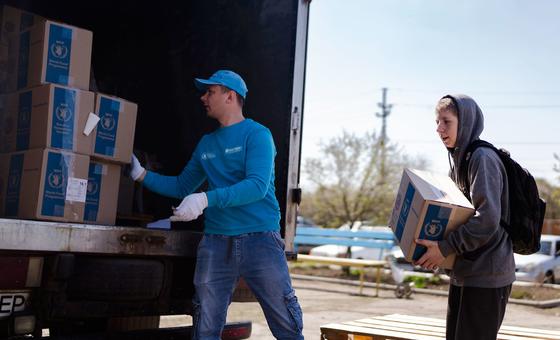
This has made the work of humanitarians even more vital, with over 400,000 people in Donetsk and Kherson receiving food and agricultural support in addition to cash-based assistance.

In total, over 130 humanitarian organizations have distributed food and livelihood assistance to over 1.8 million people across the country.  

Aid challenges

But with hostilities becoming increasingly deadly, humanitarian access remains limited. Since the start of the year, there has been a 50 per cent increase in civilian deaths when compared to the same period last year.  

Authorities continue to urge the 10,000 people who remain in the front-line region to evacuate for their own safety.  

“For those who stayed or those who came back, there are no jobs, no income and no opportunity,” Ms. McCain said. 

Source link

UN rights mission condemns civilian toll in deadly missile strikes on Ukraine

At least 24 people were reported killed and over 300 injured – including 32 children – when ballistic missiles struck Ukraine’s Dnipro and Odesa regions on Monday and Tuesday, the UN Human Rights Monitoring Mission in Ukraine (HRMMU) said on Wednesday.

The attacks destroyed homes, schools, hospitals, and other civilian infrastructure, and left hundreds wounded.

“The attacks struck during the day when civilians were at work, on trains, or at school,” said Danielle Bell, head of HRMMU.

“The timing alone made the high number of civilian casualties entirely foreseeable.”

On 23 June, two ballistic missiles launched by Russian forces hit Lyceum No. 1, a middle school in Bilhorod-Dnistrovskyi, Odesa region. Although the school year had ended, staff and students were present for administrative work. The strike killed three educators and injured 14 others, including two boys.

The school, which served over 700 students, sustained critical damage.

No military objective

HRMMU, which visited the attacks sites, reported no evidence of military presence at the school, and people confirmed that no military presence had been stationed there.

“The school in Bilhorod-Dnistrovskyi was not a military objective,” Ms. Bell said.

“Yet it was hit by two ballistic missiles, killing educators and injuring children.”

The following day, 24 June, missiles struck an industrial area of Dnipro city at around 11 AM local time. The blast shattered windows in nearby schools, hospitals and residential buildings.

HRMMU confirmed that two dormitories were hit, injuring numerous residents. A nearby passenger train was also impacted – windows blown out by the shockwave – injuring more than 20 travellers, according to a UN monitor onboard.

A troubling trend

These strikes followed a series of other attacks in June that have resulted in significant civilian harm, including in Kyiv city on 17 and 23 June, according to the human rights mission.

Civilian casualties in the first five months of 2025 were nearly 50 percent higher than during the same period last year, with increases typically seen during the summer months.

“Ballistic missiles, when used in densely populated areas, cause predictable and widespread harm to civilians, as demonstrated by these recent attacks,” Ms. Bell said.

“The rising civilian casualties reflect the severity of that risk.”

Source link