Envoys Of Four Nations Present Credentials To President Of India [Photos]

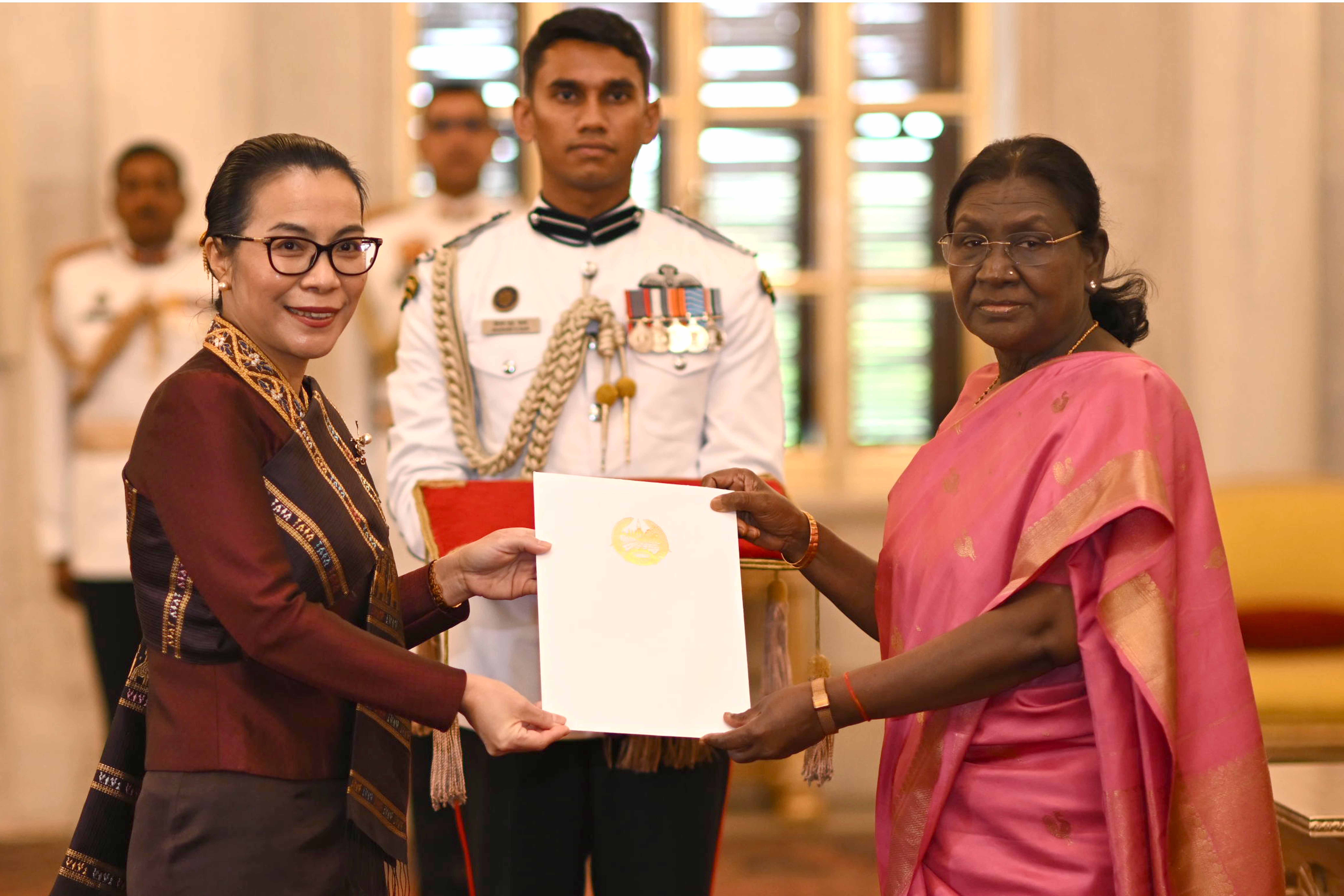
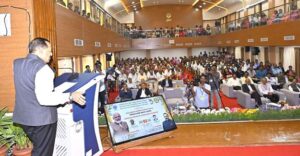
The President of India, Smt Droupadi Murmu accepted credentials from the Envoys of Lao PDR, Congo, Namibia and Guinea Bissau at a ceremony held at Rashtrapati Bhavan today (April 23, 2026).

Those who presented their credentials were:

1.   H.E. Mrs Vithaya Xayavong, Ambassador of the Lao People’s Democratic Republic

2.   H.E. Mrs Emilie Ayaza Mushobekwa, Ambassador of the Democratic Republic of the Congo

3.   H.E. Wing Commander Alex Lunyazo Tukuhupwele (Retd.), High Commissioner of the Republic of Namibia4.   H.E. Mr Antonio Serifo Embalo, Ambassador of the Republic of Guinea-Bissau


Also Read:

President Murmu Highlights Welfare, Women, Tribal Schemes In Republic Day Address

President Murmu presents National Service Scheme Awards for the year 2020-21

General Elections And Bye-Elections 2026: Seizures Cross ₹1,000 Crore Mark In Tamil Nadu And West Bengal

  1. Election Commission of India (ECI) announced the schedule for the General Election to Legislative Assemblies of Assam, Kerala, Puducherry, Tamil Nadu and West Bengal and bye-elections on March 15,2026. The Commission has directed the State/UT governments to ensure strict compliance with the Model Code of Conduct (MCC).


  1. It may be recalled that the Commission has held multiple review meetings with the Chief Secretaries, CEOs, DGPs, and senior officers from the poll-going states/UTs and their bordering states/UTs along with the Heads of Enforcement Agencies and directed them to ensure violence-free, intimidation-free and inducement free elections.


  1. To ensure this, over 5,011 (2,728 in WB and 2,283 in TN) Flying Squad Teams (FSTs) have been deployed across the two States to ensure that the complaints are attended to within 100 minutes. Besides this, over 5,363 (3,142 in WB and 2,221 in TN) Static Surveillance Teams (SSTs) have also been deployed for setting up surprise Nakas at different locations.


  1. Since the activation of the Election Seizure Management System (ESMS) on February 26, 2026, the data up to April 22, 2026 is presented below.


S. No State Cash (Rs.

Crore)

Liquor Qty (Litres) Liquor Value (Rs.

Crore)

Drugs Value (Rs.

Crore)

Preciou s Metal (Rs.

Crore)

Freebies

/Other (Rs.

Crore)

Total (Rs.

Crore)

1. West Bengal 27.48 39,31,463 102.45 108.11 55.88 178.83 472.89
2. Tamil Nadu 100.19 1,17,713 3.85 76.72 159.31 259.14 599.24
  TOTAL 127.67 40,49,176 106.3 184.83 215.19 437.97 1072.13
  1. The Commission has also stressed that the enforcement authorities should ensure that ordinary citizens are not inconvenienced or harassed during the checking and inspection for the enforcement of these directives. District Grievance Committees have also been setup to address any grievances in this regard.


  1. Citizens/political parties can report MCC violations using the C-Vigil Module on ECINET.

Also Read:

ECI Rolls Out Phase-II Of International Election Visitors’ Initiative 2026

Election Commission Schedules 2026 Assembly Polls And By-Elections; Voter Slip Distribution Begins


General Elections to Legislative Assemblies and bye-elections 2026; Implementation of Dry-Day

Implementation of Dry-Day

  1. Election Commission of India (ECI) announced the schedule for the General Election to Legislative Assemblies of Assam, Kerala, Puducherry, Tamil Nadu and West Bengal and bye-elections in 6 states on March 15, 2026.
  2. Polling in the State of Tamil Nadu and West Bengal (Phase-I) is scheduled for April 23, 2026 (Thursday), and for West Bengal (Phase-II) it will be conducted on April 29, 2026 (Wednesday), with the counting of votes for all polling States and Union Territories to take place on May 4, 2026 (Monday).
  3. Section 135C of the Representation of the People Act, 1951 provides that no spirituous, fermented or intoxicating liquor or other substances of like nature shall be sold, given or distributed at a hotel, eating house, tavern, shop or any other place, public or private, within a polling area during the period of forty-eight hours ending with the hour fixed for the conclusion of poll for any election in the polling area.
  4. In view of the statutory provision as above, ‘Dry day’ shall be declared and notified under the relevant State/Union Territory laws as is appropriate during 48 hours, ending with the hours fixed for conclusion of poll with respect to polling day for an election in that polling area where General Election to Legislative Assembly is being held. This will include the date of re-poll, if any.
  5. The Commission also directs that the date on which Counting of votes is to be taken up i.e. May 4, 2026 (Monday) shall also be declared ‘Dry Day’ under the relevant laws in poll going State/UT.
  6. No liquor shops, hotels, restaurants, clubs and other establishments selling or serving liquor shall be permitted to sell/ serve liquor to anyone whosoever, on the aforesaid days.
  7. Non-proprietary clubs, star hotels, restaurants etc. and hotels functioning under different categories of licenses for possession and supply of liquor, shall not be permitted to serve liquor on these days.
  8. The storage of liquor by individuals shall be curtailed during the above period and the restrictions provided in the excise law on the storage of liquor in unlicensed premises shall be vigorously enforced.

ddnews.gov.in

Also Read:

ECI Mandates Enhanced Voter Facilities Ahead of Assembly Polls in Five States

ECI mandates all political Parties to get pre-certification of all political advertisements on electronic media

India–Austria Relations Get Boost: Major Agreements And Outcomes From Austrian Chancellor Stocker’s India Visit

Christian Stocker, Federal Chancellor of Austria, is on a four-day official visit to India from April 14–17, 2026—his first trip to the country and also his first visit outside Europe since taking office.

During the visit, Stocker held bilateral talks with Prime Minister Narendra Modi in New Delhi, focusing on expanding cooperation in trade, investment, green technology, and strategic sectors.

The two sides signed multiple agreements, including cooperation in food safety, counter-terrorism, and broader economic engagement, signalling a renewed push in India–Austria ties.

The visit is being seen as a milestone, marking the first visit by an Austrian Chancellor to India in over four decades and reflecting growing momentum in bilateral relations.

Sl. No MoU / Agreement/LoI Description
1 Agreement on Audiovisual Co production between India and Austria The agreement will provide a framework for enhanced cooperation between the film industries of the two countries and facilitate joint film production, creative exchanges and greater cultural engagement.
2 Joint Announcement on setting up a Fast Track Mechanism for Indian and Austrian companies The Fast Track mechanism will identify and solve problems faced by Indian and Austrian companies and investors in each other’s economies. The FAST- TRACK mechanism will also serve as a platform for discussing general suggestions from the point of view of investors regarding ease of doing business.
3 Letter of Intent on Cooperation in Military Matters The LOI will provide an institutional framework for promoting cooperation in military matters, defence industrial and technology partnership, building on the momentum of the India-EU Defence and Security Partnership signed on 27 January 2026, as well as facilitate defence policy dialogue, training and capacity building.
4 Letter of Intent on Joint Working Group on Counter Terrorism The LoI will advance counter terrorism cooperation between India and Austria including the goal of both sides to work together to establish a Joint Working Group on Counter Terrorism for exploring areas of strategic cooperation on issues relating to the fight against terrorism.
5 MoU on Food Safety between AGES, Austria and FSSAI, India The MoU will promote cooperation in food safety standards, scientific exchange, capacity building and sharing of best practices in food regulation and risk assessment thereby promoting trade in agricultural and food products, while ensuring highest priority for safety standards.
6 Joint Letter of Intent regarding dual vocational training, skills development and the recognition of vocational qualifications Joint Letter of Intent will help to expand exchanges and knowledge sharing in the fields of dual vocational training (apprenticeship) and skills development as well as the promotion of recognition of Indian vocational qualifications according to Austrian Standards.

Announcements

Sl. No Title
1 Renewal of the MoU on technical cooperation in the road infrastructure sector.

(The MoU will help to strengthen technical cooperation in Intelligent Transport Systems (ITS), road safety, electronic toll collection and traffic management.)

2 Increased cooperation of startup ecosystems under India-Austria Startup Bridge.

(continued collaboration between the startups, unicorns, innovation ecosystems and venture capital networks of the two countries)

3 Launch of Institutional Cybersecurity Dialogue.
4 Partnership between India’s Centre for UN Peacekeeping and Austrian Armed Forces International Centre (AUTINT).
5 Agreement to jointly organise a bilateral space industry seminar in Vienna in Autumn 2026; included in the Joint Statement.
6 Operationalization of Working Holiday Programme.
7 High-technology cooperation as a central pillar of the Enhanced India–Austria partnership.

(Identification of several collaborative R&D projects including in the areas of material science and technology, quantum technology, wastewater treatment, machine learning, lasers, etc under the joint Committee of Science and Technology)

8 Launch a structured bilateral Dialogue on Cooperation in Education.

(Aimed at enhancing skills development, promote curricula development, facilitate the mutual recognition of qualifications, and support institutional collaboration in higher education and the development of vocational education and training systems.)

9 Focus India initiative of Austria’s leading technical Universities to systematically deepen educational cooperation and research cooperation with India.

(Launch by the three public technical universities in Austria (Technische Universität Wien, Technische Universität Graz und Montanuniversität Leoben) of a dedicated portal to facilitate admissions for Indian students to pursue engineering and technical masters programmes in Austria)

Election Commission Schedules 2026 Assembly Polls And By-Elections; Voter Slip Distribution Begins

Distribution of Voter Information Slips begins

  1. Election Commission of India (ECI) has commenced the distribution of Voter Information Slips (VIS) for the general elections to the legislative assemblies of Tamil Nadu and West Bengal (Phase-I) which go to polls on 23rd April, 2026 (Thursday).
  2. VIS contains voter’s details, Polling Station location, date and time of poll and a snapshot of the polling station map along with a list of Do’s and Don’ts to guide the voters on poll day. A QR code also helps the voters in faster searching/matching of elector details. VIS also helps in reducing crowding at polling stations and helps in faster polling.
  3. It may be recalled that the Commission had, in one of its initiatives, issued instructions to make VIS more readable and accessible for the convenience of voters. Accordingly, the part number and the serial number of the voter has been made clearly legible on the VIS for ease of identification and use.
  4. VIS are being distributed by the BLOs concerned personally to the voters by visiting door to door. The process is to be completed at least 5 days before the day of poll to all enrolled electors.
  5. To make the VIS accessible and voter-friendly, the Commission has also issued instructions that they should only be in the languages in which Electoral Roll is published for the assembly constituency.
  6. To ensure wholesome constructive participation and active engagement of Persons with Disabilities (PwDs) in the election process, it has been directed to issue Accessible Voter Information Slips (AVIS) with Braille Features to Persons with Visual Impairment or Blind, over and above the regular VIS.
  7. BLA/Candidate or their agents may accompany the BLOs during distribution of VIS.
  8. Any unauthorized distribution/ possession of VIS (election material) shall be considered as violation of the relevant provisions of the RP Act, 1951 and the BNS and is punishable with imprisonment or fine or both.
  9. Voter Information Slip shall not be accepted as a stand-alone identification document by a voter for the purpose of casting one’s vote in the poll. Electors can use any one of the 12 authorised ID proofs apart from the EPIC to cast their votes.


Also Read:

West Bengal Elections 2026: 2,926 Candidates Enter Fray Across Polls

ECI Mandates Enhanced Voter Facilities Ahead of Assembly Polls in Five States

West Bengal Elections 2026: 2,926 Candidates Enter Fray Across Polls

The Election Commission of India (ECI) announced the schedule for the General Election to Legislative Assemblies of Assam, Kerala, Puducherry, Tamil Nadu and West Bengal and bye-elections in 6 states on March 15,2026.

  1. The last date of filing of nominations for the State of West Bengal (Phase-II), which goes to polls on April 29, 2026 was April 9, 2026, while the date of scrutiny of nominations for West Bengal (Phase-II), was April 10, 2026 and the last date of withdrawal of nominations was April 13, 2026 by 3:00 PM.
  2. After the last date of withdrawal of nominations, details of the total number of candidates for West Bengal are as under:
Sl.

No.

Name of State/UT No. of ACs Total No. of candidates

after Withdrawals

1. West Bengal (Phase-I) 152 1,478
2. West Bengal (Phase-II) 142 1,448


  1. The Returning Officers (ROs) shall publish the list of contesting candidates in the Official Gazette as per the Conduct of Election Rules, 1961.
  2. ROs shall place all the election papers and proceedings relating to nominations, scrutiny and withdrawal of candidatures in each constituency together in his/her custody in a sealed packet/envelope with the seal.
  3. Citizens can view the details of their candidates including their educational qualifications, criminal antecedents, assets and liabilities and download their affidavits from the “Know Your Candidate” tab on the ECINet App.
  4. Moreover, in line with ECI’s initiative, the EVM Ballot papers will bear the coloured photographs of the candidates and their details including serial number, name and symbol in large font for the ease and convenience of the voters.

Also Read:

ECI Mandates Enhanced Voter Facilities Ahead of Assembly Polls in Five States

ECI mandates all political Parties to get pre-certification of all political advertisements on electronic media


Government Holds Inter-Ministerial Briefing On West Asia Developments

As part of its ongoing efforts to keep the media apprised of developments in West Asia, the Government of India convened a briefing at the National Media Centre today. Representatives from the Ministries of Petroleum and Natural Gas, Ports, Shipping and Waterways, and External Affairs, shared updates on fuel availability, maritime operations, and assistance to Indian nationals in the region, along with measures to ensure stability across sectors. The Ministry of Consumer Affairs, Food and Public Distribution also provided updates on food security preparedness and prices of essential commodities.

Food security and prices update

The Ministry of Consumer Affairs, Food and Public Distribution shared an update on the availability of essential food items and the prevailing price situation. It also highlighted measures being taken to ensure adequate supply and maintain market stability. The Ministry said:

Food Security Preparedness

· The Government is closely monitoring the food security situation in view of the ongoing developments in West Asia.

· Adequate buffer stocks of rice and wheat are available to ensure sufficient supplies for the Public Distribution System (PDS) as well as to meet any emergency requirements.

· The National Food Security Act continues to ensure access to foodgrains for vulnerable populations.

Market Intervention – Open Market Sale Scheme (Domestic)

· The Government continues to monitor foodgrain prices and undertakes market interventions through the Open Market Sale Scheme (Domestic) (OMSS – D) whenever required.

· Under OMSS (D), FCI releases surplus wheat and rice in the open market to augment supply, stabilise prices and contain inflation.

· Adequate stocks are available with FCI to undertake such interventions if required.

· The scheme also enables sale of rice to State Governments at subsidised fixed prices to meet additional requirements.

Procurement – RMS 2026–27

· Procurement of wheat under MSP operations for Rabi Marketing Season (RMS) 2026–27 has commenced, primarily through State Government agencies.

· The Department is regularly reviewing preparedness in coordination with States.

· Adequate packaging materials are being ensured for procurement operations.

Foodgrain Packaging

· Proactive steps have been taken to ensure availability of packaging materials during RMS 2026–27.

· In coordination with the Ministry of Petroleum and Natural Gas and the Department of Chemicals and Petrochemicals, the Department is diversifying packaging sources and maintaining contingency measures to address any potential shortfall.

Edible Oil Scenario

· Domestic availability of edible oils remains comfortable despite global uncertainties.

· Imports from key partner countries including Indonesia, Malaysia, Argentina and Brazil continue steadily.

· Improved mustard production has strengthened domestic supply.

· Overall edible oil supply remains stable and the Government continues close monitoring with readiness to intervene if required.

Sugar Sector

· Adequate sugar buffer stocks are available and sugar production in 2025–26 is expected to remain sufficient.

· About 15.80 LMT of sugar has been permitted for export, of which 3.73 LMT has already been exported.

· Major export destinations include Sri Lanka, West Asia and East Africa.

· Retail sugar prices remain stable with inflation remaining around 3% over the past three years.

Prices of Essential Commodities

· The Department of Consumer Affairs monitors daily prices of 40 food commodities reported from 578 centres across the country.

· Price trends are being closely monitored in view of the ongoing developments in the Middle East.

· So far, no unusual volatility has been observed and prices remain stable for most commodities, indicating adequate availability.

· There is no evidence of generalized supply stress or inflationary transmission in essential food commodities.

Availability of Pulses

· Pulses production is estimated to be higher than the previous year at about 266 LMT compared to 257 LMT last year.

· Government stocks of pulses are around 28 LMT, while procurement of Tur and Rabi pulses under the Price Support Scheme is ongoing.

· So far, about 3.21 LMT of Tur and 5.71 LMT of Chana have been procured.

· The import policy for pulses in 2026–27 continues the existing framework of 2025-26 to ensure supply flexibility and stable availability.

· Import of Tur and Urad is allowed under the ‘Free’ category till 31 March 2027, while imports of Chana and Masoor attract 10% duty and Yellow Peas 30% duty.

Availability of Horticultural Crops (TOP)

· Production of major horticultural crops such as potato, tomato and onion are sufficient to meet domestic demand.

· Potato production is estimated at about 584 LMT (against 586 LMT last year), tomato at about 227 LMT, and onion at about 273 LMT.

· The Government of India has set a price stabilisation buffer target of 2 LMT for onion in 2026–27, with National Agricultural Cooperative Marketing Federation of India Ltd (NAFED) and National Cooperative Consumers’ Federation of India Limited (NCCF) initiating procurement preparations.

· Procurement of Rabi 2026 onion for buffer stocking is expected to support mandi prices and moderate volatility.

Monitoring and Enforcement

· The Department of Consumer Affairs has set up a Control Room to facilitate continuous interaction and information exchange with State Governments on prices and supply of food commodities.

· The Control Room also monitors enforcement of the Essential Commodities Act, 1955, including action against hoarding and black marketing of essential commodities.

· The Department is also keeping a close watch on the complaints being received on the National Consumer Helpline-1915, available in 17 languages across the country. The helpline is also available through multiple platforms, including WhatsApp and the INGRAM portal ,  enabling consumers to register grievances with ease.

Energy Supply and Fuel Availability

An update on the prevailing fuel supply situation was shared, highlighting the steps being taken to ensure uninterrupted availability of petroleum products and LPG in the context of the Strait of Hormuz closure. It was noted that:

Public Advisory and Citizen Awareness

· Citizens are advised to avoid panic purchase of petrol, diesel and LPG and rely only on official sources for information.

· LPG consumers are requested to use digital booking platforms and avoid visiting distributors.

· Citizens are encouraged to use alternate fuels such as PNG and electric or induction cooktops.

· All citizens are urged to conserve energy during the current situation.

Government Preparedness and Supply Management Measures

· Despite the ongoing geopolitical situation, the Government has prioritised domestic LPG and PNG supply, particularly for hospitals and educational institutions.

· The Government has already implemented several rationalisation measures on both the supply and demand side, including enhancing refinery production, increasing the booking interval from 21 to 25 days in urban areas and up to 45 days in rural areas and prioritising sectors for supply.

· Alternate fuels such as kerosene and coal have been made available to ease pressure on LPG demand.

· The Ministry of Coal has directed Coal India and Singareni Collieries to supply additional coal to States for distribution to small and medium consumers.

· States have been advised to facilitate new PNG connections for domestic and commercial consumers.

· A review meeting chaired by Secretary (MoPNG) with State officials highlighted measures to ensure adequate LPG supply and directed States to prioritise prioritize LPG distribution, especially for domestic and essential needs, while maintaining strict vigilance against hoarding, diversion, and misinformation. On reports concerning FTL LPG supplies to migrant workers, States clarified that there is no disruption in LPG supply affecting migrants and that supplies remain stable. Secretary informed that states may consider managing targeted distribution of 5 kg FTL LPG cylinders, based on local requirements along with OMCs.

Coordinated Efforts with States/UTs and Institutional Mechanisms

· State Governments are empowered under the Essential Commodities Act, 1955 and LPG Control Order, 2000 to monitor supply and act against hoarding and black marketing of petroleum products.

· All Chief Secretaries, ACS/Principal Secretary/Secretary Food & Civil supply of all the States/UTs are requested –

Ø To issue daily press briefings and issue regular public advisories.

Ø To actively monitor and counter fake news / misinformation on social media.

Ø To intensify daily enforcement drives by District admin and to continue raids and inspections in coordination with OMCs

Ø To issue Commercial LPG allocation orders within their States/UTs

Ø To issue SKO allocation orders for additional SKO allotted to the States/UTs.

Ø To promote PNG adoptions and alternate fuels.

· All States/UTs have established control rooms and district monitoring committees to curb hoarding and black marketing.

· The Government of India vide letter dated 27.03.2026 and 02.04.2026 have requested Chief Secretaries of all States/UTs to intensify proactive & regular public communication, conduct daily press briefs at appropriate senior level along with timely dissemination of accurate information through social and electronic media to effectively counter misinformation and to reassure citizens regarding adequate availability and smooth distribution of LPG.

· Currently, 23 States/UTs are issuing regular press briefings.

Enforcement and Monitoring Actions

· Enforcement actions continue across the country to curb hoarding and black marketing of LPG.

· More than 1 lakh raids have been conducted and over 52,000 cylinders seized.

· Over 850 FIRs have been registered and about 220 persons arrested.

· PSU Oil Marketing Companies have strengthened surprise inspections and issued over 1,500 show-cause notices, imposed penalties on 118 LPG distributorships and suspended 41 distributorships.

LPG Supply

Domestic LPG Supply Status:

· LPG supply continues to be affected by the prevailing geopolitical situation.

· No dry-outs have been reported at LPG distributorships.

· Online LPG bookings have increased to about 97% across the industry.

· Delivery Authentication Code (DAC) based deliveries have increased to around 90% to prevent diversion.

· Domestic LPG cylinder deliveries remain normal, with over 18 crore cylinders delivered to households since 1 March 2026.

Commercial LPG Supply and Allocation Measures:

  • To look into the issues of availability of petrochemicals like propylene, polypropylene, isopropyl alcohol, butadiene, butyl acrylate etc. for department of Pharmaceuticals, Animal Husbandry, Dept. of Chemicals and Petrochemicals, DPIIT etc, a Joint working group has been constituted which has recommended for diversion of certain volume of C3-C4 molecules by Refinery & Petrochemical complexes for these sectors. This group has also given recommendations for availability of feedstock for C2 based derivatives like LDPE, LLDPE, HDPE etc. and their supplies for the downstream units.
  • Total commercial LPG allocation has been increased to about 70% of pre-crisis levels, including 10% reform-linked allocation.

· Since 23 March 2026, about 6.75 lakh 5-kg Free Trade LPG cylinders have been sold.

· PSU OMCs have organised around 550 awareness camps for 5 Kg FTL Cylinders in Andhra Pradesh, Assam, Bihar, Chandigarh, Chhattisgarh, Delhi, Goa, Gujarat, Haryana, Himachal Pradesh, Jammu & Kashmir, Jharkhand, Karnataka, Keralam, Madhya Pradesh, Maharashtra, Odisha, Puducherry, Punjab, Rajasthan, Tamil Nadu, Telangana, Uttar Pradesh, Uttarakhand, West Bengal.

· More than 6,700 – 5Kg FTL cylinders were also sold in these camps.

· A three-member committee of Executive Directors from IOCL, HPCL and BPCL is coordinating with State authorities and industry bodies to plan commercial LPG distribution.

· About 79,909 MT of commercial LPG (equivalent to over 42 lakh 19-kg cylinders) has been sold since 14 March 2026.

Natural Gas Supply and PNG Expansion Initiatives

· Priority sectors continue to receive protected supplies, including 100% supply to domestic PNG and CNG transport.

· Gas supply to operating urea plants is currently around 70–75% of their six-month average consumption and is planned to increase to about 90% from 6 April 2026 (today).

· Gas supply to other industrial and commercial sectors, including City Gas Distribution (CGD) networks, will be increased by an additional 10% from 6 April 2026 (today).

· CGD entities have been advised to prioritise PNG connections for commercial establishments such as hotels, restaurants and canteens.

· CGD companies including IGL, MGL, GAIL Gas and BPCL are offering incentives for domestic and commercial PNG connections.

· States/UTs and Central Ministries have been requested to expedite approvals required for expansion of CGD networks.

· The Government of India vide letter dated 18.03.2026 has offered all States/UTs additional 10% allocation of commercial LPG to States provided they can help in long term transition from LPG to PNG.

· 17 States/UTs are already receiving additional commercial LPG allocation linked to PNG expansion reforms.

· PNGRB has directed CGD entities to connect institutions such as schools, hostels, community kitchens and anganwadi kitchens through PNG within five days where pipelines are available.

· The Ministry of Road Transport & Highways has adopted an Accelerated Approval Framework for CGD infrastructure for three months to process applications on priority.

· The Government of India vide Gazette dated 24.03.2026 has notified the Natural Gas and Petroleum Products Distribution (Through Laying, Building, Operation and Expansion of Pipelines and Other Facilities) Order, 2026 under the Essential Commodities Act, 1955.

· The Order provides a streamlined and time-bound framework for laying and expanding pipelines across the country, addressing delays in approvals and access to land, and enabling faster development of natural gas infrastructure, including in residential areas.

· It is expected to accelerate PNG network growth, enhance last-mile connectivity, and support the transition to cleaner fuels, thereby strengthening energy security and advancing India’s gas-based economy.

· The Ministry of Defence has issued a short-term policy modification till 30 June 2026 to expedite PNG infrastructure installation in defence residential areas.

· PNGRB has extended the National PNG Drive 2.0 till 30 June 2026 to sustain momentum in PNG expansion.

· Since March 2026, about 3.67 lakh PNG connections have been gasified and about 4 lakh additional customers have registered for new connections. 

Crude Position and Refinery Operations

· All refineries are operating at high capacity with adequate crude inventories, while sufficient stocks of petrol and diesel are being maintained.

· Domestic LPG production from refineries has been increased to support domestic consumption.

Retail Fuel Availability and pricing Measures

· Retail outlets across the country are operating normally.

· The Middle East crisis has led to an abnormal increase in crude prices; however, to protect consumers, the Government of India has reduced excise duty on petrol and diesel by ₹10 per litre.

· Export levy has been imposed at ₹21.5 per litre on diesel and ₹29.5 per litre on ATF to ensure adequate domestic availability.

· Retail prices of petrol and diesel remain unchanged with no increase at retail outlets.

· The Government has advised citizens not to believe rumours and requested State Governments to disseminate accurate information through press briefings.

Kerosene Availability and Distribution Measures

· An additional allocation of 48,000 KL of kerosene has been provided to States/UTs over and above regular allocation.

· A Gazette notification dated 29 March 2026 allows distribution of PDS Superior Kerosene Oil (SKO) in SKO-free States/UTs for cooking and lighting purposes through designated PSU OMC service stations.

· 18 States/UTs have issued SKO allocation orders, while Himachal Pradesh and Ladakh have indicated no requirement.

Maritime Safety and Shipping Operations

The current maritime situation in the Persian Gulf, along with measures being undertaken to safeguard Indian vessels and crew, was also briefed. It was stated that:

· The Ministry of Ports, Shipping and Waterways continues to closely monitor shipping movements, port operations and the safety of Indian seafarers, while ensuring continuity of maritime trade.

· All Indian seafarers in the region are safe and no incident involving Indian-flagged vessels has been reported in the past 24 hours.

· In the past two days, two Indian-flagged LPG vessels, Green Sanvi and Green Asha, safely crossed the Strait of Hormuz. Green Sanvi is carrying about 46,650 MT of LPG with 25 seafarers onboard, while Green Asha is carrying about 15,405 MT of LPG with 26 seafarers onboard.

· At present, 16 Indian-flagged vessels with 433 Indian seafarers remain in the western Persian Gulf region. The Directorate General of Shipping (DG Shipping) continues close monitoring in coordination with ship owners, RPSL agencies and Indian Missions.

· The DG Shipping Control Room remains operational 24×7 and has handled 5,113 calls and 10,647 emails since activation, including 25 calls and 100 emails in the past 24 hours.

· DG Shipping has facilitated the safe repatriation of over 1,599 Indian seafarers so far, including 120 in the last 24 hours from airports and various regional locations across the Gulf.

· Port operations across India remain normal with no congestion reported. State Maritime Boards of Gujarat, Maharashtra, Goa, Kerala, Andhra Pradesh and Puducherry have confirmed smooth functioning.

· The Ministry continues to coordinate with the Ministry of External Affairs, Indian Missions and maritime stakeholders to ensure welfare of Indian seafarers and uninterrupted maritime operations.

Safety of Indian Nationals in the Region

Recent developments in the region, including assistance through Indian Missions, were shared during the briefing. It was informed that:

· The External Affairs Minister held telephonic conversations with the Foreign Ministers of Qatar and the United Arab Emirates and discussed the evolving situation in West Asia.

· The External Affairs Minister also received a call from the Foreign Minister of Iran, during which both sides exchanged views on the ongoing conflict in the region.

· The Embassy of India in Tehran has so far facilitated the movement of 1,777 Indian nationals from Iran to Armenia and Azerbaijan for onward travel to India. This includes 895 Indian students and 345 Indian fishermen. The fishermen travelled from Armenia to Chennai on 4 April 2026. The Embassy also facilitated the transit of two foreign nationals—one from Bangladesh and one from Sri Lanka.

· Of the total evacuated, 1,545 crossed into Armenia and 234 into Azerbaijan. India has expressed appreciation to the authorities of Iran, Armenia and Azerbaijan for their support in facilitating safe transit of the evacuees.

· The Ministry of External Affairs continues to closely monitor the evolving situation in the Gulf and West Asia region, with the safety, security and welfare of the Indian community remaining the highest priority.

· A dedicated MEA Special Control Room remains operational to assist Indian nationals and their families, with close coordination ongoing with State Governments and Union Territories.

· Indian Missions and Posts across the region are functioning round the clock, maintaining 24×7 helplines, issuing updated advisories and staying in regular contact with Indian community associations, organisations and companies.

· Missions continue to assist Indian nationals, including visa facilitation, consular services, logistical support and facilitating transit through neighbouring countries where airspace restrictions apply. They remain in close contact with local governments.

· Welfare of Indian students in the Gulf countries remains a priority, with Missions coordinating with local authorities, Indian schools, educational boards and the National Testing Agency to ensure that academic schedules and examinations such as JEE and NEET are not adversely affected.

· Missions are also providing support to Indian seafarers in the region, including coordination with local authorities, consular assistance, facilitating communication with families and assisting requests for return to India.

· Since 28 February, around 7,30,000 passengers have travelled from the region to India.

· In the UAE, airlines continue to operate limited non-scheduled flights based on operational and safety considerations, with around 90 flights expected to operate today to India.

· Flights continue to operate from Saudi Arabia and Oman to various destinations in India.

· Qatar airspace remains partially open, with Qatar Airways expected to operate around 8–10 flights to India today.

· Kuwait airspace remains closed, with Jazeera Airways and Kuwait Airways operating non-scheduled flights from Dammam Airport in Saudi Arabia to India.

· Bahrain airspace also remains closed, with Gulf Air operating non-scheduled flights from Dammam Airport in Saudi Arabia to India.

· Due to flight restrictions and airspace closures, travel of Indian nationals continues to be facilitated through alternative transit routes.

Ø From Israel via Egypt and Jordan.

Ø From Iran via Armenia and Azerbaijan.

Ø From Iraq via Jordan and Saudi Arabia.

Ø From Kuwait and Bahrain via Saudi Arabia.


Also Read:

Waste enters, Work begins, Value Created: Navi Mumbai Turns Textile Waste Into Livelihood Opportunity for Local Women

UIDAI partners with MapmyIndia to show authorised Aadhaar Centres in Mappls App

From McDonald’s Menus To Rural Training: Inside India’s Millet Strategy

India on April 3 advanced its millet strategy with a new training facility at the Central Food Technology Research Institute in Mysuru and growing global adoption of millet-based foods. Union Minister Jitendra Singh said innovations developed at the institute are already being used by international food chains such as McDonald’s. The move links research, skill development, and market access as part of a broader push for sustainable nutrition and rural livelihoods.


UIDAI partners with MapmyIndia to show authorised Aadhaar Centres in Mappls App

The Unique Identification Authority of India (UIDAI) has entered into a partnership with MapmyIndia to integrate authorised Aadhaar service centres into the Mappls mobile application, a move aimed at simplifying access to Aadhaar-related services across the country.

The agreement, signed on April 1, 2026, will allow users to locate verified Aadhaar centres through the Mappls App, the navigation platform developed by MapmyIndia. The rollout is expected over the coming months.

Under the collaboration, UIDAI will provide authenticated data on Aadhaar centres, which will be digitally mapped and listed within the app. The integration is designed to ensure that users searching for Aadhaar services are directed only to authorised centres.

Search-Based Access To Verified Aadhaar Services

The feature will allow residents to identify centres based on specific services offered, including new enrolments for adults and children, as well as updates to address and mobile details.

By categorising centres according to services, the platform aims to reduce confusion for users who often rely on incomplete or unverified information when seeking Aadhaar services.

The initiative also seeks to address concerns around misinformation and unauthorised operators. By displaying only verified locations, UIDAI intends to create a single, reliable digital layer for Aadhaar service access.

Focus On Convenience And Digital Mapping

“UIDAI is always driven by resident centricity. This kind of collaboration will allow digital mapping of verified Aadhaar Centres across India and help people find the authorised Aadhaar centres easily,” said Bhuvnesh Kumar, Chief Executive Officer of UIDAI.

MapmyIndia will be responsible for integrating the data into its platform, ensuring accurate geolocation, consistent updates, and clear identification of Aadhaar centres within the app interface.

“It is a privilege to serve UIDAI and enable people with easy access to Aadhaar Centres, through the Mappls App,” said Rakesh Verma, Co-founder and Chairman and Managing Director of MapmyIndia.

Nationwide Access Through Aadhaar Seva Kendras

The initiative covers Aadhaar Seva Kendras (ASKs) and other authorised centres operating across India. These centres provide services including biometric enrolment, demographic updates, and document verification.

By embedding this network into a widely used navigation app, the collaboration aims to bridge the gap between physical service points and digital discovery tools.

The rollout is expected to make Aadhaar services more accessible, particularly for users unfamiliar with official centre locations or navigating multiple service providers.

Also Read:

Govt mandates features on OTT platforms for hearing and visually impaired

Government slashes excise duty on Petrol, Diesel despite surge in global oil prices

Centre Outlines Budget Allocation for Indian Museum Expansion

The details of funds allocated and utilised by the Indian Museum, since 2014, year-wise is attached at Annexure-I.

The details of sanctioned strength, filled positions and current vacancies at the Indian Museum are as below:

Sanctioned Strength Total filled posts Total vacant posts
138 58 80


The details of visitors footfall along with revenue generated by the Indian Museum, since 2014, year-wise is attached at Annexure-II.

Salar Jung Museum ,Hyderabad

Annexure- ‘I’

The details of funds allocated and utilised by Indian Museum since 2014


Financial Year 2014 – 2015
Sl. No. GIA-Head Fund Allocated (in Lakhs) Fund Utilised (in Lakhs)
1 Plan 1288.75 1017.82
2 Non-Plan 813.92 1028.11
Total 2102.67 2045.93
 

Financial Year 2015 – 2016

Sl. No. GIA-Head Fund Allocated (in Lakhs) Fund Utilised (in Lakhs)
1 Plan 632.64 477.77
2 Non-Plan 872.52 1146.53
Total 1505.16 1624.30
 

Financial Year 2016 – 2017

Sl. No. GIA-Head Fund Allocated (in Lakhs) Fund Utilised (in Lakhs)
1 Plan 406.62 546.97
2 Non-Plan 583.86 1183.59
Total 990.48 1730.56
Financial Year 2017 – 2018


Sl. No. GIA-Head Fund Allocated (in Lakhs) Fund Utilised (in Lakhs)
1 GIA-General 525.00 525.00
2 GIA-Salary 742.59 742.59
3 GIA-CCA 0.00 0.00
4 GIA-SAP 0.00 0.00
Total 1267.59 1267.59
 

Financial Year 2018 – 2019

Sl. No. GIA-Head Fund Allocated (in Lakhs) Fund Utilised (in Lakhs)
1 GIA-General 700.00 700.00
2 GIA-Salary 1327.16 1327.16
3 GIA-CCA 48.76 48.76
4 GIA-SAP 2.25 2.25
5 GIA-NER 24.21 24.21
Total 2102.80 2102.80
 

Financial Year 2019 – 2020

Sl. No. GIA-Head Fund Allocated (in Lakhs) Fund Utilised (in Lakhs)
1 GIA-General 1600.00 1600.00
2 GIA-Salary 1227.15 758.80
3 GIA-CCA 1100.00 1027.92
4 GIA-SAP 2.25 0.22
Total 3929.40 3386.94
 

Financial Year 2020 – 2021

Sl. No. GIA-Head Fund Allocated (in Lakhs) Fund Utilised (in Lakhs)
1 GIA-General 910.55 910.55
2 GIA-Salary 1014.90 1465.03
3 GIA-CCA 127.92 188.58
4 GIA-SAP 0.00 1.66
Total 2053.37 2565.82
 

Financial Year 2021 – 2022

Sl. No. GIA-Head Fund Allocated (in Lakhs) Fund Utilised (in Lakhs)
1 GIA-General 1402.00 1402.00
2 GIA-Salary 871.78 871.78
3 GIA-CCA 188.58 180.40
4 GIA-SAP 1.63 2.00
Total 2463.99 2456.18
 

Financial Year 2022 – 2023

Sl. No. GIA-Head Fund Allocated (in Lakhs) Fund Utilised (in Lakhs)
1 GIA-General 2100.00 2100.00
2 GIA-Salaries 880.00 810.71
3 GIA-CCA 300.00 50.33
4 GIA-SAP 2.00 2.00
Total 3282.00 2963.04
 

Financial Year 2023 – 2024

Sl. No. GIA-Head Fund Allocated (in Lakhs) Fund Utilised (in Lakhs)
1 GIA-General 2250.00 2250.00
2 GIA-Salaries 900.00 915.30
3 GIA-CCA 690.00 112.02
4 GIA-SAP 2.49 2.49
Total 3842.49 3279.81
 

Financial Year 2024 – 2025

Sl. No. GIA-Head Fund Allocated (in Lakhs) Fund Utilised (in Lakhs)
1 GIA-General 2100.00 2100.00
2 GIA-Salaries 866.01 866.01
3 GIA-CCA 400.00 398.31
4 GIA-SAP 2.00 2.00
Total 3368.01 3366.32
 

Financial Year 2025 – 2026 (Upto March 25, 2026)

Sl. No. GIA-Head Fund Allocated (in Lakhs) Fund Utilised (in Lakhs)
1 GIA-General 2400.00 2331.90
2 GIA-Salaries 875.00 708.12
3 GIA-CCA 0.00 233.31
4 GIA-SAP 2.00 2.00
Total 3277.00 3275.33

Annexure-‘II’

The annual footfall at the Indian Museum since 2014 along with the information on total revenue generation is furnished below.

Financial Year Total Visitors Revenue Generated by Indian Museum(in Lakhs)
2014 – 2015 6,96,148 140.59
2015 – 2016 7,20,997 190.24
2016 – 2017 7,16,020 211.70
2017 – 2018 7,05,065 210.92
2018 – 2019 6,87,262 236.51
2019 – 2020 5,99,465 384.56
2020 – 2021 1,22,962 79.66
2021 – 2022 2,39,552 162.96
2022 – 2023 6,60,381 452.60
2023 – 2024 6,71,287 641.32
2024 – 2025 6,30,307 631.79
2025 – 2026

(Till February 2026)

6,29,322 538.07

This information was given by Union Minister for Culture and Tourism Shri Gajendra Singh Shekhawat in a written reply in Lok Sabha today.

Also Read:

India cultural diplomacy initiatives: ICCR, Gyan Bharatam, global partnerships

Akashvani to Broadcast Full Version of “Vande Mataram” from 26th March


Rajnath Singh reviews West Asia situation and Its impact on India defence preparedness

India’s defence leadership met in New Delhi on March 24 to assess how tensions in West Asia could affect the country’s military preparedness.

Defence Minister Rajnath Singh chaired the high level review, which included the Chief of Defence Staff, the professional head of India’s armed forces, along with the Army, Navy and Air Force chiefs.

Senior officials including the Defence Secretary, Secretary for Defence Production and the Chairman of the Defence Research and Development Organisation, India’s premier military research agency, also attended the meeting.

The discussions focused on the evolving security situation in West Asia and its potential implications for India.

India defence preparedness West Asia conflict supply chain impact

Officials briefed the minister on global and regional developments, including the possible consequences of an escalation in ongoing conflicts.

The review examined how such developments could affect India’s defence preparedness, particularly in areas linked to procurement and production of military equipment.

Supply chain management was identified as a key area of concern, especially in relation to maintaining and servicing existing defence platforms.

India relies on a mix of domestic production and international sourcing for defence equipment, making supply chain stability critical during periods of geopolitical uncertainty.

The meeting also assessed potential challenges and opportunities arising from the current situation, though no specific operational changes were announced.

Rajnath Singh defence roadmap Aatmanirbhar Bharat focus

Rajnath Singh directed officials to continuously study operational and technological lessons emerging from ongoing conflicts in West Asia.

“We need to formalise a comprehensive integrated roadmap for the next decade factoring in the lessons learnt, challenges and opportunities going forward whilst ensuring Aatmanirbharta and operational readiness across all fronts,” he said.

The term Aatmanirbharta refers to India’s policy focus on self reliance, particularly in defence manufacturing and technology development.

Officials were asked to incorporate these priorities into long term planning, with an emphasis on strengthening domestic capabilities while maintaining readiness.

The Defence Research and Development Organisation and other agencies are expected to play a central role in translating these directives into actionable plans.

The review comes as India continues to monitor global conflicts for lessons that could inform its own military doctrine, procurement strategies and technological development.

Also Read:

Iran War Update: Day 20 Witnesses Steep Surge in Brent Crude at $116

How Israel is Dragging Middle East War Beyond America’s Control? (Analysis)

ECI Mandates Enhanced Voter Facilities Ahead of Assembly Polls in Five States

With the General Election to the Legislative Assemblies of Assam, Kerala, Puducherry, Tamil Nadu, and West Bengal, along with bye-elections in six states, scheduled to begin following the announcement on March 15, 2026, the Election Commission of India (ECI) has issued firm directives to ensure a seamless and voter-friendly experience across all polling stations.

The Commission has instructed Chief Electoral Officers (CEOs) of all states and union territories to guarantee that each of the 2,18,807 polling stations is equipped with Assured Minimum Facilities (AMFs) and robust voter assistance mechanisms on poll day.

As part of the AMF framework, every polling station will be provided with drinking water, a waiting area with shade, a toilet with water facility, adequate lighting, a ramp with proper gradient for Persons with Disabilities (PwD) electors, a standard voting compartment, and clear signage. In a move to enhance comfort, CEOs have also been directed to place benches at regular intervals along queues, allowing electors to sit while awaiting their turn to vote.

To strengthen voter awareness, four uniform and standardized Voter Facilitation Posters (VFPs) will be prominently displayed at all polling stations. These posters will contain key information, including polling station details, the list of candidates, do’s and don’ts, approved identification documents, and the voting process.

Additionally, Voter Assistance Booths (VABs) will be established at every polling station location. Staffed by Booth Level Officers (BLOs) and officials, these booths will assist electors in locating their polling booth number and serial number in the electoral roll. The VABs will feature prominent signage to ensure easy visibility as voters approach the premises.

In one of several initiatives aimed at voter convenience, a mobile phone deposit facility will be provided outside the entrance of each polling station. Voters can hand over their switched-off phones to a designated volunteer before entering, and collect them after casting their vote.

The Election Commission has reiterated that the provisioning of AMF and related accessibility measures is mandatory, and strict compliance will be monitored across all polling stations. All field functionaries have been directed to complete necessary works well in advance of poll dates to ensure a seamless and pleasant voting experience for every elector.

Also Read:

Over 25 Lakh Officials Deployed For Assembly Polls in 5 States

What are PM MITRA Parks and where are they set up?


Iran War Update: Day 20 Witnesses Steep Surge in Brent Crude at $116

Iranian forces struck energy infrastructure across the Gulf on Thursday, triggering sharp movements in global oil and gas markets and widening a conflict that has now claimed more than 2,200 lives across four parties in 20 days. Brent crude, the international benchmark, surged past $116 a barrel while European gas prices rose more than 30 percent in a single session, as traders priced in the risk of prolonged supply disruption across the world’s most critical energy corridor.

The Trump administration responded on two fronts: a direct threat to destroy one of the world’s largest gas reserves if Iranian attacks on Qatari infrastructure continued, and a separate signal that Washington was prepared to release sanctioned Iranian oil to keep prices in check.
Energy and Market Impact

Brent crude closed above $116 a barrel on Thursday, a level not seen since the early months of Russia’s invasion of Ukraine in 2022, driven by Iranian attacks on Qatari LNG sites and widening threats to Gulf energy facilities. European gas prices climbed more than 30 percent in the same session.

The immediate trigger was “extensive” damage to Qatari LNG facilities, confirmed by state-owned QatarEnergy. Qatar supplies roughly one-fifth of the world’s LNG, making its export terminals among the most price-sensitive infrastructure in the global energy system. Any sustained outage there amplifies cost pressure across European importers still managing reduced Russian pipeline volumes.

Compounding market anxiety is Iran’s ongoing effective blockade of the Strait of Hormuz, through which passes a critical share of the world’s seaborne oil. The U.S. Navy has reported 20 commercial vessels targeted in or around the Strait since Iranian operations began, with seven fatalities and four crew members still unaccounted for.

Treasury Secretary Scott Bessent indicated the administration was weighing a partial sanctions waiver to release approximately 140 million barrels of Iranian oil, described as roughly two weeks of supply, currently immobilised in and around the Strait. “We will be using the Iranian barrels against the Iranians to keep the price down,” Bessent told Fox News.

Iran and the Gulf States

Iran’s Islamic Revolutionary Guard Corps (IRGC) issued advance evacuation warnings before launching strikes against what it described as “U.S.-linked” energy facilities across the Gulf. Saudi Arabia and Kuwait confirmed that drones struck three oil refineries. The UAE reported Iranian missiles directed at the Habshan gas facilities and the Bab oil field, both close to Abu Dhabi; Habshan was shut down after debris impacts, according to local officials.

Tehran framed the strikes as retaliation for Israeli attacks on Iranian coastal gas infrastructure connected to the South Pars field, carried out on Wednesday. South Pars is a joint Iranian-Qatari offshore reserve and Iran’s primary domestic gas source. President Trump warned publicly that the United States would “massively blow up” the South Pars Gas Field if Tehran continued targeting Qatari LNG sites, while distancing Washington from the preceding Israeli strikes.

Israel and Lebanon

Israel reported striking an Iranian military helicopter in Hamadan, in western Iran. In Lebanon, the Israel Defense Forces said operations in the south killed more than 20 Hezbollah fighters in the previous 24-hour period. Lebanese health authorities put the country’s total death toll at 968, as Israeli ground forces continued advancing north through southern Lebanon and conducting strikes on Hezbollah-linked districts of Beirut.

Air raid sirens sounded across Israel on multiple occasions Thursday. Iranian state media reported that nine medium-range ballistic missiles fitted with cluster warheads were fired at targets in central and northern Israel. Cluster munitions disperse dozens to hundreds of sub-munitions across a wide area, creating a broader pattern of damage than a single warhead but with less precision.

U.S. Policy Outline

Defense Secretary Pete Hegseth declined to specify a timeline for ending U.S. involvement when speaking to reporters Thursday, saying only that the military was “on plan” and “on target.” Hegseth addressed reports that the Pentagon had submitted a request to Congress for $200 billion in supplemental funding, saying: “It takes money to kill bad guys.”

Reuters, citing four unnamed U.S. officials, reported that the White House was actively considering deploying thousands of additional troops to the region. The U.S. has recorded 13 military fatalities since operations began in late February and a further 200 wounded.

On the diplomatic front, Treasury Secretary Bessent’s comments about sanctioned Iranian oil represented the clearest public signal yet that Washington is prepared to use economic tools, including partial sanctions relief, to manage energy market fallout, even as the military campaign continues.

Escalation Signals

Several indicators suggest the conflict is broadening rather than contracting. The expansion of Iranian strikes from the Strait of Hormuz to Gulf state energy facilities marks a geographic widening of Tehran’s targeting. The deployment of ballistic missiles with cluster warheads against Israeli population centres represents an escalation in weapons type. The Pentagon’s $200 billion supplemental funding request, if approved by Congress, would authorise sustained operations well beyond the current posture.

The sole de-escalatory signal on Thursday came from the economic track: Bessent’s sanctions-relief proposal, if implemented, would release Iranian oil into global markets without lifting pressure on Tehran politically. Whether that distinction holds under further military escalation remains uncertain.

ECI mandates all political Parties to get pre-certification of all political advertisements on electronic media

The Election Commission of India (ECI) has declared the program of the General Election to Legislative Assemblies in Assam, Kerala, Puducherry, Tamil Nadu and West Bengal and bye-elections in 6 states recently where in the rules have been spelt out for the political parties and independent contestants.

ECI has made a requirement of all registered political party and any group of organization/ association or any contesting candidate/individual seeking to be pre-certified by the Media Certification and Monitoring Committee (MCMC) on all political advertisements in the electronic media (e.g. TV, Radio, AV displays at public places, e-papers, bulk SMS/ voice messages) and social media.

Any individual or competing candidates may seek advertisement certification at District MCMC. A certification of such advertisements can be sought by all registered political parties with their respective head offices located in a State/UT by the State Level MCMC. The applications have to be submitted in accordance with the given timelines. The State level too constitutes an Appellate Committee headed by the CEO to listen to the appeals against the decision of District/State MCMC.

Without the prior certification of the MCMC, political parties/ candidates must not release any political adverts on internet based media/ websites such as social media websites.

MCMCs will also maintain a high alert on possible incidents of paid news in the media and act accordingly.

Moreover, the candidates must provide the information regarding their original social media profiles in their affidavit during nomination.

Section 77(1) of Representation of the People Act, 1951 and the guidelines of the Hon’ble Supreme Court of India states that political parties are also required to present a statement of expenditure incurred on campaigning using internet including social media websites to the ECI within 75 days after completion of assembly elections.

This spending among other things shall involve payment to internet companies and websites to carry adverts and campaign related spending on content development and operational spending incurred to maintain their social media accounts.

To this effect, the representatives of the Social Media Platforms (SMPs), the CEOs, State Police Nodal Officers and state IT Nodal Officers of all poll-bound States/UT were held to sensitise them of the above provisions and to validate and ensure a timely action against reported cases of misinformation, disinformation and fake-news during elections on March 19, 2026.


Also Read:

PM Modi Lauds Retiring Rajya Sabha Members, Calls Their Experience ‘Nation’s Asset’

Over 25 Lakh Officials Deployed For Assembly Polls in 5 States

Over 25 Lakh Officials Deployed For Assembly Polls in 5 States

In what is being described as one of the largest coordinated electoral deployments this decade, the Election Commission of India has mobilised over 25 lakh staff to superintend future Assembly elections in Assam, Kerala, Puducherry, Tamil Nadu and West Bengal.

On March 15, the poll schedule was announced and it will include more than 17.4 crore eligible voters in the five States and the Union Territory, and by-elections in six other states. The magnitude of the deployment is about one election official in every 70 voters, which confirms the administrative nature of the exercise.

According to chief election commissioner Gyanesh Kumar, the wide presence is designed to make the elections violence-free and inducement-free and officials are instructed to remain completely impartial during the process.

It has close to 15 lakh polling staff and approximately 8.5 lakh security staff with 40,000 counting staff. Moreover, the Commission has sent approximately 49, 000 micro observers, 21, 000 sector officers and 15, 000 people specifically to monitor counting procedures.

On the ground level, there are more than 2.18 lakh Booth Level Officers (BLOs) who are the main contact with the voters. The Commission has also facilitated voter services by providing helplines and online services (ECINet application) to enable citizens file complaints or seek information online by the district/ returning officers.

In order to enhance the control, 1,111 central observers have been assigned to 832 Assembly constituencies. This set will consist of the general, the police and expenditure observers, who will be the field representatives of the Commission in keeping a check on the observance of the electoral norms. Majority of them are already in their respective constituencies.

These observers will be in close contact with the candidates, the political parties and the electorate and will provide a formal avenue of dealing with the grievances so that it can be addressed during the election period.

All the staff that will be deployed to do the election duties will work on behalf of the Commission as stipulated in the Representation of the People Act, 1951, which in effect means that they will be subordinated to temporary deputation so that the same accountability can be maintained everywhere.

This mass mobilisation follows an increased concentration on securing clean electoral procedures and the Commission reaffirms its effort of restricting inducements and a level playing field.

As the various stages of polling will be involved in many states that are politically important, the administrative and logistic component implemented will be the determinant in the smooth running of the elections.

Also Read:

What are PM MITRA Parks and where are they set up?

Weekender: Inside India’s Global Capability Centre Boom

Who Is Mojtaba Khamenei? The Shadow Cleric Who Became Supreme Leader of Iran, Why Trump Already Wants him dead?

Thirty years he had been the most powerful man in Iran ever to be seen.

No speeches. No sermons. No interviews. And, even as his father was roaring away in pulpits and making a name in the history of a nation, Mojtaba Khamenei was toiling in the shadows, pushing through corridors, whispering into the correct ears, pulling the right threads that wigged the whole clockwork of the Islamic Republic without ever leaving the slightest trace of them upon it.

On Sunday the shadow got into the light.

As a successor to his father Ayatollah Ali Khamenei who was killed in a joint US-Israel attack just nine days ago, Mojtaba Khamenei is currently the new Supreme Leader of one of the most heavily armed theocracies in the world. He is 56 years old. He has been sanctioned by the US since 2019. And Washington and Tel Aviv had succeeded in a few hours after his appointment to issue a public death warrant against him.

The Man Nobody Heard Coming

Mojtaba was born in 1969 in Mashhad as the second child of the Ayatollah. He had enlisted in the Revolutionary Guard in his teens in the Iran-Iraq War, pursued theology with his father in Qom and then did something uncharacteristic of a cleric with ambitions he went off to the gears of power instead of attempting to drive them in the limelight.

He had been the gatekeeper of his father over the course of decades. He controlled access to meetings and non-access. He established relationships among the most conservative branches of the IRGC. The kind of profile that was necessary in his case was the one that worked in subterranean deliberations between generals and clerics; this was already a mighty one.

His name was familiar to Iranian people. To the majority, he had never been heard.

What they were aware of and democracy activists have been screaming years ago, was that Mojtaba was the man behind the crackdown on the 2009 Green Movement, the bloody crackdown of hundreds of thousands of Iranians who flooded the streets following a contested election. Such demonstrations were systematically suppressed and brutally. Investigators say that his fingerprints were everywhere on it.

A Vote Held Under the Gun

The process of selection said it all about what Iran is going through. As the nation was at war, its skies still reeking of Israeli attacks, members of the Assembly of Experts, senior ones, were under heavy pressure by the IRGC commanders just before the vote was taken. The individuals who objected were allowed little time to speak. Discussion was cut short. The vote was called quickly.

The outcome was packaged instantly in the tone of rebellion. One of the members of the Assembly said that the new leader was selected specifically because he was a man that the enemy hated – a literal, intentional attack on Donald Trump, who had already referred to the appointment as unacceptable before it was even official.

Iran had chosen the man that America did not want. And they would have that people know it was done on purpose.

A Warning to the World, Which Trump Delivers Not Diplomatically Dressed

Washington was not subtle in his position. A few days prior to the vote, Trump was confrontational as usual when he spoke to the ABC News that Mojtaba would not be able to remain in power without American approval, and that without it he would not last long. In another interview, he rejected the younger Khamenei saying that he even had a father who was reportedly incompetent.

Israel was equally direct. The Israeli Defence Minister was quoted saying that the appointment also placed Mojtaba an instantaneous target to be killed.

The response of Iran was not verbal but in the shape of missiles. Soon after the announcement, the Iranian state television showed footage of another strike, that is, the projectiles, which, reports said had the inscription: At Your Command, Sayyid Mojtaba.

The new supreme leader was an heir of a war. The initial move that he made was to continue fighting it.

Why This Changes Means Everything

The decision of Mojtaba Khamenei informs you about something significant where the actual power of Iran currently lies. This is not a pragmatist. This is not a diplomat. It is a man who has spent his whole career within the bosom of the IRGC, a man whose instincts were developed not in the bargaining table but in the culture of violence and the inculcate of military obedience.

The appointment, analysts pay close attention to, indicates that the hardline security establishment of Iran has solidly established itself in power, and that the off-ramp of the ceasefire or diplomacy has indeed become even even more distant.

And to that, a Bloomberg investigation published earlier this year which has implicated Khamenei in an offshore financial system that goes across London, Dubai real estate, shipping, banking and the image that comes out is of a man who knows power in all its variants.

Iran has a new supreme leader. He is younger, tougher and more imbedded in the war machine than his father was. Trump has threatened to cause consequences. Israel has promised strikes. And the man to whom most Iranians had never heard a word spoken has already responded to them both, one missile at a time.


UN Rights Chief Criticises US Immigration Raids, Warns Of Rising Abuse Against Migrants


The United Nations High Commissioner for Human Rights has raised serious concerns over the treatment of migrants and refugees in the United States, warning that aggressive immigration enforcement operations are leading to widespread fear, family separations and potential violations of fundamental rights.

In a statement released on Friday, UN human rights chief Volker Türk said individuals suspected of being undocumented migrants are increasingly being targeted in large-scale federal enforcement actions carried out in everyday locations.

Raids Reported In Hospitals, Schools And Homes

According to the UN rights office, surveillance, arrests and detentions have been reported in a wide range of public and private settings, including hospitals, schools, courthouses, markets, places of worship and private homes.

Türk said some of the operations have involved the use of force, leaving many communities feeling intimidated and vulnerable.

“I am astounded by the now-routine abuse and denigration of migrants and refugees,” he said.

The climate of fear created by such enforcement actions is affecting families and children in particular. In some cases, children have reportedly missed school or medical appointments because parents fear they may be detained during routine activities.

Concerns Over Arbitrary Arrests

The UN rights chief warned that several migration policies currently being implemented could result in arbitrary or unlawful arrests and detentions.

He also raised concerns that immigration enforcement decisions may be made without sufficient individual assessments of each person’s situation.

In the United States, immigration enforcement is primarily handled by Immigration and Customs Enforcement (ICE), a federal agency responsible for identifying, arresting and deporting individuals believed to be in violation of immigration laws.

Türk acknowledged that governments have the right to regulate migration and enforce national laws. However, he stressed that such powers must be exercised in accordance with legal standards and due process.

“Failure to respect due process risks eroding public trust, weakening institutional legitimacy and violating individuals’ rights,” he said.

Deadly Incident Raises Alarm

Türk also criticised the increasing use of large-scale enforcement operations, warning that force used in such actions may sometimes be unnecessary or disproportionate.

He referred to an incident on January 7, 2026, when a woman was fatally shot during a federal enforcement operation in Minneapolis, Minnesota.

Under international law, the UN official noted, lethal force should only be used as a last resort when there is an imminent threat to life.

Families Separated By Detention Practices

The High Commissioner highlighted the human impact of current immigration practices, particularly on families.

He cited cases in which parents were detained or transferred between detention facilities without relatives being informed of their whereabouts. In some instances, families reportedly struggled to maintain contact or obtain legal representation.

“I call on the administration to end practices that are tearing apart families,” Türk said.

He also urged US authorities to conduct independent and transparent investigations into deaths reported in immigration detention facilities.

At least 30 deaths were recorded in Immigration and Customs Enforcement custody last year, with six additional deaths reported so far this year.

Warning Over Anti-Migrant Rhetoric

Beyond enforcement actions, Türk expressed concern about what he described as increasingly hostile language directed at migrants and refugees in political discourse.

He warned that such rhetoric risks fueling xenophobia and violence against immigrant communities.

“I call on leaders at all levels in the US to halt the use of scapegoating tactics that seek to distract and divide,” he said.

According to the UN official, portraying migrants collectively as criminals or threats based solely on nationality or immigration status undermines fundamental human rights principles.

Migrants’ Contributions Highlighted

Despite his criticism, Türk also acknowledged the efforts of public officials, civil society organisations and community groups across the United States who are working to protect the rights and dignity of migrants.

He emphasised that the country’s history has been profoundly shaped by migration and the contributions of people from around the world.

“Demonising migrants and refugees collectively as criminals, threats or burdens on society is inhuman and wrong,” he said, adding that such narratives run counter to the values on which the nation was built.