ECI Mandates Enhanced Voter Facilities Ahead of Assembly Polls in Five States

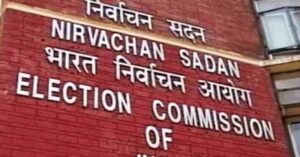
With the General Election to the Legislative Assemblies of Assam, Kerala, Puducherry, Tamil Nadu, and West Bengal, along with bye-elections in six states, scheduled to begin following the announcement on March 15, 2026, the Election Commission of India (ECI) has issued firm directives to ensure a seamless and voter-friendly experience across all polling stations.

The Commission has instructed Chief Electoral Officers (CEOs) of all states and union territories to guarantee that each of the 2,18,807 polling stations is equipped with Assured Minimum Facilities (AMFs) and robust voter assistance mechanisms on poll day.

As part of the AMF framework, every polling station will be provided with drinking water, a waiting area with shade, a toilet with water facility, adequate lighting, a ramp with proper gradient for Persons with Disabilities (PwD) electors, a standard voting compartment, and clear signage. In a move to enhance comfort, CEOs have also been directed to place benches at regular intervals along queues, allowing electors to sit while awaiting their turn to vote.

To strengthen voter awareness, four uniform and standardized Voter Facilitation Posters (VFPs) will be prominently displayed at all polling stations. These posters will contain key information, including polling station details, the list of candidates, do’s and don’ts, approved identification documents, and the voting process.

Additionally, Voter Assistance Booths (VABs) will be established at every polling station location. Staffed by Booth Level Officers (BLOs) and officials, these booths will assist electors in locating their polling booth number and serial number in the electoral roll. The VABs will feature prominent signage to ensure easy visibility as voters approach the premises.

In one of several initiatives aimed at voter convenience, a mobile phone deposit facility will be provided outside the entrance of each polling station. Voters can hand over their switched-off phones to a designated volunteer before entering, and collect them after casting their vote.

The Election Commission has reiterated that the provisioning of AMF and related accessibility measures is mandatory, and strict compliance will be monitored across all polling stations. All field functionaries have been directed to complete necessary works well in advance of poll dates to ensure a seamless and pleasant voting experience for every elector.

Also Read:

Over 25 Lakh Officials Deployed For Assembly Polls in 5 States

What are PM MITRA Parks and where are they set up?


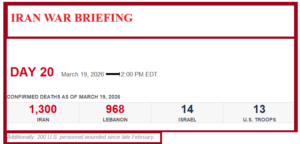
Iran War Update: Day 20 Witnesses Steep Surge in Brent Crude at $116

Iranian forces struck energy infrastructure across the Gulf on Thursday, triggering sharp movements in global oil and gas markets and widening a conflict that has now claimed more than 2,200 lives across four parties in 20 days. Brent crude, the international benchmark, surged past $116 a barrel while European gas prices rose more than 30 percent in a single session, as traders priced in the risk of prolonged supply disruption across the world’s most critical energy corridor.

The Trump administration responded on two fronts: a direct threat to destroy one of the world’s largest gas reserves if Iranian attacks on Qatari infrastructure continued, and a separate signal that Washington was prepared to release sanctioned Iranian oil to keep prices in check.
Energy and Market Impact

Brent crude closed above $116 a barrel on Thursday, a level not seen since the early months of Russia’s invasion of Ukraine in 2022, driven by Iranian attacks on Qatari LNG sites and widening threats to Gulf energy facilities. European gas prices climbed more than 30 percent in the same session.

The immediate trigger was “extensive” damage to Qatari LNG facilities, confirmed by state-owned QatarEnergy. Qatar supplies roughly one-fifth of the world’s LNG, making its export terminals among the most price-sensitive infrastructure in the global energy system. Any sustained outage there amplifies cost pressure across European importers still managing reduced Russian pipeline volumes.

Compounding market anxiety is Iran’s ongoing effective blockade of the Strait of Hormuz, through which passes a critical share of the world’s seaborne oil. The U.S. Navy has reported 20 commercial vessels targeted in or around the Strait since Iranian operations began, with seven fatalities and four crew members still unaccounted for.

Treasury Secretary Scott Bessent indicated the administration was weighing a partial sanctions waiver to release approximately 140 million barrels of Iranian oil, described as roughly two weeks of supply, currently immobilised in and around the Strait. “We will be using the Iranian barrels against the Iranians to keep the price down,” Bessent told Fox News.

Iran and the Gulf States

Iran’s Islamic Revolutionary Guard Corps (IRGC) issued advance evacuation warnings before launching strikes against what it described as “U.S.-linked” energy facilities across the Gulf. Saudi Arabia and Kuwait confirmed that drones struck three oil refineries. The UAE reported Iranian missiles directed at the Habshan gas facilities and the Bab oil field, both close to Abu Dhabi; Habshan was shut down after debris impacts, according to local officials.

Tehran framed the strikes as retaliation for Israeli attacks on Iranian coastal gas infrastructure connected to the South Pars field, carried out on Wednesday. South Pars is a joint Iranian-Qatari offshore reserve and Iran’s primary domestic gas source. President Trump warned publicly that the United States would “massively blow up” the South Pars Gas Field if Tehran continued targeting Qatari LNG sites, while distancing Washington from the preceding Israeli strikes.

Israel and Lebanon

Israel reported striking an Iranian military helicopter in Hamadan, in western Iran. In Lebanon, the Israel Defense Forces said operations in the south killed more than 20 Hezbollah fighters in the previous 24-hour period. Lebanese health authorities put the country’s total death toll at 968, as Israeli ground forces continued advancing north through southern Lebanon and conducting strikes on Hezbollah-linked districts of Beirut.

Air raid sirens sounded across Israel on multiple occasions Thursday. Iranian state media reported that nine medium-range ballistic missiles fitted with cluster warheads were fired at targets in central and northern Israel. Cluster munitions disperse dozens to hundreds of sub-munitions across a wide area, creating a broader pattern of damage than a single warhead but with less precision.

U.S. Policy Outline

Defense Secretary Pete Hegseth declined to specify a timeline for ending U.S. involvement when speaking to reporters Thursday, saying only that the military was “on plan” and “on target.” Hegseth addressed reports that the Pentagon had submitted a request to Congress for $200 billion in supplemental funding, saying: “It takes money to kill bad guys.”

Reuters, citing four unnamed U.S. officials, reported that the White House was actively considering deploying thousands of additional troops to the region. The U.S. has recorded 13 military fatalities since operations began in late February and a further 200 wounded.

On the diplomatic front, Treasury Secretary Bessent’s comments about sanctioned Iranian oil represented the clearest public signal yet that Washington is prepared to use economic tools, including partial sanctions relief, to manage energy market fallout, even as the military campaign continues.

Escalation Signals

Several indicators suggest the conflict is broadening rather than contracting. The expansion of Iranian strikes from the Strait of Hormuz to Gulf state energy facilities marks a geographic widening of Tehran’s targeting. The deployment of ballistic missiles with cluster warheads against Israeli population centres represents an escalation in weapons type. The Pentagon’s $200 billion supplemental funding request, if approved by Congress, would authorise sustained operations well beyond the current posture.

The sole de-escalatory signal on Thursday came from the economic track: Bessent’s sanctions-relief proposal, if implemented, would release Iranian oil into global markets without lifting pressure on Tehran politically. Whether that distinction holds under further military escalation remains uncertain.

ECI mandates all political Parties to get pre-certification of all political advertisements on electronic media

The Election Commission of India (ECI) has declared the program of the General Election to Legislative Assemblies in Assam, Kerala, Puducherry, Tamil Nadu and West Bengal and bye-elections in 6 states recently where in the rules have been spelt out for the political parties and independent contestants.

ECI has made a requirement of all registered political party and any group of organization/ association or any contesting candidate/individual seeking to be pre-certified by the Media Certification and Monitoring Committee (MCMC) on all political advertisements in the electronic media (e.g. TV, Radio, AV displays at public places, e-papers, bulk SMS/ voice messages) and social media.

Any individual or competing candidates may seek advertisement certification at District MCMC. A certification of such advertisements can be sought by all registered political parties with their respective head offices located in a State/UT by the State Level MCMC. The applications have to be submitted in accordance with the given timelines. The State level too constitutes an Appellate Committee headed by the CEO to listen to the appeals against the decision of District/State MCMC.

Without the prior certification of the MCMC, political parties/ candidates must not release any political adverts on internet based media/ websites such as social media websites.

MCMCs will also maintain a high alert on possible incidents of paid news in the media and act accordingly.

Moreover, the candidates must provide the information regarding their original social media profiles in their affidavit during nomination.

Section 77(1) of Representation of the People Act, 1951 and the guidelines of the Hon’ble Supreme Court of India states that political parties are also required to present a statement of expenditure incurred on campaigning using internet including social media websites to the ECI within 75 days after completion of assembly elections.

This spending among other things shall involve payment to internet companies and websites to carry adverts and campaign related spending on content development and operational spending incurred to maintain their social media accounts.

To this effect, the representatives of the Social Media Platforms (SMPs), the CEOs, State Police Nodal Officers and state IT Nodal Officers of all poll-bound States/UT were held to sensitise them of the above provisions and to validate and ensure a timely action against reported cases of misinformation, disinformation and fake-news during elections on March 19, 2026.


Also Read:

PM Modi Lauds Retiring Rajya Sabha Members, Calls Their Experience ‘Nation’s Asset’

Over 25 Lakh Officials Deployed For Assembly Polls in 5 States

Over 25 Lakh Officials Deployed For Assembly Polls in 5 States

In what is being described as one of the largest coordinated electoral deployments this decade, the Election Commission of India has mobilised over 25 lakh staff to superintend future Assembly elections in Assam, Kerala, Puducherry, Tamil Nadu and West Bengal.

On March 15, the poll schedule was announced and it will include more than 17.4 crore eligible voters in the five States and the Union Territory, and by-elections in six other states. The magnitude of the deployment is about one election official in every 70 voters, which confirms the administrative nature of the exercise.

According to chief election commissioner Gyanesh Kumar, the wide presence is designed to make the elections violence-free and inducement-free and officials are instructed to remain completely impartial during the process.

It has close to 15 lakh polling staff and approximately 8.5 lakh security staff with 40,000 counting staff. Moreover, the Commission has sent approximately 49, 000 micro observers, 21, 000 sector officers and 15, 000 people specifically to monitor counting procedures.

On the ground level, there are more than 2.18 lakh Booth Level Officers (BLOs) who are the main contact with the voters. The Commission has also facilitated voter services by providing helplines and online services (ECINet application) to enable citizens file complaints or seek information online by the district/ returning officers.

In order to enhance the control, 1,111 central observers have been assigned to 832 Assembly constituencies. This set will consist of the general, the police and expenditure observers, who will be the field representatives of the Commission in keeping a check on the observance of the electoral norms. Majority of them are already in their respective constituencies.

These observers will be in close contact with the candidates, the political parties and the electorate and will provide a formal avenue of dealing with the grievances so that it can be addressed during the election period.

All the staff that will be deployed to do the election duties will work on behalf of the Commission as stipulated in the Representation of the People Act, 1951, which in effect means that they will be subordinated to temporary deputation so that the same accountability can be maintained everywhere.

This mass mobilisation follows an increased concentration on securing clean electoral procedures and the Commission reaffirms its effort of restricting inducements and a level playing field.

As the various stages of polling will be involved in many states that are politically important, the administrative and logistic component implemented will be the determinant in the smooth running of the elections.

Also Read:

What are PM MITRA Parks and where are they set up?

Weekender: Inside India’s Global Capability Centre Boom

Who Is Mojtaba Khamenei? The Shadow Cleric Who Became Supreme Leader of Iran, Why Trump Already Wants him dead?

Thirty years he had been the most powerful man in Iran ever to be seen.

No speeches. No sermons. No interviews. And, even as his father was roaring away in pulpits and making a name in the history of a nation, Mojtaba Khamenei was toiling in the shadows, pushing through corridors, whispering into the correct ears, pulling the right threads that wigged the whole clockwork of the Islamic Republic without ever leaving the slightest trace of them upon it.

On Sunday the shadow got into the light.

As a successor to his father Ayatollah Ali Khamenei who was killed in a joint US-Israel attack just nine days ago, Mojtaba Khamenei is currently the new Supreme Leader of one of the most heavily armed theocracies in the world. He is 56 years old. He has been sanctioned by the US since 2019. And Washington and Tel Aviv had succeeded in a few hours after his appointment to issue a public death warrant against him.

The Man Nobody Heard Coming

Mojtaba was born in 1969 in Mashhad as the second child of the Ayatollah. He had enlisted in the Revolutionary Guard in his teens in the Iran-Iraq War, pursued theology with his father in Qom and then did something uncharacteristic of a cleric with ambitions he went off to the gears of power instead of attempting to drive them in the limelight.

He had been the gatekeeper of his father over the course of decades. He controlled access to meetings and non-access. He established relationships among the most conservative branches of the IRGC. The kind of profile that was necessary in his case was the one that worked in subterranean deliberations between generals and clerics; this was already a mighty one.

His name was familiar to Iranian people. To the majority, he had never been heard.

What they were aware of and democracy activists have been screaming years ago, was that Mojtaba was the man behind the crackdown on the 2009 Green Movement, the bloody crackdown of hundreds of thousands of Iranians who flooded the streets following a contested election. Such demonstrations were systematically suppressed and brutally. Investigators say that his fingerprints were everywhere on it.

A Vote Held Under the Gun

The process of selection said it all about what Iran is going through. As the nation was at war, its skies still reeking of Israeli attacks, members of the Assembly of Experts, senior ones, were under heavy pressure by the IRGC commanders just before the vote was taken. The individuals who objected were allowed little time to speak. Discussion was cut short. The vote was called quickly.

The outcome was packaged instantly in the tone of rebellion. One of the members of the Assembly said that the new leader was selected specifically because he was a man that the enemy hated – a literal, intentional attack on Donald Trump, who had already referred to the appointment as unacceptable before it was even official.

Iran had chosen the man that America did not want. And they would have that people know it was done on purpose.

A Warning to the World, Which Trump Delivers Not Diplomatically Dressed

Washington was not subtle in his position. A few days prior to the vote, Trump was confrontational as usual when he spoke to the ABC News that Mojtaba would not be able to remain in power without American approval, and that without it he would not last long. In another interview, he rejected the younger Khamenei saying that he even had a father who was reportedly incompetent.

Israel was equally direct. The Israeli Defence Minister was quoted saying that the appointment also placed Mojtaba an instantaneous target to be killed.

The response of Iran was not verbal but in the shape of missiles. Soon after the announcement, the Iranian state television showed footage of another strike, that is, the projectiles, which, reports said had the inscription: At Your Command, Sayyid Mojtaba.

The new supreme leader was an heir of a war. The initial move that he made was to continue fighting it.

Why This Changes Means Everything

The decision of Mojtaba Khamenei informs you about something significant where the actual power of Iran currently lies. This is not a pragmatist. This is not a diplomat. It is a man who has spent his whole career within the bosom of the IRGC, a man whose instincts were developed not in the bargaining table but in the culture of violence and the inculcate of military obedience.

The appointment, analysts pay close attention to, indicates that the hardline security establishment of Iran has solidly established itself in power, and that the off-ramp of the ceasefire or diplomacy has indeed become even even more distant.

And to that, a Bloomberg investigation published earlier this year which has implicated Khamenei in an offshore financial system that goes across London, Dubai real estate, shipping, banking and the image that comes out is of a man who knows power in all its variants.

Iran has a new supreme leader. He is younger, tougher and more imbedded in the war machine than his father was. Trump has threatened to cause consequences. Israel has promised strikes. And the man to whom most Iranians had never heard a word spoken has already responded to them both, one missile at a time.


 

UN Rights Chief Criticises US Immigration Raids, Warns Of Rising Abuse Against Migrants


The United Nations High Commissioner for Human Rights has raised serious concerns over the treatment of migrants and refugees in the United States, warning that aggressive immigration enforcement operations are leading to widespread fear, family separations and potential violations of fundamental rights.

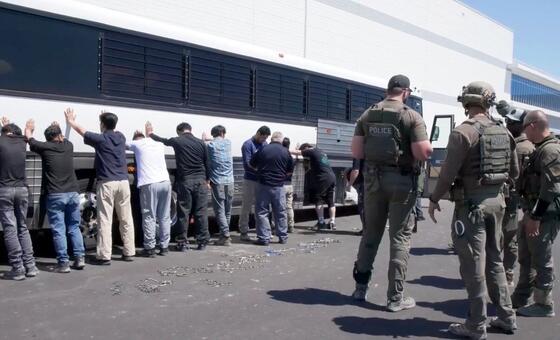
In a statement released on Friday, UN human rights chief Volker Türk said individuals suspected of being undocumented migrants are increasingly being targeted in large-scale federal enforcement actions carried out in everyday locations.

Raids Reported In Hospitals, Schools And Homes

According to the UN rights office, surveillance, arrests and detentions have been reported in a wide range of public and private settings, including hospitals, schools, courthouses, markets, places of worship and private homes.

Türk said some of the operations have involved the use of force, leaving many communities feeling intimidated and vulnerable.

“I am astounded by the now-routine abuse and denigration of migrants and refugees,” he said.

The climate of fear created by such enforcement actions is affecting families and children in particular. In some cases, children have reportedly missed school or medical appointments because parents fear they may be detained during routine activities.

Concerns Over Arbitrary Arrests

The UN rights chief warned that several migration policies currently being implemented could result in arbitrary or unlawful arrests and detentions.

He also raised concerns that immigration enforcement decisions may be made without sufficient individual assessments of each person’s situation.

In the United States, immigration enforcement is primarily handled by Immigration and Customs Enforcement (ICE), a federal agency responsible for identifying, arresting and deporting individuals believed to be in violation of immigration laws.

Türk acknowledged that governments have the right to regulate migration and enforce national laws. However, he stressed that such powers must be exercised in accordance with legal standards and due process.

“Failure to respect due process risks eroding public trust, weakening institutional legitimacy and violating individuals’ rights,” he said.

Deadly Incident Raises Alarm

Türk also criticised the increasing use of large-scale enforcement operations, warning that force used in such actions may sometimes be unnecessary or disproportionate.

He referred to an incident on January 7, 2026, when a woman was fatally shot during a federal enforcement operation in Minneapolis, Minnesota.

Under international law, the UN official noted, lethal force should only be used as a last resort when there is an imminent threat to life.

Families Separated By Detention Practices

The High Commissioner highlighted the human impact of current immigration practices, particularly on families.

He cited cases in which parents were detained or transferred between detention facilities without relatives being informed of their whereabouts. In some instances, families reportedly struggled to maintain contact or obtain legal representation.

“I call on the administration to end practices that are tearing apart families,” Türk said.

He also urged US authorities to conduct independent and transparent investigations into deaths reported in immigration detention facilities.

At least 30 deaths were recorded in Immigration and Customs Enforcement custody last year, with six additional deaths reported so far this year.

Warning Over Anti-Migrant Rhetoric

Beyond enforcement actions, Türk expressed concern about what he described as increasingly hostile language directed at migrants and refugees in political discourse.

He warned that such rhetoric risks fueling xenophobia and violence against immigrant communities.

“I call on leaders at all levels in the US to halt the use of scapegoating tactics that seek to distract and divide,” he said.

According to the UN official, portraying migrants collectively as criminals or threats based solely on nationality or immigration status undermines fundamental human rights principles.

Migrants’ Contributions Highlighted

Despite his criticism, Türk also acknowledged the efforts of public officials, civil society organisations and community groups across the United States who are working to protect the rights and dignity of migrants.

He emphasised that the country’s history has been profoundly shaped by migration and the contributions of people from around the world.

“Demonising migrants and refugees collectively as criminals, threats or burdens on society is inhuman and wrong,” he said, adding that such narratives run counter to the values on which the nation was built.