
Indian-American Republicans Face a MAGA Identity Test in 2026

Indian-American candidates are seeking office across the United States under both major political parties, but their campaigns are unfolding against a complicated backdrop: conservative politics has opened opportunities for some candidates of Indian origin even as parts of the MAGA movement have questioned immigration, cultural identity and who belongs in America.

The tension is visible in New York, where Republican Saritha Komatireddy is challenging Democratic Attorney General Letitia James, and in Ohio, where President Donald Trump’s endorsement has helped propel Indian-American Republican Vivek Ramaswamy’s campaign for governor. Their political positions differ from those of prominent Indian-American Democrats such as Ro Khanna and Pramila Jayapal, underlining how ancestry does not determine political allegiance.

Yet the reception for Indian-American conservatives has not always been straightforward. The backlash over H-1B visas, which intensified within Trump’s political coalition in late 2024 and early 2025, exposed a divide between business conservatives who support access to skilled foreign workers and nativist voices demanding tighter restrictions. Indian-origin politicians can share the movement’s positions on crime, economic policy or cultural issues without necessarily escaping hostility directed at their background.

The question facing these candidates is therefore not simply whether voters agree with their politics. It is also whether a movement built around an “America First” identity can accommodate political figures whose families came to the country from elsewhere.

From State Legal Offices to the Governor’s Mansion

Komatireddy’s campaign has brought that debate into the New York attorney general race. A former federal prosecutor and chief of staff at the Drug Enforcement Administration, she gained wider recognition after a televised debate with James on October 8.

During the debate, Komatireddy accused the incumbent of politicising the attorney general’s office and failing to focus sufficiently on public safety. James pushed back, questioning her opponent’s understanding of the office. The exchange offered voters a direct comparison between a long-serving Democratic incumbent and a Republican challenger making her first bid for elected office.

Komatireddy was born in Brooklyn to parents who emigrated from India. She graduated from Harvard College and Harvard Law School and clerked for Brett Kavanaugh when he was a judge on the US Court of Appeals for the District of Columbia Circuit, before his elevation to the Supreme Court. She subsequently worked as a federal prosecutor in New York and served as DEA chief of staff from 2023 to 2024. President Trump endorsed her campaign in August.

Her candidacy combines a law-and-order message with a professional background in federal law enforcement. It also places an Indian-American Republican in a high-profile contest against a Democrat who became nationally prominent through litigation involving Trump and his business interests.

Komatireddy’s candidacy should not, however, be taken as evidence that Indian-American Republicans face no barriers within the conservative movement. Her prospects will depend on New York’s political environment, voters’ assessments of the candidates and the issues dominating the state race. A candidate’s ancestry alone cannot explain either electoral support or opposition.

The broader Indian-American presence in the 2026 elections extends beyond New York. In Ohio, Ramaswamy is seeking the governorship as a Republican with Trump’s endorsement. On the Democratic side, Ro Khanna, Ami Bera, Pramila Jayapal and Suhas Subramanyam are seeking re-election to the House of Representatives. Democrat Amish Shah is running in Arizona’s 1st Congressional District, while Pia Dandiya is contesting Florida’s 22nd District.

The race for Colorado attorney general also illustrates the importance of tracking primary results rather than treating every announced candidacy as a live general-election contest. Indian-American Democrat Hetal Doshi entered the race but lost the June primary to Jena Griswold. Doshi is therefore not a November general-election candidate.

The range of these campaigns reflects a community whose political representation is no longer confined to a small group of federal lawmakers. Indian-American candidates are competing for statewide legal offices, congressional seats and executive positions, while building constituencies around different views of government, immigration and the economy.

H-1B Dispute Exposes the Limits of Political Belonging

Ramaswamy’s political position illustrates the tension between conservative alignment and questions of identity. A US-born entrepreneur and former presidential candidate, he has embraced a range of conservative positions and has become a prominent figure in Trump’s political orbit. But his rise has also attracted criticism from parts of the right that oppose skilled immigration or frame Indian professionals as competitors for American jobs.

The H-1B dispute brought those differences into the open. In late 2024, disagreements over the programme intensified after Trump allies debated the role of skilled foreign workers in the US economy. Ramaswamy defended the need for highly skilled talent, arguing that American companies’ ability to recruit specialised workers mattered to their competitiveness. Some hard-line immigration opponents rejected that position, treating the programme as inconsistent with an “America First” approach.

The dispute was not simply a disagreement over visa policy. Critics of H-1B visas raised concerns about wages, hiring practices and whether companies were using overseas recruitment to reduce costs. Supporters argued that the programme helps employers fill specialised positions and sustain innovation. Those policy arguments can be assessed on their merits, but rhetoric that targets Indians as a group moves beyond questions about how the visa system should work.

That distinction matters for Indian-American candidates. A politician can support restrictions on immigration, advocate stricter enforcement or criticise particular visa programmes without necessarily endorsing racial prejudice. Conversely, attacks that focus on someone’s ancestry or religion rather than their policies can expose a more exclusionary view of national identity.

Republicans of Indian origin

The distinction is especially important for Republicans of Indian origin. Their campaigns may appeal to conservative voters through positions on public safety, taxation, regulation or cultural issues. But political agreement does not ensure acceptance among every faction of a movement. Ramaswamy’s experience shows how a debate over skilled immigration can become entangled with arguments over who is entitled to define American identity.

The Democratic side presents a different political landscape. Khanna and Jayapal, for example, have built national profiles around policy positions that differ sharply from those of Ramaswamy and other conservative Indian-American figures. Their presence demonstrates that Indian-American political representation is not a unified bloc, nor can the community’s voting preferences be inferred from the prominence of a handful of candidates.

For voters, the November 3 midterms will be decided by a broad set of issues, including the cost of living, jobs, public safety and the performance of the parties in power. Candidates’ backgrounds may shape how their campaigns are discussed, but electoral outcomes will depend on their records, platforms, constituencies and opponents.

For Indian-Americans, the political significance of the current cycle lies in the widening range of offices they are contesting and the ideological differences among them. Their participation challenges the assumption that a community with immigrant roots will necessarily support one party or share one set of priorities.

But the debate over H-1B visas also demonstrates that representation and acceptance are not identical. Indian-American candidates can rise through party structures, win endorsements and campaign on conservative or progressive platforms while still encountering questions about their heritage.

The test for American politics is whether candidates are judged primarily by their policies and public service, or whether ancestry and religion remain grounds for questioning their place in the national story. The 2026 election will not settle that question, but it will offer another measure of how far Indian-American political participation has advanced and where its limits remain.

Over 25 Lakh Officials Deployed For Assembly Polls in 5 States

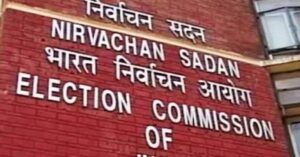
In what is being described as one of the largest coordinated electoral deployments this decade, the Election Commission of India has mobilised over 25 lakh staff to superintend future Assembly elections in Assam, Kerala, Puducherry, Tamil Nadu and West Bengal.

On March 15, the poll schedule was announced and it will include more than 17.4 crore eligible voters in the five States and the Union Territory, and by-elections in six other states. The magnitude of the deployment is about one election official in every 70 voters, which confirms the administrative nature of the exercise.

According to chief election commissioner Gyanesh Kumar, the wide presence is designed to make the elections violence-free and inducement-free and officials are instructed to remain completely impartial during the process.

It has close to 15 lakh polling staff and approximately 8.5 lakh security staff with 40,000 counting staff. Moreover, the Commission has sent approximately 49, 000 micro observers, 21, 000 sector officers and 15, 000 people specifically to monitor counting procedures.

On the ground level, there are more than 2.18 lakh Booth Level Officers (BLOs) who are the main contact with the voters. The Commission has also facilitated voter services by providing helplines and online services (ECINet application) to enable citizens file complaints or seek information online by the district/ returning officers.

In order to enhance the control, 1,111 central observers have been assigned to 832 Assembly constituencies. This set will consist of the general, the police and expenditure observers, who will be the field representatives of the Commission in keeping a check on the observance of the electoral norms. Majority of them are already in their respective constituencies.

These observers will be in close contact with the candidates, the political parties and the electorate and will provide a formal avenue of dealing with the grievances so that it can be addressed during the election period.

All the staff that will be deployed to do the election duties will work on behalf of the Commission as stipulated in the Representation of the People Act, 1951, which in effect means that they will be subordinated to temporary deputation so that the same accountability can be maintained everywhere.

This mass mobilisation follows an increased concentration on securing clean electoral procedures and the Commission reaffirms its effort of restricting inducements and a level playing field.

As the various stages of polling will be involved in many states that are politically important, the administrative and logistic component implemented will be the determinant in the smooth running of the elections.

Also Read:

What are PM MITRA Parks and where are they set up?

Weekender: Inside India’s Global Capability Centre Boom

Breaking News: Baba Siddiqui shot dead in Mumbai

In a shocking news, NCP (Ajit Pawar) leader from Maharashtra Baba Siidqui known for his annual Iftaar parties for celebrities in Mumbai was shot dead around midnight on Saturday. Currently, an MLC, Siddiqui  was shot dead by three attackers in Mumbai around 9.30 pm at the office of his son, Zeeshan, who is the MLA from Bandra East..

“Mumbai police chief told me two persons have been arrested. One is from UP, other from Haryana. Third assailant is absconding but police are trying to nab him,” chief minister Eknath Shinde told media.

Initial reports said three people fired at Baba Siddique outside his son Zeeshan’s office in Bandra East. Though he was rushed to Mumbai’s Lilawati Hospital immediately, he succumbed to his injuries.

“Two to three rounds were fired. Further probe is underway as teams have rushed to the area,” a police official told PTI. Mumbai police commissioner Vivek Phansalkar reportedly said that two alleged shooters have been taken into custody.

One of them is from Uttar Pradesh and the other from Haryana, while a third accused fled from the spot, the CM told TV channels.

“This is an extremely unfortunate incident and I spoke to the doctors and police. Two people have been arrested, the accused are from UP and Haryana. The third accused is absconding. We have given instructions to Mumbai Police that strict action should be taken against those who take law and order into their hands…I am sure that Mumbai police will soon arrest the third accused…Strict action will be taken against the accused,” CM Shinde said.

Ziauddin Siddique, widely known as Baba Siddique, was a prominent political figure in Maharashtra. He served as a Member of the Legislative Assembly (MLA) for the Vandre West constituency for three consecutive terms in 1999, 2004, and 2009. During his tenure, Siddique also held the position of Minister of State for Food & Civil Supplies and Labour under Chief Minister Vilasrao Deshmukh from 2004 to 2008.

Before his role as an MLA, Siddique was a Municipal Corporator, serving two consecutive terms from 1992 to 1997. At the time of his passing, he held key roles as the Chairperson and Senior Vice President of the Mumbai Regional Congress Committee and as a member of the Parliamentary Board of the Maharashtra Pradesh Congress Committee. On February 8, 2024, he resigned from the Indian National Congress (INC) and joined the Nationalist Congress Party (NCP) under Ajit Pawar on February 12, 2024.

“I joined the Indian National Congress party as a young teenager, and it has been a significant journey lasting 48 years. Today I resign from the primary membership of the Indian National Congress Party @INCIndia with immediate effect,” he had written in an X post about his decision to join Ajit Pawar.

Siddique’s political journey began in 1977 when, as a teenager, he joined the INC and became involved in student movements through the National Students Union of India (NSUI), the student wing of the INC. He quickly rose through the ranks, becoming General Secretary of the Bandra Taluka Youth Congress in 1980 and its president two years later. In 1988, he was elected president of the Mumbai Youth Congress.

In 1992, Siddique was elected as a Municipal Councilor for the Mumbai Municipal Corporation, securing re-election five years later. His ascent to state politics came in 1999 when he became an MLA from Bandra West, where he served for three terms. He also held the position of Chairman of the MHADA Mumbai Board from 2000 to 2004. Beyond his legislative work, Siddique contributed to his community by funding the creation of an eco-garden in Bandra-Khar in 2011.

Baba Siddique was married to Shehzeen Siddique, and together they had two children, Arshia and Zeeshan Siddique.


Sri Reddy row: MAA heeds Pawan Kalyan, turns ire on TV channels

The Telugu film industry’s own version of #MeToo movement has taken an ugly political turn when actor-cum-aspiring politician Pawan Kalayan was dragged in to it unwittingly.

The month-old saga of Sri Reddy set the Telugu film industry in a state of shock when she stripped herself on Hyderabad roads on April 7, exactly two weeks ago. Soon, she revealed the top producers, directors and individuals involved in the so-called ‘casting couch’ tirade unleashed on women aspirants in to the film field.

The real drama began when she appealed to Pawan Kalyan, who is at cudgils with the estranged ruling TDP and the AP chief minister Chandrababu Naidu. In his response, he asked her to approach the police.

Intrigued at his response, Sri Reddy called him names and used abusive language and apologized for calling him a brother. She took out her own sandal and slapped her own cheek i disgust, claiming police complaint would be a hogwash in such cases. Another Telugu film director Ram Gopal Verma, who was waiting in the wings, claimed that it was he who played the “Sutradhari” and apologized to Pawan Kalyan.

Even Sri Reddy apologized but Pawan Kalyan has unleashed his anger this time and forced AP CM and his son, AP9 TV channel owner, host of others into the row for bringing him disrepute on TV channels repeatedly telecasting the public rant of Sri Reddy against him.

On Friday, the building of the apex body Telugu Film Chamber of Commerce, in Hyderabad’s Film Nagar, took the centre-stage with the entire Chiranjeevi’s family and fans attending and the meeting where Pawan Kalyan discussed the next course of action. He questioned why the Movie Artists Association (MAA) did not initiate any action against what he called ‘erring’ TV channels.

Notwithstanding, Ram Gopal Verma has given out his version to answer Pawan Kalyan. Today, the chamber is meeting to discuss and release its statement against the TV channels which have been airing the news of Sri Reddy and giving her undue publicity.

Already Telugu TV news channels, including TV9, TV5 and Mahaa News have taken exception to Pawan Kalyan’s tweets alleging aspersion on them. “When Pawan Kalyan is doing Pada Yatra, he needs us to cover but not when we cover victims of ‘casting coach’ in the Telugu film industry. He cannot tell us what to cover and what not to cover,” said Allam Narayana of TV5.

The the Movie Artists Association is meeting on saturday in Hyderabad to issue a statement supporting Pawan Kalyan and initiating legal notices to all the TV channels which have broadcast the rant by Sri Reddy.

As politics entered the Telugu film industry’s #MeToo movement, the desired dilution has happened and the attention is wholly on a bigger name Pawan Kalyan, not Sri Reddy now.

New India? Refusal to Chant ‘Bharat Mata Ki Jai’ Attracts Beating, What Next?

A teenager and his two friends were reportedly beaten up in Delhi, the capital of secular and independent India. The incident happened in a park outside a school in outer Delhi’s Begumpur area, police said on Tuesday.

According to police, the incident took place on 26 March, when three boys from a madrasa called up the police control room. They were beaten in the park and let off with injuries on their bodies. They were sent to medical inspection.

One of the 3 boys told police that he was asked to chant "Jai Mata di" and his statement was recorded again and new sections were added. However, the fear-stricken boys refused to record it in the complaint under fear but apparently told their elders that they were asked to chant "Bharat Mata ki Jai" and beaten up for not doing so.

It remains to be seen how many more such incidents actually occur and are reported.

[tags, bharat mata ki jai controversy, muslim boys, madrasa boys beaten, delhi begumpura park incident, delhi police, anti-national, brain wash, india fascism, fascist india, bjp india, rss mindset,secular india, ]