Cabinet Approves Increase In Supreme Court of India Judges To 37 From 33

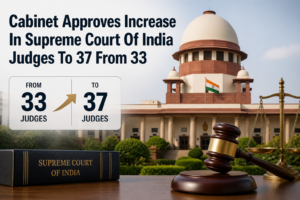
The Union Cabinet chaired by the Prime Minister Shri Narendra Modi today has approved the proposal for introducing The Supreme Court (Number of Judges) Amendment Bill, 2026 in Parliament to amend The Supreme Court (Number of Judges) Act, 1956 for increasing the number of Judges of the Supreme Court of India by 4 from the present 33 to 37 (excluding the Chief Justice of India).

Point-wise details:

Supreme Court (Number of Judges) Amendment Bill, 2026 provides for increasing the number of Judges of the Supreme Court by 04 i.e. from 33 to 37 (excluding the Chief Justice of India). 

Major Impact: 

The increase in the number of Judges will allow Supreme Court to function more efficiently and effectively ensuring speedy justice.

Expenditure:

The expenditure on salary of Judges and supporting staff and other facilities will be met from the Consolidated Fund of India.
Background:

Article 124 (1) in Constitution of India inter-alia provided “There shall be a Supreme Court of India consisting of a Chief Justice of India and, until Parliament by law prescribes a larger number, of not more than seven other Judges…”. 

An act to increase the Judge strength of the Supreme Court of India was enacted in 1956 vide The Supreme Court (Number of Judges) Act 1956. Section 2 of the Act provided for the maximum number of Judges (excluding the Chief Justice of India) to be 10.

The Judge strength of the Supreme Court of India was increased to 13 by The Supreme Court (Number of Judges) Amendment Act, 1960, and to 17 by The Supreme Court (Number of Judges) Amendment Act, 1977. The working strength of the Supreme Court of India was, however, restricted to 15 Judges by the Cabinet, excluding the Chief Justice of India, till the end of 1979, when the restriction was withdrawn at the request of the Chief Justice of India.

The Supreme Court (Number of Judges) Amendment Act, 1986 further augmented the Judge strength of the Supreme Court of India, excluding the Chief Justice of India, from 17 to 25. Subsequently, The Supreme Court (Number of Judges) Amendment Act, 2008 further augmented the Judge strength of the Supreme Court of India from 25 to 30.

The Judge strength of the Supreme Court of India was last increased from 30 to 33 (excluding the Chief Justice of India) by further amending the original act vide The Supreme Court (Number of Judges) Amendment Act, 2019.


Also Read:

ECI mandates all political Parties to get pre-certification of all political advertisements on electronic media


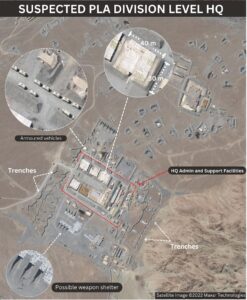
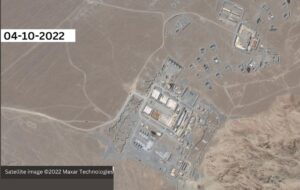
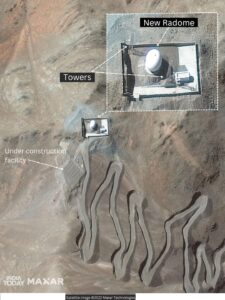
China building towns along Arunachal border, show satellite images

Amid border incursions with the Chinese soldiers coming with barbed sticks near the LAC on December 9, satellite images show that China has built villages on their side. As per a bilateral pact, weapons are not to be borne by soldiers on the border.
Along the India-China border abutting Arunachal Pradesh’s Tawang, the PLA army has also constructed a road, Indian Army sources told media on Tuesday, a day after a clash between troops of both sides last week became public.

On the clash, sources said that as many as 300 Chinese troops had arrived near the LAC on December 9 to gain control over the peak of a 17,000-feet-high mountain but the Indian troops foiled their attempt, the source said.

Meanwhile, China’s first statement on the clash has come, with its Foreign Ministry said that the situation on its border with India is “stable”. Responding to reports of clash between Indian and Chinese soldiers on the Line of Actual Control (LAC) near Tawang, China maintained that the situation on the border is stable.

Chinese Foreign Ministry spokesman Wang Wenbin said: “As far as we understand, the situation on the China-India border is overall stable. Continuous talks are going on, on the border issue through diplomatic and military channels.”

Union Defence Minister Rajnath Singh on Tuesday told Parliament that Indian troops successfully thwarted an attempt by Chinese soldiers to transgress the LAC in Arunachal Pradesh’s Tawang sector.

In a statement which the Defence Minister read out in both Houses of Parliament, he said that Indian troops in a brave and resolute manner pushed back the Chinese troops back to their positions after a physical scuffle, in which minor injuries were suffered by both sides in Yangtse area of Tawang sector.

However no fatalities were reported on the Indian side during the incident, Rajnath Singh informed the House. He said that subsequently a flag meeting between Indian and Chinese commanders was held on December 11, where the Chinese side was told to refrain from such actions and maintain peace and tranquility along the border.

The matter has also been taken up through diplomatic channels with China. Rajnath Singh expressed confidence that the House stands united in supporting Indian soldiers in their efforts as the Lok Sabha witnessed a pandemonium when he read out the statement.

Earlier in the day, Rajnath Singh had chaired a high-level emergency meeting with CDS Lieutenant General Anil Chauhan, Army chief General Manoj Pande and NSA Ajit Doval.

Congress leader Shashi Tharoor said, “No doubt that China has its eyes on Tawang. We’ve to be very alert there. I think what our Army did yesterday had the support of entire country.”
The clash between Indian and Chinese troops on December 9 took place at the 17,000 feet at Yangtse, some 35 km north-east of Tawang in western Arunachal Pradesh.

A source informed that there have been injuries to both Indian and Chinese soldiers and six of the injured Indian soldiers had been admitted to the military hospital at Guwahati, but here is no reports of any serious injury or death.

China has been repeatedly trying to take control of the 17,000-feet-high peak but Indian Army sources said that India has a firm control of the peak, which provides a commanding view on both sides of the border. Currently, Indian Air Force aircraft are patrolling the skies of Arunachal.


President Mukherjee Remembers Life as MP at Farewell, Thanks Modi

The President of India, Mr. Pranab Mukherjee was given a grand farewell at Central Hall of the Parliament on Sunday, July 23, 2017, where he remebred fondly his 37 years as a member of parliament before taking up the office of President.

The President said that as he retired from the Office of the President of the Republic, his association with the Parliament also comes to an end. He will no longer be a part of the Parliament of India. He stated he was leaving with a sense of fulfilment and happiness of having served the people of this great country through this institution- as their humble servant.

Speaking on the occasion, the President said that for 37 years he served as a Member of Lok Sabha and Rajya Sabha. Listening to the stalwarts for hours and days in Parliament sitting in the Treasury or Opposition Benches, he felt one with the soul of this living institution. He understood the real value of debate, discussion and dissent.

He realized how disruption hurts the opposition more than the government as it denies them the opportunity to raise the concerns of the people. It was unfortunate that the parliamentary time devoted to legislation has been declining. With the heightened complexity of administration, legislation must be preceded by scrutiny and adequate discussion.

Scrutiny in committees is no substitute to open discussion on the floor of the House. When the Parliament fails to discharge its law-making role or enacts laws without discussion, it breaches the trust reposed in it by the people of this great country. He stated that the recent passage of Goods and Services Tax and its launch on 1st July is a shining example of co-operative federalism and speaks volumes for the maturity of Indian Parliament.

The President said that it was in July 2012 that his membership in Lok Sabha came to an end when he was declared as the 13th President of the Republic. Even though thirty-seven years of his life in Parliament came to an end on that day but he still continued to have a tenacious link with this institution, in fact he became an integral part of it, as President of Republic, as per the Constitution.

In these five years, his principal responsibility was to function as the guardian of the Constitution. As he had said on oath, he strived to preserve, protect and defend our Constitution, not just in word but also in spirit. In this task, he said he was greatly benefitted from the advice and co-operation extended by Prime Minister Modi at every step.

With passion and energy, he is driving transformational changes in the country. He would carry with him fond memories of their association and his warm and courteous behaviour, said the President.

Mr Ram Nath Kovind will take over as the next President of India on Monday.