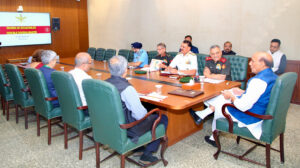
The Union Cabinet, chaired by Prime Minister Narendra Modi, has approved the Emergency Credit Line Guarantee Scheme (ECLGS) 5.0 to provide targeted financial assistance to Indian airlines grappling with mounting operational and liquidity pressures arising from the ongoing West Asia crisis.
The move comes amid a steep rise in Aviation Turbine Fuel (ATF) prices, airspace restrictions and reduced international flight operations, factors that have adversely impacted aircraft utilisation and strained airline finances.
Under the scheme, the government has earmarked ₹5,000 crore specifically for the aviation sector. The initiative will provide 100 per cent credit guarantee coverage for MSMEs and 90 per cent coverage for non-MSMEs and airlines through the National Credit Guarantee Trustee Company Limited to Member Lending Institutions against defaults on additional credit facilities extended to eligible borrowers.
The scheme allows airlines to avail loans of up to ₹1,000 crore per borrower, with an additional ₹500 crore permitted subject to matching equity infusion by the borrower. The loans will carry a repayment tenure of up to seven years, including a two-year moratorium, aimed at easing immediate liquidity stress.
The government said the latest version of ECLGS is intended to strengthen financial resilience among MSMEs and airlines during a challenging global environment. It also allows conversion of up to 50 per cent of interest liabilities into a Funded Interest Term Loan (FITL), a measure expected to improve cash flow management and reduce short-term repayment burdens.
Civil Aviation Minister Ram Mohan Naidu said India’s aviation sector had remained resilient despite global disruptions due to timely government intervention.
“Under the decisive leadership of Hon’ble Prime Minister Narendra Modi Ji, India’s aviation growth story today stands out globally as a success story built on the foundation of reforms, resilience and resurgence,” he said.
He added that Indian airlines had benefited from measures such as capping ATF prices during global fuel spikes and reductions in airport landing and parking charges.
“By approving the Emergency Credit Line Guarantee Scheme (ECLGS) 5.0, airlines will be enabled to navigate short-term liquidity challenges and maintain seamless operations amid global disruptions. It will provide strong financial backing to safeguard jobs, sustain connectivity and ensure resilience across the aviation ecosystem, while also supporting MSMEs,” the minister said.
The scheme will provide additional credit support of up to 20 per cent of peak working capital utilised during the fourth quarter of FY26, capped at ₹100 crore for eligible sectors. For airlines, the support can extend up to 100 per cent, subject to a ceiling of ₹1,500 crore per borrower and fulfilment of prescribed conditions.
According to the government, the guarantee coverage will remain valid for the entire tenure of the loan. The scheme will apply to all loans sanctioned from the date of issuance of guidelines by the NCGTC until March 31, 2027.
The Centre said the initiative is expected to cushion airlines against the impact of rising fuel prices, currency volatility and operational disruptions while improving lender confidence and ensuring steady credit flow to the aviation sector. The measure is also aimed at protecting jobs, preserving sectoral capacity and preventing higher operational costs from being passed on to passengers.
Also Read:
Government Holds Inter-Ministerial Briefing On West Asia Developments