Trump Welcomes Xi Jinping at Joint Base Andrews as B-1 Bomber Flypast Sparks Viral Online Moment

U.S. President Donald Trump personally welcomed Chinese President Xi Jinping at Joint Base Andrews in Maryland on Wednesday for the start of a three-day state visit, the Chinese leader’s first trip to Washington in more than a decade.
The arrival ceremony featured a red carpet, American and Chinese flags, a U.S. Air Force band performing the national anthem, ceremonial cannon fire, an honor guard, and a flypast by two U.S. Air Force B-1 bombers.Trump was accompanied by First Lady Melania Trump. Xi arrived with his wife, Peng Liyuan. During the ceremony, as the national anthem played, the two B-1 Lancer bombers flew overhead.
A video of the moment captured Trump saluting and then appearing to wince at the loud noise of the aircraft before looking toward Xi. Xi appeared largely unfazed. The contrasting reactions quickly circulated widely on social media.Online responses varied. Some users questioned why Trump seemed startled by a planned element of the military display.
Others defended the flypast as a demonstration of U.S. military strength.Trump’s decision to greet Xi in person at the military airfield highlighted the importance attached to the visit. The two leaders are expected to hold high-level talks at the White House covering trade and tariffs, technology and artificial intelligence, Taiwan, military relations, and various international conflicts.
Xi’s visit occurs amid ongoing strategic competition between the United States and China, drawing close international attention. While the viral flypast video has dominated social-media discussion, the primary focus remains the bilateral discussions aimed at managing the broader U.S.-China relationship.
The visit marks Xi’s first trip to the United States in nearly three years and comes at a sensitive point in relations between the world’s two largest economies. While expectations for a major breakthrough remain limited, the two sides have agreed to extend their existing trade truce, US Treasury Secretary Scott Bessent said.
Bessent told Fox News’ “Special Report” that the arrangement would remain in place through January 10. The current truce had been due to expire on November 10. The extension provides a temporary reprieve for businesses and financial markets still dealing with the effects of the tariff confrontation.  The 2025 trade war pushed tariffs to exceptionally high levels before a temporary accommodation.
Trump personally receives Xi
 The two leaders, accompanied by their wives, spoke briefly and posed for photographs as a military band played and cannons fired. A B-1 bomber also flew overhead. According to C-SPAN, the reception was the first time in 11 years that a US president had greeted a foreign leader at Joint Base Andrews.
The previous occasion was in 2015, when then-President Barack Obama received Pope Francis.
“China and the United States should be partners, not rivals,” Xi said in a written statement released by the Chinese embassy in Washington. The statement did not refer to the trade-truce extension.Trade progress comes with major disputes unresolvedThe agreement does not resolve deeper disagreements over China’s rare-earth exports, US chip and technology restrictions, Beijing’s relationship with Iran and US support for Taiwan.Those issues are expected to feature prominently in Thursday’s talks.
Xi is likely to raise Beijing’s claims over Taiwan, while Trump is expected to maintain US export controls. Whether China could help on the Iran conflict, now in its seventh month and affecting energy prices, remains unresolved.Narrower agreements are possible on drug trafficking, military-to-military communication and artificial intelligence. Trump is also expected to seek the release of some Americans detained in China.The leaders approach the summit from different positions.
China’s exports remain strong despite weak domestic consumption and property-sector pressure; Xi has consolidated authority through military corruption probes. The US faces elevated energy prices linked to the Iran conflict. The summit is expected to focus as much on managing tensions as resolving them.

Time is on China’s Side
Edgard Kagan, a former White House official now with the Center for Strategic and International Studies, said both leaders believe time is working in their favour.“The president very much believes that over time the US economy is going to grow, the US will get stronger,” Kagan said. “I think when Xi Jinping sits down with Donald Trump, he very much believes the US is in hurtling decline, and that time is on China’s side.”
Trump and Xi prepare for high-profile summitThe programme includes a state dinner expected to draw tech leaders including Apple CEO Tim Cook, Nvidia CEO Jensen Huang and OpenAI CEO Sam Altman, underscoring technology’s growing importance amid US chip restrictions and China’s AI ambitions. Trump and Xi are also expected to attend a White House military ceremony and visit the National Archives.Despite disagreements, both governments seek to project greater stability.
The meeting will be tightly choreographed, with separate announcements rather than a joint news conference.For Trump, the summit follows a UN General Assembly visit and comes amid pressure over the Iran conflict ahead of November’s congressional elections. Another meeting could take place later this year at the APEC summit in China or the G20 in the United States.The trade-truce extension offers more time to negotiate, but the broader relationship remains defined by disputes well beyond tariffs.

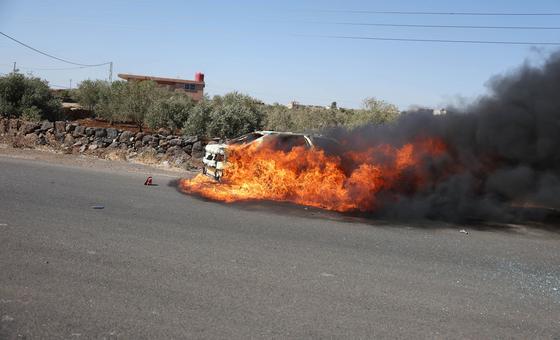
Syria: Ceasefire under strain as violence and aid access issues persist in Sweida

The 19 July truce followed weeks of sectarian clashes, Israeli airstrikes and grave human rights violations in the southern governorate, also known as As-Sweida.

As a result, more than 190,000 people have been displaced there and in neighbouring Dar’a and Rural Damascus governorates.

The fighting also caused severe damage to infrastructure and to livelihoods.  Electricity networks, water production assets including wells, and key public facilities were impacted.

Volatility, surveillance and demonstrations

Between 1 and 5 August, the security situation in Sweida and surrounding areas remained volatile, with clashes reported in three places, according to the OCHA flash update.

“Additionally, aerial surveillance activity attributed to the Israeli Defence Forces (IDF) has been observed over multiple locations in Dar’a and As-Sweida, contributing to regional tension,” the agency said.

During the same period, public demonstrations occurred across multiple locations in Sweida, reiterating calls for improved humanitarian access and protection.

Parallel demonstrations also took place in Dar’a and Damascus governorates which emphasised the importance of national unity. 

Aid efforts continue

Humanitarian access remains constrained, OCHA said, as the UN and partners continue to support response efforts.  

The main highway between Sweida and the capital, Damascus, has been inaccessible since 12 July due to security concerns. 

Furthermore, the southern corridor via Busra Esh-Sham in eastern Dar’a was temporarily closed for 24 hours but reopened on Monday, affecting aid delivery.

“Humanitarian actors scaled up response efforts, including fuel and food deliveries to As-Sweida and Dar’a, commercial convoy facilitation, and shelter support for displaced populations,” OCHA said.

Inter-agency mission

Since the escalation of hostilities, humanitarians have provided bread assistance to nearly 1.5 million people.

OCHA also led an inter-agency mission to Dar’a to assess shelter conditions and to discuss medium-term housing options for displaced people.

Meanwhile, restoration of essential services is ongoing in Sweida, with partial electricity restored through emergency repairs.  

However widespread telecommunication and internet outages persist across the governorate, and maintenance of water and power networks continues in rural areas. 

Source link

Pollution, melting microbes, undamming rivers, risks for elders: 4 key climate issues

From ancient microbes awakening in melting glaciers to toxic pollutants unleashed by floods, the dangers are no longer distant or theoretical. They are here, and they are growing.

The Frontiers Report 2025, released by the UN Environment Programme (UNEP), highlights four critical areas where environmental degradation intersects with human vulnerability: legacy pollution, melting glacier microbes, undamming rivers and climate risks for an ageing population that is growing.

The report paints a vivid picture of how climate change is not only altering ecosystems but also exposing communities – especially the most vulnerable – to new and intensifying dangers. Some issues may be local or relatively small-scale issues today, but have the potential to become issues of regional or global concern if not addressed early, the report warned.

UNEP Executive Director Inger Andersen said action must be taken “to protect people, nature and economies from threats that will only grow with each passing year”.

Here’s what’s at stake and why it matters to all of us:

UN Nepal/Narendra Shrestha

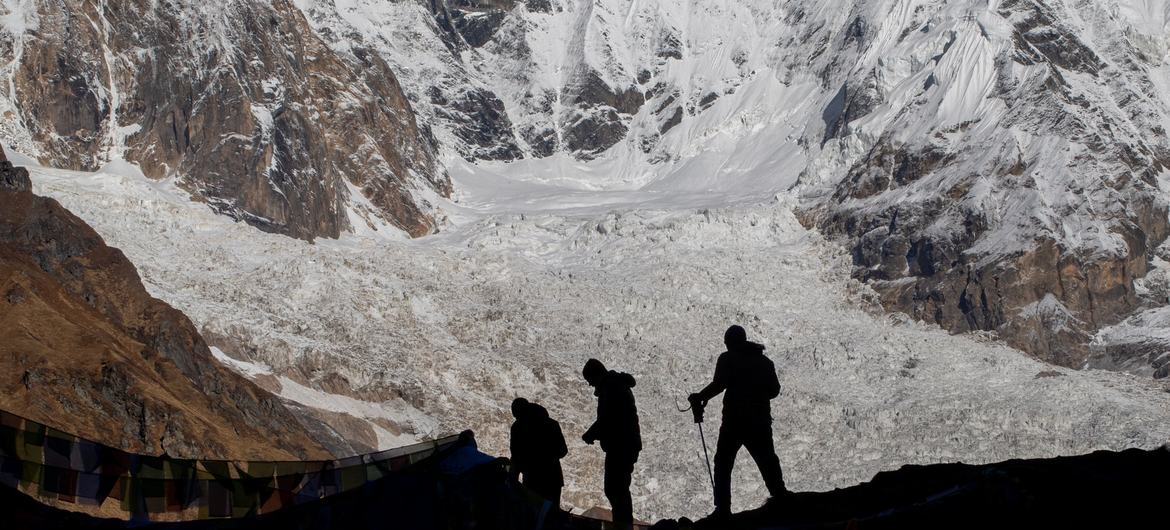
UN Secretary-General António Guterres visits the Annapurna base camp in Nepal in 2023. (file)

Melting glacier microbes

Climate scientists are saying many glaciers will not survive this century unless action is taking to slow the melting rate caused by climate change. That means those living downstream will face a tide of floods alongside threats posed by reactivated microbes in a warming cryosphere or frozen parts of the Earth.

Frozen in ice sheets, glaciers and permafrost are bacteria, fungi and viruses. While most are dead, some are dormant and some are active. As global temperatures hit record highs, these microorganisms will become more active in many ecosystems. Even if the melting can be slowed down by mitigating greenhouse gas emissions, efforts must assess and prepare for possible threats from potential pathogens.

Also crucial is documenting and preserving cryospheric microorganisms, which can shed light on the history of climate and evolution, help in finding therapies for diseases and develop innovative biotechnologies.

© UNICEF/Felipe Chic Jiménez

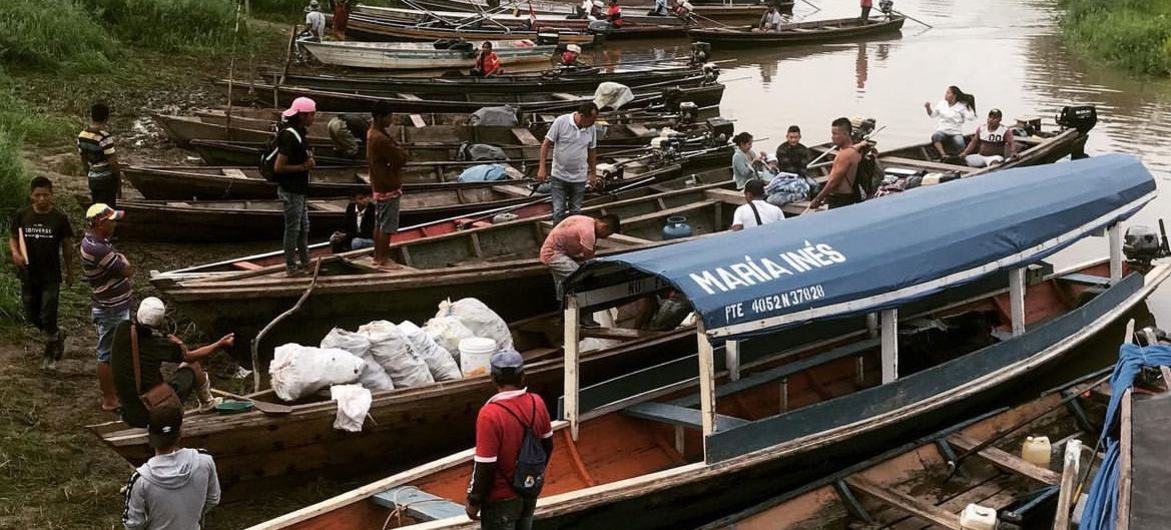
Indigenous communities in the Amazonía region in southern Colombia. (file)

Dismantling dams

In the Colombian Amazon, river water levels have dropped by up to 80 per cent, restricting access to drinking water and food supplies, leading to shuttering 130 schools, increasing children’s risk of recruitment, use and exploitation by non-State armed groups and resulting in increased respiratory infections, diarrhoeal diseases, malaria and acute malnutrition among youngsters under age five.

Part of what is making the problem worse in Colombia and other hot spots around the world are the plethora of dams operating at a time when climate change is triggering droughts around the world. Drought is keeping more than 420,000 children out of school in Brazil, Colombia and Peru alone, according to a report by the UN Children’s Fund (UNICEF).

As such, there is a growing need to remove dams and other barriers to rehabilitate river ecosystems, a process increasingly initiated by local communities, Indigenous Peoples, women and youth. Rivers and streams can recover remarkably once barriers are gone, but other stressors, from pollution to climate change, need to be addressed in parallel. Understanding the restoration outcomes of barrier removal is necessary not only to guide future removals, but also to inform decisions about existing and future barriers.

Elderly people suffer disproportionately from climate change consequences.

Climate risks for the elderly

Older people face increased risks during extreme weather and suffer more from ongoing environmental degradation. As the World Meteorological Organization (WMO) predicts ever more hot weather, the elderly are suffering disproportionately, as seen in rising numbers of deaths and illnesses amid recent heat waves around the world.

At the same time, the world’s ageing population is growing: the global share of people over 65 years old will rise from 10 per cent in 2024 to 16 per cent by 2050. Most of them will live in cities, where they will be exposed to extreme heat and air pollution and experience more frequent disasters.

Older people are already more at risk, so effective adaptation strategies will need to evolve to protect these older populations.

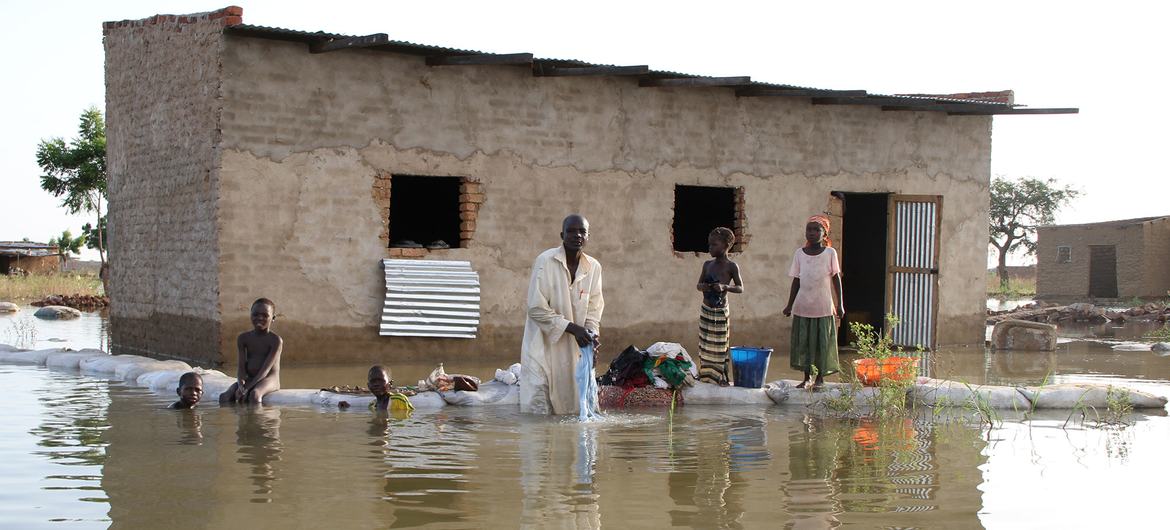
A family outside their flood damaged home in N’Djamena, Chad. (file)

Legacy pollutants

Flooding has crippled communities in all regions of the world as the number of extreme weather events climb. Among the hidden dangers are legacy pollutants that have been secreted into the ground over time and released as extreme rainfall and floods wash away sediments and debris.

The Pakistan floods of 2010, flooding in the Niger Delta in 2012 and Hurricane Harvey off the coast of Texas in 2017 are all examples when floodwaters stirred up sediments, releasing heavy metals and persistent organic pollutants.

Evaluating sediments to understand hazards, rethinking flood protection to lean on nature-based solutions and investments in natural remediation of contaminated sediments are all options to deal with this problem.

Read the full Frontiers Report here.