One in four still lacks access to safe drinking water and sanitation

The report from the World Health Organization (WHO) and children’s agency (UNICEF) issued as World Water Week gets underway, highlights persistent gaps in access, with vulnerable communities facing the greatest disparities.

Some 2.1 billion people still lack access to safely managed drinking water, while 106 million worldwide are forced to rely on untreated surface sources.

Water, sanitation and hygiene are not privileges, they are basic human rights,” said Ruediger Krech, Director of WHO’s Environment, Climate Change and Health Department.

Clear disparities

The report finds that people in least developed countries are more than twice as likely as people in other countries to lack basic drinking water and sanitation services, and over three times as likely to go without basic hygiene.

“These inequalities are especially stark for girls who often bear the burden of water collection and face additional barriers during menstruation,” said Cecilia Scharp, UNICEF’s head of water, sanitation and hygiene services.

Data from 70 countries reveal that while most women and adolescent girls have menstrual materials and a private place to change, many still lack sufficient supplies to manage their needs safely and with dignity.

‘We must act faster’

Some 1.7 billion people still lack basic hygiene services at home, including 611 million with no facilities at all.

“We must accelerate action, especially for the most marginalised communities, if we are to keep our promise to reach the Sustainable Development Goals,” said Mr. Krech.

“At the current pace, the promise of safe water and sanitation for every child is slipping further from reach – reminding us that we must act faster and more boldly to reach those who need it most,” said Ms. Scharp.

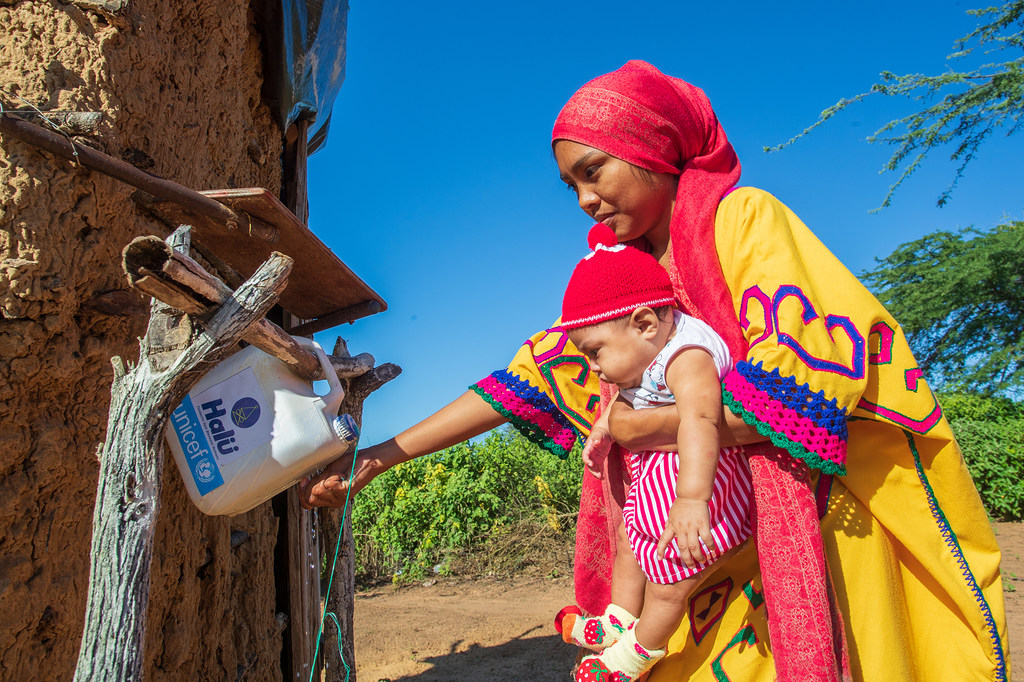
In the municipality of Manaure in La Guajira, Colombia, a woman washes her hands at an installation of hand-washing point known as tippy taps.


Source link

PM Narendra Modi to visit Madhya Pradesh on 17th September to release wild Cheetahs

Prime Minister Narendra Modi will visit Madhya Pradesh on 17th September. At around 10:45 AM, Prime Minister will release Cheetahs in Kuno National Park. After that, at around 12 Noon, he will participate in SHG Sammelan with women SHG members/community resource persons at Karahal, Sheopur.

  • PM to release wild Cheetahs – which had become extinct from India – in Kuno National Park.
  • Cheetahs – brought from Namibia – are being introduced in India under Project Cheetah, which is world’s first inter-continental large wild carnivore translocation project.
  • Bringing Cheetahs back to India will help in the restoration of open forest and grassland ecosystems and also lead to enhanced livelihood opportunities for the local community.
  • In line with the Prime Minister’s commitment towards environment protection and wildlife conservation.
  • Prime Minister to participate in SHG Sammelan at Karahal, Sheopur.
  • Thousands of women SHG members/community resource persons to attend the Sammelan.
  • PM to also inaugurate four Particularly Vulnerable Tribal Groups skilling centres under PM Kaushal Vikas Yojana.

PM at Kuno National Park

The release of wild Cheetahs by the Prime Minister in Kuno National Park is part of his efforts to revitalise and diversify India’s wildlife and its habitat. Cheetah was declared extinct from India in 1952. The Cheetahs that would be released are from Namibia and have been brought under an MoU signed earlier this year. The introduction of Cheetah in India is being done under Project Cheetah, which is world’s first inter-continental large wild carnivore translocation project.

Cheetah

Cheetahs will help in the restoration of open forest and grassland ecosystems in India. This will help conserve biodiversity and enhance the ecosystem services like water security, carbon sequestration and soil moisture conservation, benefiting the society at large. This effort, in line with the Prime Minister’s commitment towards environment protection and wildlife conservation, will also lead to enhanced livelihood opportunities for the local community through eco-development and ecotourism activities.

Kuno national park

PM at SHG Sammelan

Prime Minister will participate in the SHG Sammelan being organised at Karahal, Sheopur. The Sammelan will witness the attendance of thousands of women Self Help Group (SHG) members/community resource persons that are being promoted under the Deendayal Antyodaya Yojana-National Rural Livelihoods Mission (DAY-NRLM).

During the programme, Prime Minister will also be inaugurating four Particularly Vulnerable Tribal Groups (PVTG) skilling centres under PM Kaushal Vikas Yojana.

DAY-NRLM aims at mobilising rural poor households into SHGs in a phased manner and provide them long-term support to diversify their livelihoods, improve their incomes and quality of life. The Mission is also working towards empowering the women SHG members through awareness generation and behaviour change communication on issues like domestic violence, women’s education and other gender related concerns, nutrition, sanitation, health etc.

Swachh Bharat launches Swachh Survekshan Gramin 2017

As the Swachh Bharat Mission approaches the third anniversary of its launch by the Prime Minister, Shri Narendra Modi, the Ministry of Drinking Water and Sanitation today launched a third party verification survey report to take stock of the progress already made by the Mission in rural India. The Quality Council of India (QCI) has conducted a transparent third-party assessment of the present status of rural sanitation in all States and UTs, called Swachh Survekshan Gramin 2017.

Under the Swachh Survekshan Gramin 2017, QCI surveyed 1.4 lakh rural households across 4626 villages, and found the overall toilet coverage to be 62.45%. At the time of the survey, i.e. May-June 2017, the Swachh Bharat Mission (Gramin) MIS reported the coverage to be 63.73%. The survey also observed that 91.29% of the people having access to a toilet, use it. The Swachh Survekshan Gramin 2017 report was launched at a press conference today in New Delhi by the Union Minister, Ministry of Drinking Water and Sanitation, Shri Narendra Singh Tomar, and the Secretary, Shri Parameswaran Iyer.

It was also announced at the press conference that, to encourage States and districts to improve their Sanitation coverage and Solid Liquid Waste Management (SLWM), the MDWS will also begin ranking all districts in India based on the data available on the SBM-G IMIS quarterly. The ranking will be done based on parameters of Performance, Sustainability and Transparency, and the first ranking will be announced on 2nd October, 2017 for the quarter July-September 2017. To instil healthy competition amongst districts, they will also be given awards based on this ranking on a quarterly basis. The formula for calculating these rankings will be:

Total score (100) = Performance (50) + Sustainability (25) + Transparency (25)

Further, in response to the Prime Minister’s call to the nation to Quit Filth, it was announced by Shri Tomar that the Swachh Bharat Mission (Gramin) will celebrate the week leading up to the 70thIndependence Day as “Khule Mein Shauch Se Azaadi”saptaah. Highlights of this week are:

1. More than 24 States have prepared their Swachhta Action Plan for the week to reinforce their swachhta efforts by innovative methods and with community engagement.
2. On 12 August, 2017, MDWS and MoWR, RD & GR will jointly announce 24 Ganga Grams from five States, Uttarakhand (3), UP (10), Bihar (4), Jharkhand (5) and West Bengal (2) to make them Aadarsh Ganga Gram.
3. 30 SwachhtaRaths will be launched at Allahabad on August 12, 2017 in the presence of the Chief Minister of Uttar Pradesh, Union Minister of Water Resources, River Development and Ganga Rejuvenation and Shri Tomar.
4. Swachhta Raths will also be launched in other parts of the country.

Shri Tomar also announced that, in the run up to completion of three years of Swachh Bharat Mission, MDWS is planning various Swachhta events across the country from 25th September to 2nd October 2017. During this week, National Swachhta Awards will be given to grass root level swachhta champions, district officers, Best Pakhwada Ministries, outstanding contributions by Ministries, PSU sponsors for Swachh Iconic Places and Swachhta Action Plan.

Over 4.54 crore household toilets have been constructed since the launch of the Swachh Bharat Mission Gramin. 2,20,104 villages, 160 districts and 5 States declared ODF.Sanitation Coverage has increased from 39% in October 2016 to 66% in August 2017.