UN chief hails ‘remarkable example’ of Papua New Guinea as he concludes historic trip

Flanked by the country’s Prime Minister, James Marape, Mr. Guterres echoed comments he made during a speech in the national parliament on Wednesday, in which he described Papua New Guineans as “champions of multilateralism and international solutions.”

The Secretary-General noted that, in a world where “we see democratic values being put into question,” the country – where some 800 languages are spoken – retains a preference for solving problems peaceably through dialogue.

Ryan Hawk/Woodland Park Zoo

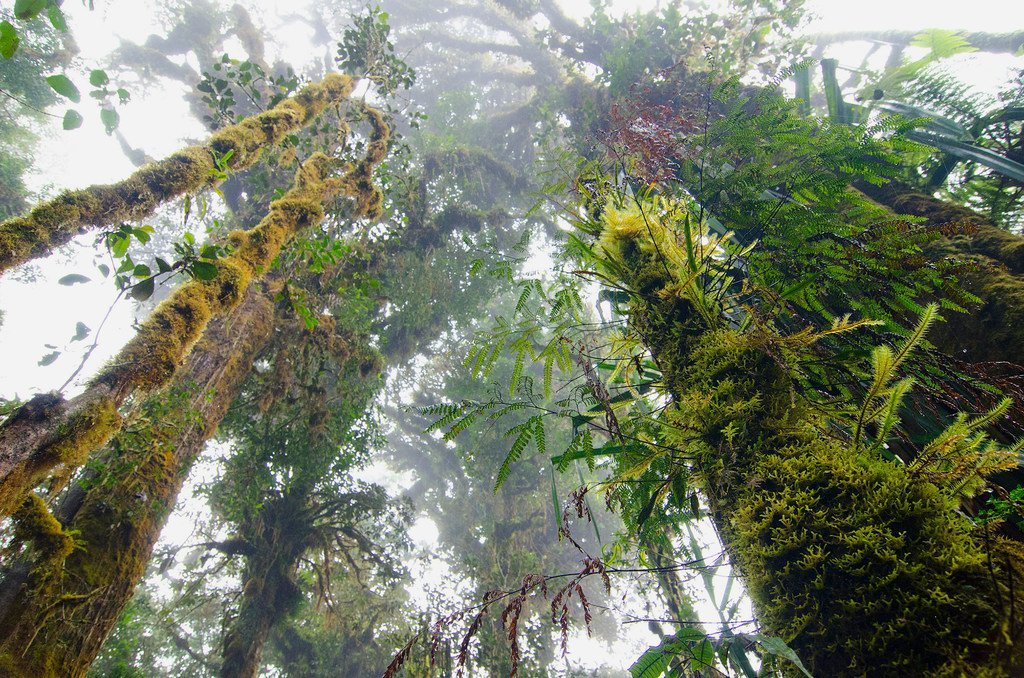
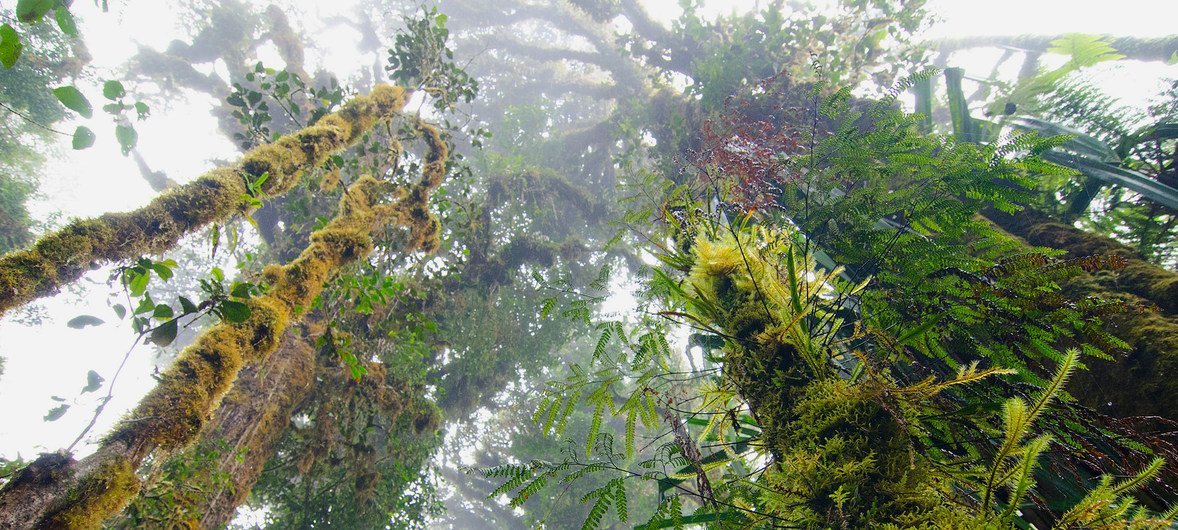
Papua New Guinea’s rainforest (file)

Time for climate justice…

The climate crisis has been high on the agenda throughout the visit, with Mr. Guterres leaving the capital to visit a rainforest region and discuss the problems caused by the changing climate with civil society representatives.

Addressing the media in Port Moresby, the UN chief expressed gratitude and solidarity with Papua New Guineans, for how they are addressing an existential challenge not of their own making.

“Papua New Guinea does not contribute to climate change,” he pointed out. “Papua New Guinea has a negative emissions record, due to an enormous carbon sink: the admirable forests of this country and the ocean.”

He said it was time for the international community to recognise that countries like Papua New Guinea deserve climate justice and support to build resilience against the “devastating impact of climate change.”

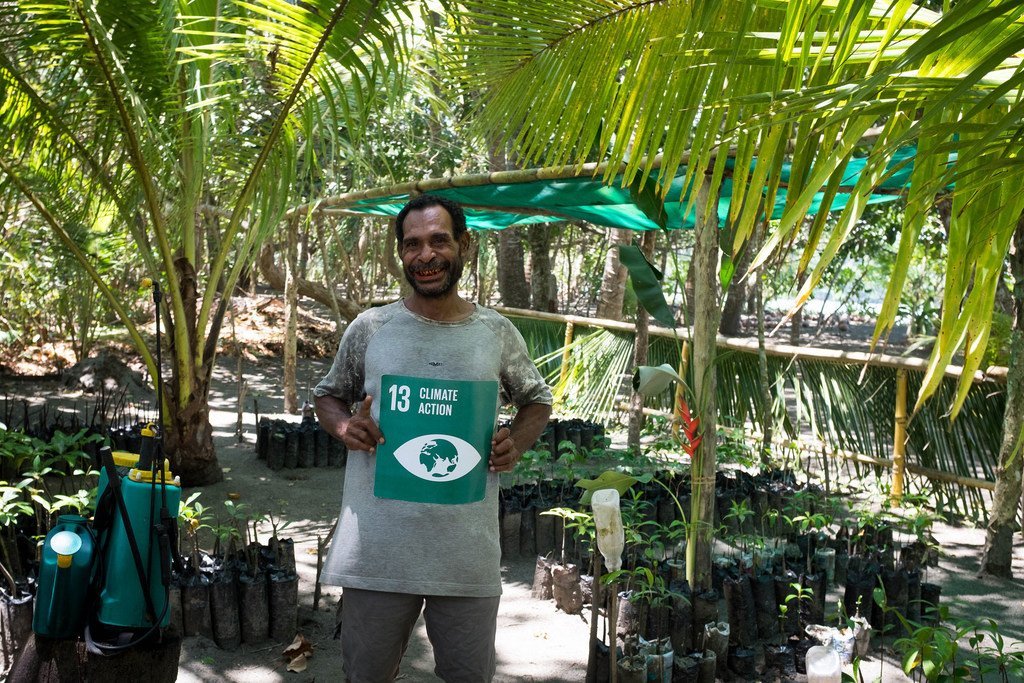
Papuan conservationist Alfred Masul is replanting mangrove trees to build resilience against climate change (file)

…And economic justice

The country’s ability to adapt to the increasingly volatile climate and develop its economy is also hampered, declared Mr. Guterres, by its designation as a middle-income country – which means that it does not have access to the kinds of concessional funding, such as grants, low interest loans and debt relief, that are available to low-income nations.

This, he said, is “an injustice that must be corrected.”

Part of the issue, according to the Secretary-General, is the outdated nature of the international financial architecture (a recurrent theme during his mandate). The institutions created over 75 years ago, need to be reformed “in order for developing countries like Papua New Guinea to have a much stronger voice and a much stronger influence in the way decisions are taken,” he argued, “and a much higher access to the resources that are essential for the development of the country.”

UN chief hails ‘remarkable example’ of Papua New Guinea as he concludes historic trip

Flanked by the country’s Prime Minister, James Marape, Mr. Guterres echoed comments he made during a speech in the national parliament on Wednesday, in which he described Papua New Guineans as “champions of multilateralism and international solutions.”

The Secretary-General noted that, in a world where “we see democratic values being put into question,” the country – where some 800 languages are spoken – retains a preference for solving problems peaceably through dialogue.

Ryan Hawk/Woodland Park Zoo

Papua New Guinea’s rare cloud forests are a high elevation rainforest characterised by low-level cloud cover. (14 June 2011)

Time for climate justice…

The climate crisis has been high on the agenda throughout the visit, with Mr. Guterres leaving the capital to visit a rainforest region and discuss the problems caused by the changing climate with civil society representatives.

Addressing the media in Port Moresby, the UN chief expressed gratitude and solidarity with Papua New Guineans, for how they are addressing an existential challenge not of their own making.

“Papua New Guinea does not contribute to climate change,” he pointed out. “Papua New Guinea has a negative emissions record, due to an enormous carbon sink: the admirable forests of this country and the ocean.”

He said it was time for the international community to recognise that countries like Papua New Guinea deserve climate justice and support to build resilience against the “devastating impact of climate change.”

Local conservationist Alfred Masul is replanting mangrove trees in Papua New Guinea to build resilience against climate change.

…And economic justice

The country’s ability to adapt to the increasingly volatile climate and develop its economy is also hampered, declared Mr. Guterres, by its designation as a middle-income country – which means that it does not have access to the kinds of concessional funding, such as grants, low interest loans and debt relief, that are available to low-income nations.

This, he said, is “an injustice that must be corrected.”

Part of the issue, according to the Secretary-General, is the outdated nature of the international financial architecture (a recurrent theme during his mandate). The institutions created over 75 years ago, need to be reformed “in order for developing countries like Papua New Guinea to have a much stronger voice and a much stronger influence in the way decisions are taken,” he argued, “and a much higher access to the resources that are essential for the development of the country.”

Source link

World News in Brief: Afghanistan quake update, Guterres in Papua New Guinea, Ebola returns to DR Congo, UN condemns attack on peacekeepers in South Sudan

Since the initial earthquake on Sunday in eastern Nangarhar province, landslides and several strong aftershocks have disrupted the work of rescue teams.

In an update, the UN Children’s Fund, UNICEF, said that access routes remain blocked in various locations including the districts of Chawkay and Nurgal, both in Kunar province, although the authorities have deployed earth-moving machinery to restore access.

Latest estimates indicate that approximately half a million people have been affected – including 263,000 children – while at least 5,000 homes have suffered partial or total damage.

Tremors continue

Among the UN agencies operating there, UN Habitat noted that the earthquake had caused massive upheaval in a remote region where recent returnees from Pakistan and Iran were just beginning to settle.

“There are still more earthquakes every day in the region, causing landslides and making access even harder,” said UN Habitat’s Stephanie Loose in the capital, Kabul.

She noted that women and girls were the main victims because of strict rules preventing them from leaving their homes alone.

“Many of them, due to cultural norms or restrictions imposed, didn’t dare to leave their houses; nor are there sufficient female doctors in the country, and I understand they are not able to reach the women who would need it,” Ms. Loose said.

Papua New Guinea’s on the frontline of climate change, warns Guterres

Papua New Guinea and the Pacific islands are climate change’s “Ground Zero” whose precious rain forests and ecosystems deserve the world’s support to ensure they’re protected, the UN Secretary-General said on Thursday.

Speaking from Papua New Guinea where he visited the world’s third largest rainforest and sat down with civil society representatives, António Guterres highlighted the challenges brought about by climate change in the region.

It’s the first ever visit to the southwest Pacific nation by a sitting Secretary-General.

Earlier, he repeated his warning that the 1.5 degree limit on the rise in global temperatures agreed to under the 2015 Paris Agreement remains in jeopardy.

And although scientists say that it is still possible to limit global warming, the UN chief urged countries to unveil their new national climate plans to reduce emissions and “seize the opportunities” arising from the renewable energy revolution.

New Ebola outbreak declared in DR Congo

Health authorities in the Democratic Republic of the Congo (DRC) have declared an outbreak of Ebola virus disease in Kasai province where 28 suspected cases and 15 deaths – including four health workers – have been reported as of Thursday.

The outbreak is concentrated in the Bulape and Mweka health zones in Kasai Province, in the south-central region of DRC. Symptoms of the rare – but severe – and often fatal illness, include fever, vomiting, diarrhoea and haemorrhaging.

Samples tested on 3 September at the country’s National Institute of Biomedical Research in the capital Kinshasa confirmed the cause of the outbreak as the Ebola Zaire strain.

Experts deployed

A national Rapid Response Team assisted by UN World Health Organization (WHO) experts in epidemiology, infection prevention and control – as well as case management – has been deployed to Kasai province.

Communication experts have also been deployed to reach communities and help them understand how to protect themselves.

Additionally, WHO is delivering two tonnes of supplies including personal protective equipment, mobile laboratory equipment and medical supplies.

The area is difficult to reach and at least a day’s drive from the provincial capital Tshikapa, with few air links.   

“We’re acting with determination to rapidly halt the spread of the virus and protect communities,” said Dr Mohamed Janabi, WHO Regional Director for Africa.

“Banking on the country’s long-standing expertise in controlling viral disease outbreaks, we’re working closely with the health authorities to quickly scale up key response measures to end the outbreak as soon as possible.”

Cases likely to rise

Case numbers are likely to increase as transmission is ongoing.

The country has a stockpile of treatments, as well as 2,000 doses of the Ervebo Ebola vaccine already prepositioned in the capital city Kinshasa that will be quickly moved to Kasai to vaccinate contacts and frontline health workers.   

The DRC’s last outbreak affected the northwestern Equateur province in April 2022.

It was brought under control in under three months thanks to the robust efforts of the health authorities. In Kasai province, previous outbreaks of Ebola virus disease were reported in 2007 and 2008. In the country overall, there have been 15 outbreaks since the disease was first identified in 1976.

UN condemns attack on peacekeepers in South Sudan

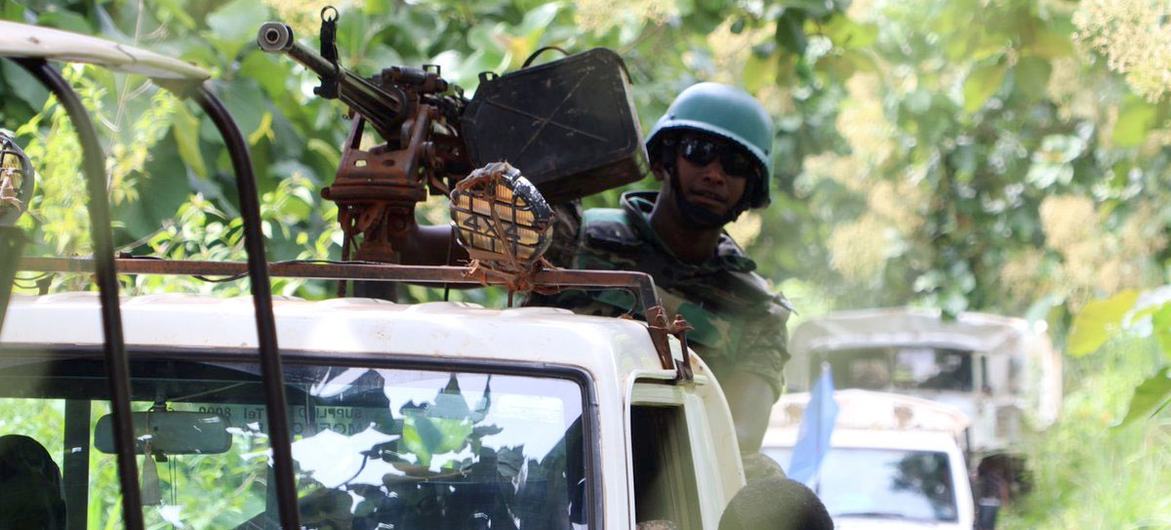
The UN peacekeeping mission in South Sudan, UNMISS, has condemned an attack by a local armed group which targeted “blue helmets” in Western Equatoria state.

The militants subsequently seized a small cache of weapons and ammunition. The incident occurred while peacekeepers were conducting a patrol between Tambura and Mapuse.

“We emphasise that any attack against peacekeepers may constitute a war crime,” UN Spokesperson Stéphane Dujarric said at the daily press briefing in New York on Thursday.

“These peacekeepers are deployed to protect civilians at a time when access and security remain fragile across Western Equatoria,” he added.

Meanwhile, widespread flooding is also impacting hundreds of thousands of people in several parts of the world’s youngest nation, which became embroiled in civil war soon after gaining independence in 2011.

A fragile 2018 peace accord is in danger of unravelling amid fresh offensives and deteriorating humanitarian conditions.

Flooding affects 270,000

Local reports suggest that over 270,000 people are affected by flooding in 12 counties across four states.

These areas were already grappling with floods, displacement, food security and cholera, said Mr. Dujarric, with farmland, homes and humanitarian facilities now submerged, disrupting access to education, health, nutrition and water services.

UN humanitarians say overcrowding at relocation sites has led to tensions among displaced families at the same time, reports of waterborne diseases and snake bites are increasing public health risks.

Peacekeepers serving with the UN Mission in South Sudan (UNMISS) have increased their presence and intensified vehicle patrols, navigating treacherous, rain-soaked routes both day and night.


Guterres hails Papua New Guinea as an example of diversity, dialogue and climate action

António Guterres is the first serving UN Secretary-General to visit the country, which is celebrating 50 years of independence.

He praised its tremendous diversity, with over 800 languages spoken and countless traditions.

Commitment to peace, dignity and progress

“And yet, you have a shared commitment to speak with one voice – to having ‘one talk’ – for peace, for dignity and for progress,” he said.

“You are champions of multilateralism and international solutions. And that spirit is urgently needed in our world today.”

He said that “Papua New Guinea offers a number of powerful lessons to the world”, with the first being forging consensus through dialogue.

The country has spent the past half century working to build “a single nation out of many traditions, many islands, many tongues”, which has not been easy.

Last Saturday, 30 August, marked 24 years since the signing of the Bougainville Peace Agreement. The accord between the Government and separatists ended a decade of conflict and established the autonomous Bougainville region.

Mr. Guterres said that while the conflict left deep scars, Papua New Guinea and Bougainville have stayed the course of peace for more than two decades.

“You have shown the world the path of healing through dialogue, perseverance and mutual respect,” he said, adding that people in Bougainville will go to the polls on Thursday in the fifth autonomous election since the agreement.

Leadership in climate action

Another lesson from Papua New Guinea has been bold climate action.

This was the Secretary-General’s first visit to the Pacific region since the International Court of Justice (ICJ), the UN’s highest judicial body, issued a landmark advisory opinion affirming that addressing the climate crisis is a legal obligation under international law.

As Pacific countries played a central role, the advisory opinion “is a testament to the leadership of Papua New Guinea, Melanesia and the wider Pacific region, particularly your young people, who make up 60 per cent of your population”, he said.

A crucial voice

“Your voice will be integral again during the annual UN climate conference in Belem, Brazil,” he said, warning that efforts to limit global temperature rise to 1.5 degrees Celsius are in jeopardy.

He urged countries to submit new national climate plans that align with this goal, cover all emissions across their economies and accelerate the transition from fossil fuels.

Mr. Guterres also called for action on climate finance, including stepping up contributions to the loss and damage fund, while richer countries must honour their promise to double adaptation finance and deliver $300 billion each year over the next decade.

Furthermore, as many developing countries are “drowning in unsustainable debt”, reform of the current international financial architecture is needed to make it fairer and more representative. The same applies to the UN Security Council and other international institutions.

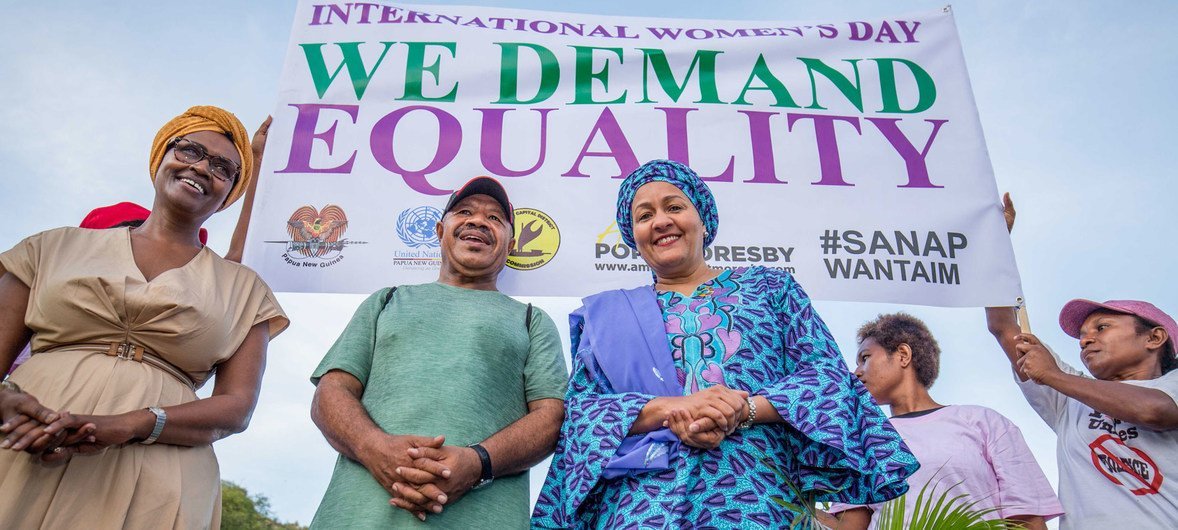
The UN Deputy Secretary-General, Amina Mohammed (centre right) joined a march in support of International Women’s Day in Port Moresby, Papua New Guinea, in March 2020.

Representation of women

The UN chief noted that Papua New Guinea once hosted peacekeepers, but today is a champion of peacebuilding and sustainable development.

He stressed, however, that “no story of peace or progress is complete without fully including half of the population”, highlighting another area where the country can set an example.

He recalled that UN Deputy Secretary-General Amina Mohammed was there five years ago for the national launch of the Spotlight Initiative — part of the world’s largest effort to end all forms of violence against women and girls, a challenge that exists in all societies.

In March, parliament devoted an entire day to testimonies on gender-based violence, marking a vital step.

“Ensuring greater voice and representation of women is not only a matter of justice — it is a matter of national strength,” he said.

“Families thrive. Communities grow stronger. And institutions become more responsive when we uphold the rights of all.”  

Trial Results Show Ebola Vaccine Developed by Merck is Working: WHO

The World Health Organization (WHO) has said that an experimental Ebola vaccine has been found to be highly protective against the deadly virus in a major trial in Guinea.

WHO said that an international vaccine-focussed organization, GAVI, provided $5 million to Merck, and the medical firm committed to ensure that 300,000 doses of the vaccine are available for emergency use in the interim, and to submit the vaccine for licensure by the end of 2017.
Merck has also submitted the vaccine to WHO’s Emergency Use and Assessment Listing procedure, a mechanism through which experimental vaccines, medicines and diagnostics can be made available for use prior to formal licensure.

“The vaccine is the first to prevent infection from one of the most lethal known pathogens, and the findings add weight to early trial results published last year,” WHO said in a release, noting the results of the latest trial, published in the medical journal The Lancet.

According to WHO, the vaccine, rVSV-ZEBOV was studied in a trial involving 11,841 people in Guinea during 2015. Among the 5,837 people who received the vaccine, no Ebola cases were recorded 10 days or more after vaccination. In comparison, there were 23 cases 10 days or more after vaccination among those who did not receive the vaccine.

“While these compelling results come too late for those who lost their lives during West Africa’s Ebola epidemic, they show that when the next Ebola outbreak hits, we will not be defenceless,” said Dr. Marie-Paule Kieny, WHO’ Assistant Director-General for Health Systems and Innovation, and the study’s lead author.

The Ebola virus was first identified in 1976 and caused sporadic outbreaks in Africa. However, the 2013-2016 outbreak in west Africa, that killed more than 11,300 people, underlined the urgent need of a vaccine.

The trial took place in the coastal region of Basse-Guinée, the area of Guinea still experiencing new Ebola cases when the trial started in 2015.

It employed an innovative design, a so-called “ring vaccination” approach – the same method used to eradicate small pox. This involved tracing all people who may have been in contact with a new Ebola case within the previous three weeks as well as certain “contacts of contacts.” These “rings” were randomized to receive the vaccine either immediately or after a three-week delay.

However, the authors note that the trial was not designed to measure this effect, so more research will be needed.