
UN chief calls for justice and ‘real change’ for people of African descent

In a message released ahead of the Day, Mr. Guterres honoured the “extraordinary” contributions of people of African descent across every sphere of human endeavour. The Secretary-General also recognised the “long shadows” of slavery and colonialism, which include systemic racism, unequal economies and societies, and the digital divide (between those who are able to benefit from digital technology, and those who don’t have access).

Mr. Guterres hailed the Global Digital Compact – adopted in 2024 as part of the Pact for the Future, which promotes a multilateral system that reflects today’s realities and delivers for everyone, everywhere – as a step forward, citing commitments to tackle discrimination and hate speech in digital technologies. “White supremacy and dehumanising narratives,” wrote the UN chief, “are amplified by social media, and, too often, racial bias is encoded in algorithms.”

“Eighty years after the United Nations Charter reaffirmed the equal rights and inherent dignity of every human being, and sixty years since the adoption of the International Convention on the Elimination of All Forms of Racial Discrimination,” he concluded, “it is long past time to right historic wrongs.”

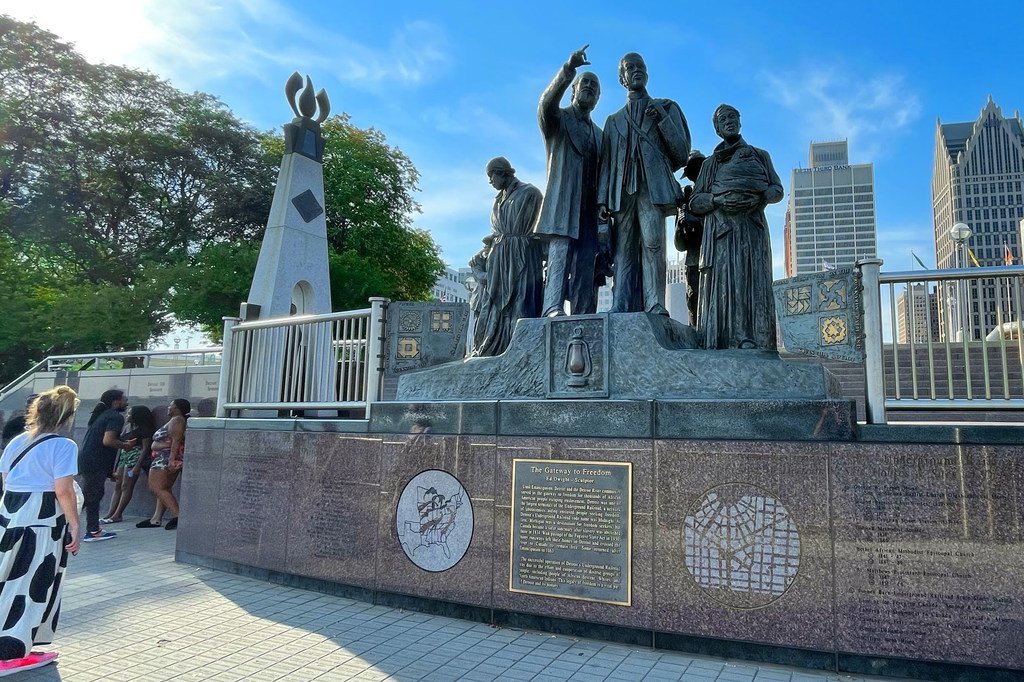
The Gateway to Freedom: International Memorial to the Underground Railroad in Detroit, Michigan, dedicated in 2001.

A decade of action

This year’s International Day is the first to take place during the second International Decade for People of African Descent, which runs from January 1, 2025, to December 31, 2034. The decade, which embraces the theme “People of African Descent: Recognition, Justice, and Development,” aims to highlight the importance of acknowledging the rights and contributions of people of African descent. Mr. Guterres has called for the next ten years to drive “real change,” including working towards a United Nations Declaration on the full respect of people of African descent’s human rights.

The first Decade saw more than 30 countries change their laws and policies to tackle racial discrimination and address specific issues faced by people of African descent – in some cases for the first time. The Permanent Forum on People of African Descent, was created, and new International Days were launched to celebrate the contributions of the diaspora, including those of women and girls.

Building on the progress made between 2015 and 2024, the second Decade seeks to amplify global efforts toward justice and development for individuals of African descent and create a more equitable future, in which the aspirations and rights of people of African descent are fully recognised, honoured, and celebrated.

Source link

The descent into ‘a massive famine’ in Gaza has begun, relief agencies warn

Although the private aid platform run by the US and Israeli-backed Gaza Humanitarian Foundation continues to receive its own supplies, “we are on a descent into a massive famine”, insisted Jens Laerke, spokesperson for the UN aid coordination office, OCHA, on Friday.

Referring to the latest catastrophic assessment of food insecurity in Gaza from the UN-backed IPC group of experts, Mr. Laerke noted that 500,000 people are in the worst possible situation today, with another 160,000 expected to be added to that number in the coming weeks.

Everyone lacks food

“They all need food,” he told journalists in Geneva. The entire Gaza Strip needs food. There would not have been declared famine had there been sufficient amounts of food.”

In a related development, the UN World Health Organization (WHO) highlighted the growing risk of communicable diseases in Gaza, with 94 suspected cases of Guillain-Barré Syndrome now reported.

The disease can cause paralysis and is treatable in hospital with intravenous immunoglobulin or plasma exchange, according to WHO. “But these two [treatments] are at zero stock, as are anti-inflammatories,” said WHO spokesperson Christian Lindmeier, referencing ongoing Israeli aid restrictions impacting humanitarian relief supplies entering Gaza. “These deliveries must be urgently expedited as much as surveillance and testing capabilities.”

Between 20 and 26 August, out of 89 attempts to coordinate relief missions with Israeli authorities across Gaza, 53 were facilitated, 23 were initially approved but then impeded on the ground, seven were denied and six had to be withdrawn by the organizers, OCHA said in an update.

More to come on this developing story…

Source link

Women and girls of African descent: celebrating contributions, recognizing challenges

It recognizes their immense contributions to society but also acknowledges the challenges they face due to the double burden of racism and sexism.

Although woman and girls of African descent embody strength, resilience, and untapped potential, they remain among the most marginalized groups globally due to the intersection of racial, gender, and socio-economic discrimination.

For example, they suffer alarming maternal mortality rates, according to the UN’s reproductive health agency, UNFPA. Oftentimes, cases are not related to income or education, but rather to racism and structural inequality stemming from a legacy of slavery and colonialism.

“The good news though, is these things are not irreversible,” Patricia DaSilva, a senior programme adviser with the agency told UN News.

“We can fix them. We have the solutions for many of the problems that we are facing in terms of maternal health for women and girls of African descent.”

Data and solutions

UNFPA advocates for stronger health systems and investment in midwifery programmes, culturally sensitive training for healthcare providers, and improvements in data collection.

The agency also invests in partnerships, such as an initiative in the Pacific region of Colombia, home to large communities of people of African descent.

“We have worked with the traditional midwives for them to integrate ancestral knowledge with modern health practices. And this includes supporting accurate birth registration,” she said.

“It sounds like a really simple thing, but when you are in a remote community without access to technology, without access to administrative offices, it becomes this really, really important issue.”

Agents of change

Ms. DaSilva upheld the theme for the International Day, which focuses on women and girls of African descent as leaders, not just beneficiaries.

“I think it is important that the international community, the global community, understands that women and girls of African descent are not recipients of aid.  They are leaders. They are innovators. They are agents of change,” she said.

“We have an opportunity and even an obligation and a responsibility to support the efforts to resource their solutions, to elevate their voices and continue to really double our efforts to dismantle the structural barriers that continue to impede their progress.”

The first celebration of the International Day coincides with the start of the Second International Decade for People of African Descent, which runs through 2034.

Source link