Ukraine: UN aid convoy reaches frontlines in Dnipro

UN Spokesperson Stéphane Dujarric told reporters that access to the town had been “extremely difficult due to the continued fighting.” Of the 10,000 people who lived there before the full-scale invasion in February 2022, only about 500 remain, “most of them older people and people with disabilities.”

According to Ukrainian authorities, hostilities between Tuesday and Wednesday morning caused several civilian deaths and injuries, including children. The regions of Donetsk, Dnipro, Sumy and Kherson were reported to be the hardest hit.

In Zaporizhzhia region, a hospital and a pre-school were damaged, and thousands of people were left without heating following an attack, underscoring the strain on essential services as winter conditions persist.

Drone strike devastates family

Meanwhile, a Russian drone strike killed a father and three young children and left a pregnant woman critically injured in the town of Bohodukhiv in the Kharkiv region, humanitarian workers said on Wednesday.

The attack occurred around midnight Tuesday into Wednesday, completely destroying the family home, according to Olena Labzeva of the Humanitarian Mission Proliska.

The father, who had a disability, and the couple’s three children – including toddlers aged one and two – were killed.

A neighbour who heard the explosion pulled the injured woman from the burning rubble. She remains in an extremely serious physical and psychological condition in hospital.

Damage costs exceed $176 billion

Amid the ongoing violence, UN agencies are also supporting longer-term recovery efforts.

The UN Development Programme (UNDP) said it has now helped clear one million tonnes of debris since the start of the full-scale invasion, restoring safe access to more than 200 public locations and enabling reconstruction at over 1,600 heavily damaged sites – including homes, schools and hospitals.

Direct damage to Ukraine’s buildings and infrastructure was estimated at $176 billion by the end of 2024, with debris posing a major obstacle to rebuilding and the return of residents.

Health system under severe strain

At the same time, the war’s devastation is placing additional pressure on the health system.

Repeated strikes on energy facilities have disrupted electricity, heating and water supplies, complicating care for pregnant women and newborns, particularly during freezing winter temperatures.

According to the UN reproductive health agency, UNFPA, doctors and nurses have reported power outages during complex surgical procedures.

They are also seeing more potentially life-threatening obstetric emergencies, including hypertension and uterine rupture, signalling a maternal health system under severe strain.

Just under 12 per cent of babies are born preterm in frontline areas – nearly double the national rate.

UNFPA is supplying maternity hospitals with back-up energy systems and life-saving reproductive health supplies, while calling for sustained international support.

Source link

Guterres calls for immediate Gaza ceasefire as humanitarian crisis reaches ‘horrific proportions’

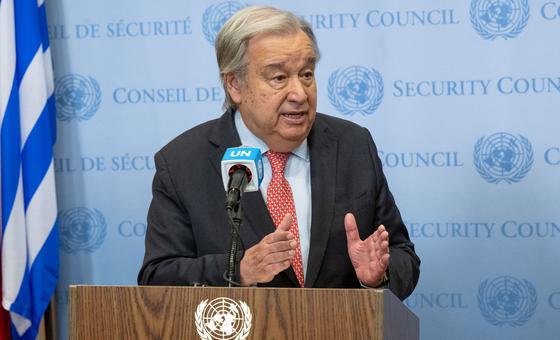
Speaking to reporters at UN Headquarters ahead of his departure to Spain for the International Conference on Financing for Development, the Secretary-General said that while the Israel-Iran conflict had dominated recent headlines, the plight of civilians in Gaza remained urgent and dire.

Families have been displaced again and again – and are now confined to less than one-fifth of Gaza’s land,” he said.

Even these shrinking spaces are under threat. Bombs are falling – on tents, on families, on those with nowhere left to run.

Search for food must never be a death sentence

Mr. Guterres described the situation as the most severe since the onset of the war, citing acute shortages of food, fuel, medicine and shelter.

The search for food must never be a death sentence,” he said, highlighting the danger faced by Palestinians simply trying to survive.

He has repeatedly called for three urgent steps: an immediate ceasefire, the unconditional release of all hostages, and full, unimpeded humanitarian access.

On Friday, he again pressed for these demands, emphasising that aid workers are starving, hospitals are rationing life-saving supplies and civilians are trapped in unsafe zones.

Surge in aid urgently needed

“What’s needed now is a surge – the trickle must become an ocean,” he said.

The UN chief stressed that Israel, as the occupying power, is legally obliged to facilitate humanitarian relief.

“To those in power, I say: enable our operations as international humanitarian law demands. To those with influence, I say: use it,” he added.

Earlier this week, a small convoy of UN medical supplies entered Gaza for the first time in months, Mr. Guterres noted, adding that it only underscored the overwhelming scale of the need.

He also also cautioned that any aid delivery method must ensure civilian safety, stressing that “operations which place desperate people in or near militarized areas are inherently unsafe.”

We have the solution – a detailed plan grounded in the humanitarian principles of humanity, impartiality, neutrality, and independence,” he said.

It worked during the last ceasefire. So it must be allowed to work again.

Two-State solution critical

Mr. Guterres concluded with a broader political appeal:

The only sustainable path to re-establishing hope is by paving the way to the two-State solution. Diplomacy and human dignity for all must prevail.

Source link

DR Congo aid operation reaches Beni with food supplies for thousands

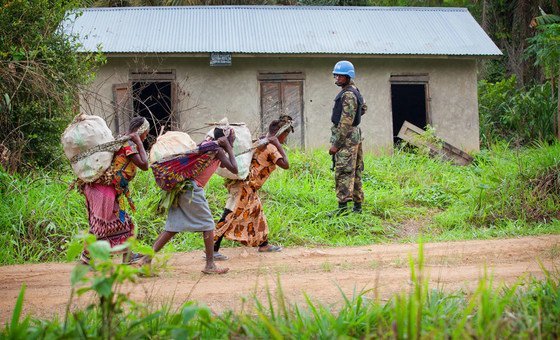
The UN World Food Programme (WFP) said that trucks packed with cereals, beans and cooking oil reached the city of Beni in North Kivu province from neighbouring Uganda, amid clashes between Rwanda-backed M23 rebel fighters and Congolese forces.

Aid for 140,000

WFP said that it intends to use the thousands of tonnes of relief supplies transported to warehouses in Beni to help around 140,000 people living in Lubero territory, south of the city of Butembo.

Violence escalated on 2 May across Lubero territory, uprooting some 30,000 people, according to the UN aid coordination office, OCHA.

The development comes amid ongoing peace talks in Qatar between the DRC Government and the M23 rebels. At previous talks in April, both sides pledged to work towards peace.

Amid rampant insecurity caused by proliferating armed groups, the Rwandan-backed M23 rebels have been at war for years with the Congolese army and allied forces in the mineral-rich region. In 2021, negotiations between the group and Kinshasa collapsed.

January offensive

Hostilities ramped up in January this year when M23 fighters captured Goma, the capital of North Kivu Province. A month later they seized Bukavu, the capital of South Kivu and threatened to take Kinshasa, on the other side of the huge country.

Since then, ongoing fighting has caused mass displacement, killed more than 7,000 people and fuelled fears of regional conflict.

A total of 21 million people need humanitarian assistance in DRC today. UN aid teams and partners remain on the ground to help and have condemned the looting of aid warehouses by armed groups which have destroyed food and medicine.

Source link