University of Galway-led research has discovered that when low smoke manufactured fuels are burnt, they emit minute ultrafine particles which may be even more detrimental to human health.
The Ryan Institute at the University conducted several controlled burn experiments with peat, wood, “low-smoke” manufactured products, such as “low-smoke” coal – since 2022, banned in domestic stoves – and several domestic heating fuels to figure out precisely what various domestic fuels emit to the air.
The scientists quantified the smoke with sophisticated equipment that relies on monitoring the number of particles that are generated, their size, and their composition.
The team also took real-life measurements of air in Dublin and Birr, Co Offaly over a period of several years and thus they were able to compare lab results and what people actually breath in during periods of winter pollution.
With the help of these measurements and known statistical fingerprinting methods and proven lung-deposition models, the researchers were able to determine the most harmful contribution of fumes by different fuels and how deep these particles may enter the respiratory system.
The findings – the ones witnessed in a low smoke zone in Ireland and applicable in the rest of Europe and with immense implications on the regions that are in an extremely rapid transition like those in China and India – indicate that the EU, international and national regulatory frameworks must react quicker to the accumulating body of scientific evidence.
This study was published in Nature Geosciences.
This was a research conducted by the Centre of Climate and Air Pollution Studies, Ryan Institute, University of Galway, in conjunction with Irish, Chinese, Australian and USA partners.
Director of the Centre of Climate and Air Pollution Studies, Professor Jurgita Ovadnevaite at the Ryan Institute, University of Galway, stated: “In an attempt to reduce the amount of particulate mass, our research indicates that emissions of the smallest particles have been inadvertently increased and this could be even more detrimental to the human condition than the larger ones. These ultrafine particles of the low smoke fuels get to the deepest point of the lungs, then to the cardiovascular system and it even gets to the brain.
On this basis, we highlight why we should abandon residential solid fuel burning as one of the broader societal goals to decarbonise the economy by 2050.
The research also reveals that there is a serious necessity to revise EU and International air quality standards and cover ultrafine particles in the list of pollutants so that the mass concentration may be managed without an increase in the number of ultrafine particles.
In the study, it is shown that the substitution of smoky fuels with the low-smoke counterparts doubles and even triples the amount of ultrafines emissions.
Taking into account the fact that the smaller ultrafine particles are capable of penetrating more deeply into the lungs and settling there, the newly recorded trend can offset some of the benefits of the reduction in smoke emission. Rather than decreasing the total exposure of the human being to ultrafine particles by decreasing the total mass of the particulate matter (PM), it leads to a subsequent increase in the number of ultrafine particles and, possibly, health effects.


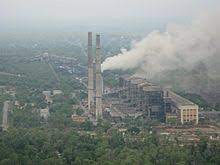
Air pollution/Photo:en.wikipedia.org
Literature indicates that the concentrations of the number of particles in the air are greatly (ten times) underrated in the existing air quality models.
Air pollution causes a number of several million premature deaths every year around the world. One of the greatest factors contributing to this frightening statistic is exposure to airborne fine particulate matter (PM2.5; less than 2.5 um in diameter). PM2.5 pollution is associated with over 1,700 premature deaths per year even in Ireland, which is commonly viewed to have clean air. Ultrafine particles (smaller than 100 nm in diameter), in comparison to PM2.5, cause more severe pulmonary inflammation and long-term lung retention because of their potential to penetrate deep to the respiratory tract even through the bloodbrain barrier. They become more toxic with diminishing size, greater specific surface area, constituents that are bound on the surface and their intrinsic physical characteristics.
Although the health impact of ultrafine particles continues to be identified as a health issue in the European policy, with the recent amendment of the Ambient Air Quality Directive (EU 2024/2881), the first time that includes the obligatory monitoring of ultrafine particles in the Member States. This research contributes to the literature that the directive should extend further and establish binding regulatory limit values of ultrafine particles.
The Centre for Climate and Air Pollution Studies, University of Galway, offers evidence to policymakers in the country and EU, aiding in the formulation of air-quality standards, emission-reduction policies and planning of climate actions. Its effort is the foundation of the ability of Ireland to comply with new regulatory standards, such as the new EU regulations on the ultrafine particle monitoring.
Read More:
Belém COP30 delivers climate finance boost and a pledge to plan fossil fuel transition
The Oil Shock Lesson: Why Energy Diversification Is Back On The Global Agenda