Artemis II Update-9, Day 3: NASA cancels first trajectory correction burn

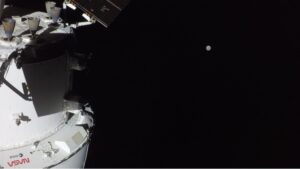
NASA confirmed on April 4 that Artemis II’s first planned trajectory correction burn was canceled after Orion remained on its precise path to the Moon. The crew, traveling toward a scheduled lunar flyby on April 6, continues operations without the need for immediate adjustments. Mission controllers in Houston determined the spacecraft’s trajectory required no correction at this stage, with future burns still available if needed.


Artemis II Update-7, Day 2 : Orion completes Translunar Injection burn , crew begins journey to Moon

NASA’s Artemis II crew began their journey to the Moon on April 2 after Orion completed a translunar injection burn lasting nearly six minutes. The maneuver sent astronauts Reid Wiseman, Victor Glover, Christina Koch, and Jeremy Hansen out of Earth orbit for the first time since 1972. The spacecraft is now on a trajectory toward a planned lunar flyby, with scientific observations scheduled in the coming days.

For the first time in more than half a century, humans are no longer orbiting Earth. They are heading for the Moon.

At 7:49 p.m. Eastern Time on April 2, NASA’s Orion spacecraft ignited its engine and began accelerating out of Earth’s gravitational hold. The burn lasted five minutes and 50 seconds. When it ended, Artemis II had crossed a threshold not reached since the Apollo era.

The mission, led by the National Aeronautics and Space Administration, is now on a trajectory that will carry its crew around the Moon and back.

Translunar injection burn performance and Orion trajectory

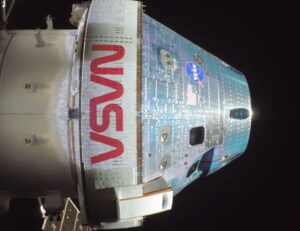
The translunar injection burn marked the mission’s most consequential maneuver to date. Orion’s main engine, capable of producing up to 6,000 pounds of thrust, fired as planned, pushing the spacecraft onto a path toward the Moon.

At the time of ignition, Orion had a mass of about 58,000 pounds. During the burn, it consumed roughly 1,000 pounds of propellant, according to NASA mission data.

The maneuver required precise timing and alignment. Even small deviations could shift the spacecraft’s trajectory over the distance between Earth and the Moon.

With the burn complete, Orion is no longer bound to low Earth orbit. It is now traveling along a translunar path that will bring the crew into the Moon’s vicinity in the coming days.

The milestone places Artemis II alongside historic missions such as Apollo 17, which marked the last time astronauts traveled beyond Earth orbit.

NASA

Crew operations, exercise systems, and onboard experiments

As Orion moves deeper into space, the crew has begun settling into daily operations designed for long-duration missions.

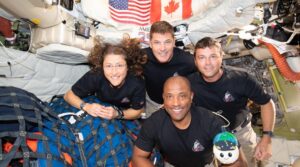
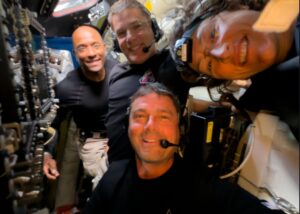
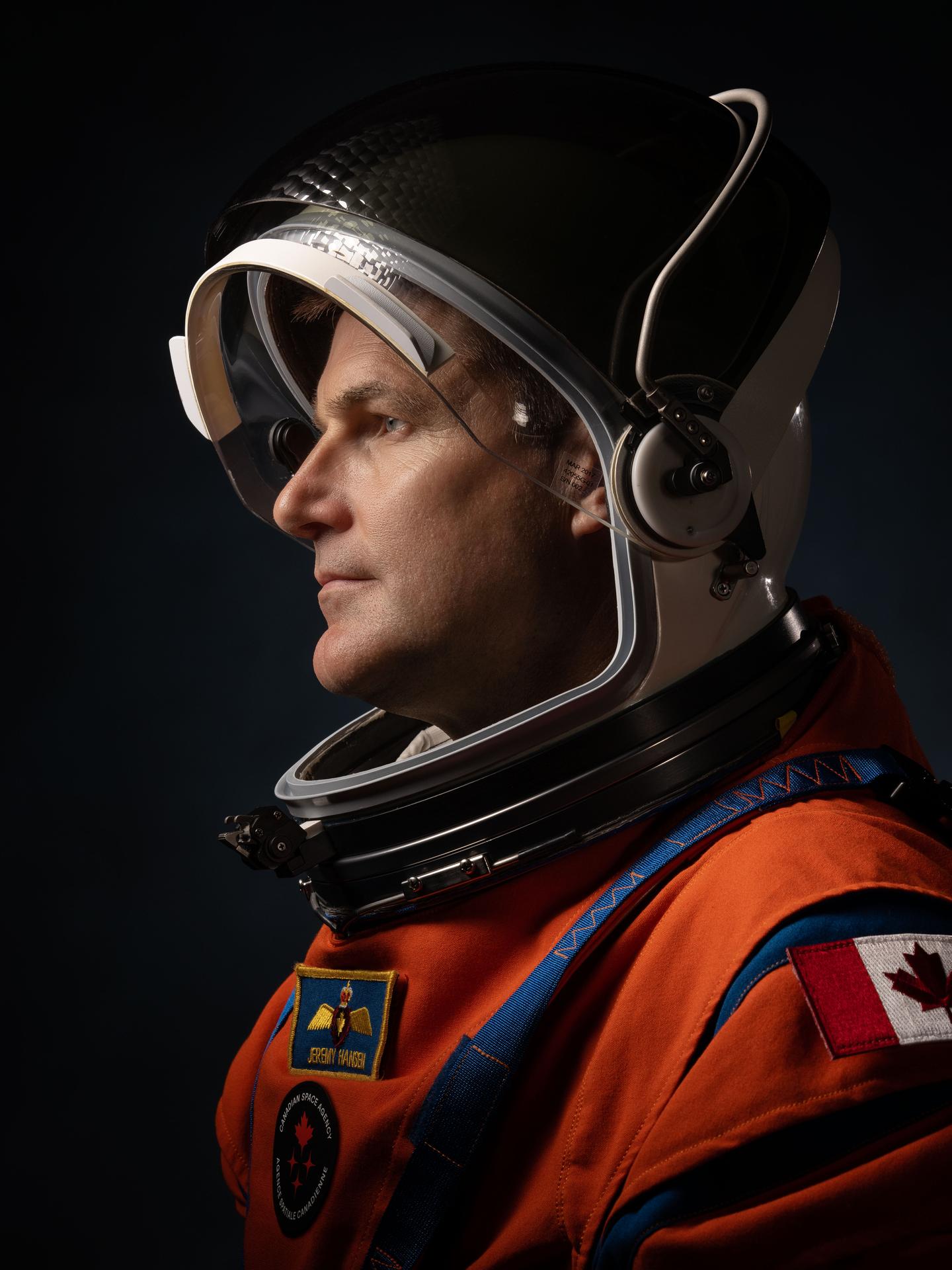
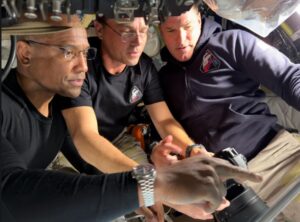
NASA astronauts Reid Wiseman, Victor Glover, and Christina Koch are joined by Jeremy Hansen of the Canadian Space Agency.

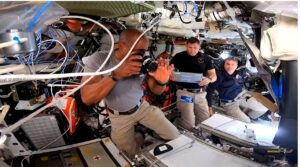
The astronauts are using a compact flywheel exercise device to maintain physical conditioning. The system relies on a cable-based mechanism that provides resistance based on applied force, supporting both aerobic and strength exercises. It can generate loads of up to 400 pounds while weighing only about 30 pounds, a design suited to the mass constraints of deep space missions.

By comparison, exercise equipment aboard the International Space Station weighs several thousand pounds and occupies far more space. Orion’s system is designed to deliver similar benefits in a much smaller footprint.

During exercise sessions, ground teams monitored Orion’s air revitalization system, which regulates oxygen, carbon dioxide, and cabin conditions. Engineers also assessed how crew movement affects spacecraft stability.

The crew has also completed checks on the AVATAR scientific payload, part of the mission’s broader research objectives.

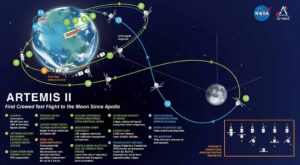
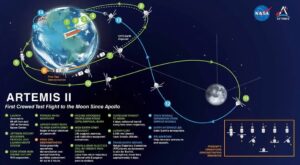
Trajectory for Artemis II, NASA’s first flight with crew aboard SLS, Orion to pave the way for long-term return to the Moon, missions to Mars

Communications glitch resolved and lunar science plan begins

Engineers investigated a brief loss of two-way communication that occurred earlier in the mission. NASA determined the issue stemmed from a ground configuration problem involving the Tracking and Data Relay Satellite system.

The system, which supports communication between spacecraft and Earth, was quickly reconfigured. NASA reported no impact on mission operations.

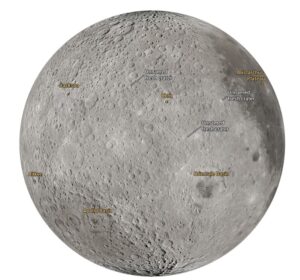
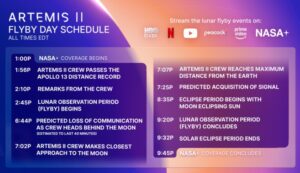
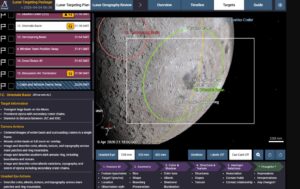
Attention is now shifting toward the upcoming lunar flyby. A dedicated science team has begun developing a Lunar Targeting Plan, which will guide what the crew observes during a roughly six-hour window near the Moon on April 6.

The plan includes studying surface features such as impact craters, ancient lava plains, and tectonic structures. These observations are intended to support research into the Moon’s formation and the broader history of the solar system.

One planned highlight is a solar eclipse visible from Orion’s vantage point. As the Moon blocks the Sun, the crew will have an opportunity to observe the solar corona, the Sun’s outer atmosphere, and look for flashes caused by meteoroid impacts on the lunar surface.

The sequence of events marks a transition point. Artemis II has moved beyond Earth orbit and into deep space, carrying its crew toward a destinatio:n that has not hosted human visitors in decades.
Also Read:

Artemis II Update-6, Day 2 : Crew, houston poll ‘Go’ for Translunar injection burn, crew prepares for Moon flight

Artemis II Update-5: Perigee raise burn complete, translunar injection burn next

Artemis II Update-6, Day 2 : Crew, houston poll ‘Go’ for Translunar injection burn, crew prepares for Moon flight

NASA approved the translunar injection burn for Artemis II on April 2, clearing the Orion spacecraft to leave Earth orbit at 7:49 p.m. EDT. The burn will send astronauts Reid Wiseman, Victor Glover, Christina Koch, and Jeremy Hansen toward the Moon for the first time since 1972. The decision follows a mission management review confirming spacecraft readiness and system performance.

The call came from Houston after a day of checks and calculations. The answer was simple. Go.

With that, NASA cleared Artemis II to attempt the maneuver that will send its crew beyond Earth orbit. If executed as planned, the burn will place humans on a path toward the Moon for the first time in more than five decades.

The mission marks a major step for the National Aeronautics and Space Administration and its Artemis program, which aims to return astronauts to deep space operations.

Translunar injection burn timing and Orion engine performance

The translunar injection burn is scheduled to begin at 7:49 p.m. Eastern Time. Orion’s main engine will fire for five minutes and 49 seconds, providing the acceleration needed to break free from Earth’s orbit.

The engine, located on the spacecraft’s service module, produces up to 6,000 pounds of thrust. NASA compares that output to accelerating a car from zero to 60 miles per hour in about 2.7 seconds.

The burn must be executed with precise timing and orientation. Even minor deviations can alter the spacecraft’s path over the hundreds of thousands of miles between Earth and the Moon.

Flight controllers will track engine performance, guidance systems, and navigation data in real time to ensure Orion remains aligned with its intended trajectory.

NASA flight directors Rick Henfling (right) and Judd Frieling (left) sit on console in Mission Control’s White Flight Control room during NASA’s Artemis II mission launch on Wednesday, April 1, 2026.
ROBERT MARKOWITZ NASA-JSC

Crew activities and first full day operations in space

Earlier in the day, the Artemis II crew began their first full schedule of in-space operations. NASA astronauts Reid Wiseman, Victor Glover, and Christina Koch were joined by Jeremy Hansen of the Canadian Space Agency.

Mission control woke the crew at 2:35 p.m. Eastern Time with the song “Green Light” by John Legend and Andre 3000, continuing a long-standing NASA tradition of musical wake-up calls.

The astronauts moved into preparations for the burn, reviewing procedures and monitoring spacecraft systems. They also conducted their first exercise session using Orion’s flywheel-based device, designed to help maintain muscle and bone health in microgravity.

Exercise equipment is a standard feature for crewed missions, particularly those that extend beyond low Earth orbit. Maintaining physical conditioning becomes critical as mission duration increases.

The hours leading up to the burn are structured around system checks, communication with ground teams, and final readiness confirmations.

The Artemis II mission is designed as a test flight. Yet the stakes of this maneuver are clear. Once the engine fires, the crew will begin a journey that carries them away from Earth and toward the Moon, retracing a path last taken during the Apollo era.

Also Read:

Artemis II Update-5: perigee raise burn complete, translunar injection burn next

Artemis II Update-4: Crew completes proximity test, perigee raise burn up next

Artemis II Update-3: Apogee Raise burn complete, Crew prepares critical Proximity Test

NASA confirmed the Artemis II crew completed the apogee raise burn on April 2, increasing Orion’s orbital high point. The mission now transitions toward a proximity operations demonstration that will test manual spacecraft control near another object. Engineers continue to monitor a minor onboard system issue as the crew prepares for the next phase.


Artemis II Update-2 : Perigee Raise Burn Completed with brief Communications Loss, NASA Probes

NASA confirmed the Artemis II crew completed a perigee raise maneuver on April 2, refining Orion’s orbit around Earth. A brief communications loss occurred shortly after the burn but was quickly resolved with no reported impact on crew safety. The agency will hold a press conference from Kennedy Space Center as the mission prepares for its next orbital milestone.


Artemis II Mission Launch: NASA Sends Crew on First Moon Flyby in 50 Years

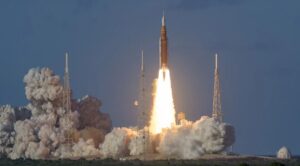
The National Aeronautics and Space Administration launched four astronauts on April 2 from Kennedy Space Center in Florida aboard the Artemis II mission. The crew is set for a 10-day test flight around the Moon, marking the first human lunar flyby since the Apollo era. The mission aims to validate spacecraft systems and pave the way for future Moon landings and Mars exploration.