
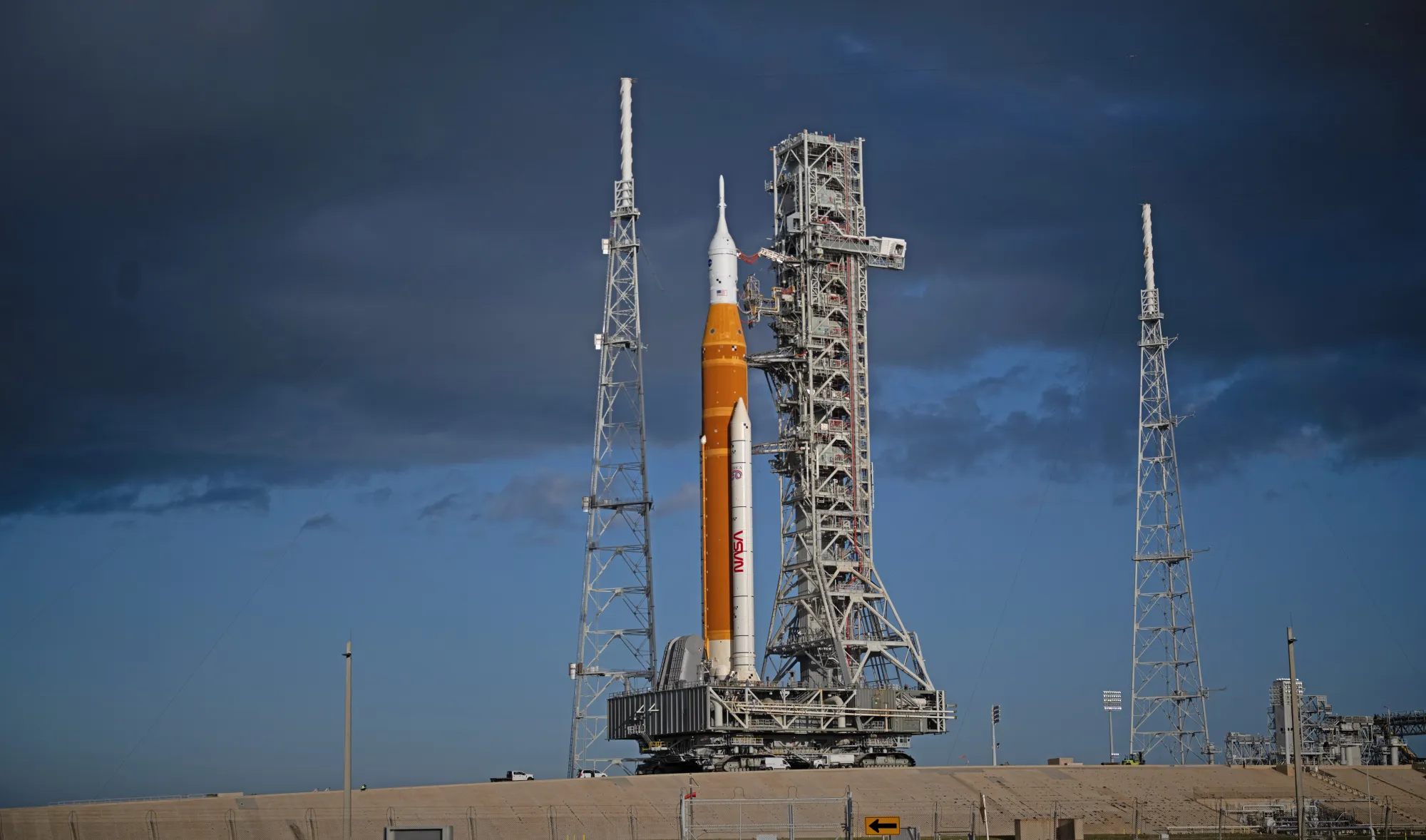
Cape Canaveral, March 22, 2026: NASA’s Artemis II mission has reached a critical milestone, with the Space Launch System (SLS) rocket and Orion spacecraft now standing at Launch Pad 39B at the agency’s Kennedy Space Center in Florida, setting the stage for the first crewed lunar mission in more than five decades.
The towering 322-foot-tall Moon rocket arrived at the pad at 11:21 a.m. EDT on Friday, March 20, completing an 11-hour journey from the Vehicle Assembly Building. The slow and steady trek began at 12:20 a.m. EDT, as NASA’s crawler-transporter 2 carried the integrated SLS and Orion, secured atop the mobile launcher, along the 4-mile path at a maximum speed of just 0.82 mph.
With the rocket now in place at Pad 39B, the historic launch site of Apollo missions and numerous space shuttle flights, NASA teams are entering the final phase of prelaunch preparations. The mission is targeting liftoff as soon as Wednesday, April 1, with the early April launch window extending through Monday, April 6.

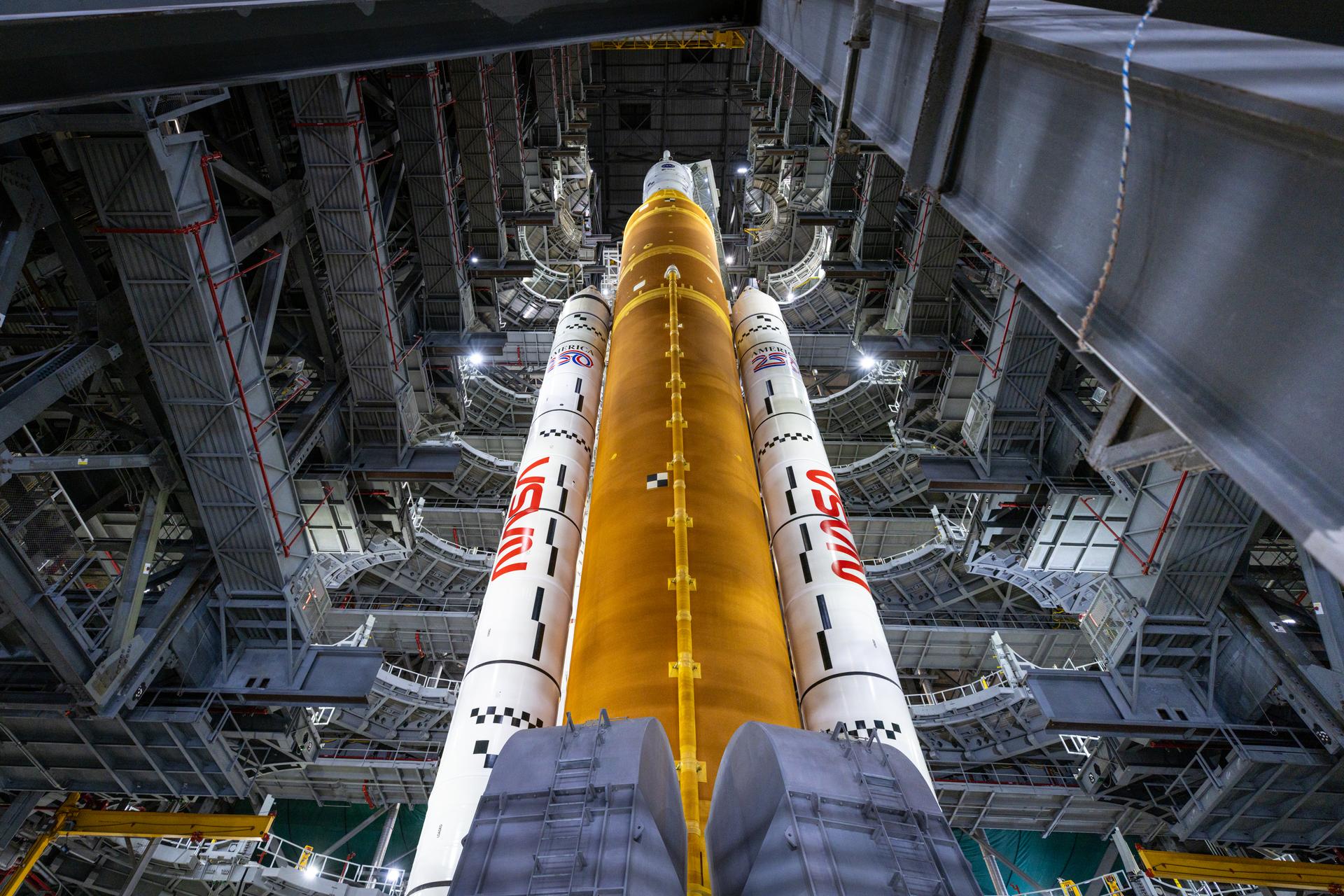
Artemis II will mark the first crewed test flight of the SLS rocket and Orion spacecraft, carrying a four-member astronaut team on a 10-day journey around the Moon and back. The crew includes NASA astronauts Reid Wiseman as Commander, Victor Glover as Pilot, and Christina Koch as Mission Specialist, alongside Canadian Space Agency (CSA) astronaut Jeremy Hansen as Mission Specialist.
The mission represents a pivotal step in what NASA describes as a “Golden Age of innovation and exploration.” Artemis II will pave the way for subsequent U.S.-crewed missions to the lunar surface, with the goal of establishing a sustained presence on the Moon that will ultimately enable the agency to prepare for human exploration of Mars.
As the world watches, the final countdown has begun for humanity’s return to deep space.
Also Read:
NASA to stream launch and docking of ‘Progress 94 cargo spacecraft’ to ISS
Huge Craters On an Asteroid Psyche Could Provide Clues to Early Planets