The surge was driven by continued human emissions, more wildfire activity and weakened absorption by land and ocean “sinks” – a development that threatens to create a vicious climate cycle.
Tripling since the 1960s
The WMO’s latest Greenhouse Gas Bulletin shows that CO₂ growth rates have tripled since the 1960s, accelerating from an annual average increase of 0.8 parts per million (ppm) to 2.4 ppm per year, in the decade from 2011 to 2020.
The rate jumped by a record 3.5 ppm between 2023 and 2024 – the largest increase since monitoring began in 1957.
Average concentrations reached 423.9 ppm in 2024, up from 377.1 ppm when the bulletin was first published in 2004.
Roughly half of CO₂ emitted remains in the atmosphere, while the rest is absorbed by land and oceans; storage that is weakening as warming reduces ocean solubility and worsens drought.
The 2024 spike was likely amplified by an uptick in wildfires and a reduced uptake of CO₂ by land and the ocean in 2024 – the warmest year on record, with a strong El Niño weather pattern effect.
“There is concern that terrestrial and ocean CO₂ sinks are becoming less effective, which will increase the amount of CO₂ that stays in the atmosphere, thereby accelerating global warming. Sustained and strengthened greenhouse gas monitoring is critical to understanding these loops,” said Oksana Tarasova, WMO senior scientific officer who coordinates the bulletin research.
Other record highs
Methane and nitrous oxide – the second and third most significant long-lived greenhouse gases – also set new emission records.
Methane levels rose to 1,942 ppb, 166 per cent above pre-industrial levels, while nitrous oxide hit 338 ppb – a 25 per cent increase.
“The heat trapped by CO2 and other greenhouse gases is turbo-charging our climate and leading to more extreme weather. Reducing emissions is therefore essential not just for our climate but also for our economic security and community well-being,” said WMO Deputy Secretary-General Ko Barrett.
Monitoring and action
The WMO issued the report ahead of the COP30 climate conference in Belém, Brazil, beginning in November, emphasising that sustained global monitoring is vital for guiding climate action.
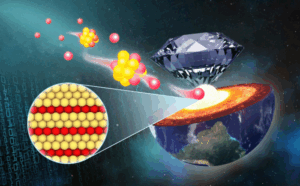
Oxygen is the key substance for life and one of the most abundant elements in the Earth. However, it’s still unknown whether oxygen is present and in which form in the inner core with extreme high pressure and temperature conditions, and almost composed of pure iron. Scientists co-led by Dr. Jin Liu from HPSTAR (the Center for High Pressure Science &Technology Advanced Research) and Dr. Yang Sun from Columbia University reveal that Fe-rich Fe-O alloys are stable at extreme pressures of nearly 300 GPa and high temperatures of more than 3,000 K.
The results published in the journal of The Innovation prove that oxygen can exist in the solid inner core, which provides key constraints for further understanding of the formation process and evolution history of the Earth’s core.
The Earth’s solid inner core, as one of the most mysterious places on the planet, is in the most extreme temperature and pressure environment on Earth, with a pressure of more than 3 million atmospheres and a temperature close to the surface of the Sun, about 6000 K. Because the inner core is far beyond the reach of humans, we can only infer its density and chemical composition from the seismic signals generated by earthquakes.
Iron-rich Fe–O compounds at Earth’s core pressures/CREDIT:Jin Liu
At present, it is believed that light elements exist in the inner core, but the type and content are still debated. Cosmochemical and geochemical evidence suggests that it should contain sulfur, silicon, carbon, and hydrogen. Experiments and calculations also confirmed that these elements mix with pure iron to form various Fe alloys under high temperatures and high-pressure conditions of the deep Earth.
However, oxygen, which is closely related to us, is usually excluded from the inner core. This is mainly because Fe-O alloys with iron-rich compositions have never been found in the surface or mantle environments. The oxygen content in all known iron oxides is greater than or equal to 50 atomic percent. Although people have been trying to synthesize iron oxide compounds with iron-rich compositions, such substances have never been found yet. Is the Earth’s inner core so “anoxic”? To answer this question, a series of experiments and theoretical calculations were carried out in this study.
To be close to the temperature and pressure of Earth’s core, pure iron and iron oxide were placed on the tips of two diamond anvils and heated with a high-energy laser beam. After many attempts, it was found that a chemical reaction between iron and iron oxide occurs above 220-260 GPa and 3000 K. The XRD results reveal that the reaction product is different from the common high-temperature and high-pressure structure of pure iron and iron oxide.
Theoretical crystal structure search using a genetic algorithm proved that the iron-rich Fe-O alloy could exist stably at approximately 200 GPa. Under such conditions, the new Fe-rich Fe-O alloys form a hexagonal close-packed structure, where the oxygen layers are arranged in between Fe layers to stabilize the structure. Such a mechanism produces many close-packed arrangements forming a large family of Fe-rich Fe-O compounds with large configurational entropy.
Based on this theoretical information, an atomic configuration of Fe28O14 was found to match the experimentally measured XRD pattern. Further calculations showed that Fe-rich Fe-O phases are metallic, in contrast with common iron oxides at low pressures. The electronic structure depends on O concentration and the Fe and O layer arrangements. The mechanical properties and thermal properties of the alloy need to be further studied in the future.
Activated carbon is used in kitchen fans to eliminate food odours. A new dissertation from the University of Gothenburg shows that activated carbon could also eliminate the smell of urine from diapers. Experiments with the odour molecule p-cresol show that activated carbon, which largely consists of the carbon variant graphene, can lock in odour instead of it being released to the surroundings.
Modern diapers can absorb and lock in a lot of liquid, meaning they do not have to be changed as often as in the past. But odour is still a problem. In a dissertation by Isabelle Simonsson at the University of Gothenburg, she looked at a specific odour molecule and discovered that in the right setting, it can choose to remain in the liquid and not cause foul odour.
“The odour molecule is called p-cresol and is an organic, volatile hydrocarbon. It’s what causes the strong odour associated with pig farming and horse stables. p-Cresol is also found in human urine and is hydrophobic, which means it avoids water. That’s one of the reasons why it is released from urine into the surrounding air, in other words, that the odour spreads,” says Isabelle Simonsson.
Electrically charged surfaces can adsorb odour
Manufacturers of diapers and other hygiene products have long known that an electrically charged surface can adsorb odour. There is even an old patent covering this, but a great deal has involved conducting tests on different materials and seeing what works. The tests have not resulted in a solution.
The main goal of the dissertation is to investigate what material properties are important for adsorbing odour molecules in urine. One of the materials used was activated carbon, which is found in almost every kitchen fan these days to neutralise odour; it is also an inexpensive and environmentally friendly material.
Tests with carbon materials that had been manipulated in various ways showed that carbon with the least charge was most effective at attracting p-cresol molecules from the liquid, resulting in less odour. Activated carbon, consisting mainly of the carbon variant graphene, was best at capturing the odour molecule.
“Our findings show a direct ‘ion-specific effect’ on the material’s properties and adsorption capability in synthetic urine. Activated carbon has a large surface area, which is good at adsorbing odour molecules,” says Simonsson.
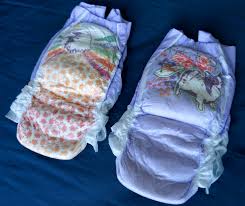
Baby Diapers/wikipedia
Salts in urine enhance the effect
The same effect was not achieved in tests in which p-cresol was dissolved in water, which is due to the salts in urine. The salt ions, including sodium, reduce the water solubility of organic molecules, which then bind to the activated carbon instead.
The dissertation primarily involved fundamental research, but its findings may be useful in many industrial processes, including for the mining industry, water and sewage treatment, the development of new hygiene products, pharmaceuticals and construction materials.
“These results are promising, but there are obstacles to developing an odourless diaper. Like colour. Can you sell a diaper that’s black?”
Scientists develop a simple, fast, and energy-efficient synthesis method for producing exceptional carbon nano-onions from fish scales.
Thanks to their low toxicity, chemical stability, and remarkable electrical and optical properties, carbon-based nanomaterials are finding more and more applications across electronics, energy conversion and storage, catalysis, and biomedicine. Carbon nano-onions (CNOs) are certainly no exception. First reported in 1980, CNOs are nanostructures composed of concentric shells of fullerenes, resembling cages within cages. They offer multiple attractive qualities such a s a high surface area and large electrical and thermal conductivities.
Unfortunately, the conventional methods for producing CNOs have some serious drawbacks. Some require harsh synthesis conditions, such as high temperatures or vacuum, while others demand a lot of time and energy. Some techniques can circumvent these limitations, but instead call for complex catalysts, expensive carbon sources, or dangerous acidic or basic conditions. This greatly limits the potential of CNOs.
Fish/Photo:en.wikipedia.org
Fortunately, not all hope is lost. In a recent study published in Green Chemistry (available online on April 25, 2022, and published in issue 10 on May 21, 2022), a team of scientists from Nagoya Institute of Technology in Japan found a simple and convenient way to turn fish waste into extremely high-quality CNOs. The team, which included Assistant Professor Yunzi Xin, Master’s student Kai Odachi, and Associate Professor Takashi Shirai, developed a synthesis route in which fish scales extracted from fish waste after cleaning are converted into CNOs in mere seconds through microwave pyrolysis.
But how can fish scales be converted into CNOs so easily? While the exact reason is not altogether clear, the team believes that it has to do with the collagen contained in fish scales, which can absorb enough microwave radiation to produce a fast rise in temperature. This leads to thermal decomposition or “pyrolysis,” which produces certain gases that support the assembly of CNOs. What is remarkable about this approach is that it needs no complex catalysts, nor harsh conditions, nor prolonged wait times; the fish scales can be converted into CNOs in less than 10 seconds!
Moreover, this synthesis process yields CNOs with very high crystallinity. This is remarkably difficult to achieve in processes that use biomass waste as a starting material. Additionally, during synthesis, the surface of the CNOs is selectively and thoroughly functionalized with (−COOH) and (−OH) groups. This is in stark contrast to the surface of CNOs prepared with conventional methods, which is typically bare and has to be functionalized through additional steps.
This “automatic” functionalization has important implications for applications of CNOs. When the CNO surface is not functionalized, the nanostructures tend to stick together owing to an attractive interaction known as pi−pi stacking. This makes it difficult to disperse them in solvents, which is necessary in any application requiring solution-based processes. However, since the proposed synthesis process produces functionalized CNOs, it allows for an excellent dispersibility in various solvents.
Yet another advantage associated with functionalization and the high crystallinity, is that of exceptional optical properties. Dr. Shirai explains: “The CNOs exhibit ultra-bright visible-light emission with an efficiency (or quantum yield) of 40%. This value, which has never been achieved before, is about 10 times higher than that of previously reported CNOs synthesized via conventional methods.”
To showcase some of the many practical applications of their CNOs, the team demonstrated their use in LEDs and blue-light-emitting thin films. The CNOs produced a highly stable emission, both inside solid devices and when dispersed in various solvents, including water, ethanol, and isopropanol. “The stable optical properties could enable us to fabricate large-area emissive flexible films and LED devices,” speculates Dr. Shirai. “These findings will open up new avenues for the development of next-generation displays and solid-state lighting.”
Furthermore, the proposed synthesis technique is environmentally friendly and provides a straightforward way to convert fish waste into infinitely more useful materials. The team believes their work would contribute to the fulfillment of several of UN’s Sustainable Development Goals. Additionally, if CNOs make their way into next-generation LED lighting and QLED displays, they could greatly help reduce their manufacturing costs.
Let us hope the efforts of these scientists tip the scales in favor of CNOs for more practical applications!